
The Quick Answer — Match Connector Family × Wire Size × Barrel/Die
Choosing the right wire crimping tool comes down to matching three factors: your connector family (type of terminal), the wire gauge, and the crimp barrel/die shape required. In practice, this means first identifying what kind of wire connector you need to crimp (for example, a butt splice, ring terminal, ferrule, etc.), then ensuring you select a wire crimping tool that fits the wire’s AWG size range, and finally using the proper crimp die geometry that will form a solid crimp on that specific connector. Each connector type is designed to be crimped in a certain way, so using the right tool for the job is essential for a reliable electrical crimp connection. In short, know your connector, know your wire, and use the matching crimp profile – this combination will guide you to the correct wire crimping tools for any given task.
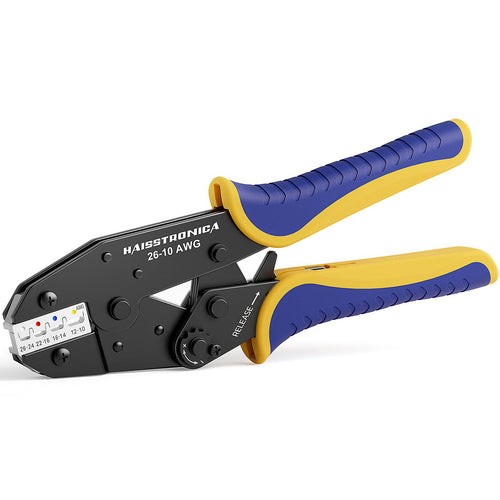
Explore Haisstronica’s wire crimping tools and interchangeable jaws to match your connector type, wire size and crimp profile.
Choose connector, AWG and die—then check workload
Do not choose by handle style alone. A correct crimp needs compatibility first; workload then decides the most practical handle and mechanism.
Know Your Connector Family (Start Here)
The first step is to identify the connector family you’re working with. Crimping tools are commonly used for attaching wire connectors such as ring terminals, spade connectors, or butt splice connectors to the ends of wires. These types of terminals (including vinyl/nylon-insulated or heat-shrink butt connectors, spade terminals, and ring connectors) typically have a closed-barrel design – the wire inserts into a tubular metal barrel which the tool compresses into an oval or trapezoid shape around the wire. A butt connector crimper or similar ratcheting wire crimper is ideal for these, as it applies even pressure and won’t release until the crimp is complete, preventing under-crimping of the connector.
Other connector families require different approaches. For instance, open-barrel terminals (often found in automotive wiring harnesses and some OEM plug connectors) have “ears” or flanges that wrap around the wire and insulation. These are crimped with a tool that curls the flanges into a tight B-crimp or F-crimp shape for a secure hold. Likewise, wire ferrules (used to consolidate fine-stranded wires for screw terminals) need a dedicated ferrule crimping tool that typically produces a square or hexagonal crimp profile for optimum contact. If you’re working with specialty cables, there are specific tools as well – for example, to crimp spark plug wires you’ll need a spark plug wire crimping tool designed for ignition leads, and large battery lugs call for heavy-duty battery cable crimpers or even hydraulic crimpers (standard wire crimping tools simply can’t accommodate those larger cable sizes).
Step‑by‑Step Selection Checklist
-
Identify the Connector Type: Determine your connector family first – e.g. butt connectors, ring or spade terminals, open-barrel pins, wire ferrules, coaxial plugs, etc. The type of terminal dictates the style of crimp and the tool needed. (For instance, insulated butt splices vs. open-barrel automotive terminals require different crimping approaches.)
-
Match the Wire Gauge: Check the wire AWG size and choose a crimping tool rated for that range. The tool’s crimp cavities must correspond to the wire size for a proper crimp. Using the wrong size tool on a wire can lead to a crimp that is too loose or over-compressed.
-
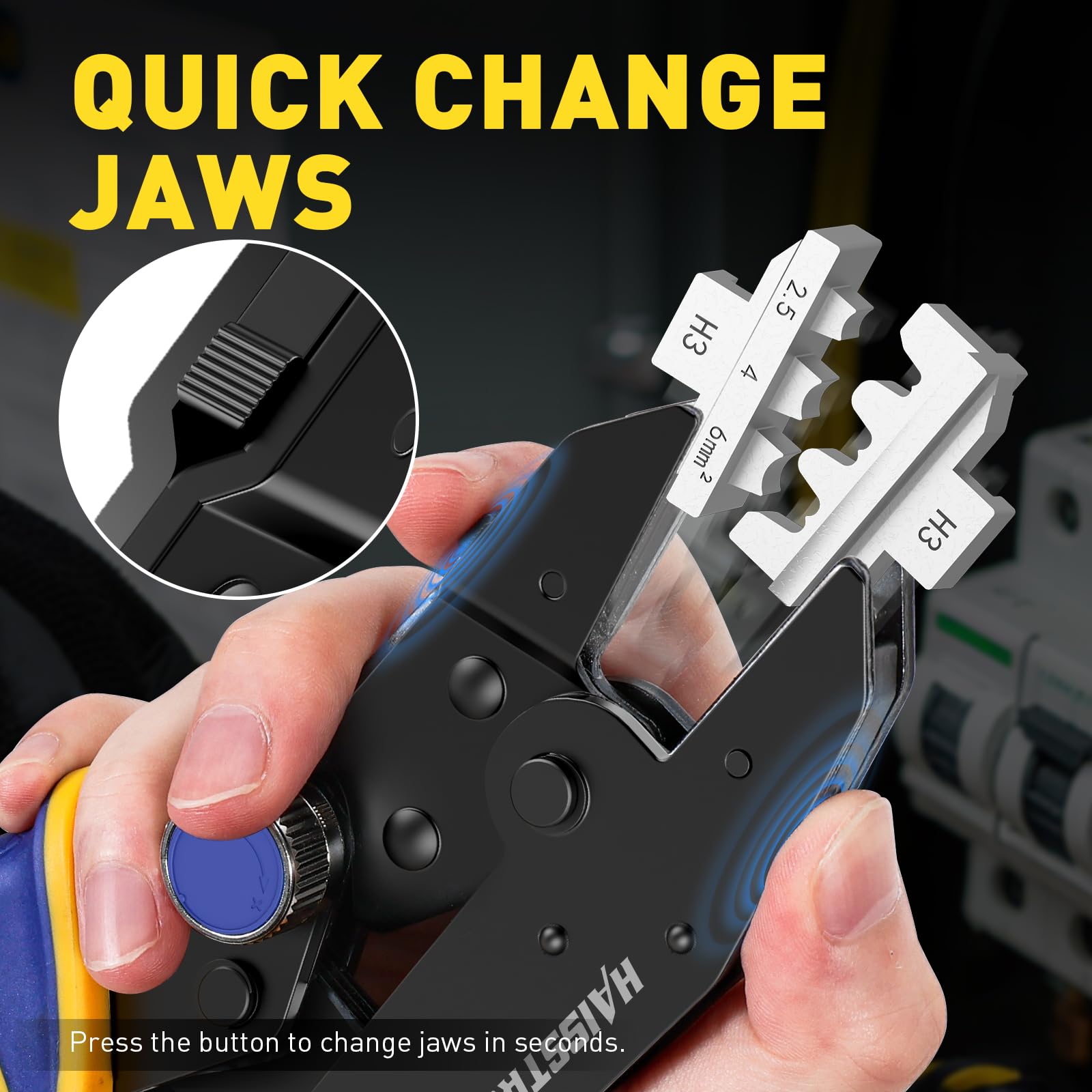
Select the Proper Die/Profile: Use a tool with the correct crimp die shape for your connector’s barrel (oval, hex, square, etc.). Ensure the die or jaws are designed for your specific terminal type to crimp the wire correctly. (Example: use a ferrule crimping tool for ferrules, a hex die for battery lugs, an F-crimp die for open-barrel pins, a dimple die for ignition terminals, etc.)
-
Consider Insulation & Environment: If the connector is insulated (vinyl/nylon or heat-shrink), make sure your wire crimping tool is suitable for insulated terminals (often with a corresponding color-coded die). For waterproof or marine use, choose heat shrink butt connectors and a tool that won’t pierce the insulation. In extreme vibration or heat environments, use high-quality terminals and a crimper that produces a robust crimp (e.g. double-crimp for strain relief).
-
Mind the Application Demands: For high volumes of crimping, consider ratcheting or power crimpers to reduce fatigue and ensure consistency. For special applications like spark plug wire crimping or very large cables, use the designated crimping tools (e.g. an ignition wire crimper, hydraulic battery cable crimping tool, etc.). Always follow any manufacturer recommendations for crimp tools on specific connectors to guarantee performance and preserve warranties.
-
Verify the Crimp Quality: Once selected, double-check that the tool’s die and setting match your connector and wire before crimping. A quick test crimp can confirm if the connection is tight and correctly formed. A proper crimp should be firm and secure – not cutting through the wire, but not slipping off either. Using a good quality wire crimper with a ratchet mechanism can help ensure the crimp is fully completed every time. Finally, inspect and tug-test the crimped wire connection to ensure it’s sound. If everything checks out, you’ve got the right tool for the job!
Find the crimper that fits your connector
Compare ratchet, open-barrel, ferrule, battery-lug and interchangeable-die tools in one place.
 RATCHET · OPEN BARREL · FERRULE · LUG
Crimping Tool FAQ
How do I know which crimping tool to use?
Start with the connector family, then match the wire gauge and die shape. Insulated terminals, heat shrink terminals, ferrules, and open-barrel terminals usually need different crimping jaws or dies.
Can one crimping tool work for every connector?
No. A general ratcheting crimper can cover many insulated or heat shrink terminals, but ferrules, open-barrel terminals, battery lugs, and specialty connectors usually need matched tools.
What matters most when matching a crimper to a wire connector?
The most important checks are connector type, AWG range, barrel shape, insulation style, and whether the connection needs waterproof sealing or strain relief.
When should I choose a ratcheting crimping tool?
Choose a ratcheting crimping tool when you need repeatable pressure, cleaner crimps, and more reliable electrical connections than basic pliers-style crimpers can provide.