
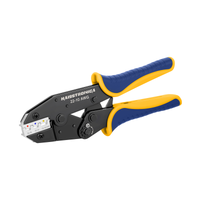

Buy for your workload—not the lowest tool price
Die accuracy and ratchet consistency determine the crimp. Hand fatigue, changeover time, and rework determine the real cost. Start with how often you crimp and how many connector families you use.

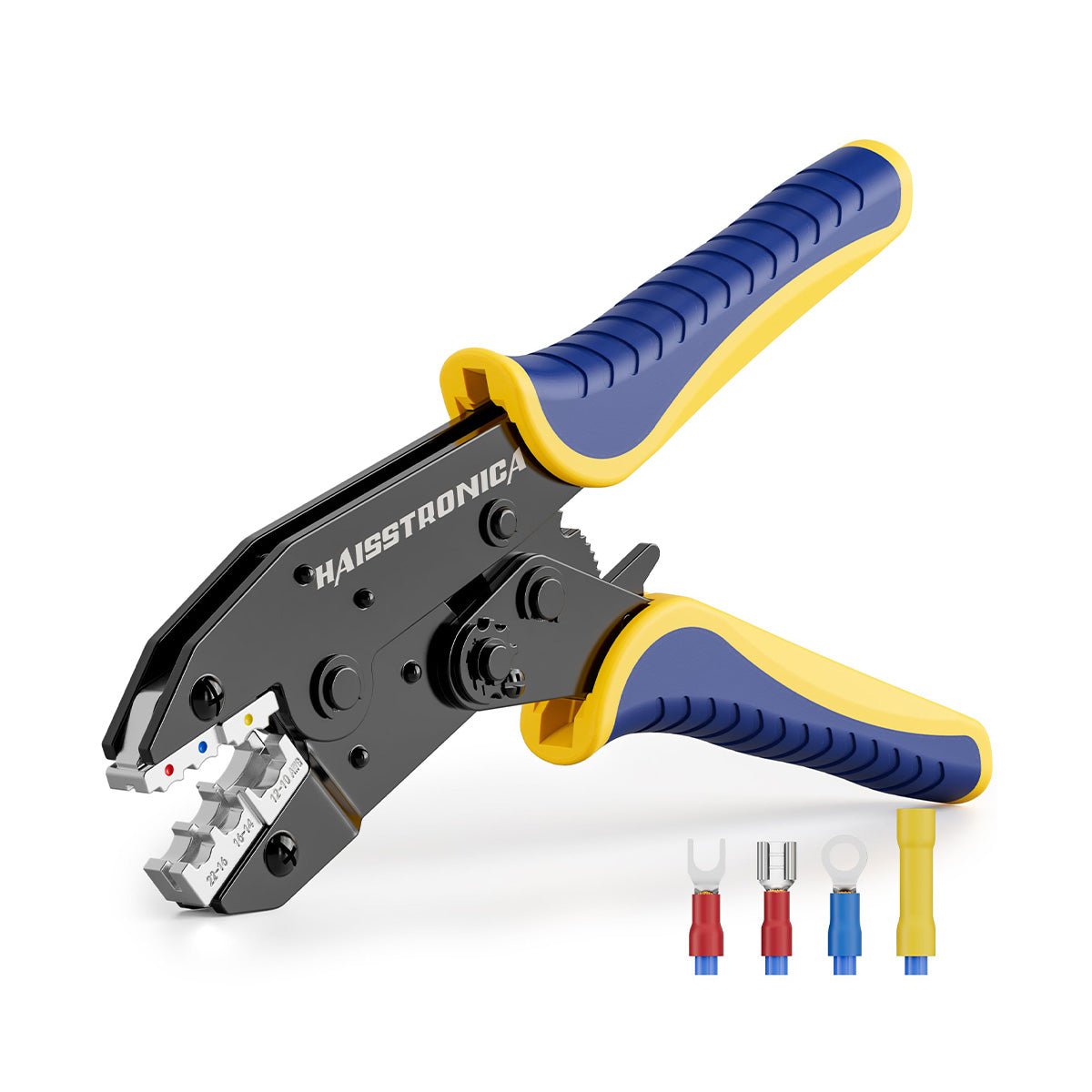
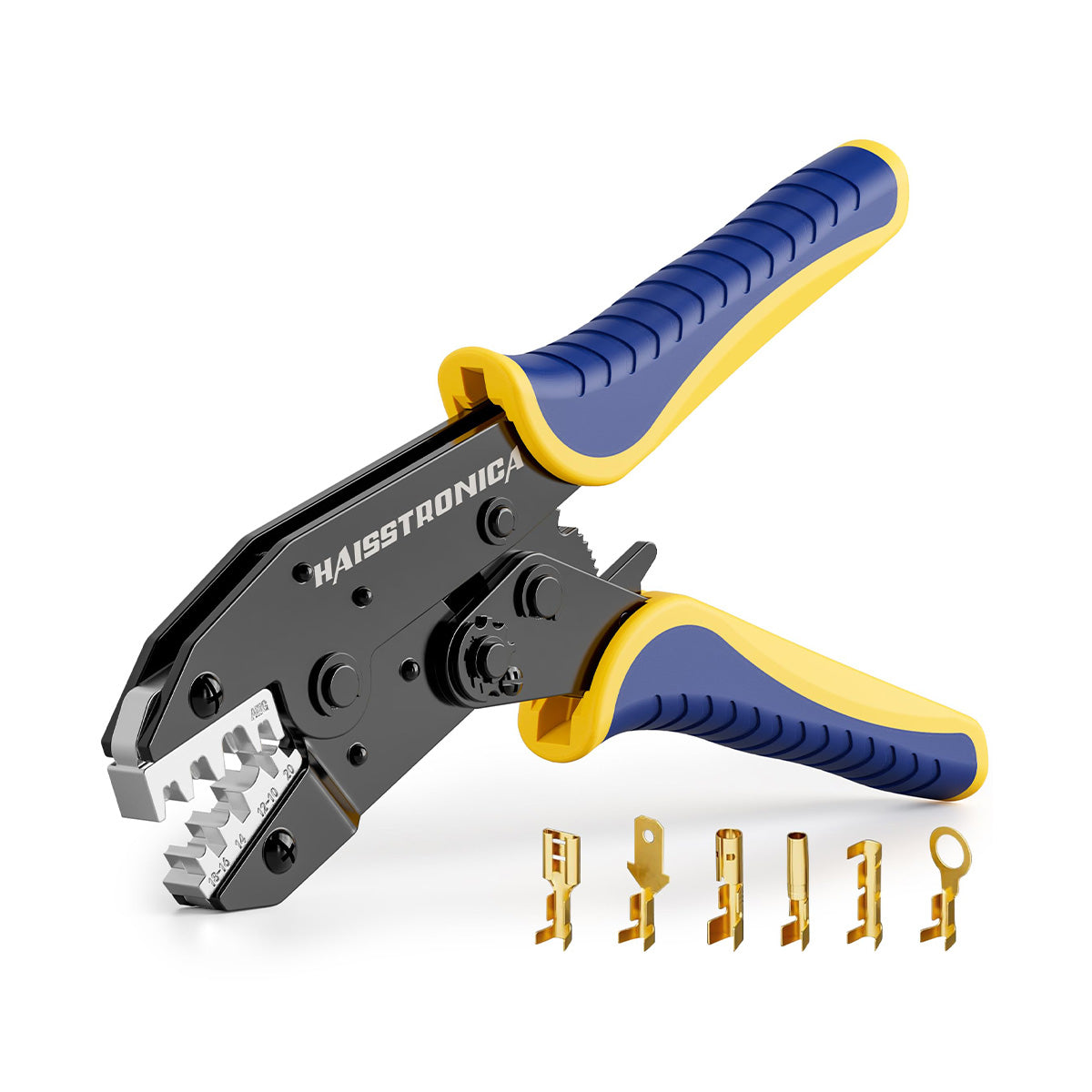
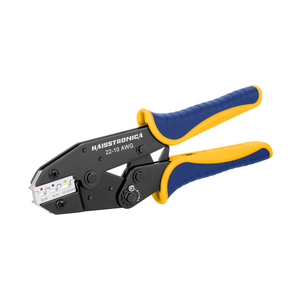
Entry Ratchet Crimper
Best for one connector family, small repairs, and a few projects per year.
View Entry Tool →
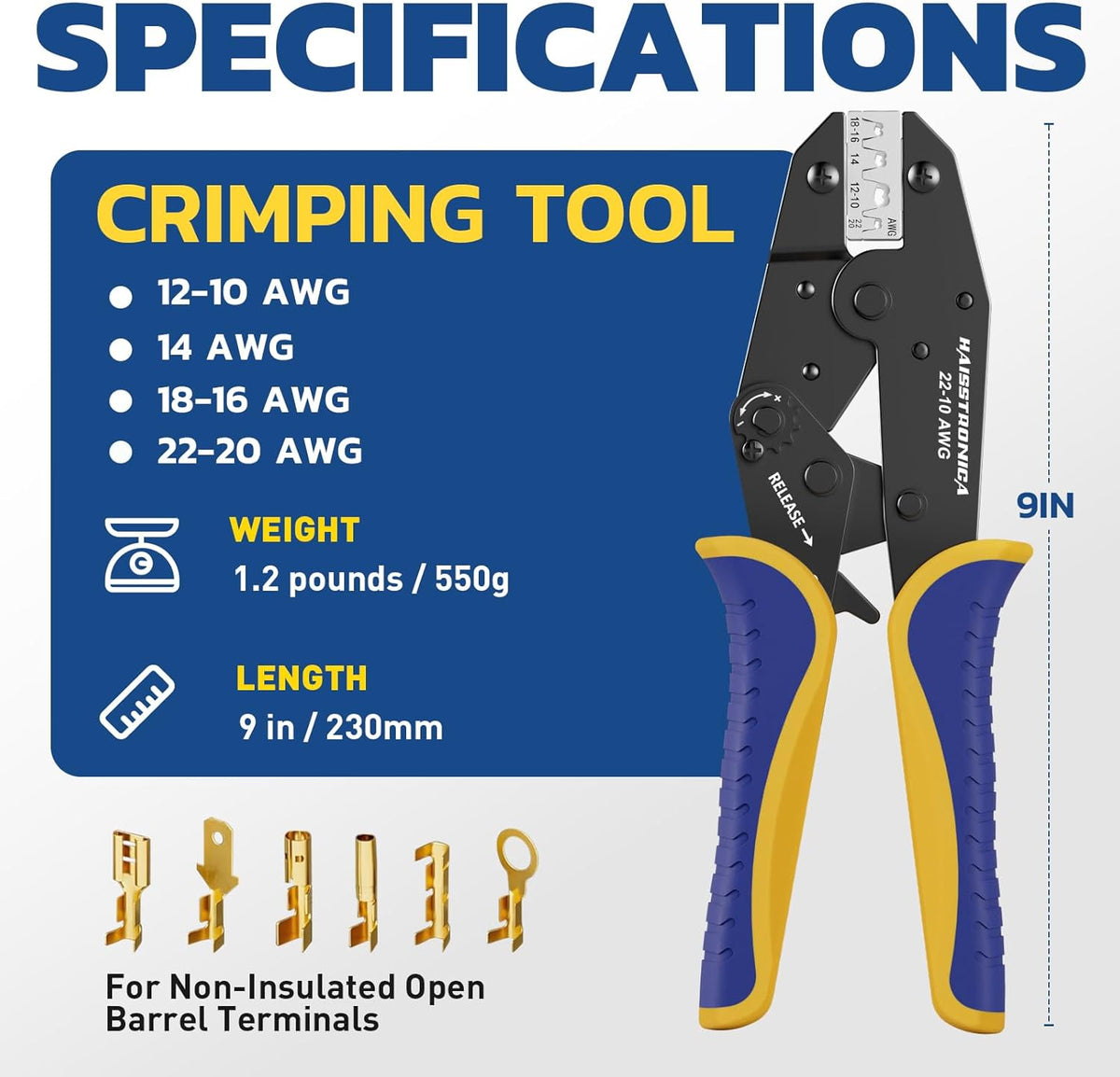
Premium Ratchet Set
Best when repeatability, comfort, and fewer failed crimps matter every week.
View Premium Set →
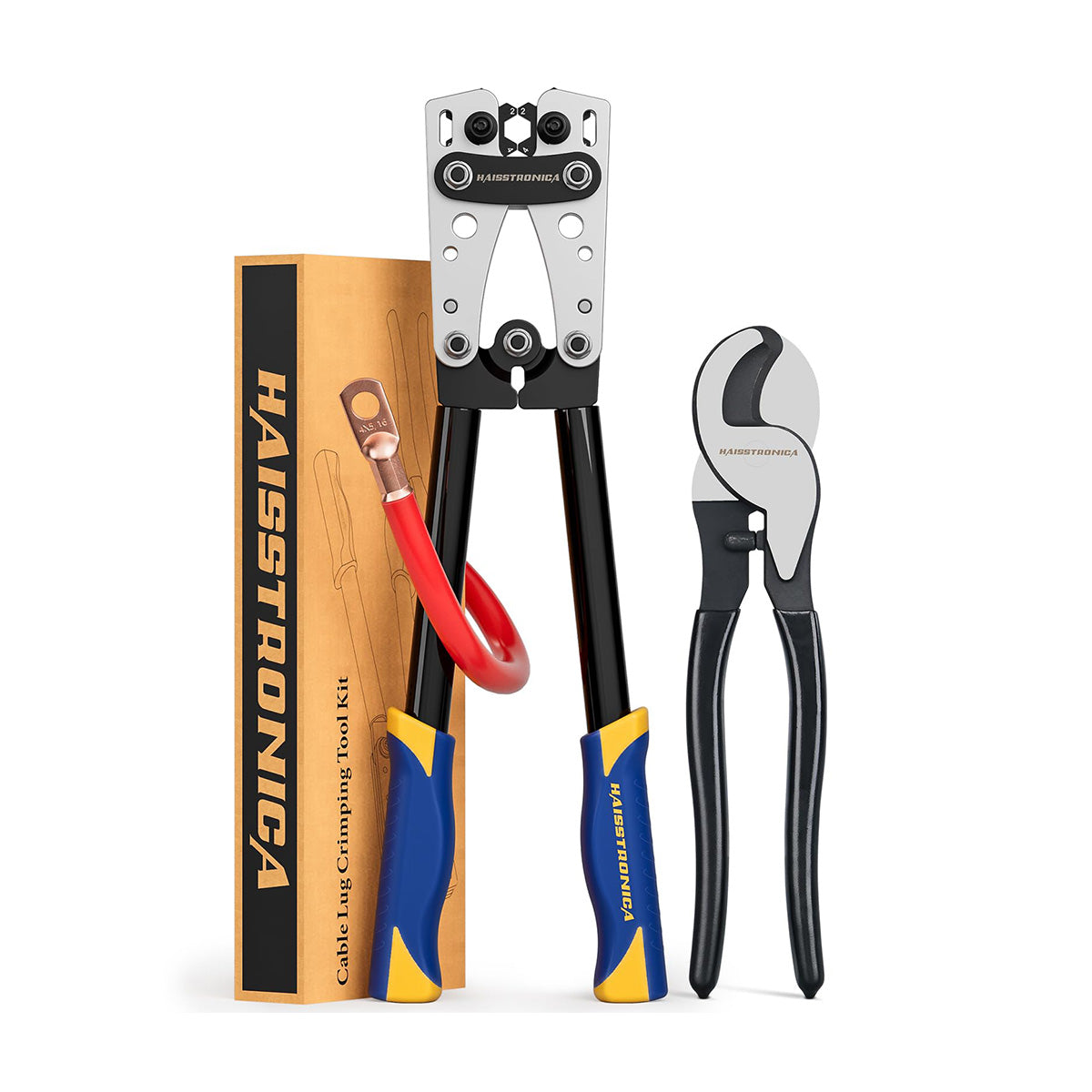
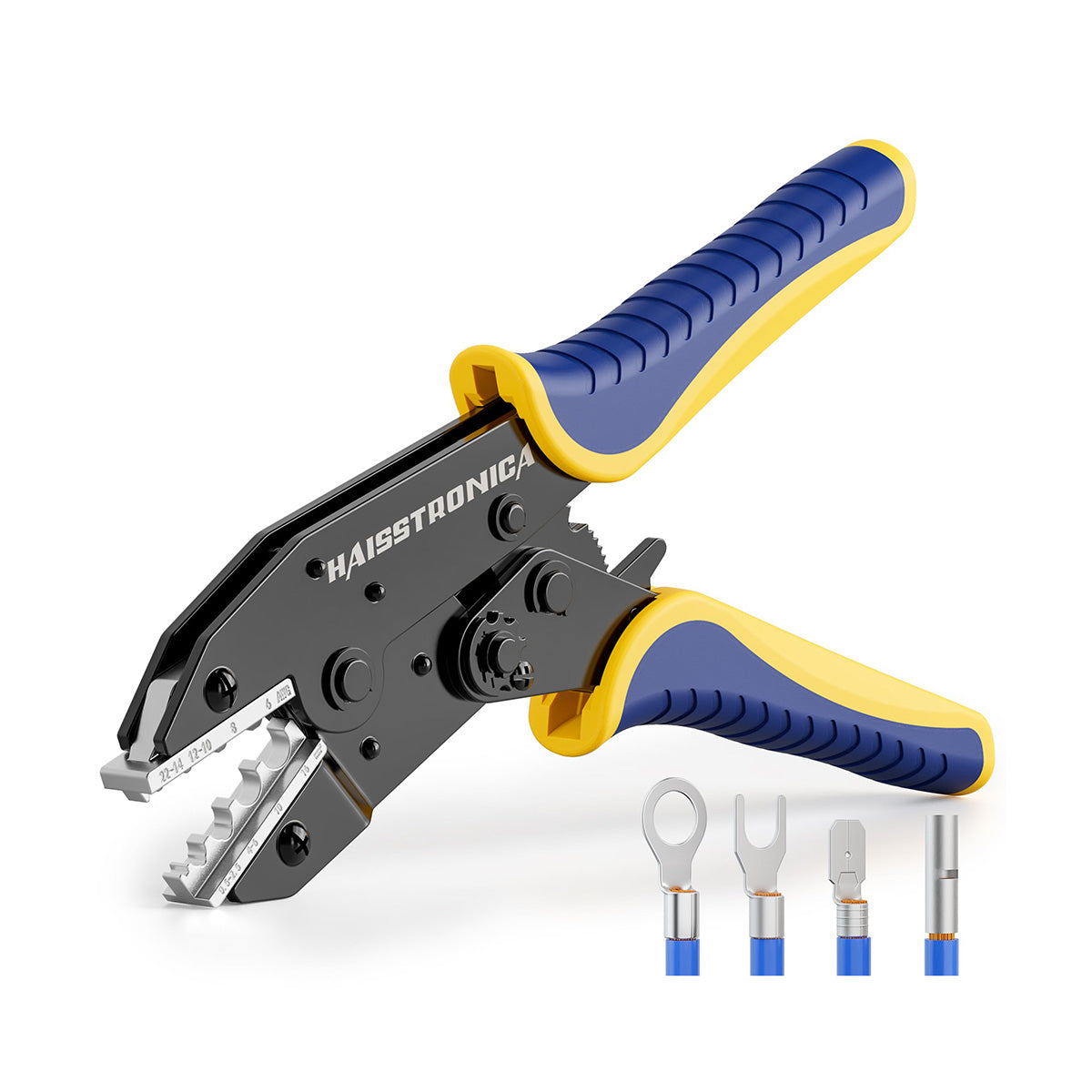
Interchangeable-Die Kit
Best for multiple terminal families, fast changeovers, and daily production.
View 8PCS Kit →Check barrel support and terminal alignment.
Confirm full, repeatable pressure cycles.
Compare failures across repeated samples.
Track hand effort over a full work batch.
Add rework, scrap, and changeover time.
Test 1: die precision and ratchet travel
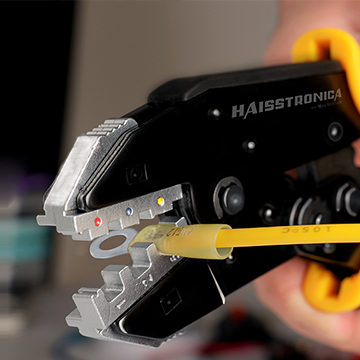
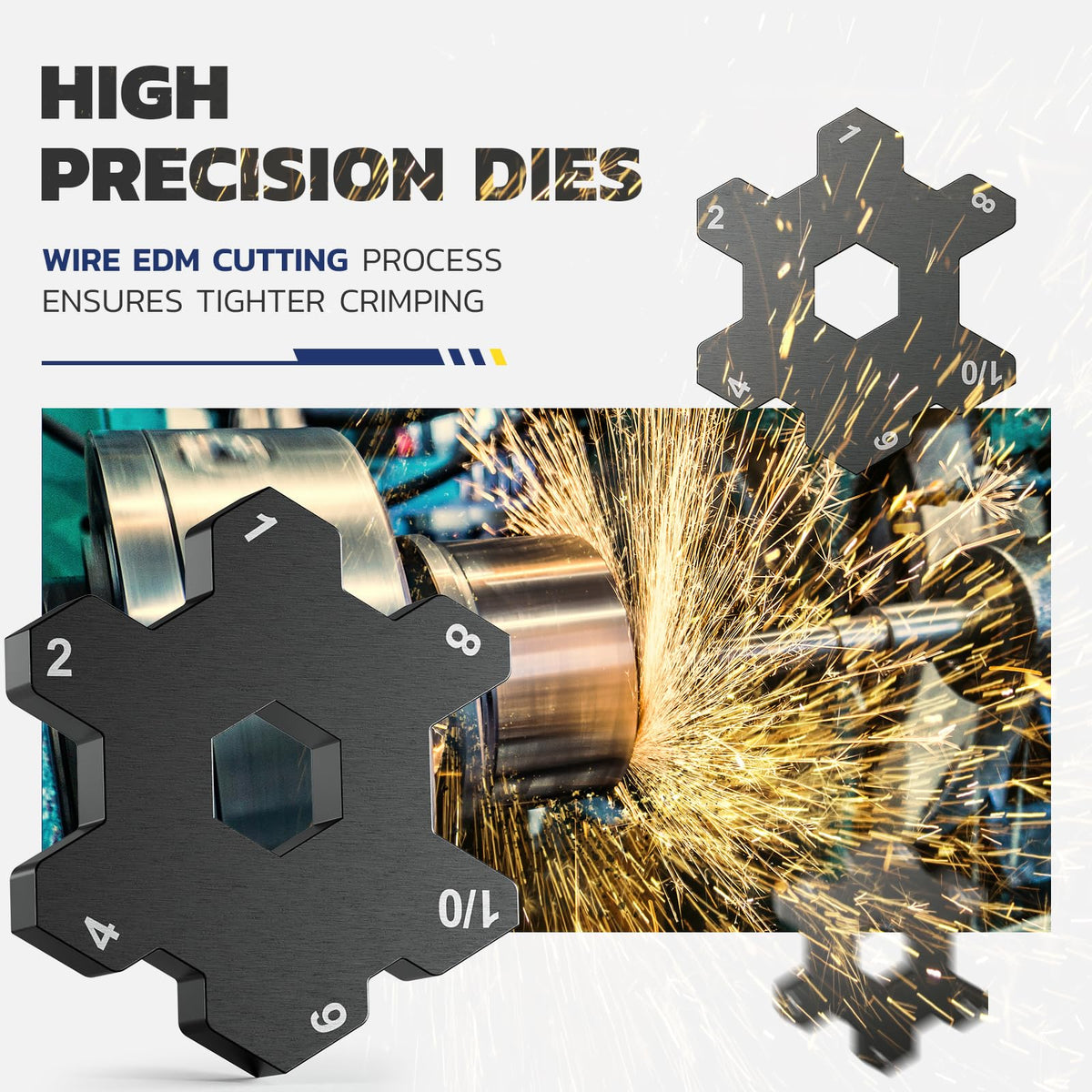
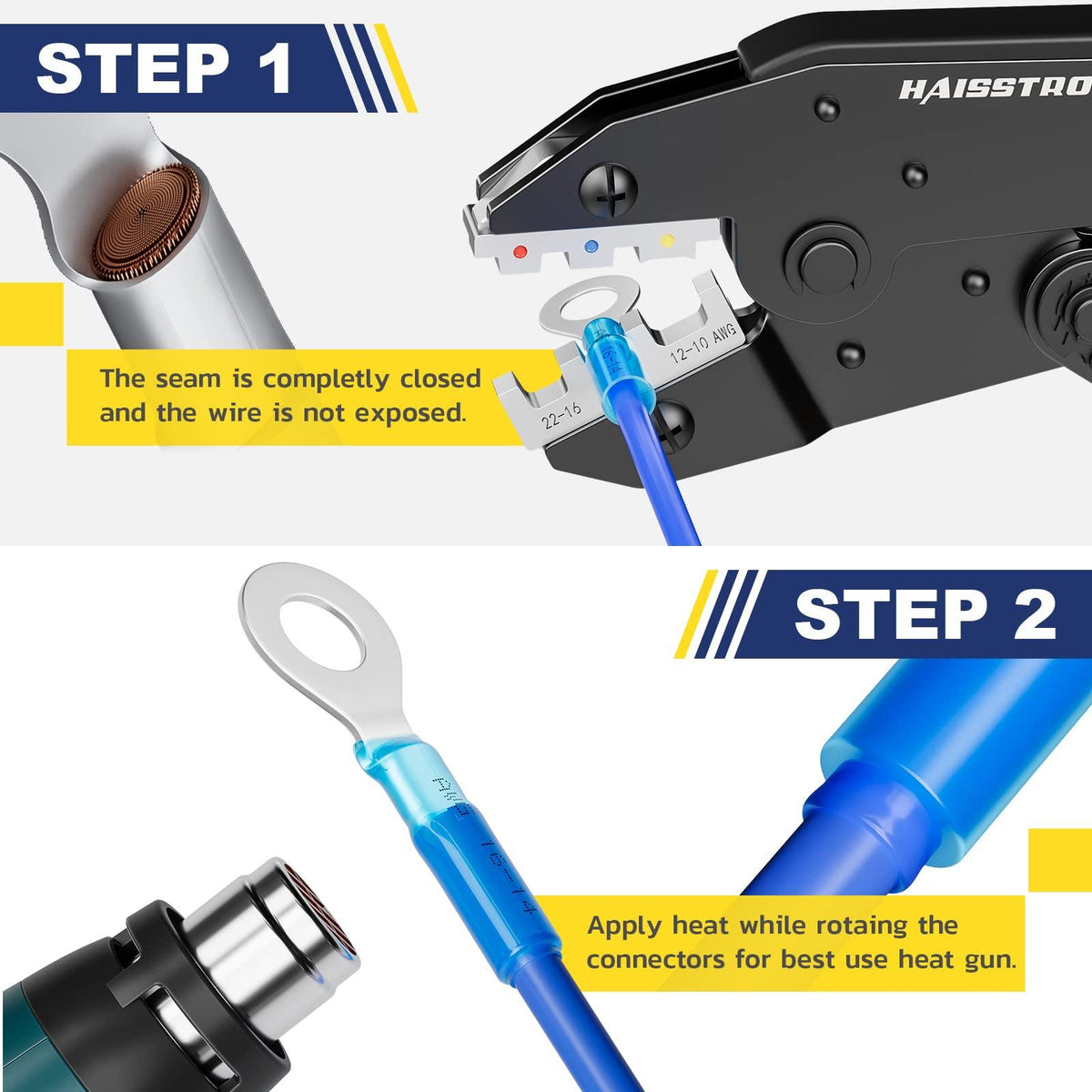
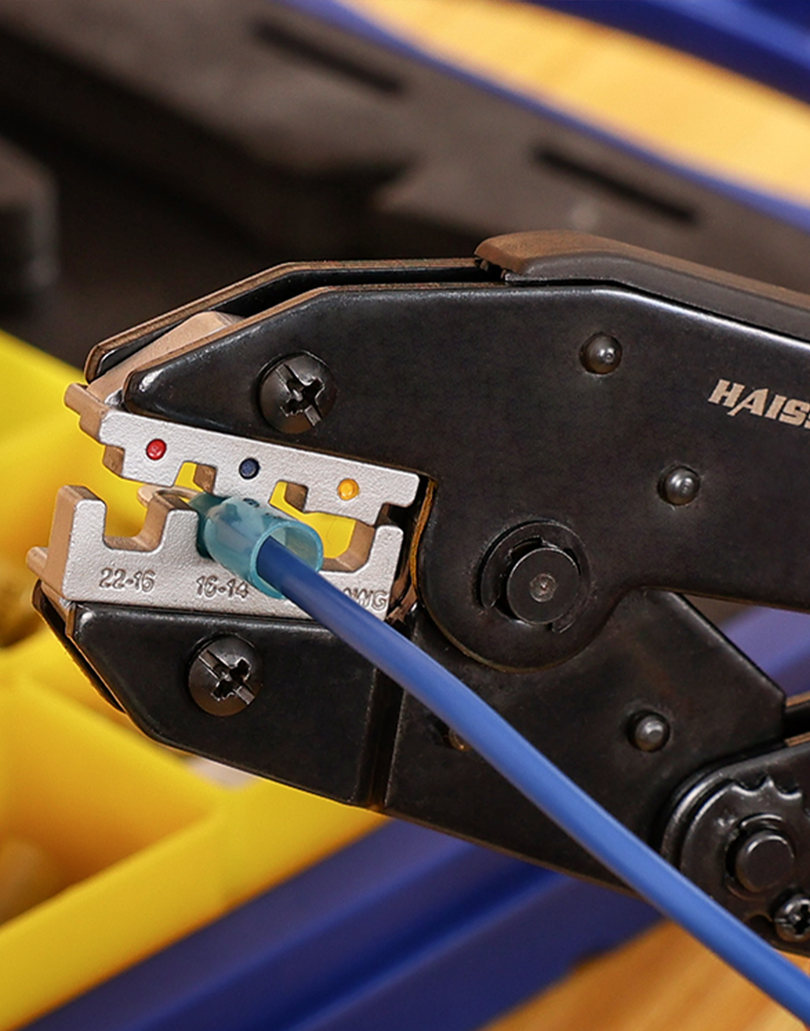
A crimper is only correct when its die geometry matches the connector. Use the same wire gauge, terminal type, strip length, and operator for every comparison. Complete one full ratchet cycle—never add a random second squeeze to “improve” the result.
| Tool tier | Die strategy | Best-fit workload |
|---|---|---|
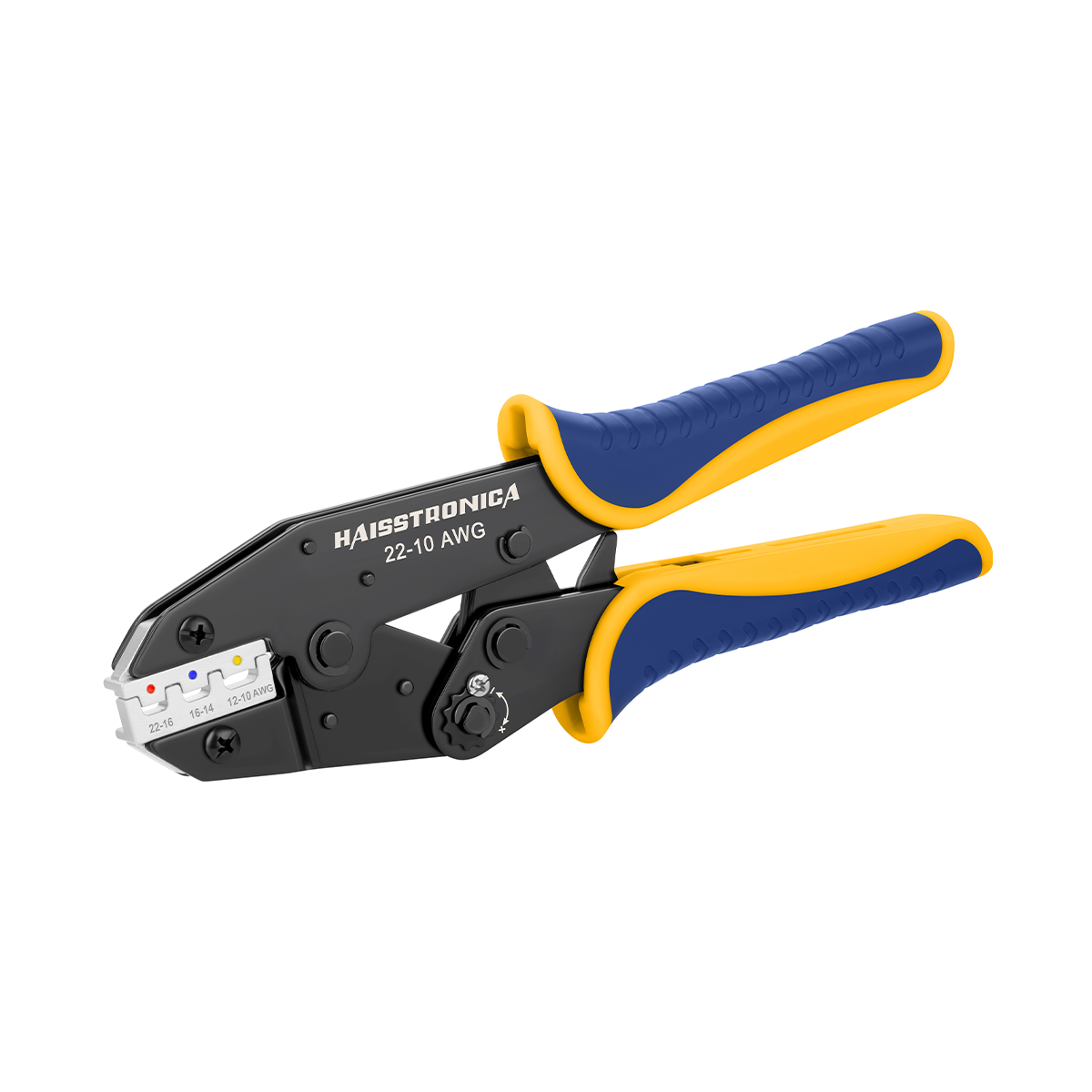
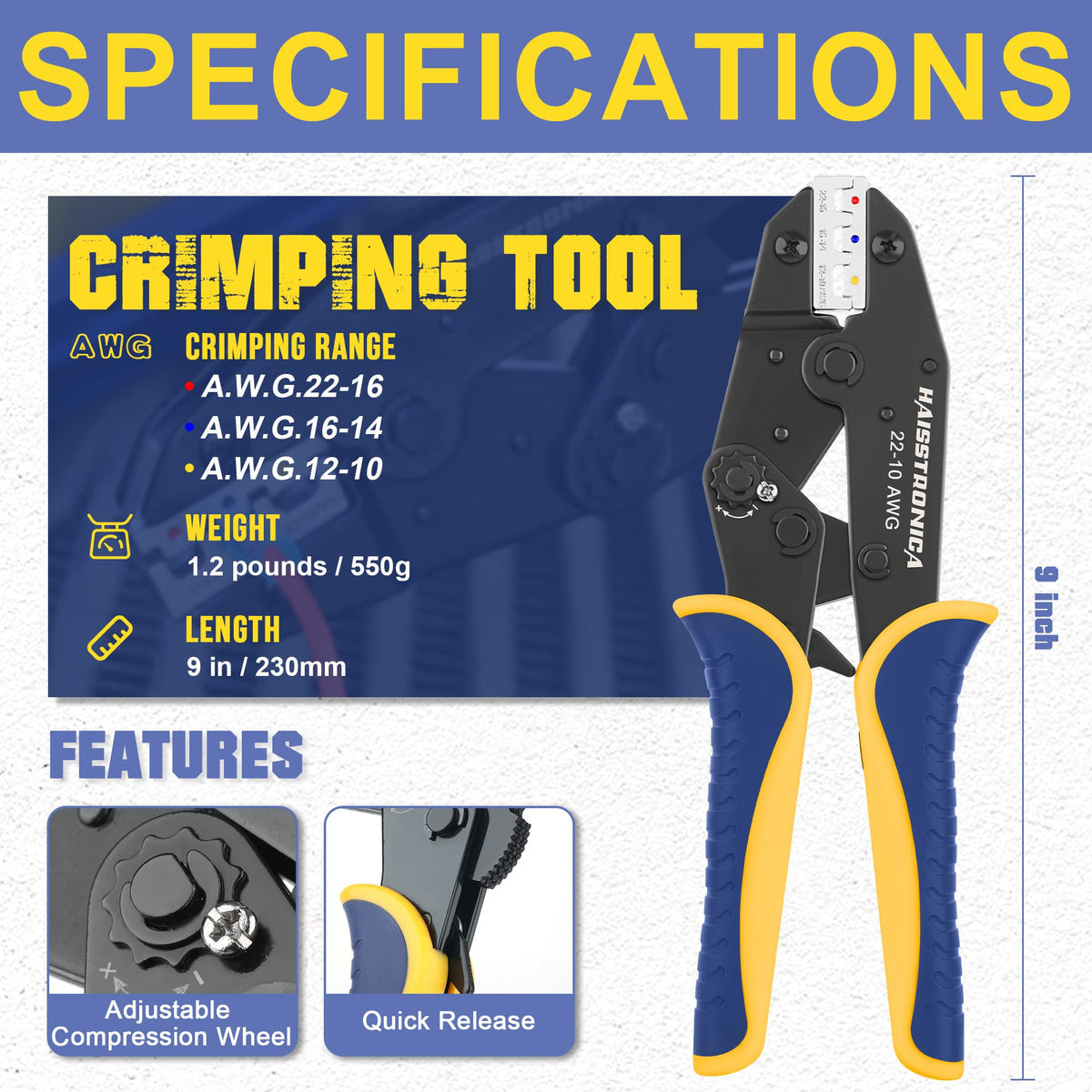
| Entry ratchet | Fixed die for one terminal family | Low variety, occasional repairs |
| Premium ratchet | Tighter alignment and controlled travel | Repeat weekly work |
| Replaceable-die kit | One frame, several dedicated die profiles | High connector variety and production |

Test 2: pull strength and consistency
Do not judge one attractive crimp. Make a sample batch with the same wire and terminals, then inspect and pull-test each piece. The better tool is the one that produces fewer outliers with the same operator and setup.
Even barrel compression, intact insulation, no flash or cracking.
Wire remains seated; failures are recorded rather than hidden.
Repeated crimps look and test alike across the batch.
Test 3: hand fatigue and die changeover
A low purchase price can lose its advantage during repetitive work. Compare handle force, grip comfort, release behavior, and the time required to change terminal families. Test over a realistic batch—not just three crimps.

Premium Ratchet Set
For a stable bench setup, repeatable weekly work, and organized tool storage.
View Premium Set →
8PCS Tool Kit
For professional benches that change connector families and need fast, organized die access.
View 8PCS Kit →Match tool spend to use frequency
| Usage pattern | Priority | Recommended path |
|---|---|---|
| A few projects per year | Correct fixed die at low entry cost | Entry Ratchet Crimper |
| Weekly repair work | Consistency and lower hand fatigue | Premium Ratchet Set |
| Daily or mixed-terminal production | Fast changeover and die coverage | 6-in-1 Tool or 8PCS Kit |
Total cost of ownership: the comparison that matters
Purchase price carries more weight because the batch count is small.
Rework and hand fatigue begin to outweigh small price differences.
Consistency and changeover time compound across every shift.
Simple worksheet: multiply failed crimps by the cost of each terminal, add wasted wire, then multiply rework minutes by your hourly labor rate divided by 60. Run the same calculation for each tool tier using your own batch data.
Frequently asked questions
Does a premium crimper always make a stronger crimp?
No. The die must still match the terminal and wire gauge. Premium construction improves repeatability and workflow, but it cannot correct a mismatched die.
When is an interchangeable-die tool worth it?
When you regularly use several terminal families or lose meaningful time switching between dedicated tools.
Should a low-frequency DIYer buy the cheapest tool?
Buy the least expensive ratcheting tool that correctly matches the connector family and completes a controlled cycle. Generic pliers are not the same as a matched ratchet crimper.
What should a professional track?
Pass rate, pull failures, visible defects, rework minutes, hand fatigue, and changeover time per batch.
Pay for the failure rate and workflow you need
Choose a fixed-die ratchet for occasional, single-family work. Move to premium or interchangeable dies when repeatability, fatigue, and changeover time affect real output.