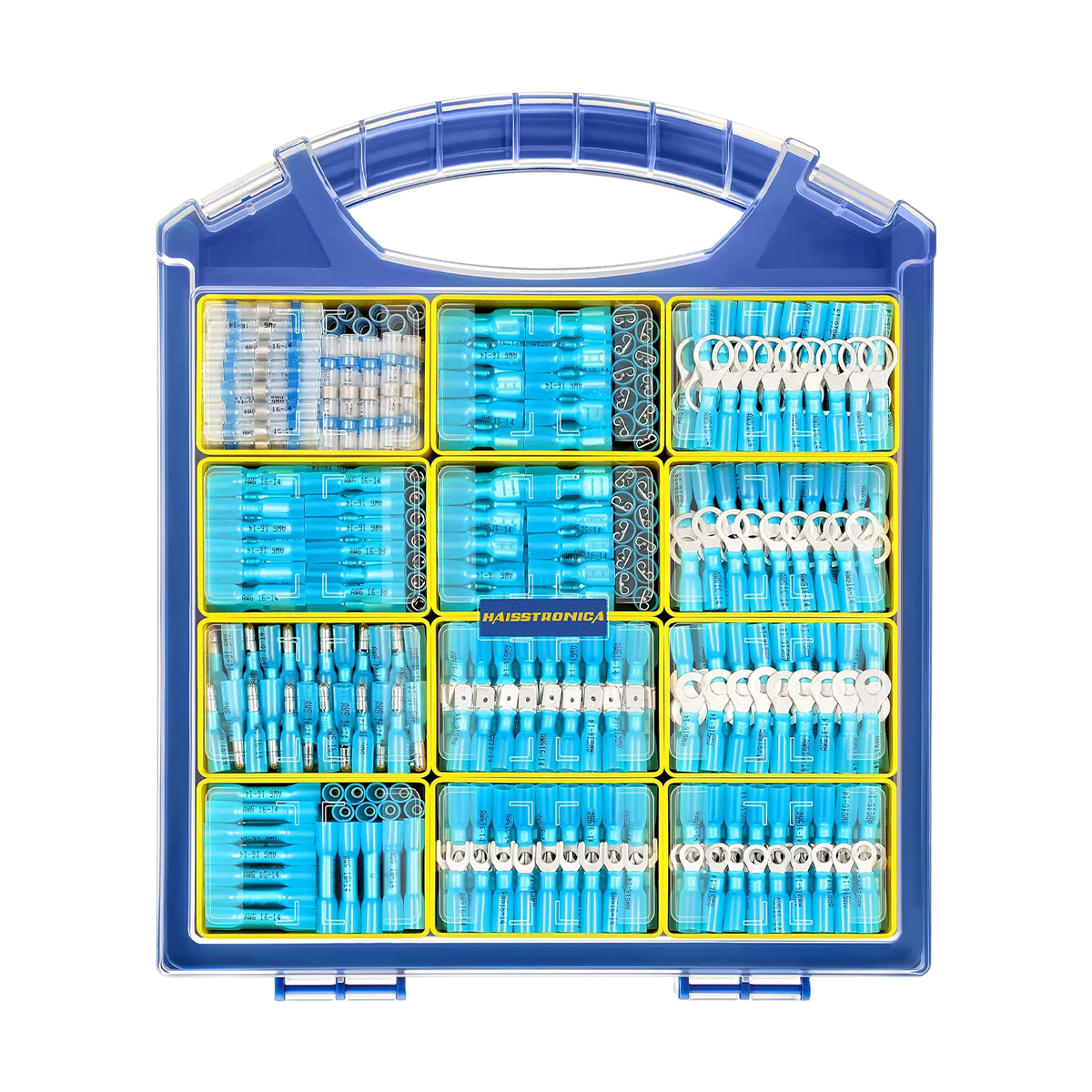

TERMINAL SELECTOR
Start with what the connection must do
Do not choose a terminal by appearance alone. First decide whether the connection must be fixed, removable, spliced inline, locked into a housing, or finished for a terminal block.
Wire terminal types at a glance
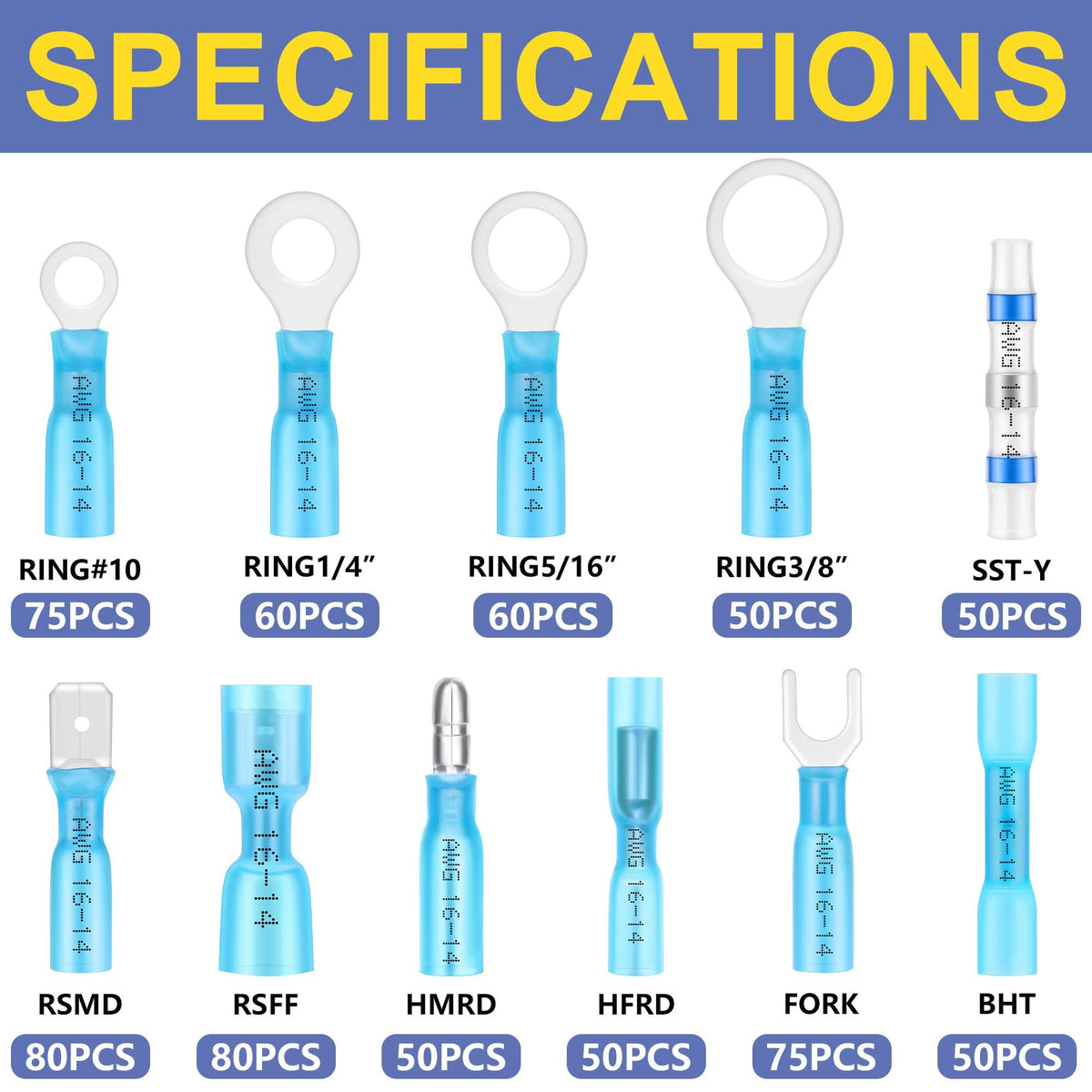
| Terminal | Best use | Connection behavior | Collection |
|---|---|---|---|
| Ring | Battery, grounding, studs | Most secure; fastener must be removed | Shop Ring |
| Spade / Fork | Screw terminals and serviceable equipment | Removable without fully removing screw | Shop Spade |
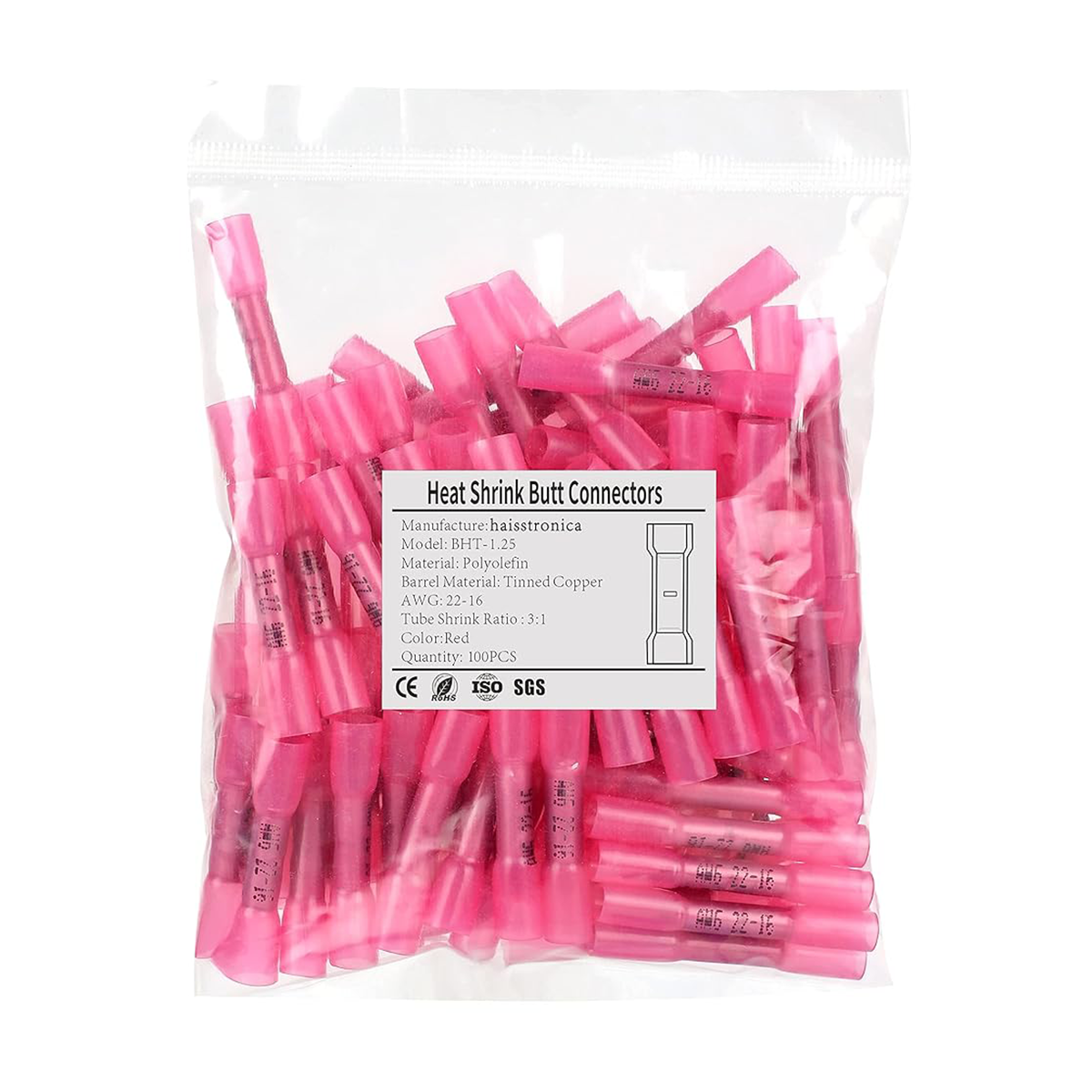
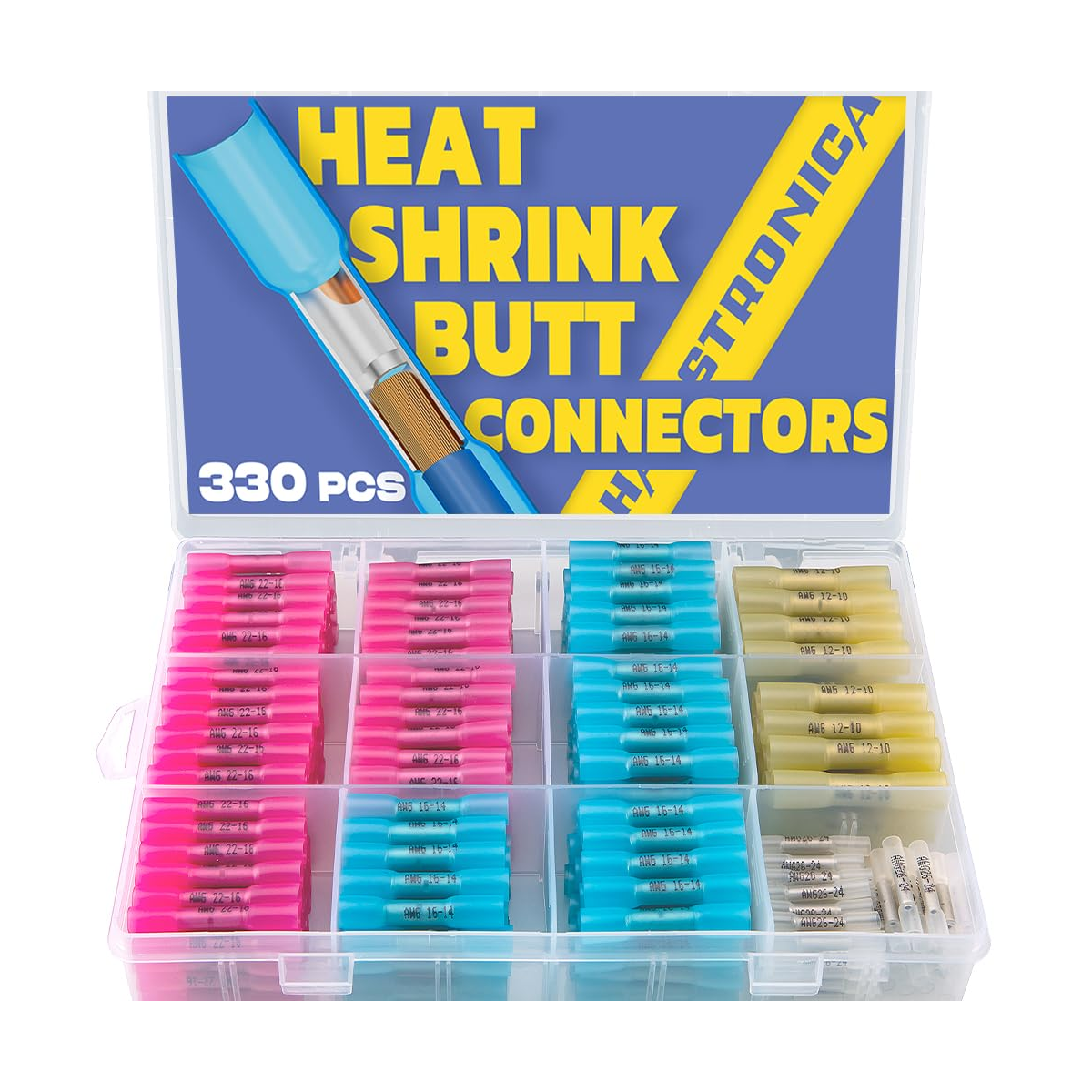
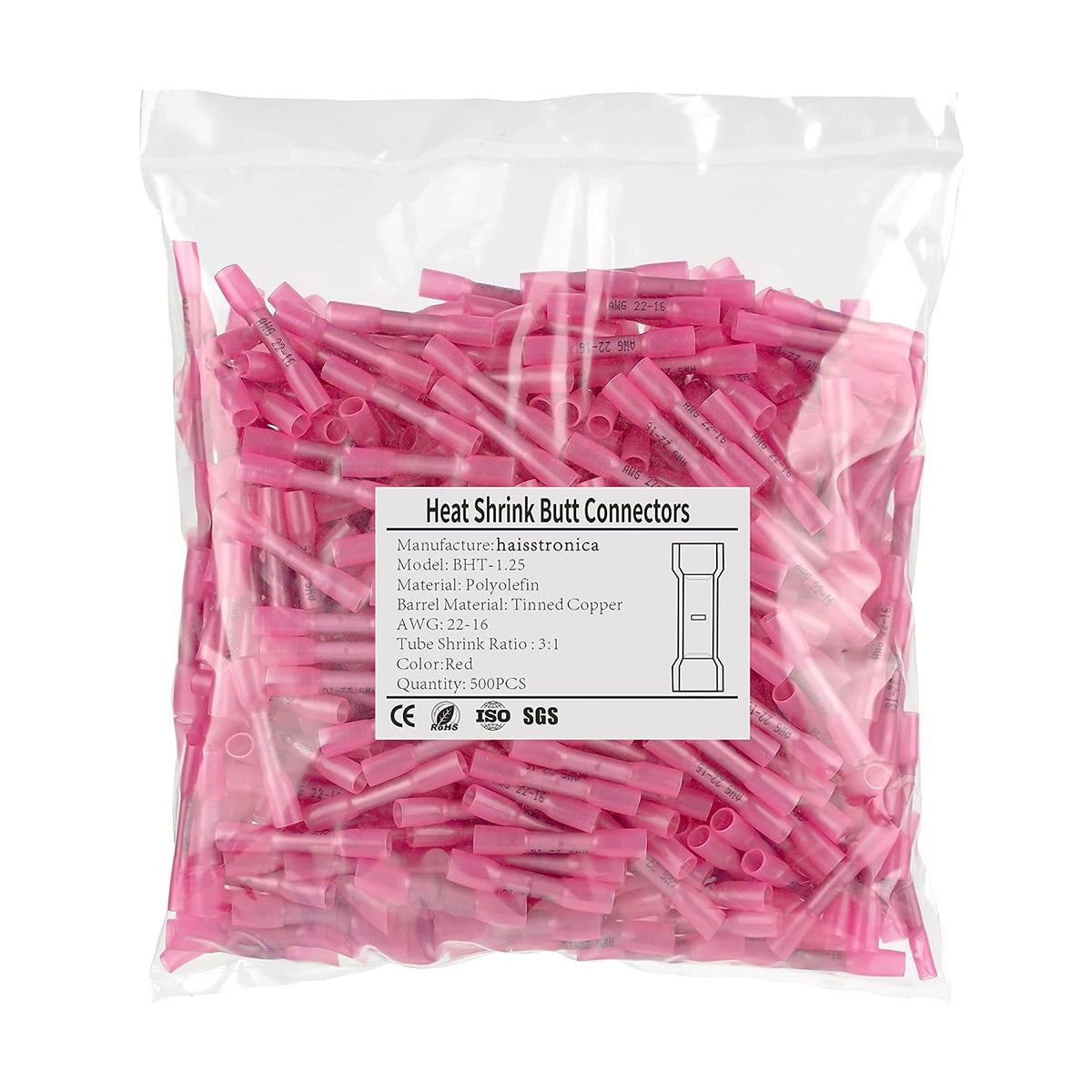
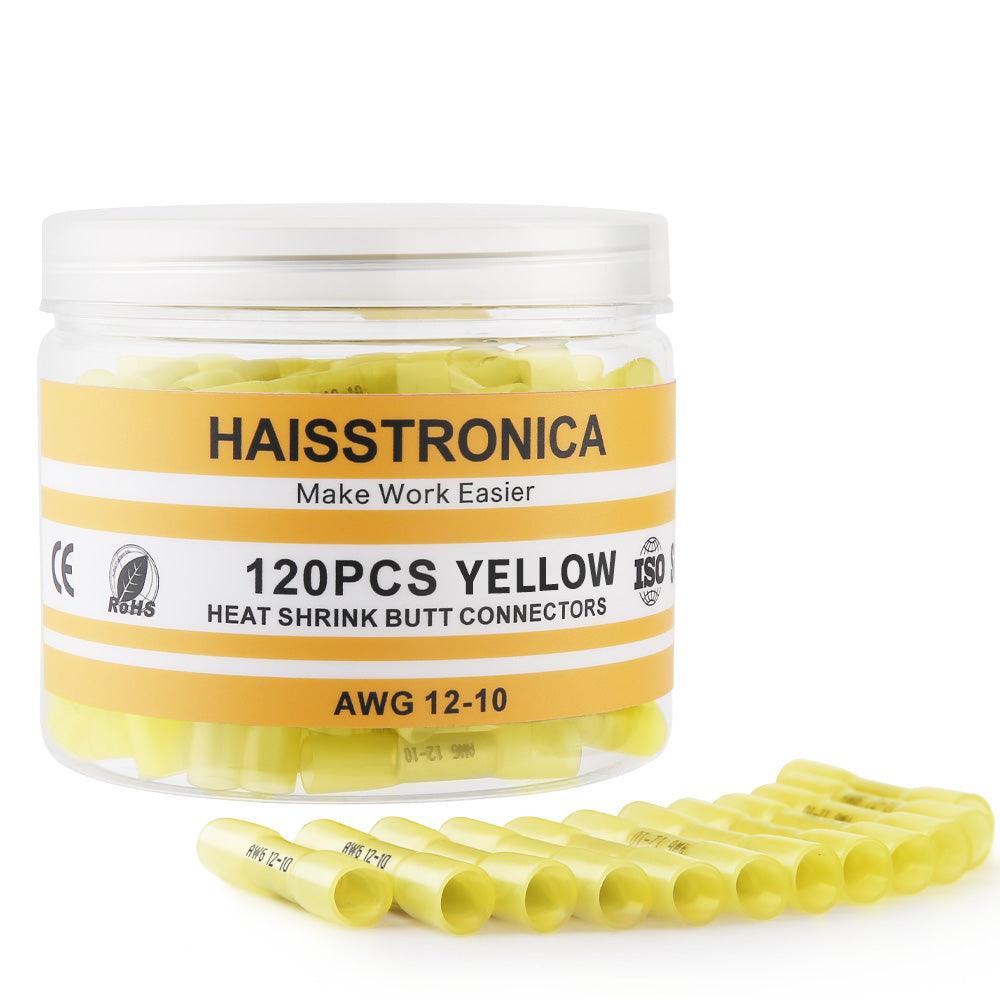
| Butt | Inline wire-to-wire splice | Permanent, one-time splice | Shop Butt |
| Open Barrel | OEM connector housings and harnesses | Terminal locks into a plastic housing | Shop Open Barrel |
| Ferrule | Stranded wire into terminal blocks | Reinforces the wire end; does not join wires | Shop Ferrules |
How each terminal is used
FIXED CONNECTION
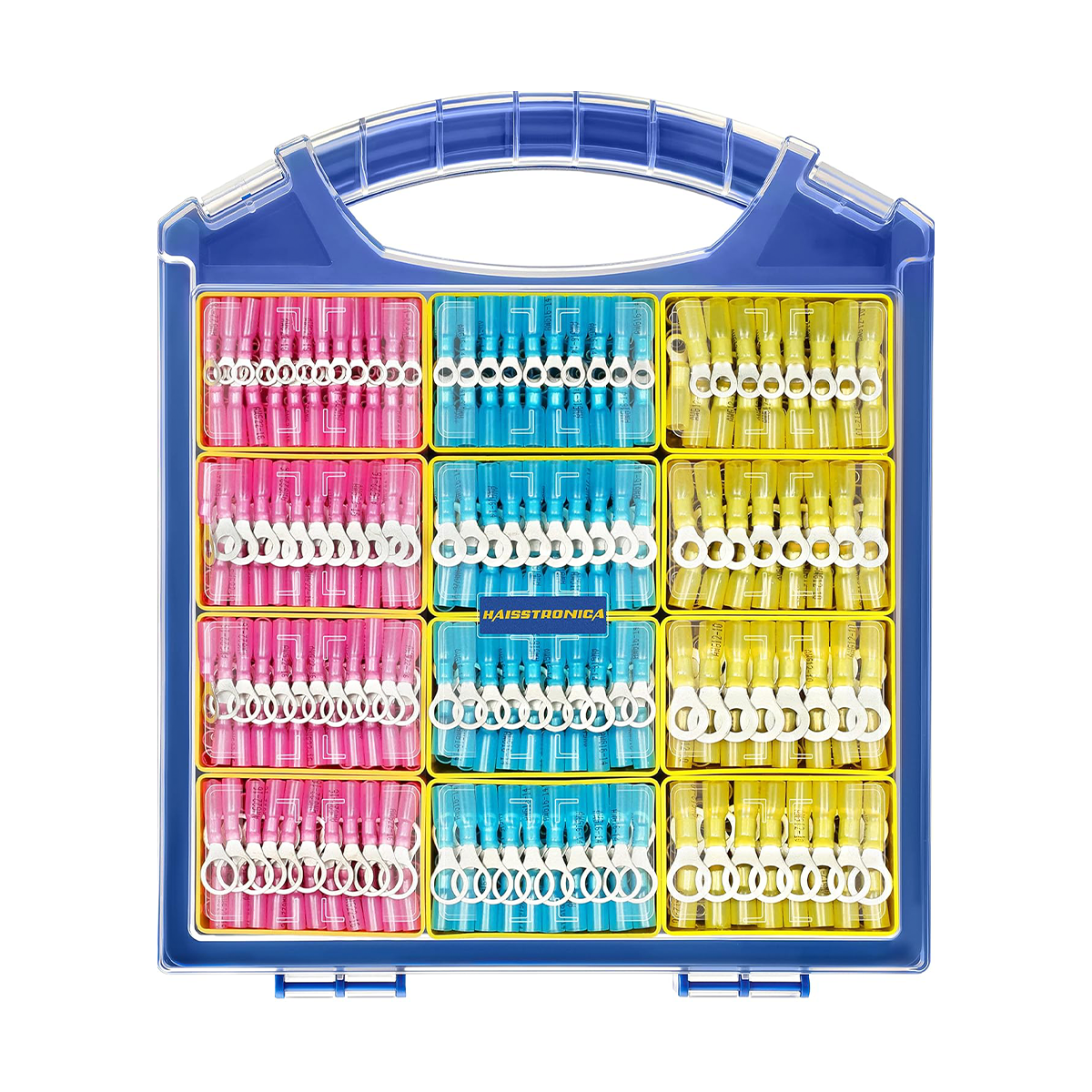
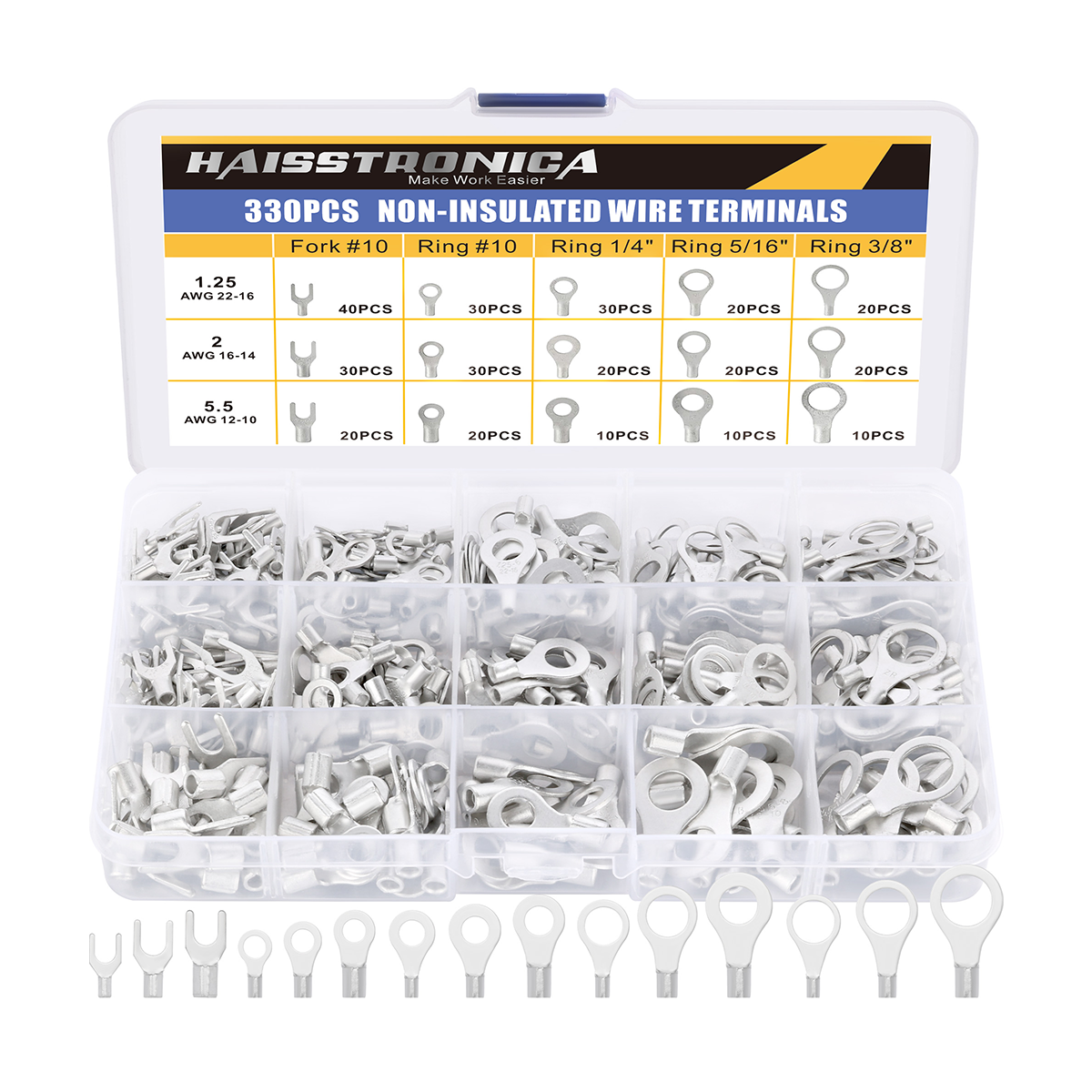
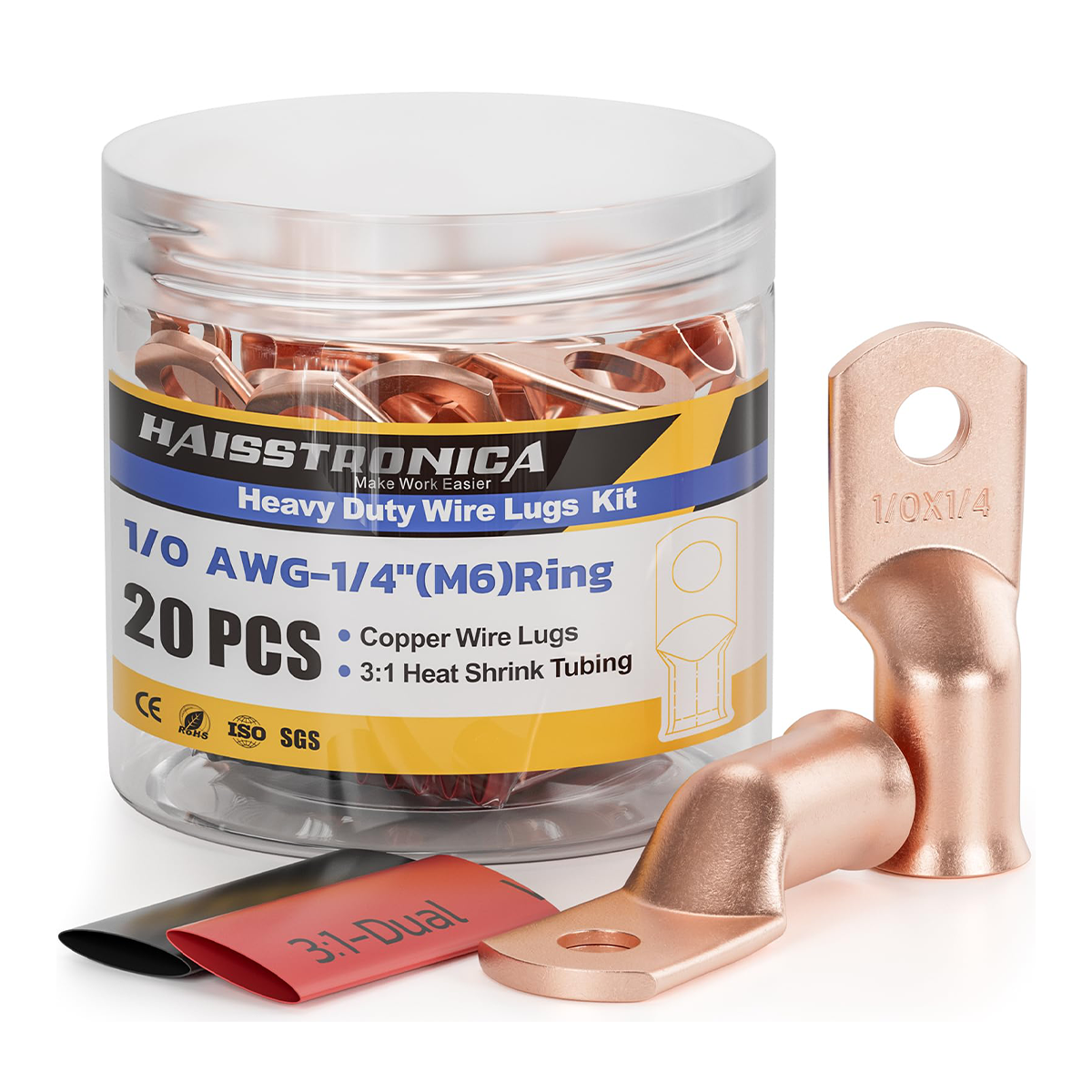
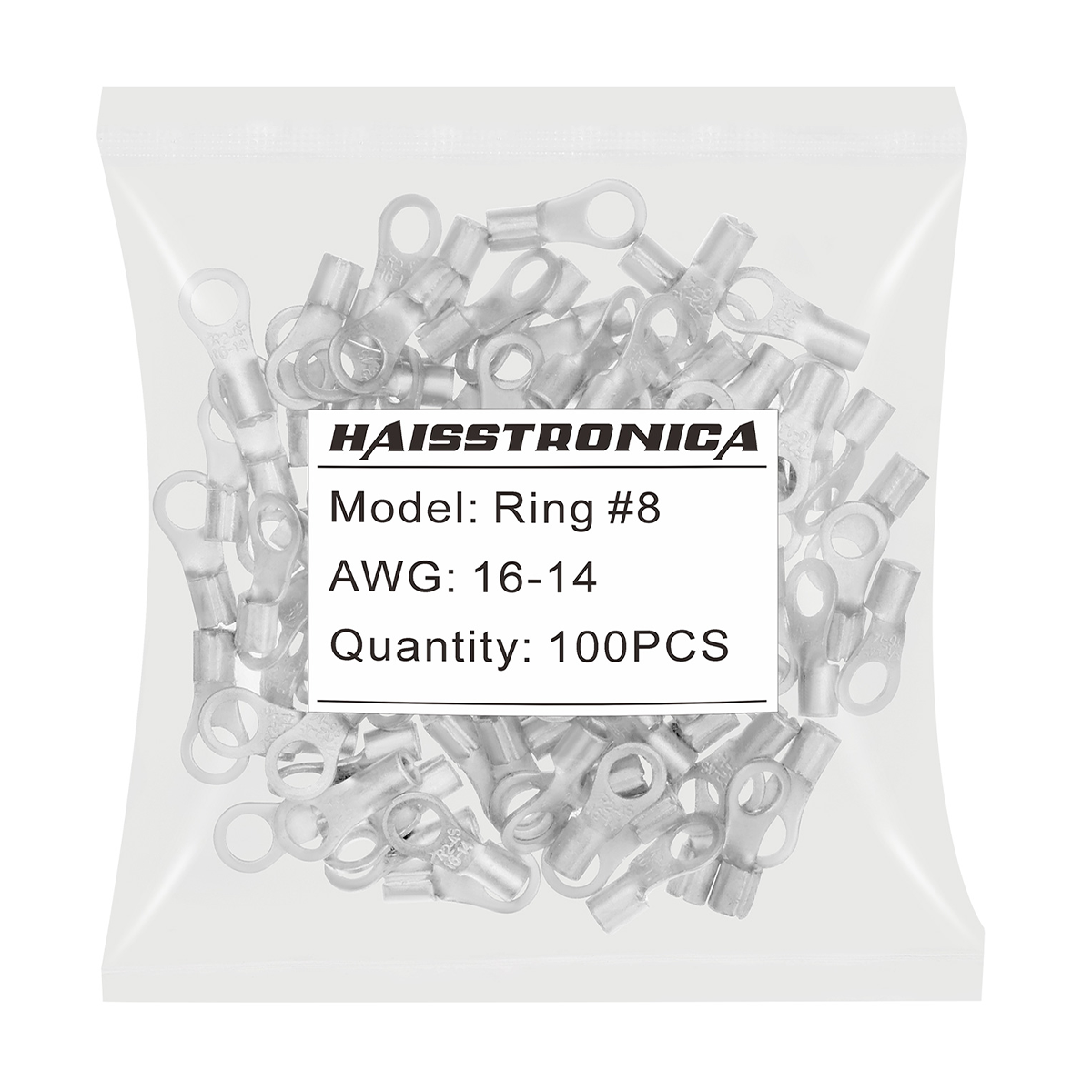
Ring terminals
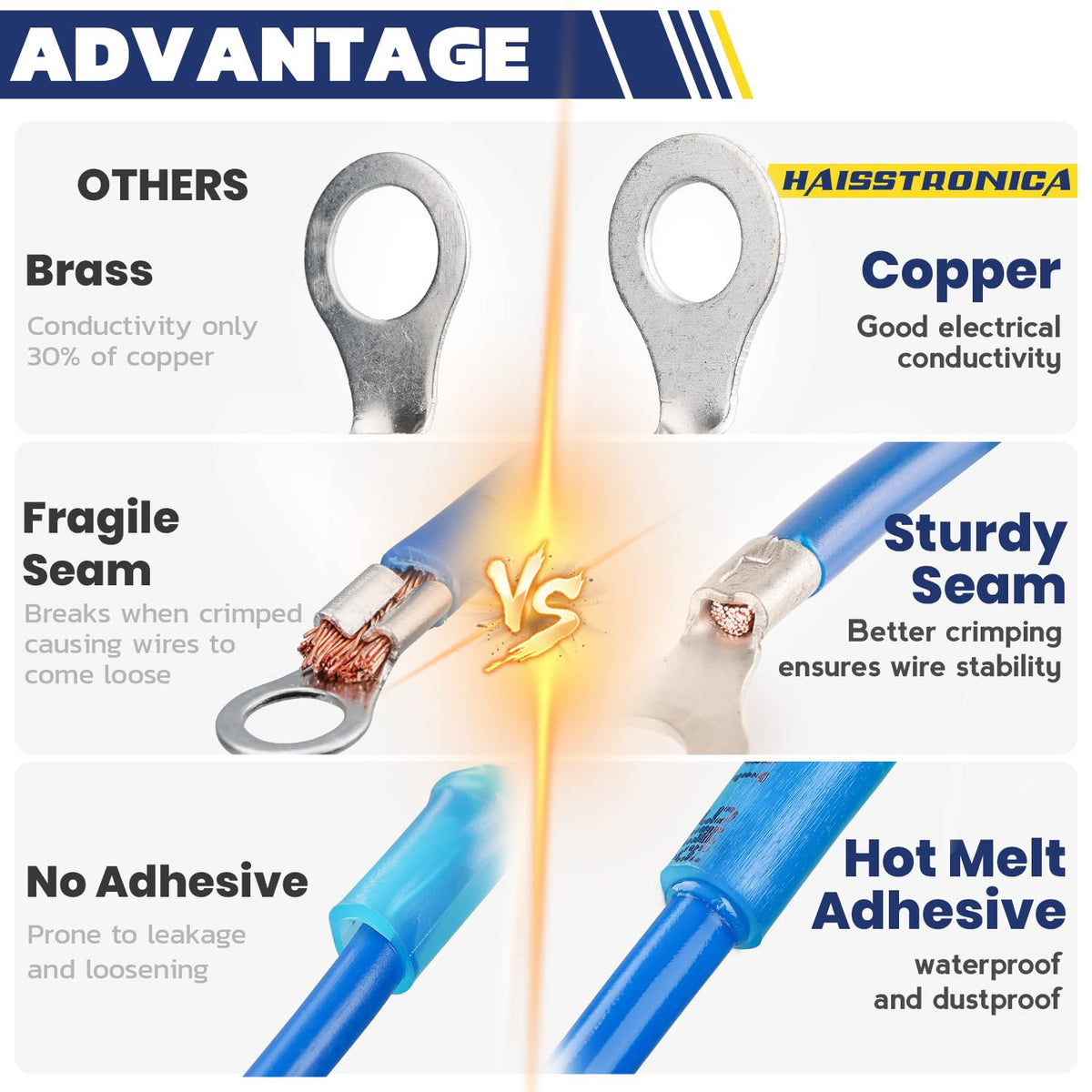
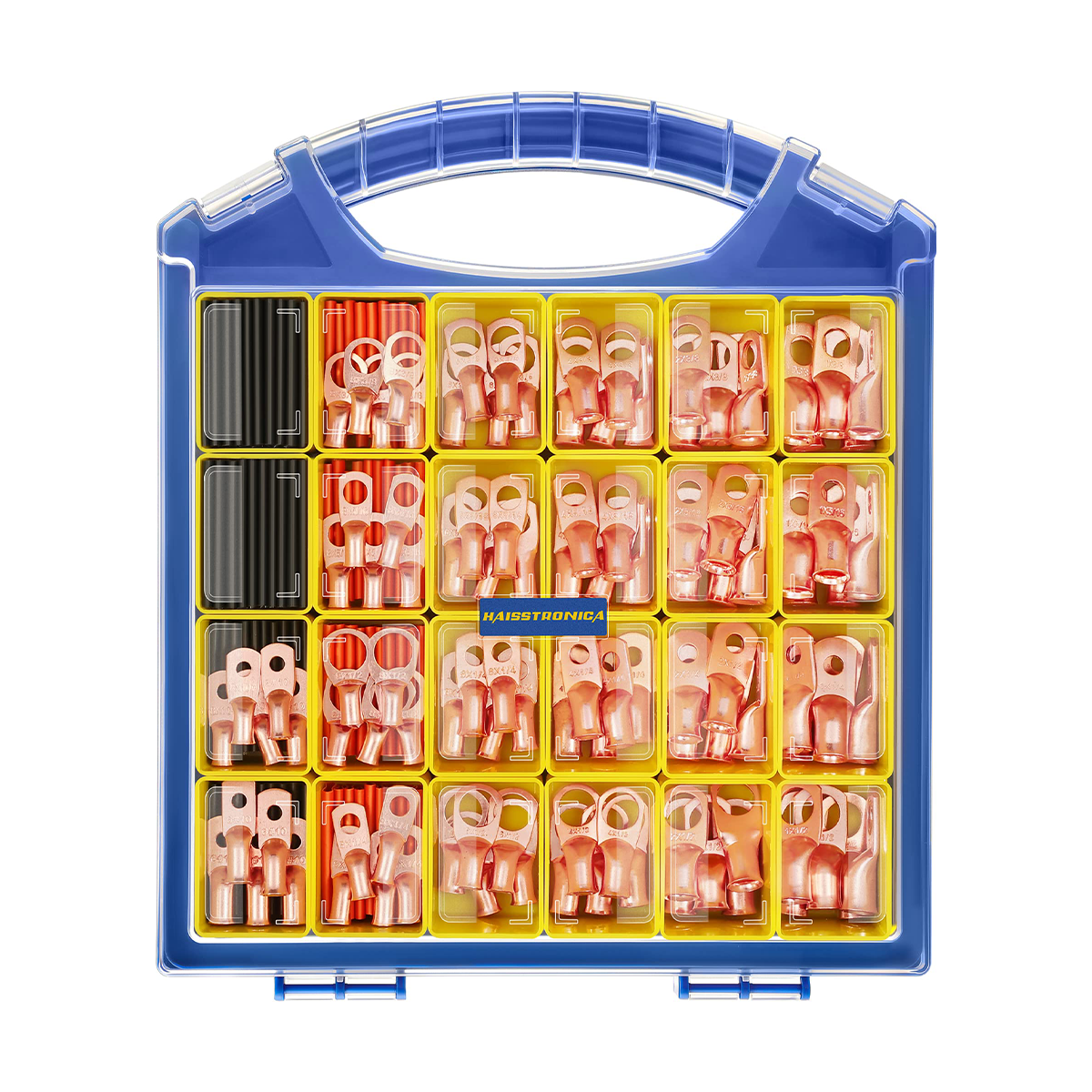
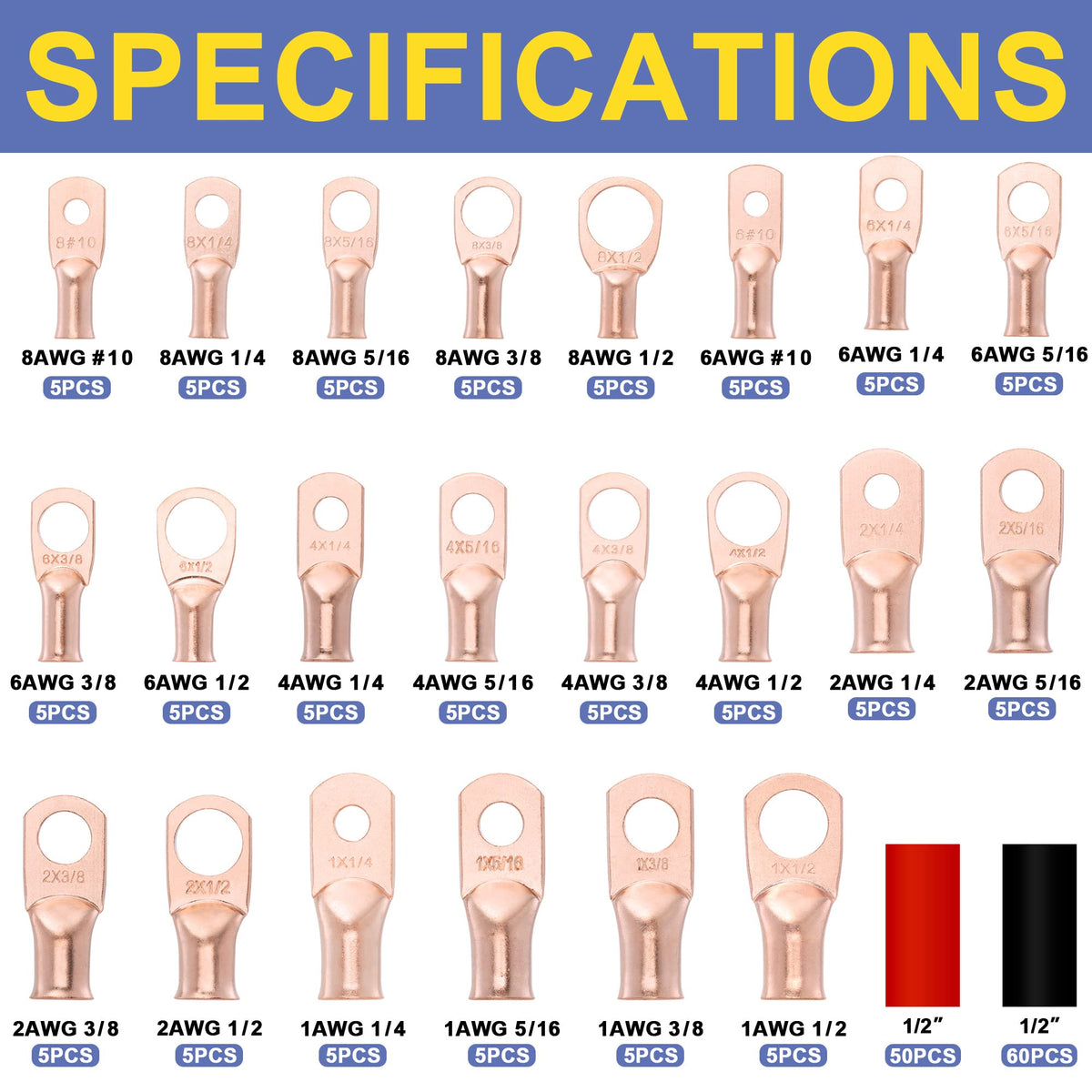
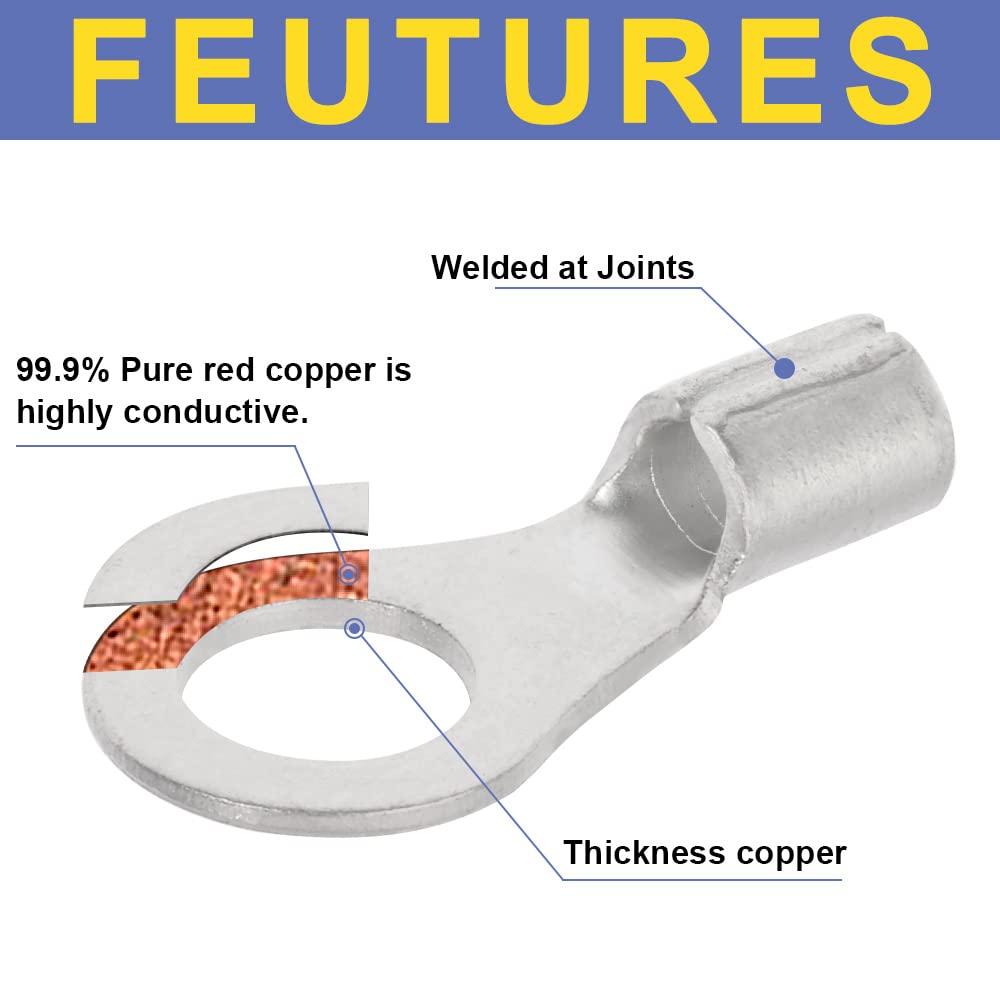
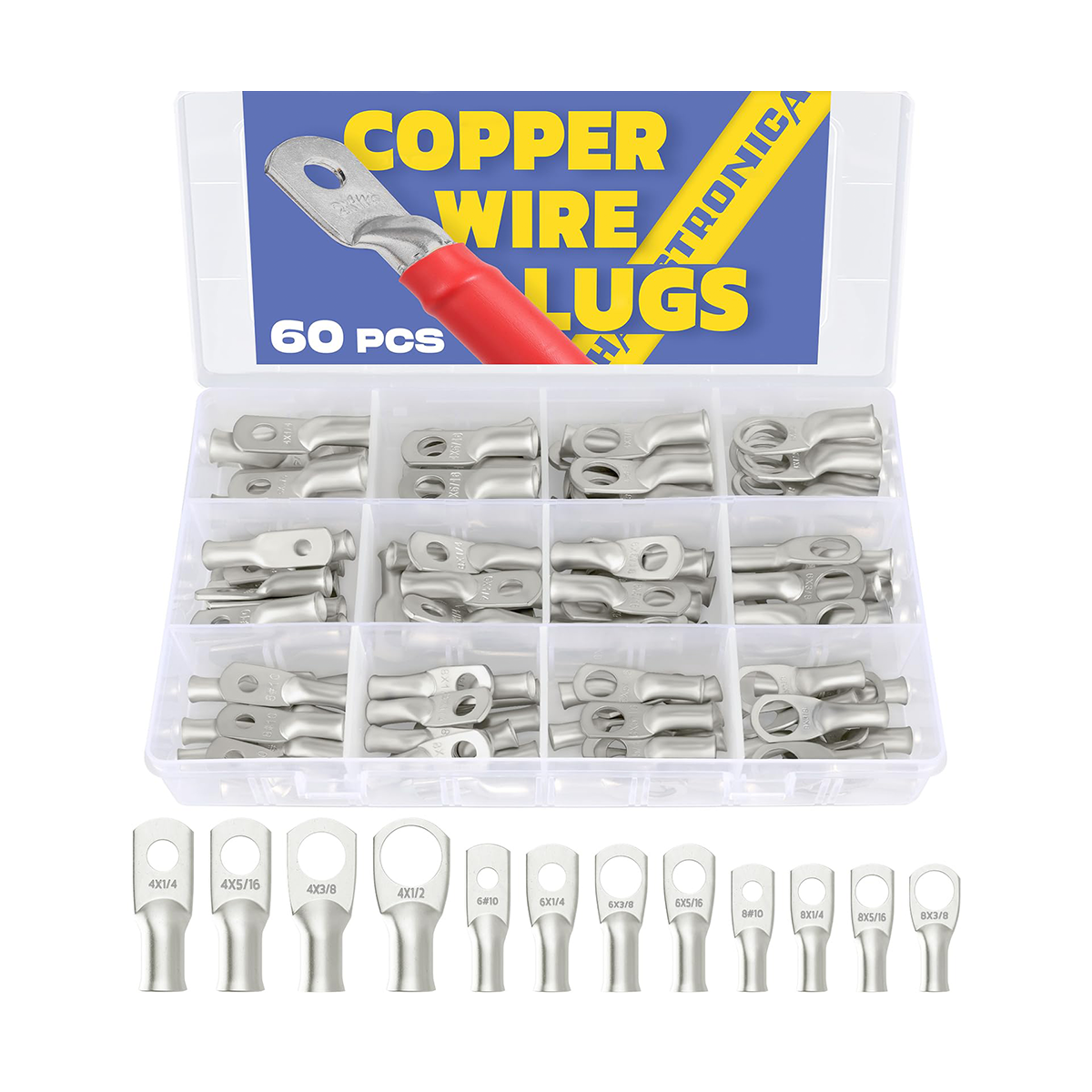
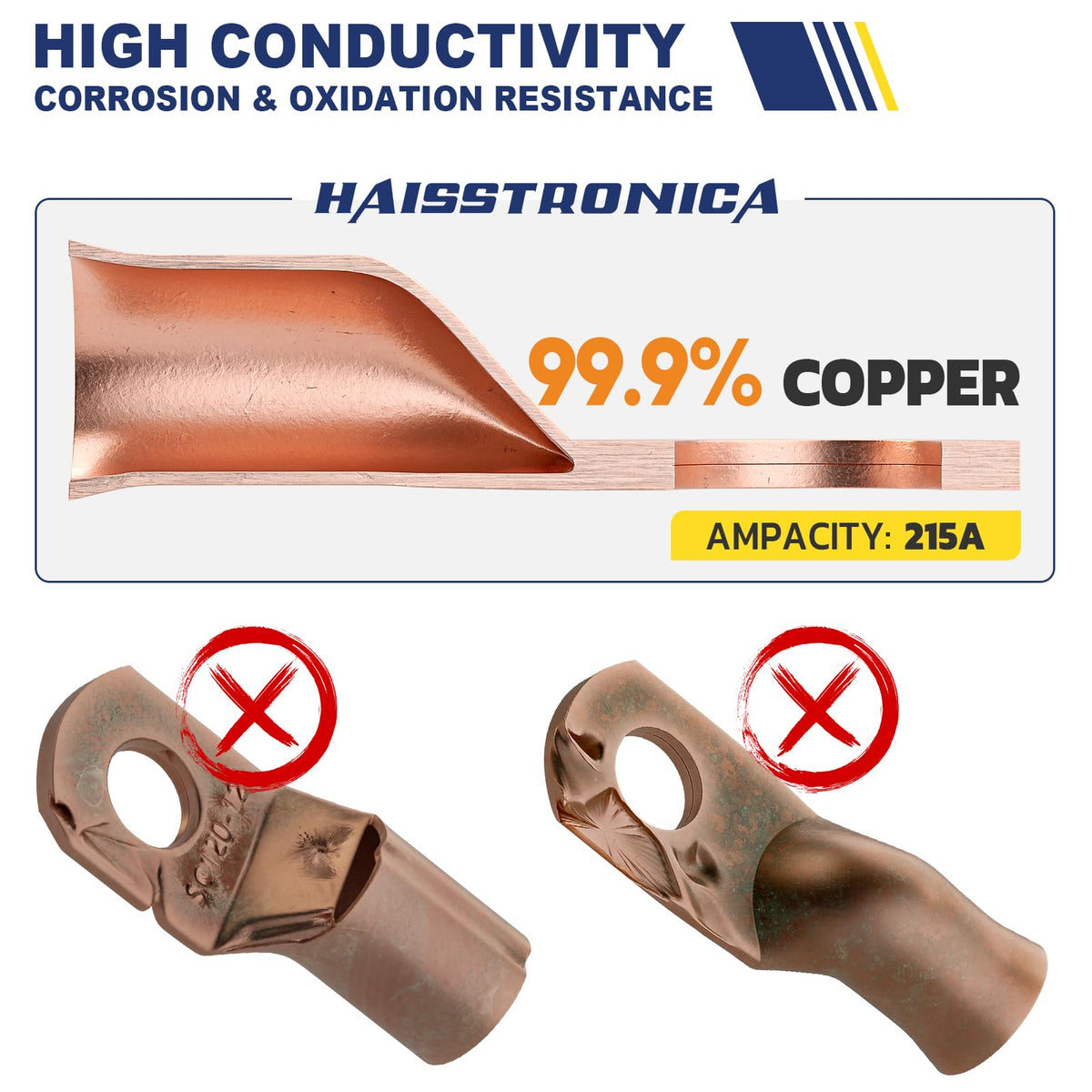
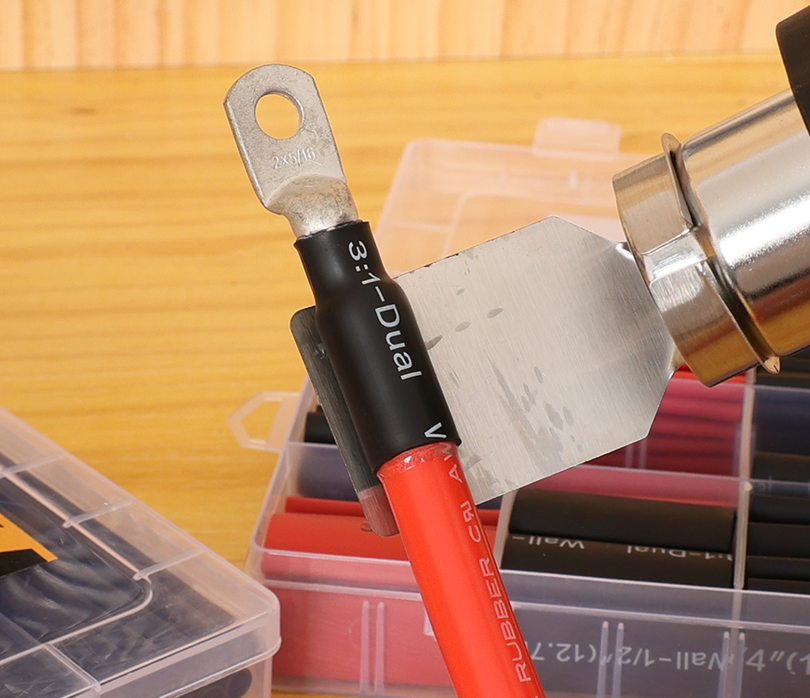
A ring terminal sits completely around a stud or bolt, making it the strongest choice when accidental disconnection is unacceptable. Use it for battery posts, chassis grounds, bus bars and bolted equipment connections. Match three things: conductor AWG, ring stud diameter and the required insulation or sealing.
Browse Ring Terminal Collection
REMOVABLE CONNECTION
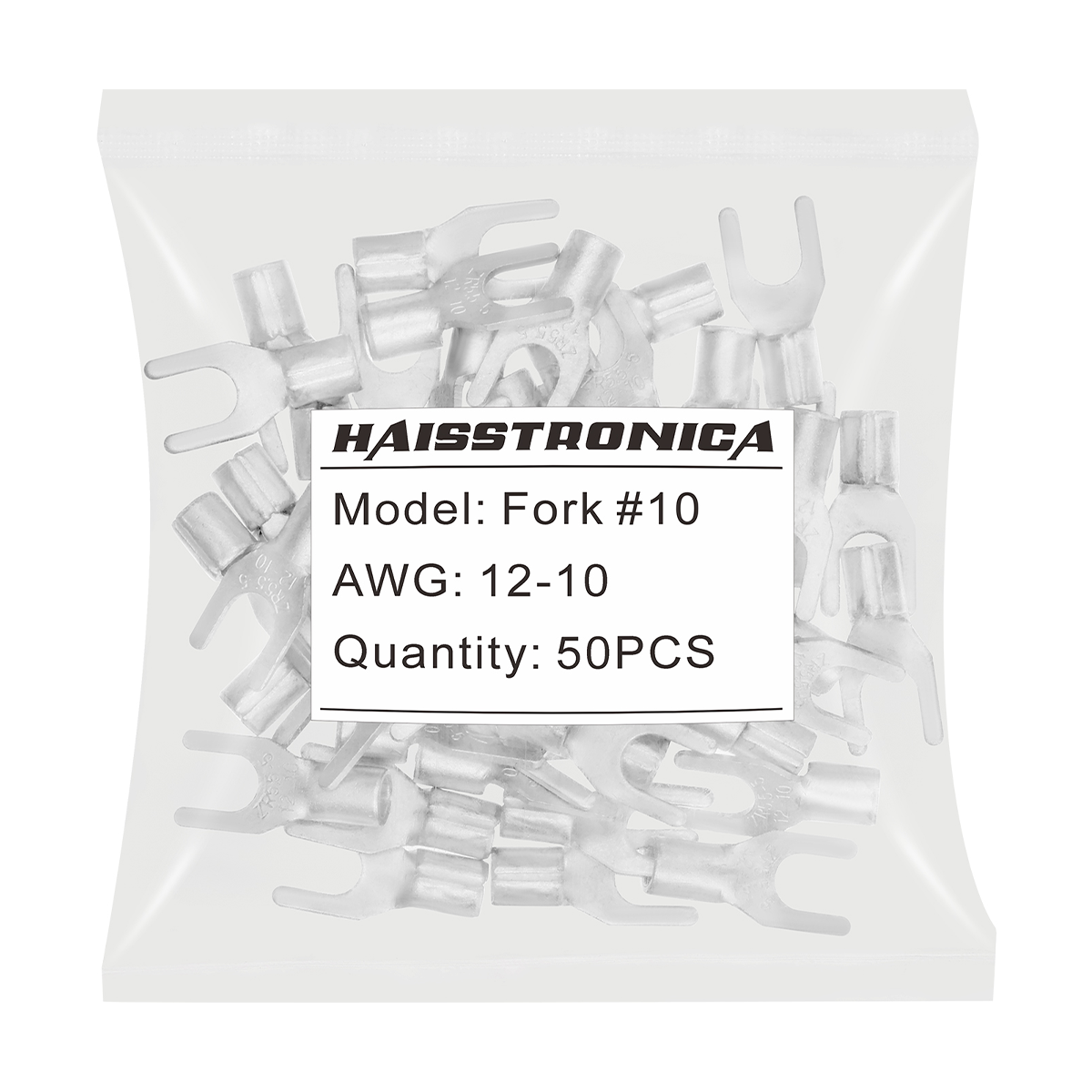
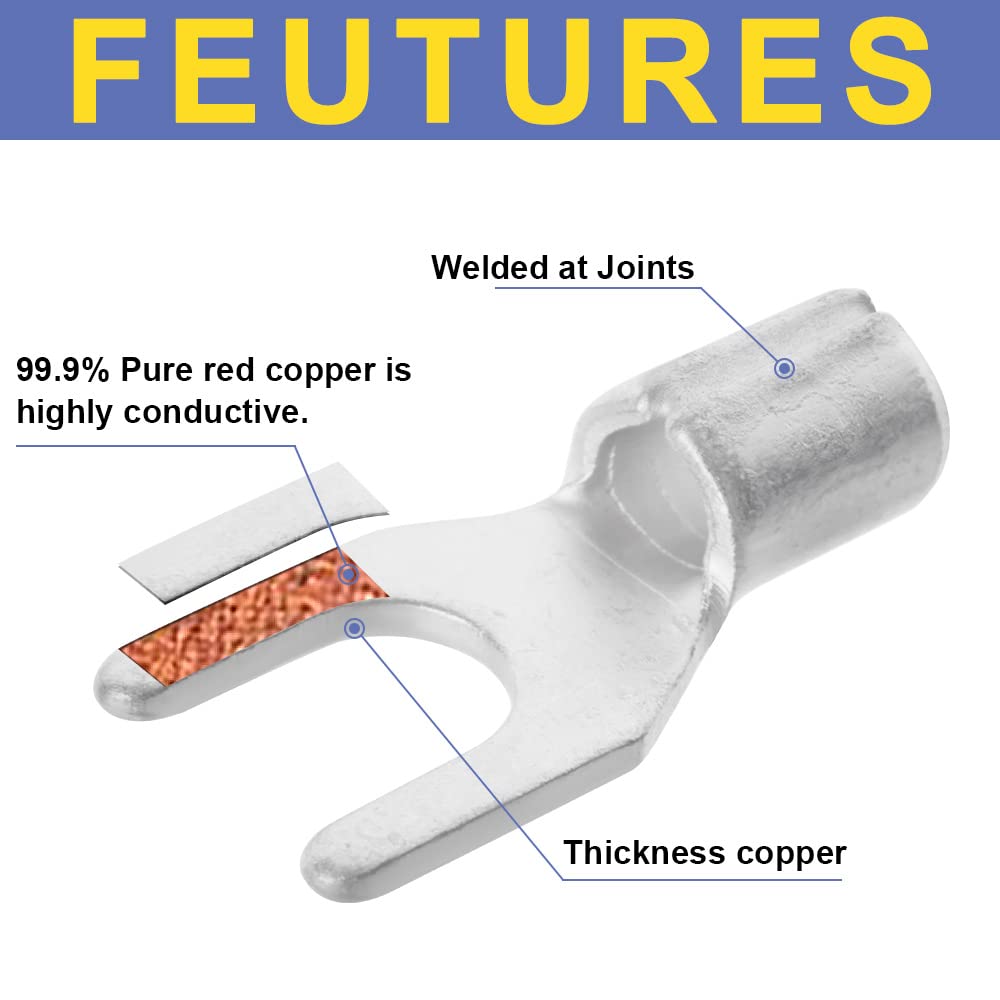
Spade and fork terminals
Fork terminals slide under a screw head without requiring the screw to be fully removed. Blade-style male and female spades create quick-disconnect pairs. They suit appliances, speakers, relays and equipment that may require service, but a ring terminal is usually safer for high-vibration bolted connections.
Browse Spade Connector Collection
WIRE-TO-WIRE SPLICE
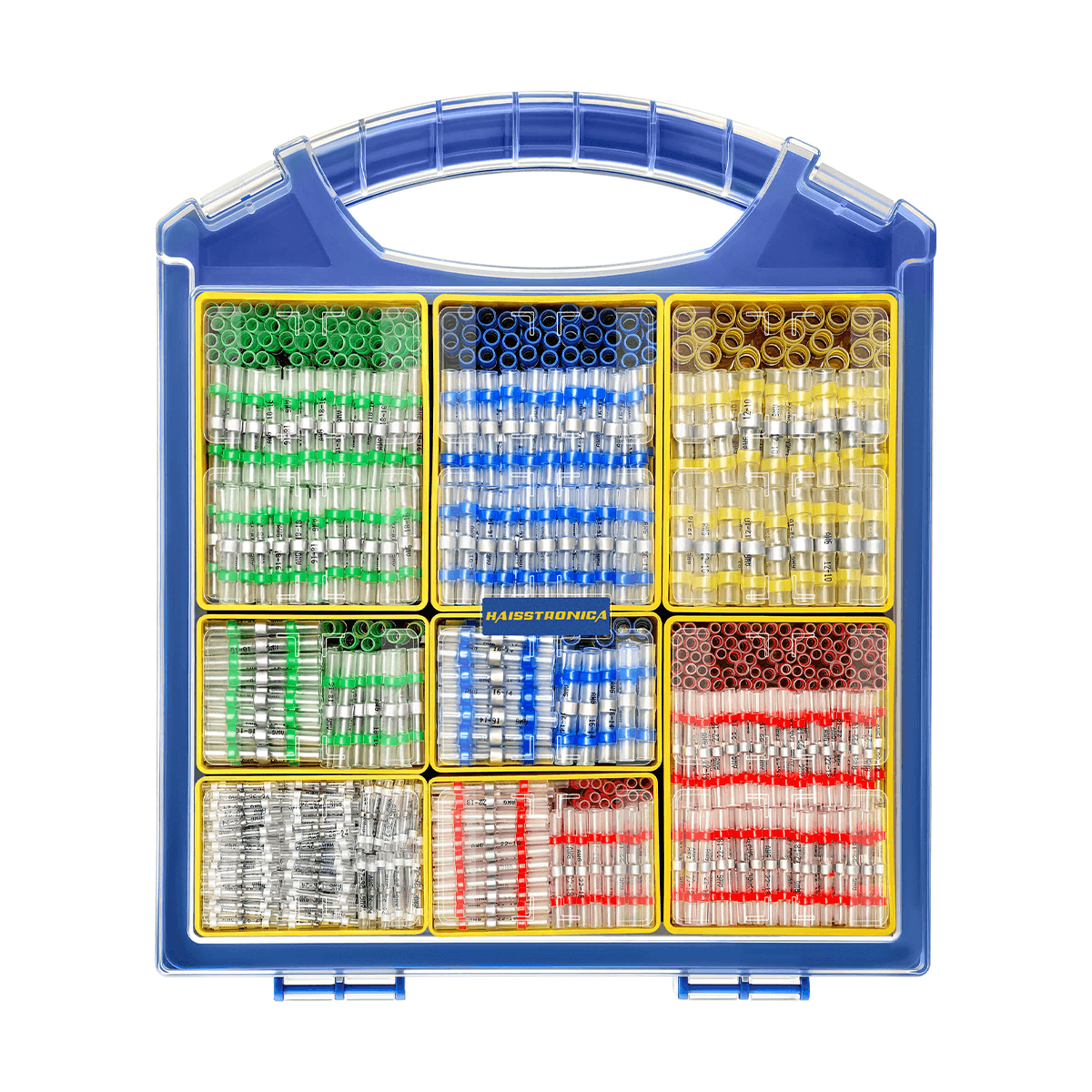
Butt connectors
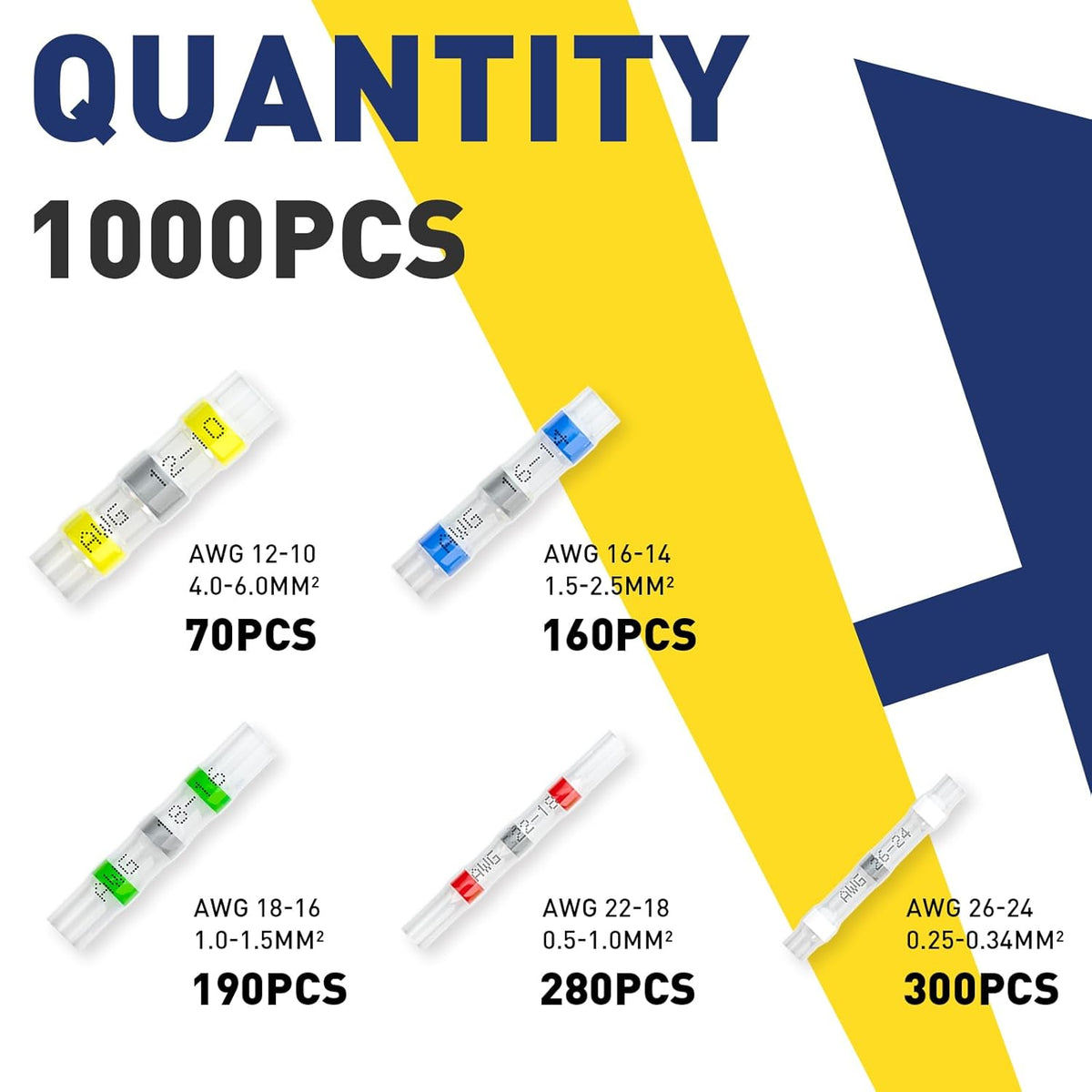
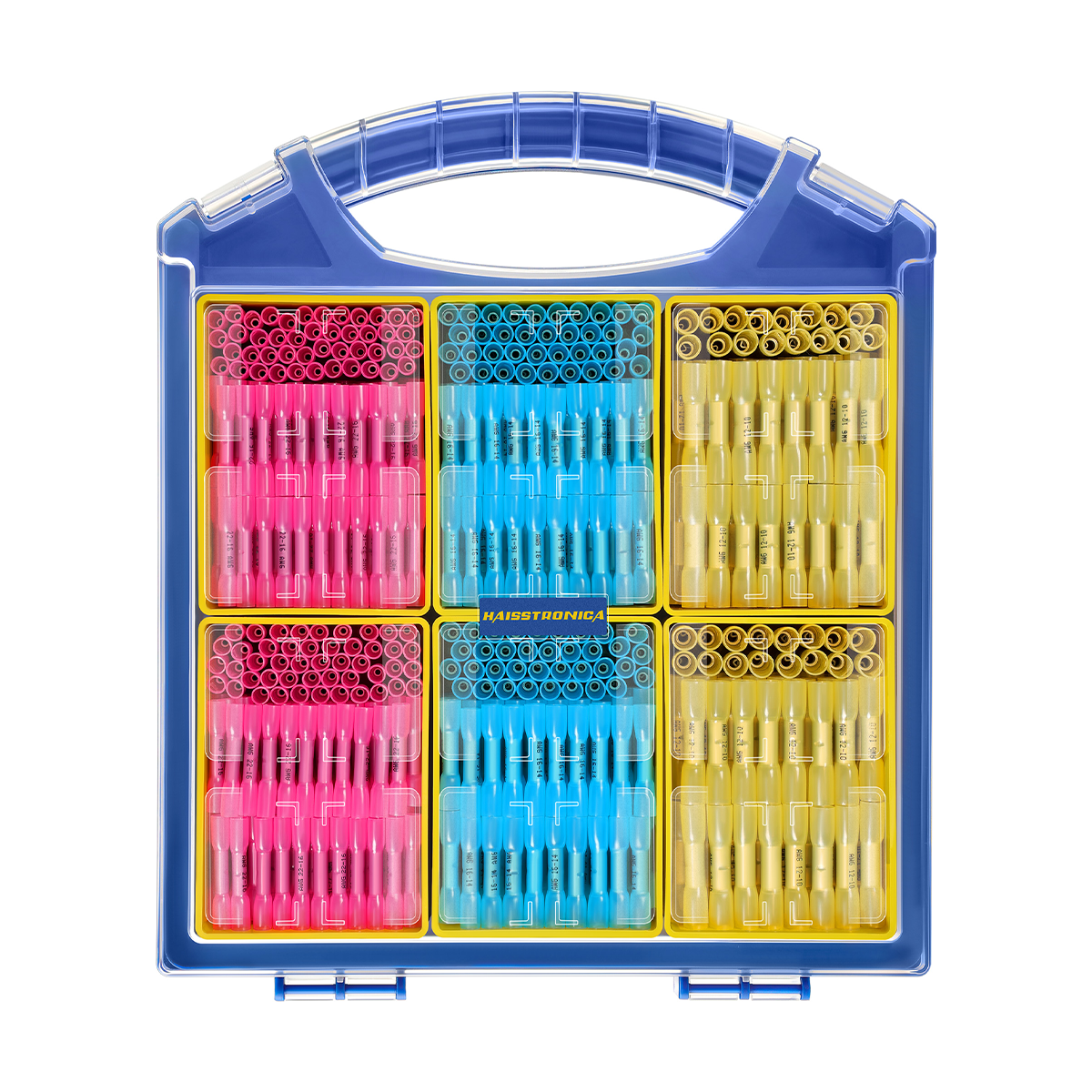
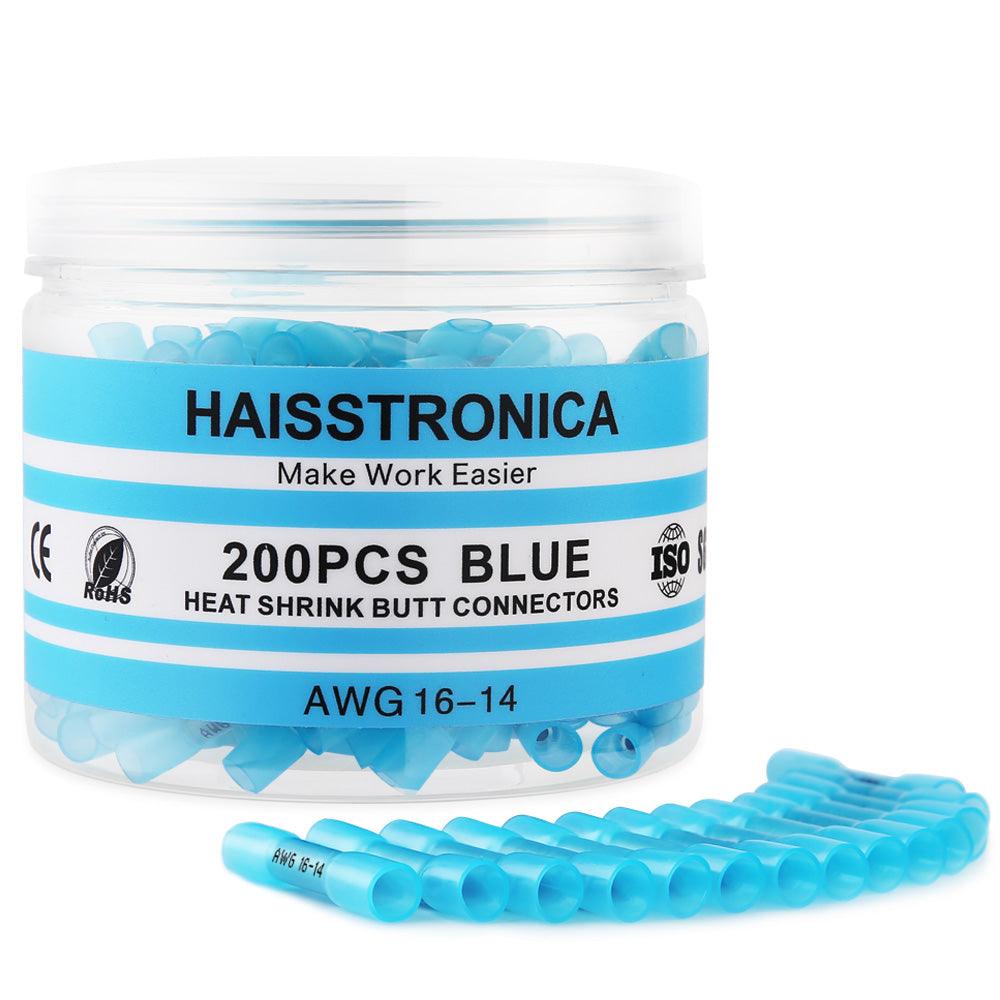
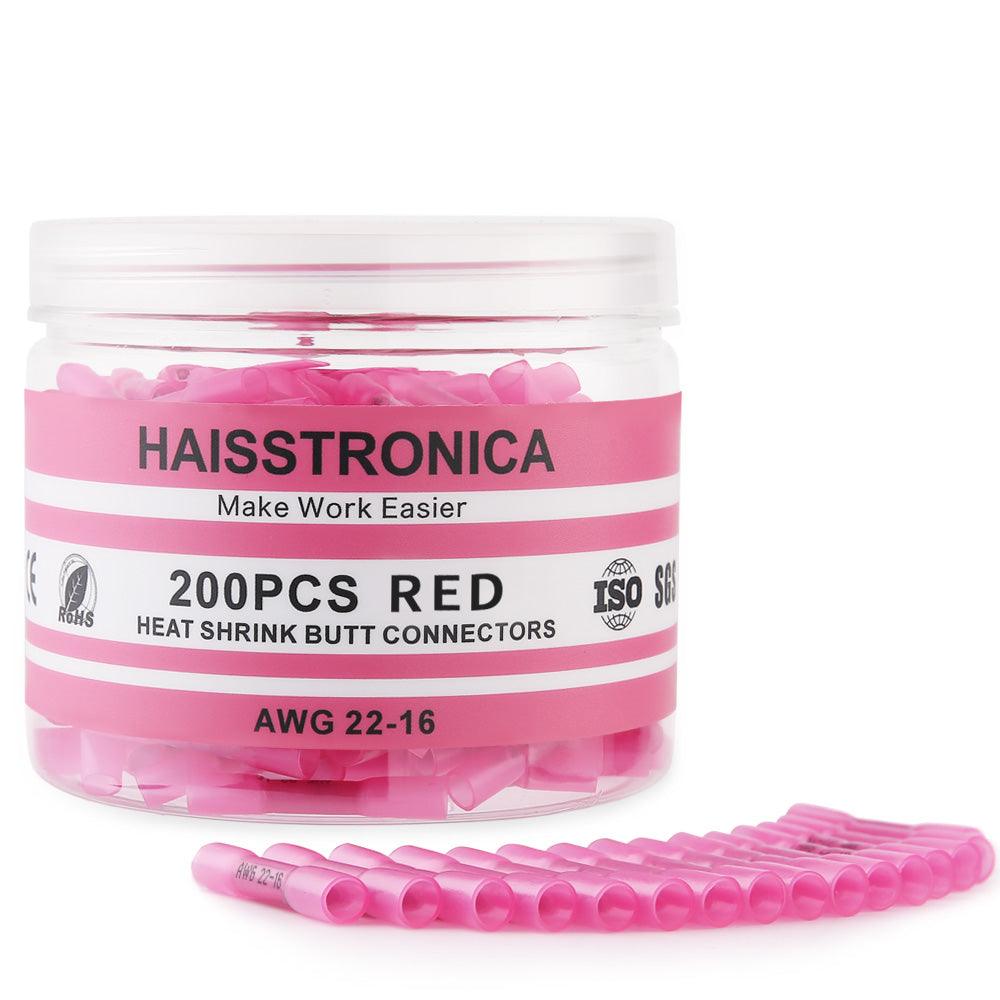
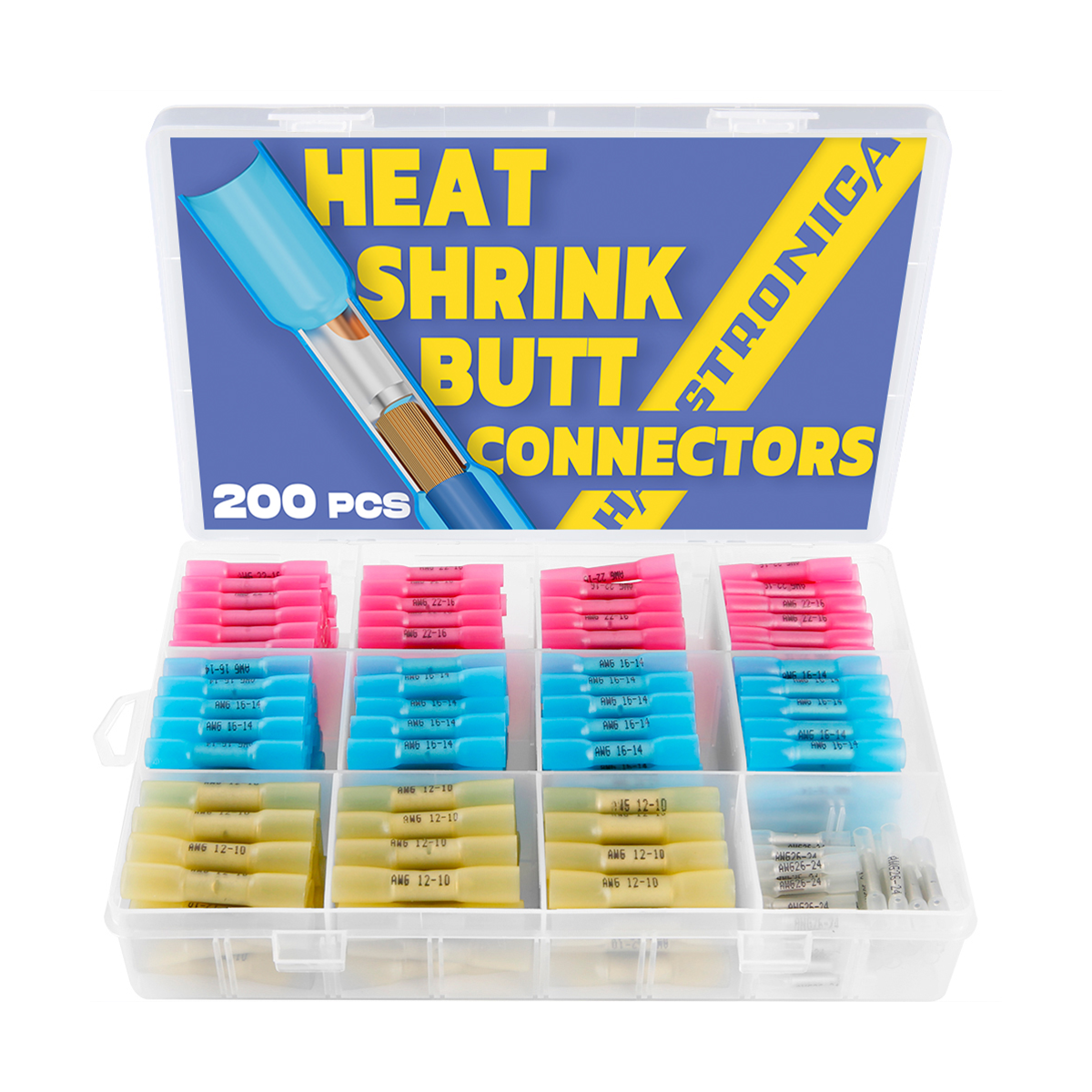
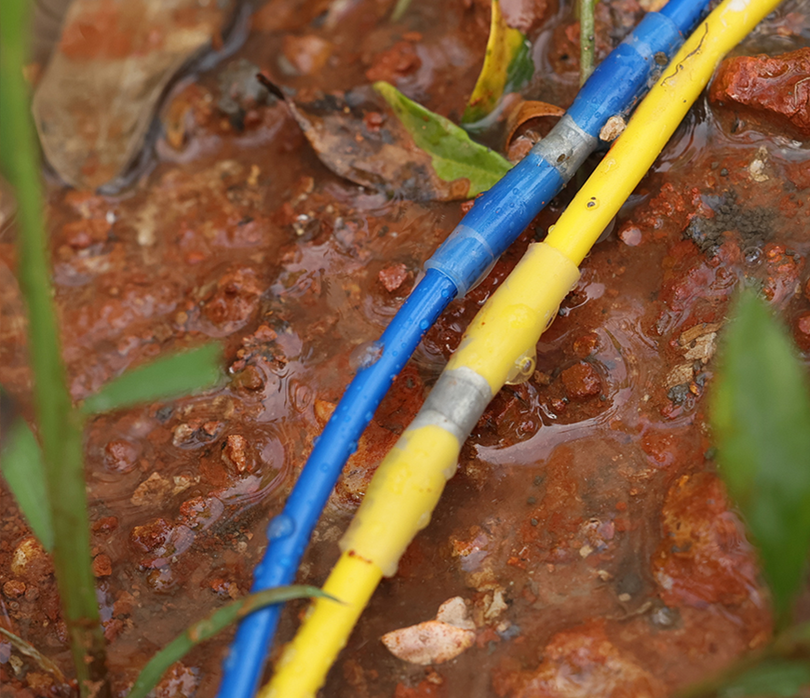
Butt connectors join two conductor ends in a straight line. They are useful for harness repairs, extensions and damaged-wire replacement. For automotive, marine, trailer or outdoor wiring, select correctly sized adhesive-lined heat-shrink versions and treat them as single-use connectors.
Browse Butt Connector Collection
OEM CONNECTOR HOUSING
Open-barrel terminals
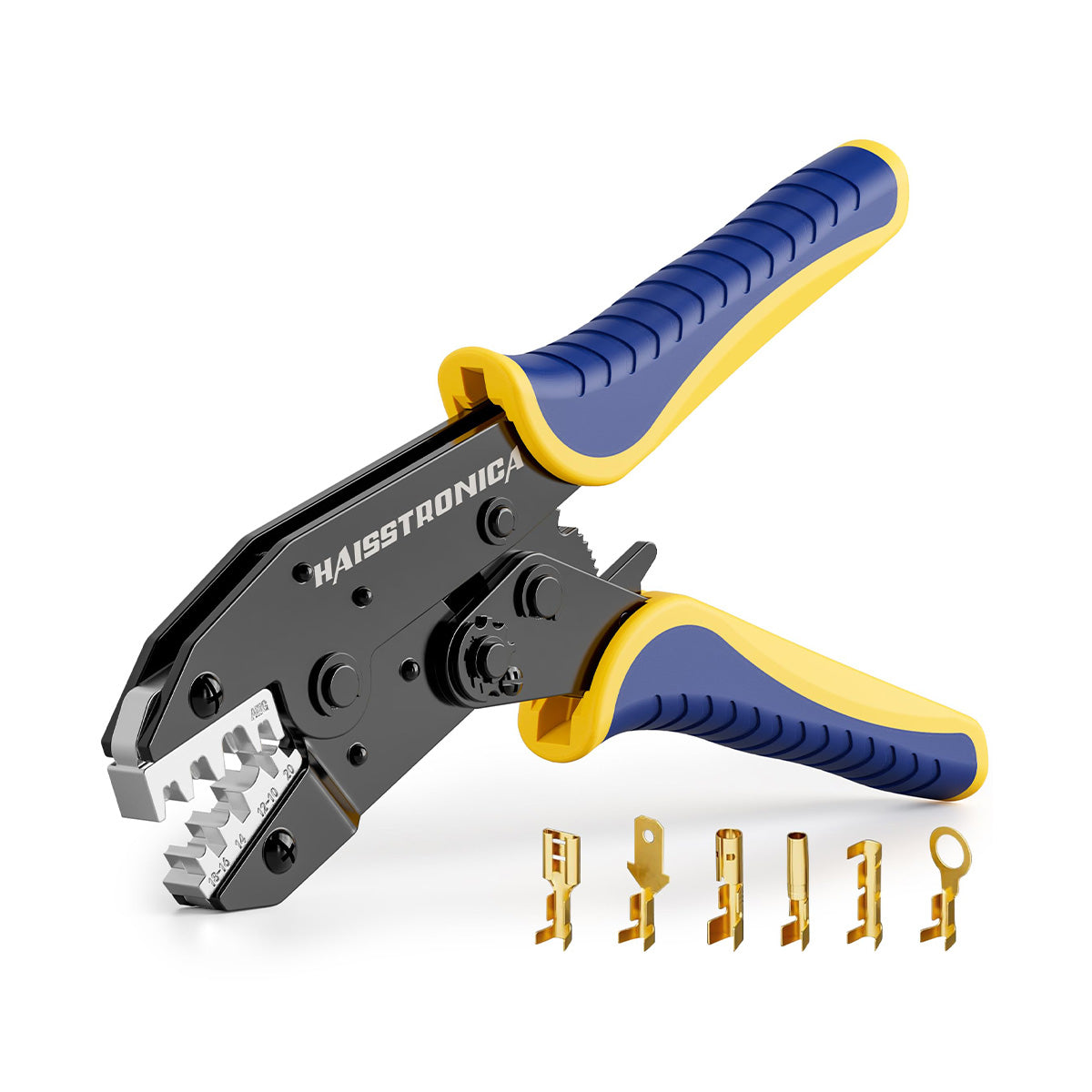
Open-barrel terminals use separate wings to crimp the bare conductor and support the insulation. After crimping, the terminal locks into a compatible plastic housing. They are common in automotive sensors, factory plugs and compact wiring harnesses, and require a die shaped specifically for open-barrel crimps.
Browse Open Barrel Collection
STRANDED-WIRE END
Wire ferrules
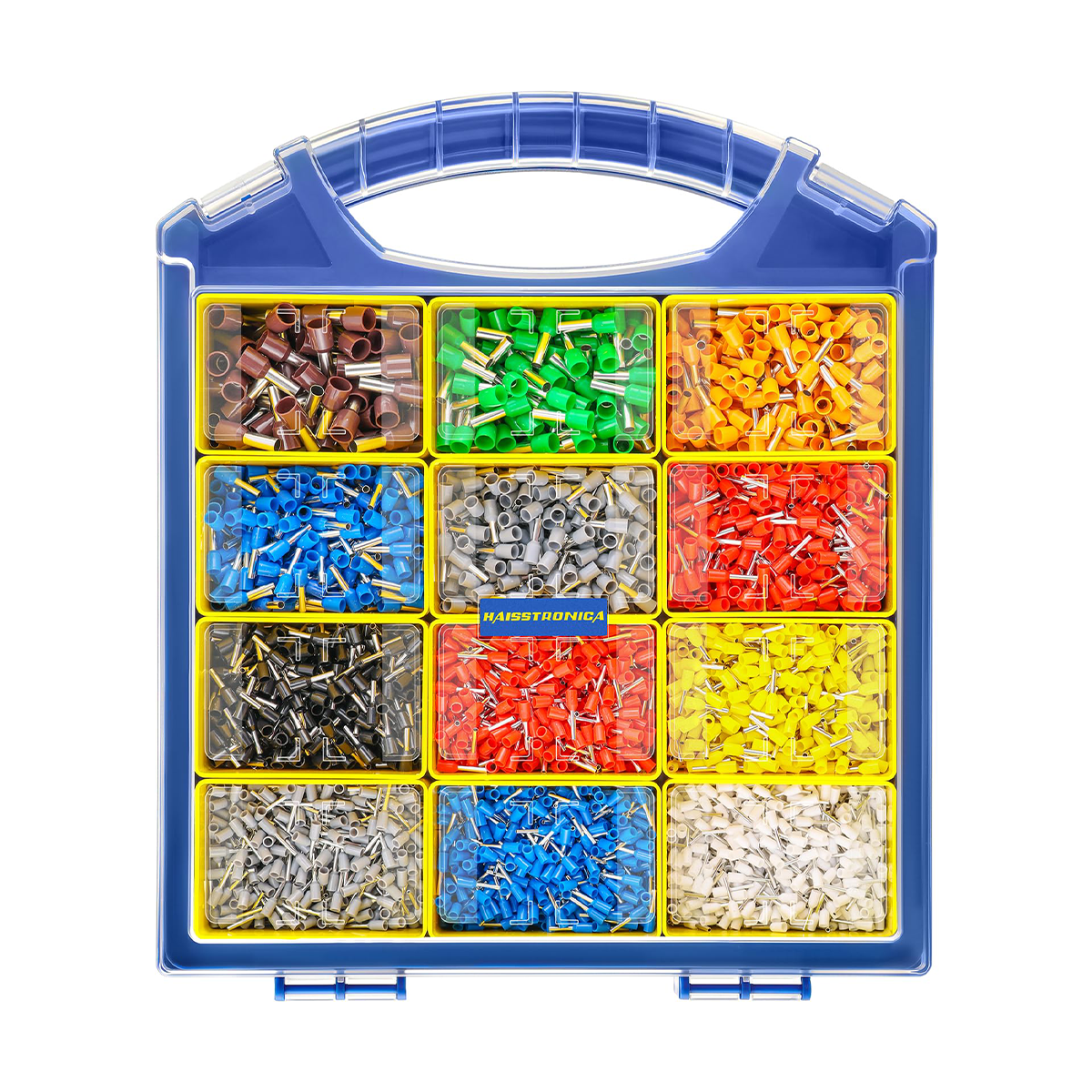
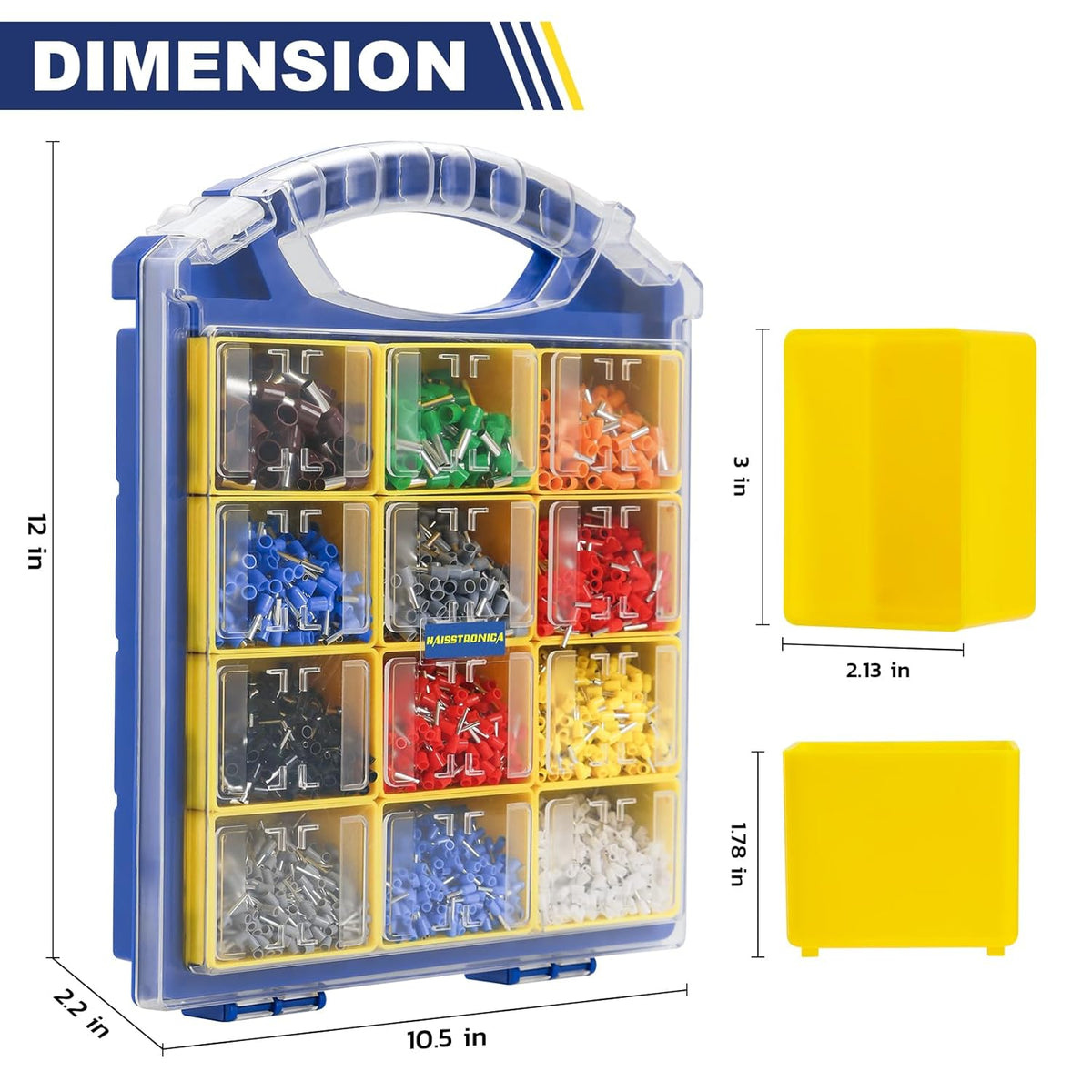
A ferrule compresses fine stranded wire into a tidy, reinforced end before it enters a screw clamp or terminal block. It helps prevent loose strands and uneven clamping in control panels, audio equipment and industrial wiring. A ferrule terminates one wire end; it is not an inline splice.
Browse Wire Ferrule Collection
Terminal chosen? Now match the crimper
The connector shape and AWG range determine the die. One generic crimper is not automatically suitable for every terminal.
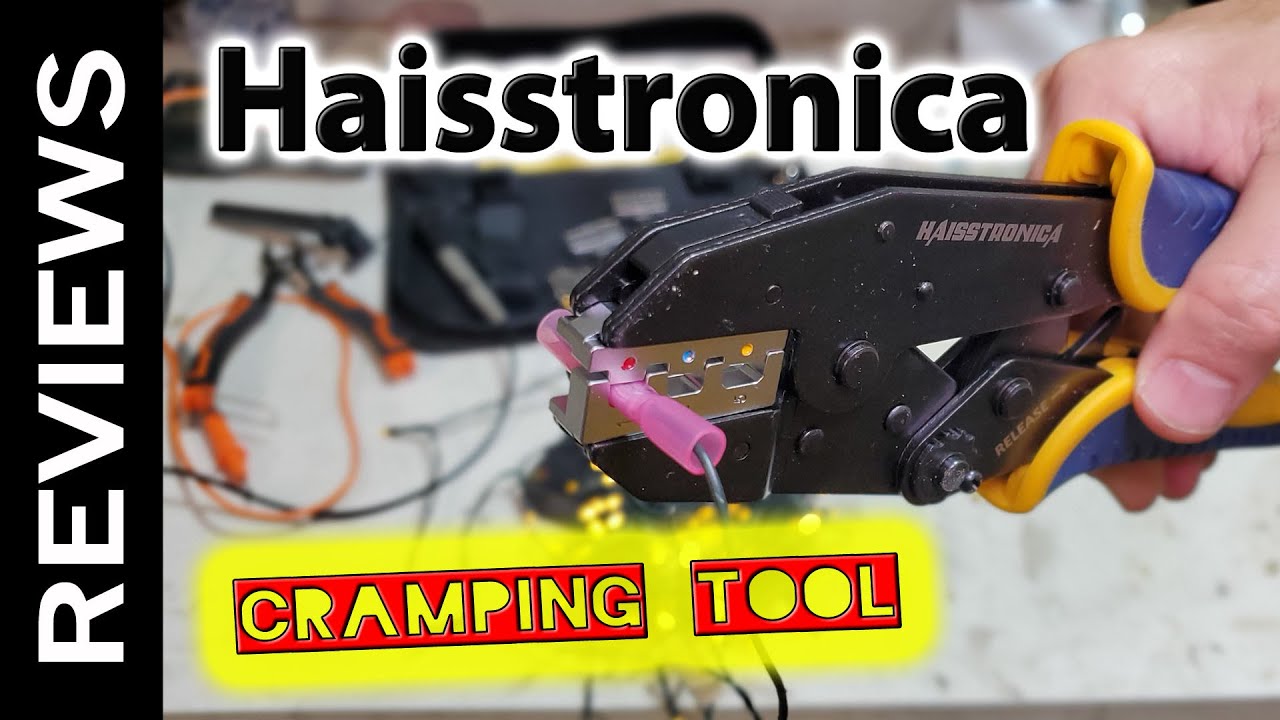
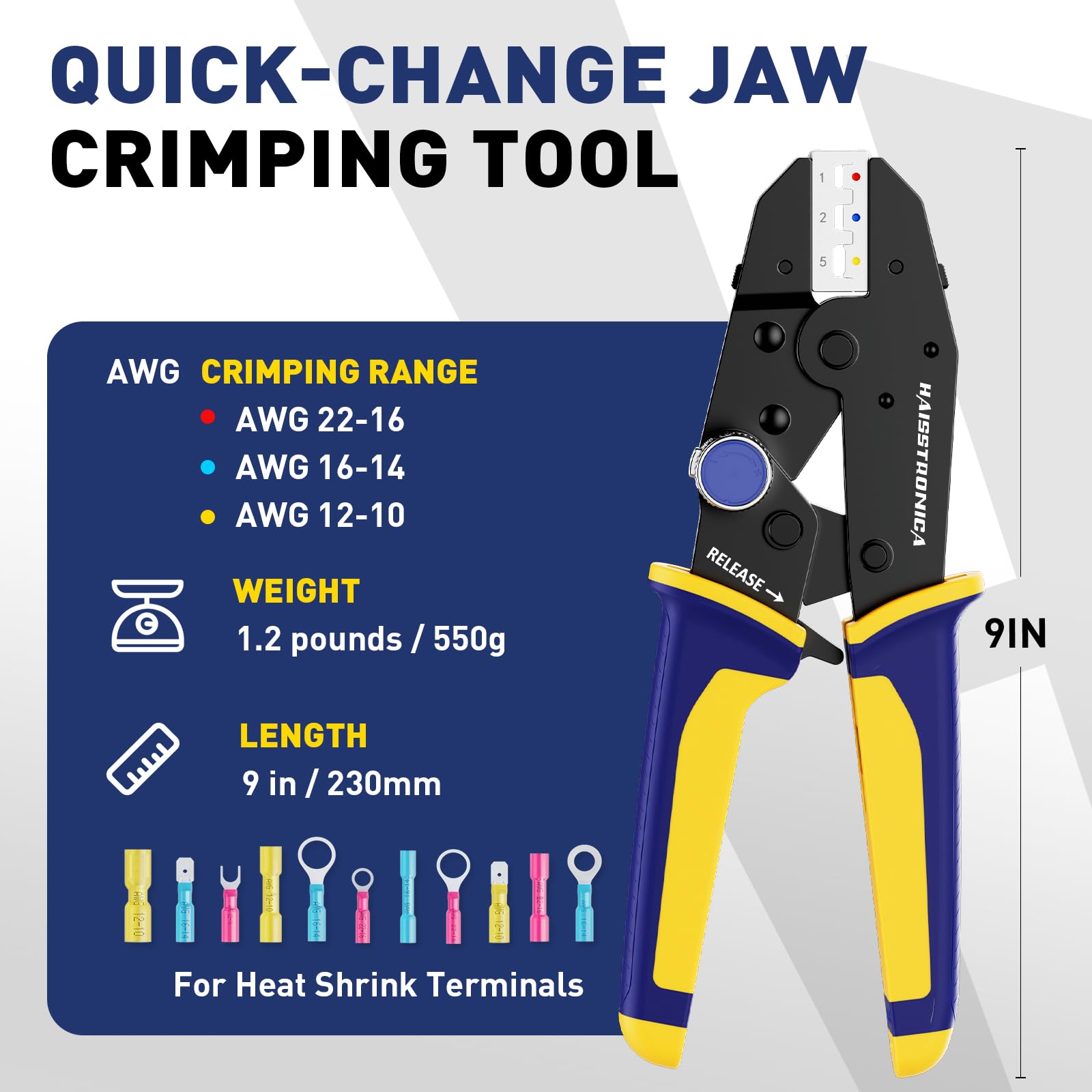
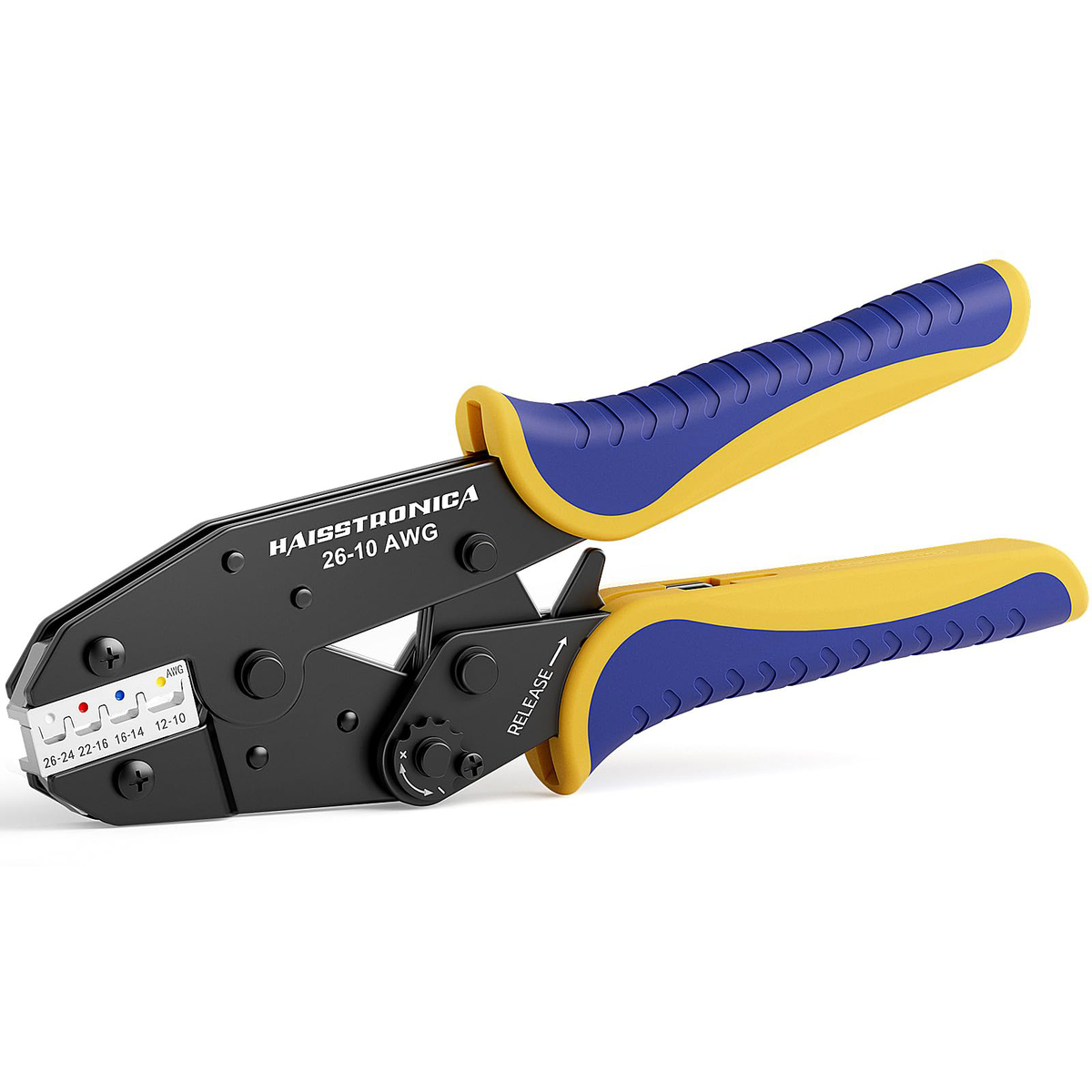
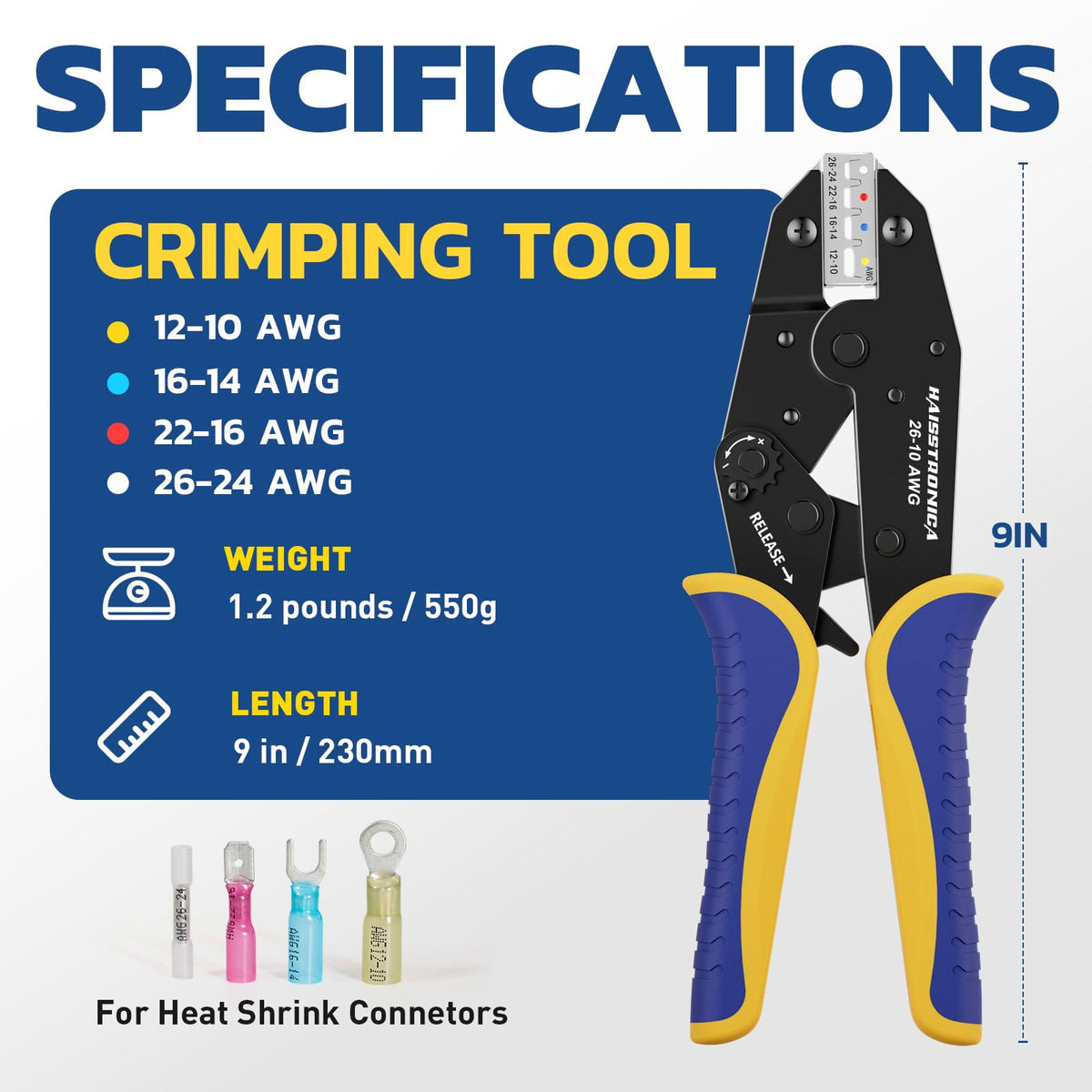
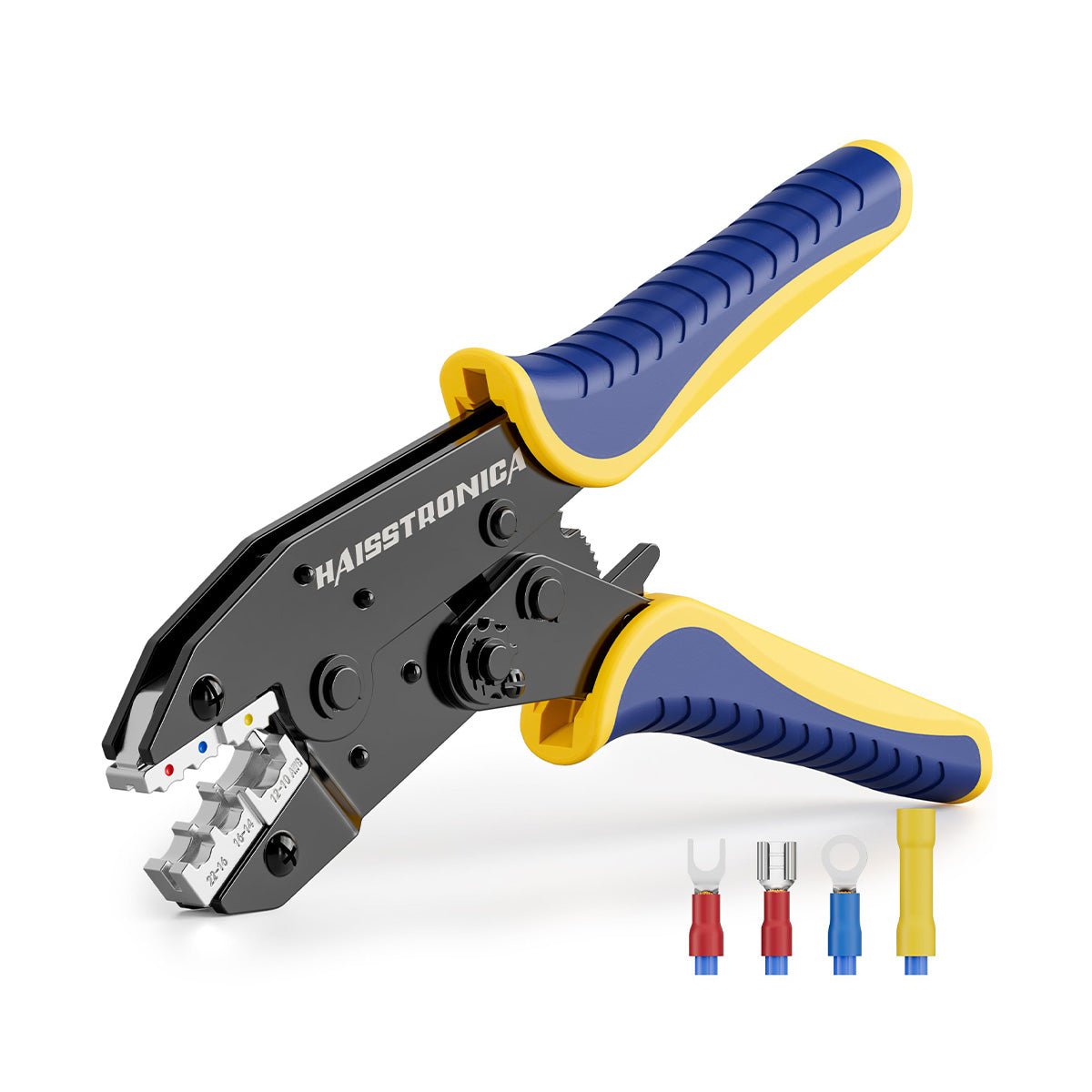
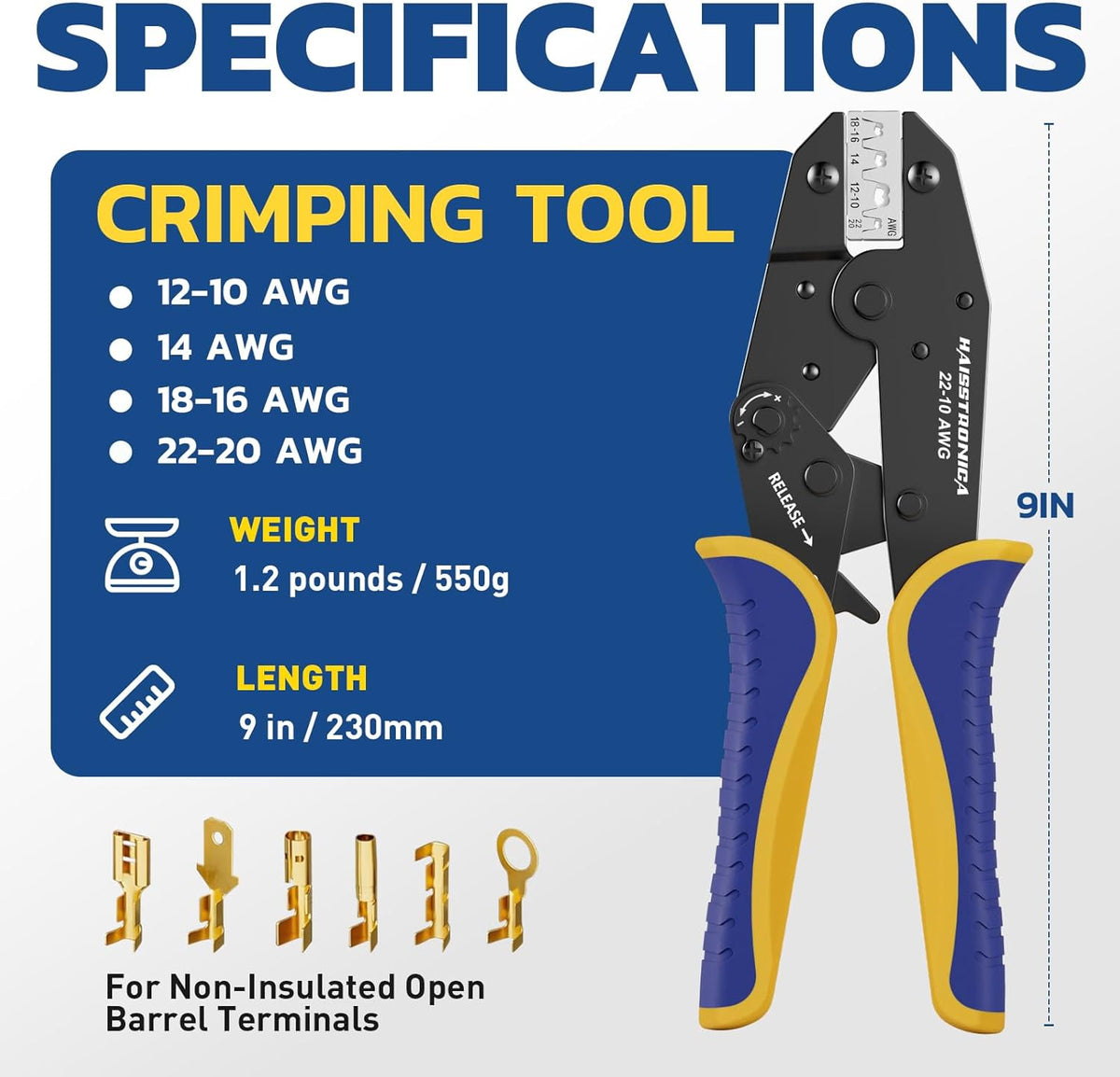
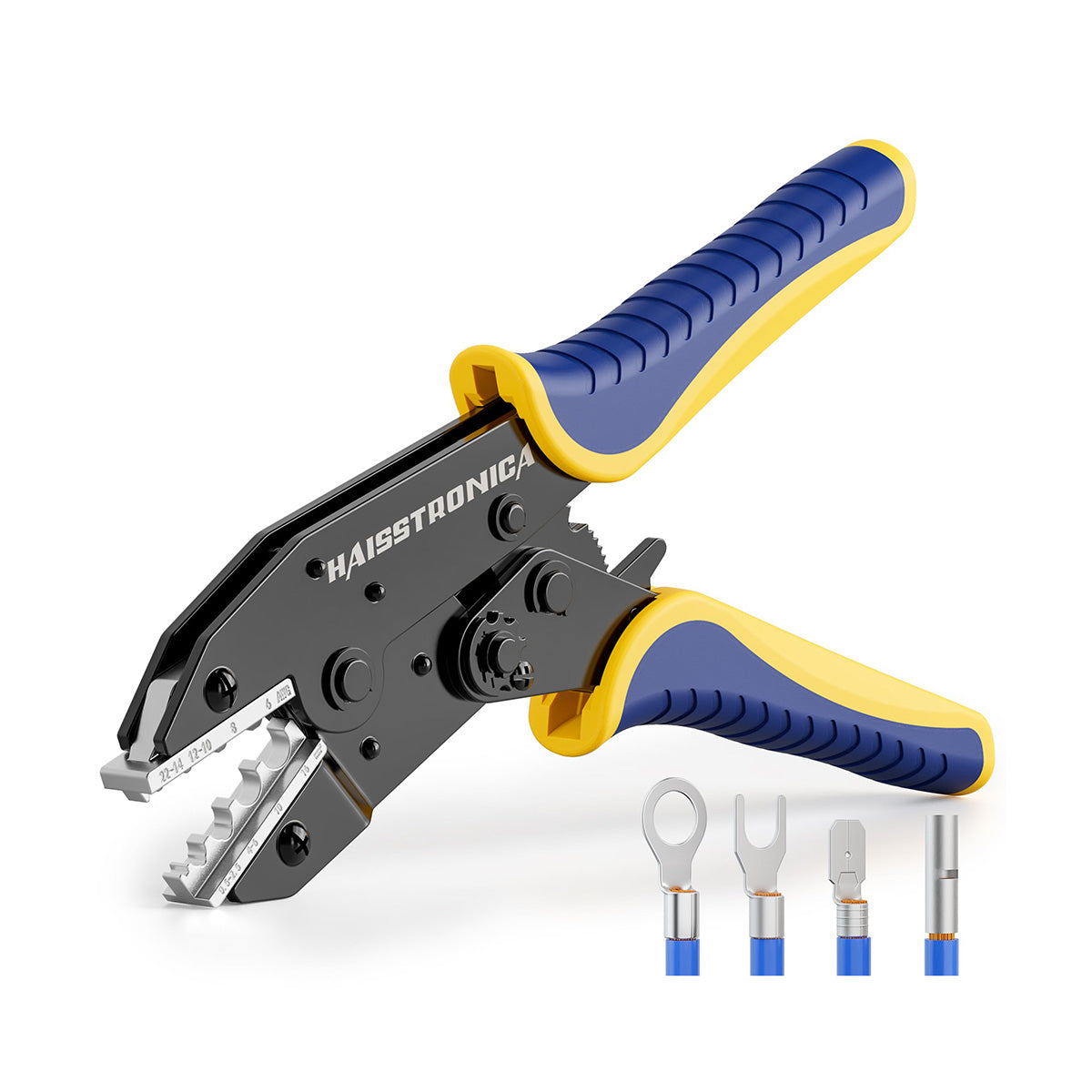
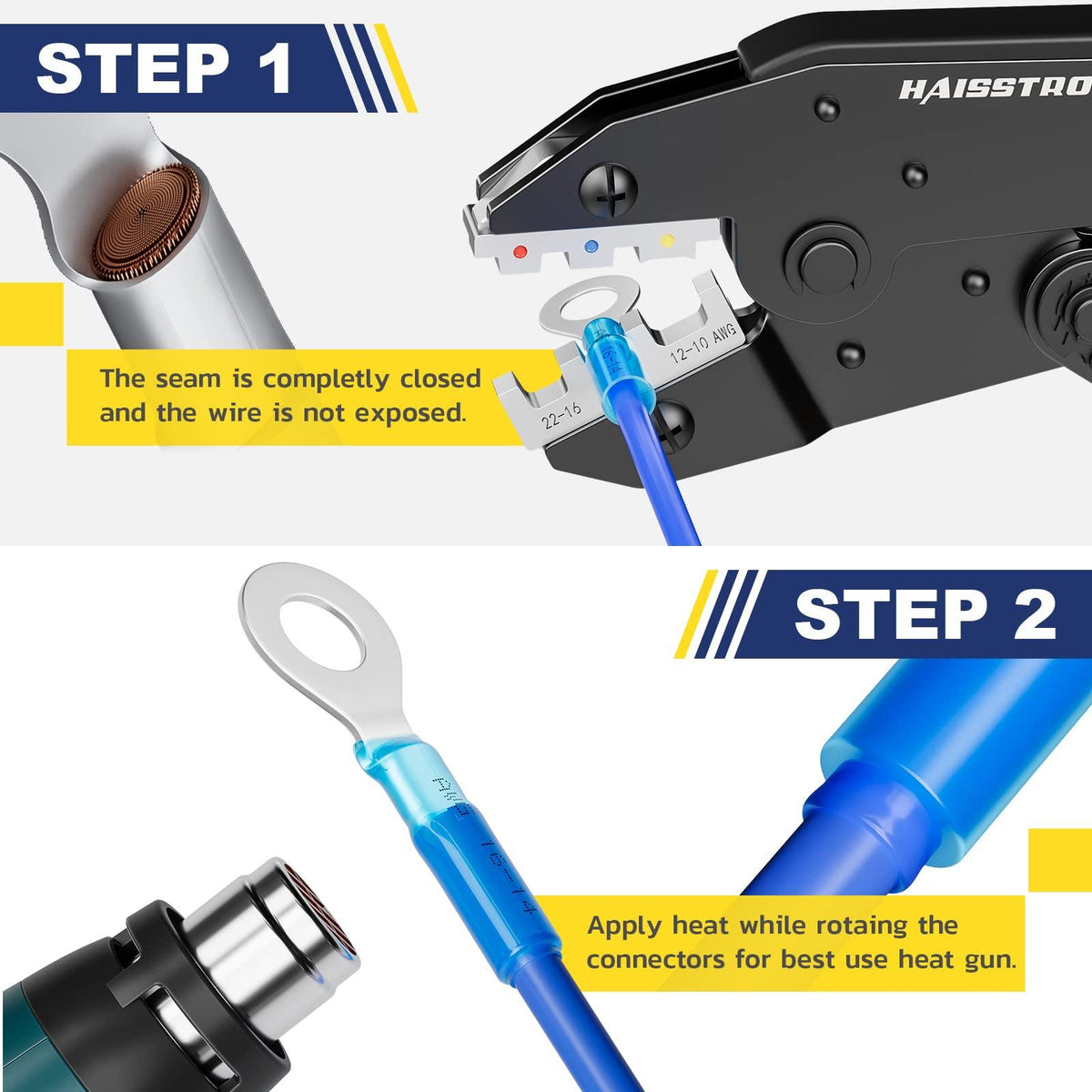
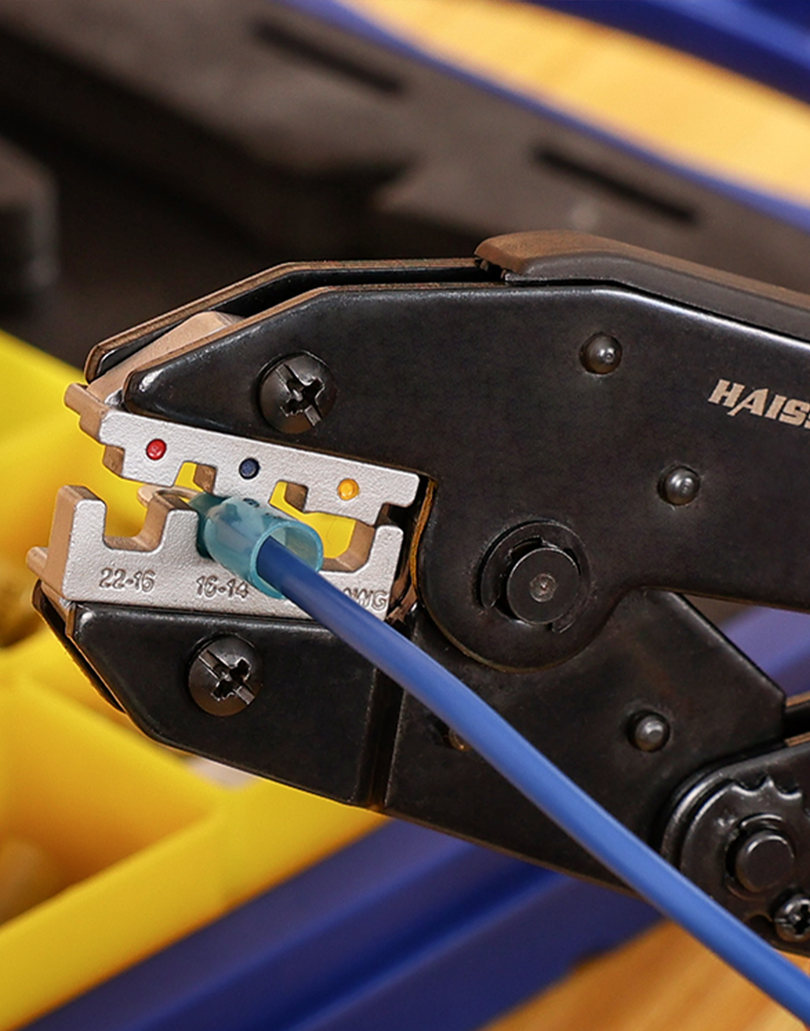
AWG 22–10 Ratchet Crimper
For compatible insulated and heat-shrink terminals within the supported wire range.
View Matching Ratchet CrimperOpen Barrel Terminal Crimper
Uses a die profile designed to form conductor and insulation wings without flattening the terminal.
View Open Barrel CrimperFerrule Crimping Tool
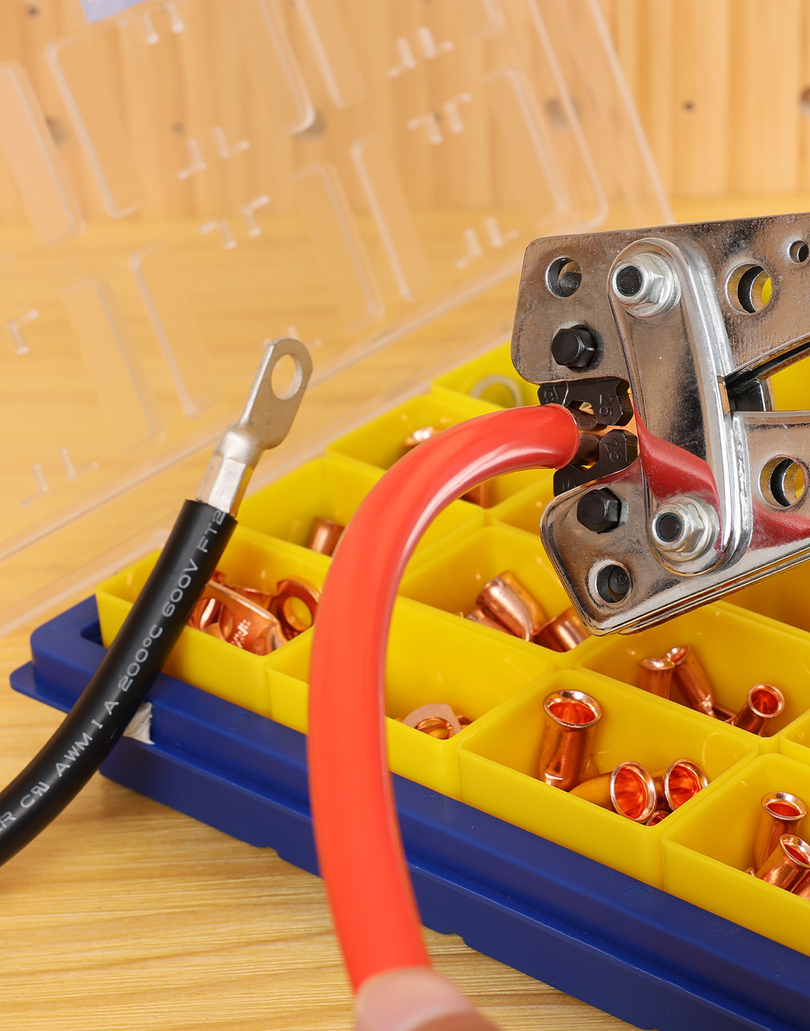
Forms a controlled multi-sided compression around compatible wire ferrules and stranded conductors.
View Ferrule CrimperFinal compatibility check
- Confirm the conductor AWG—not only the outside insulation diameter.
- Confirm stud, tab, housing or terminal-block dimensions.
- Select insulation and sealing for the actual environment.
- Match the crimper die shape and stated AWG range to the terminal.
- After crimping, inspect the barrel and perform a light pull test.
Frequently asked questions
Can one crimping tool handle every terminal type?
Usually not. Insulated terminals, open-barrel contacts and ferrules use different die profiles. Interchangeable-die tools may cover several categories, but compatibility must still be checked.
Which terminal should I use for a battery or ground connection?
Use a ring terminal that matches the conductor size and stud diameter. Its closed shape remains captured under the fastener.
Which connector joins two wires end to end?
A butt connector is designed for an inline two-wire splice. Choose its AWG range and sealing level based on the wire and environment.
Are terminal colors universal?
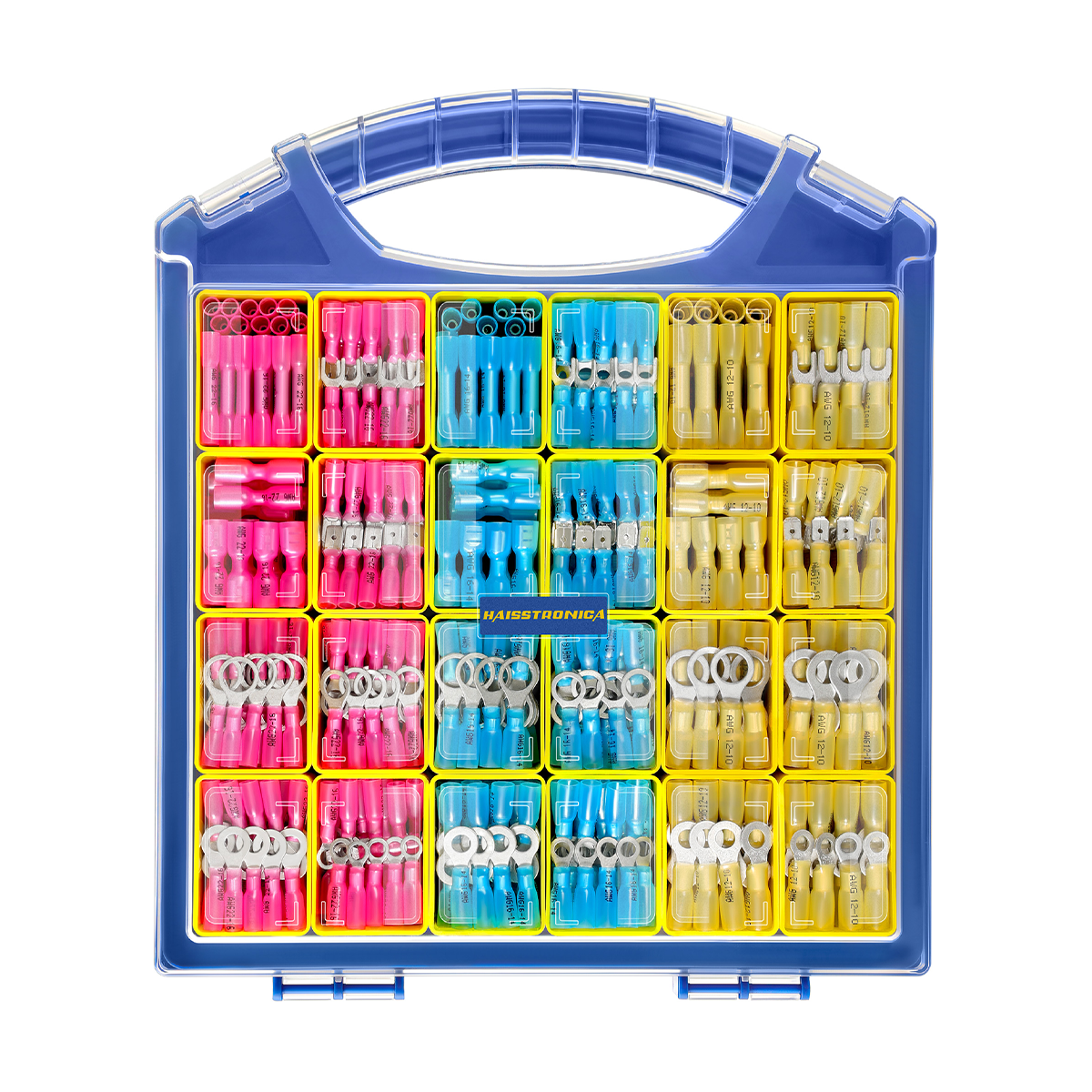
Red, blue and yellow commonly indicate insulated-terminal AWG ranges, but always verify the specifications printed on the product and tool.
RETURN TO THE FULL NAVIGATION
Compare all wire terminals and connectors
Still deciding? Browse the complete connector navigation by terminal type and application.
View All Wire Connectors