
How to Crimp 22-10 AWG Wires Perfectly: A Beginner’s Guide with Haisstronica’s Ratchet Tool
How to Crimp 22-10 AWG Wires Perfectly: A Beginner’s Guide with Haisstronica’s Ratchet Tool
Crimping wires is a fundamental skill for electricians, automotive enthusiasts, and DIYers. In this beginner-friendly guide, we explain everything you need to know to crimp 22-10 AWG wires perfectly. You’ll learn about different types of wire terminals (and how to choose the right connector for your wire size), the importance of matching your crimping tool and die to the wire and terminal, how to strip insulation to the correct length and prepare the wire, and a step-by-step technique for using a ratcheting crimping tool. By following these tips and using a high-quality ratchet crimper, even first-timers can create safe, durable electrical connections—made easier with Haisstronica’s reliable crimping tools.
What are the Best Crimping Tools for Wiring Projects? The Perfect Terminal Crimper for the DIYer! Reading How to Crimp 22-10 AWG Wires Perfectly: A Beginner’s Guide with Haisstronica’s Ratchet Tool 17 minutes

Know Your Terminals (Types of Crimp Connectors)

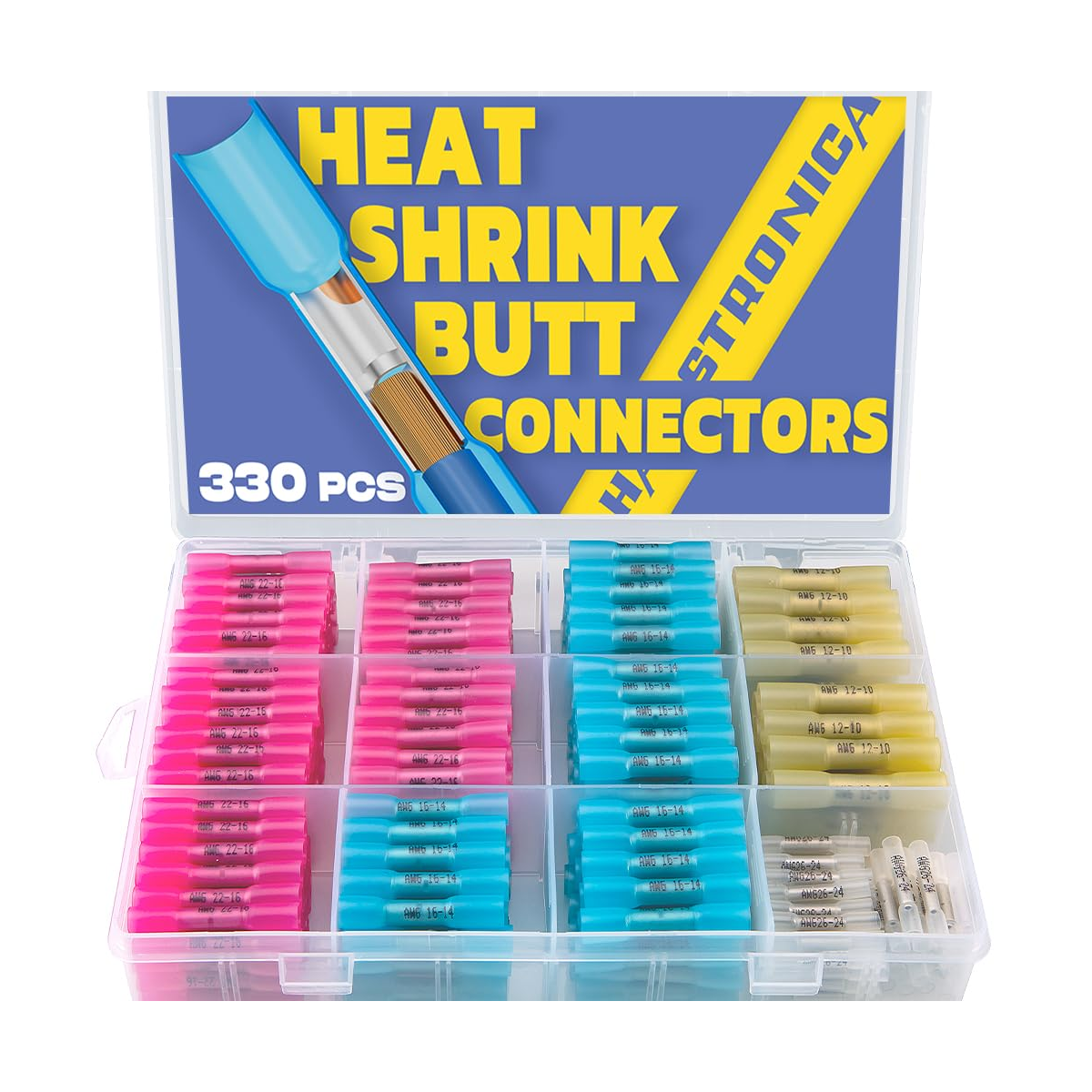
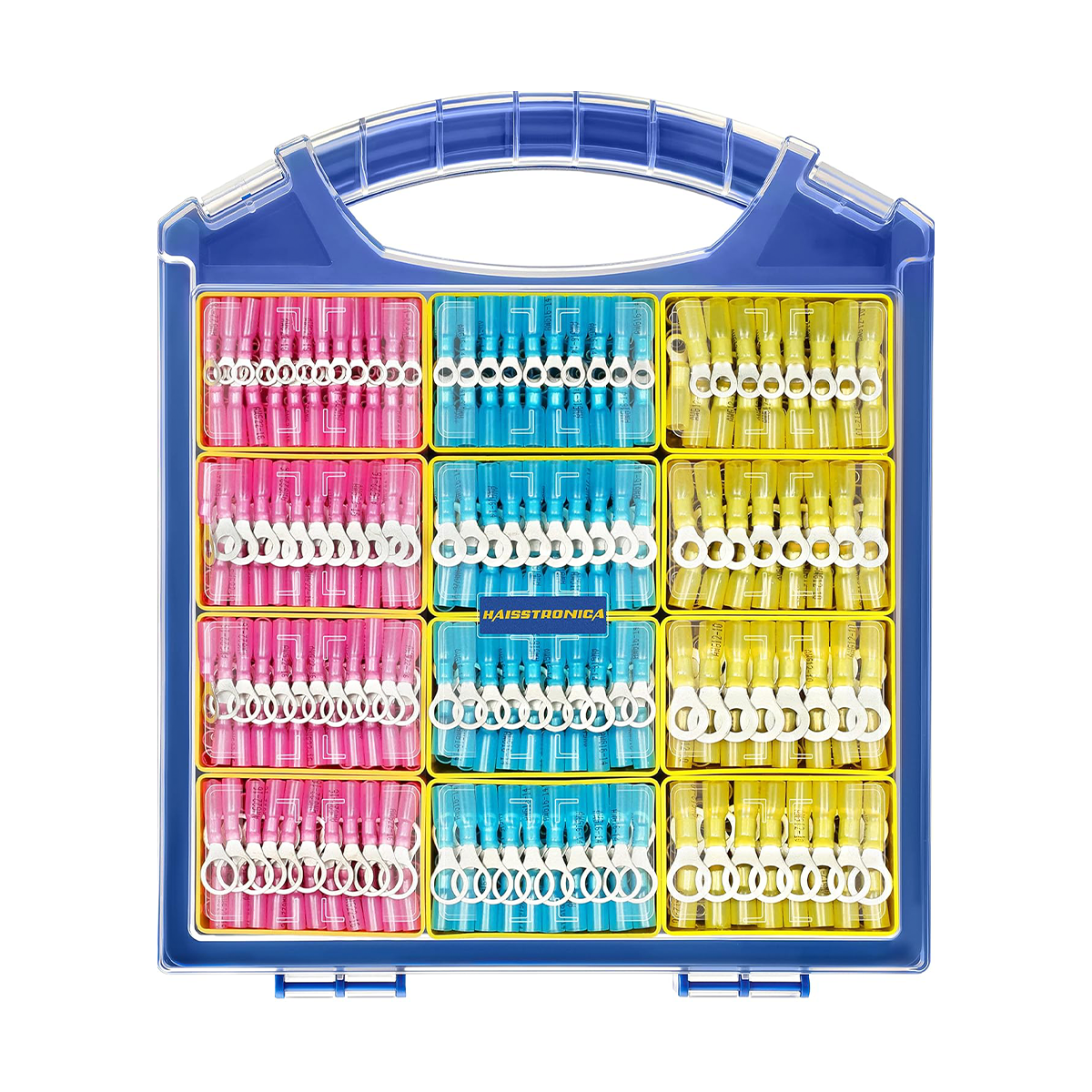
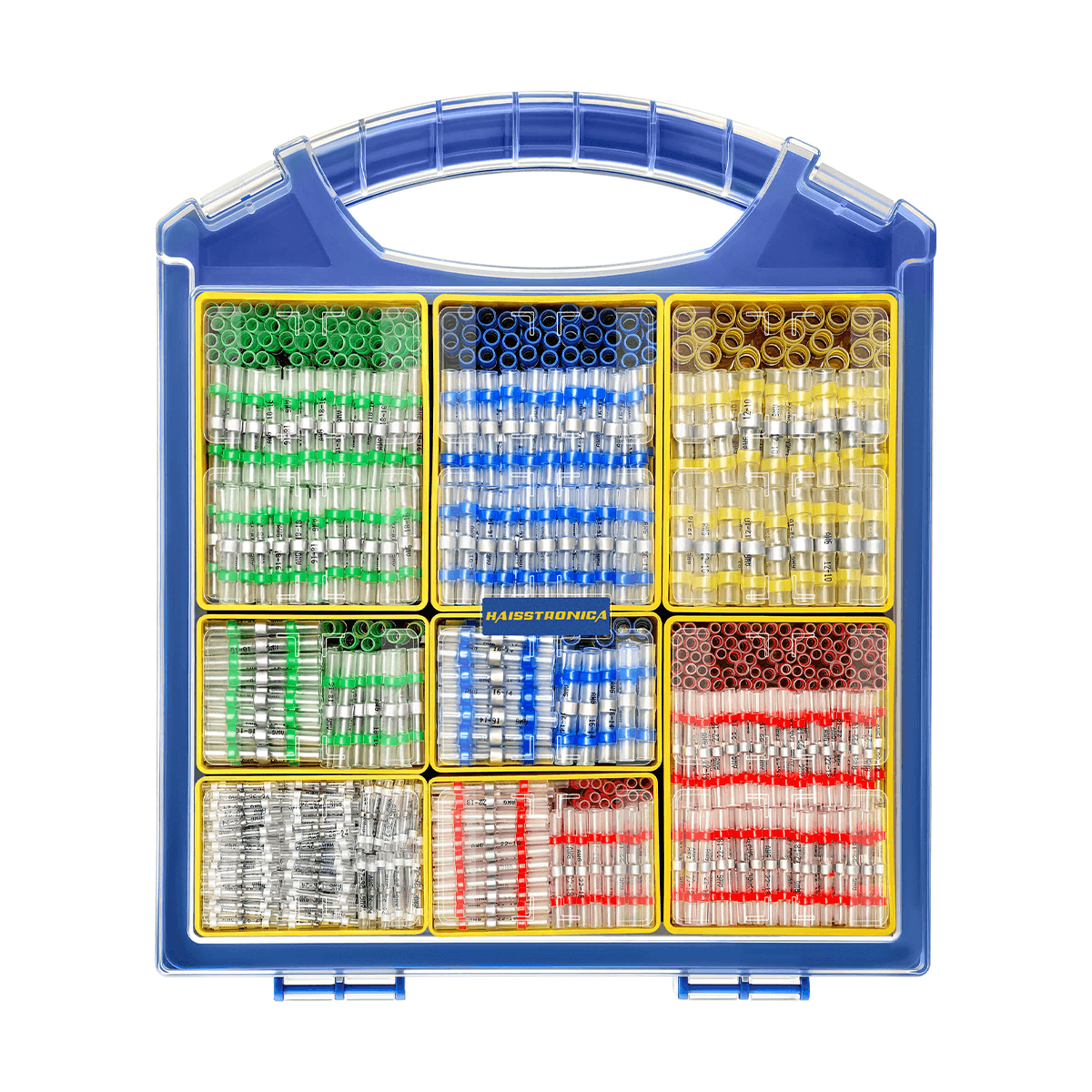
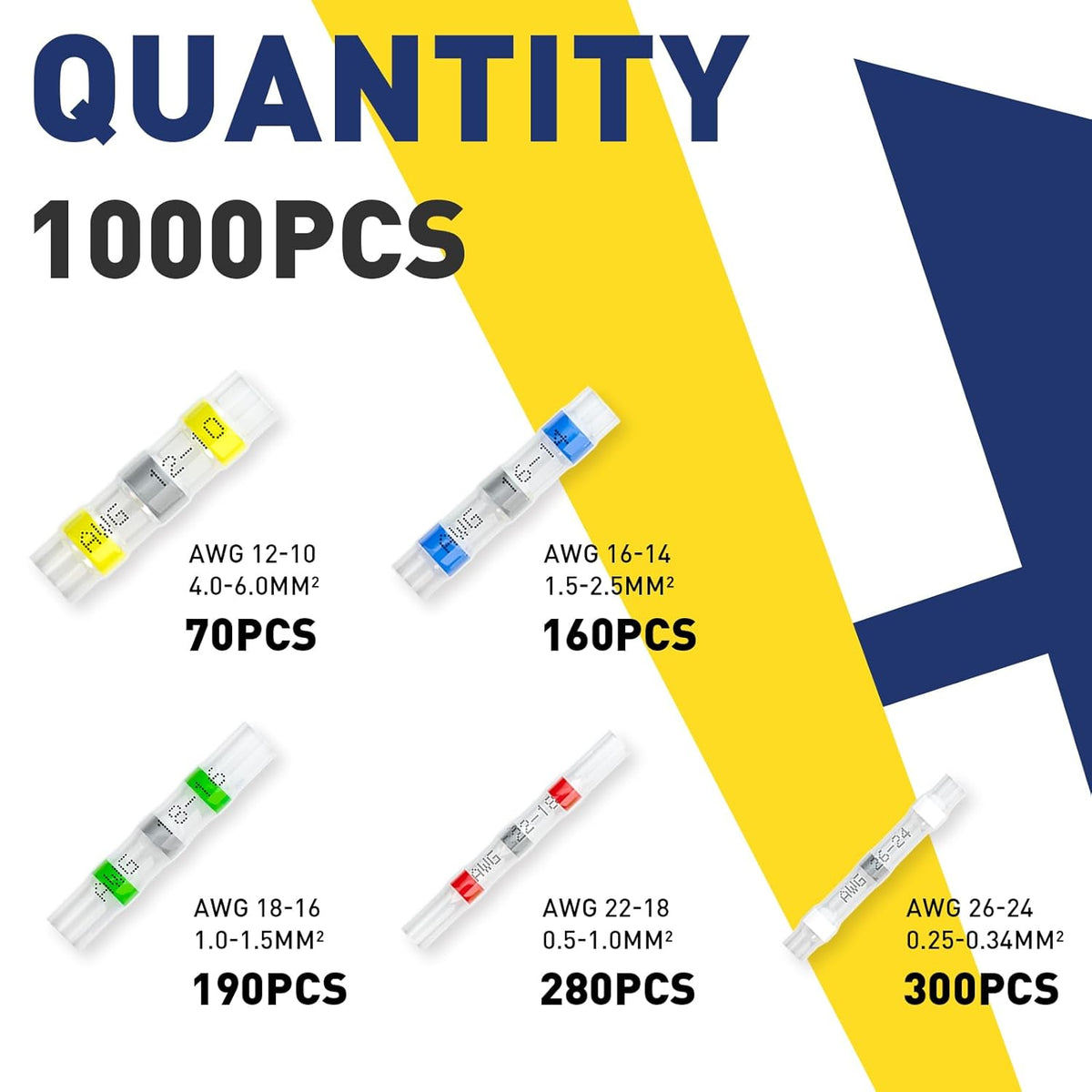
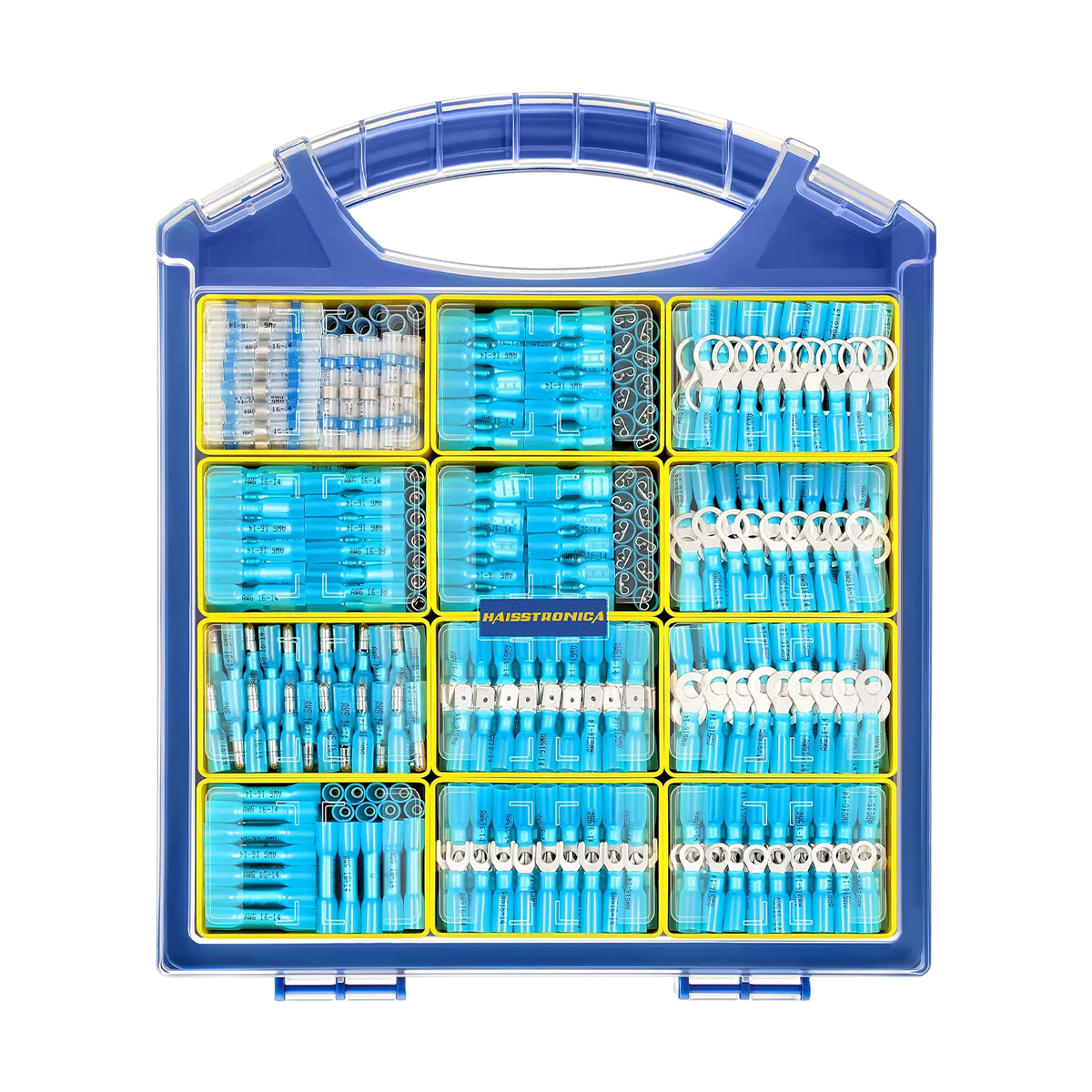
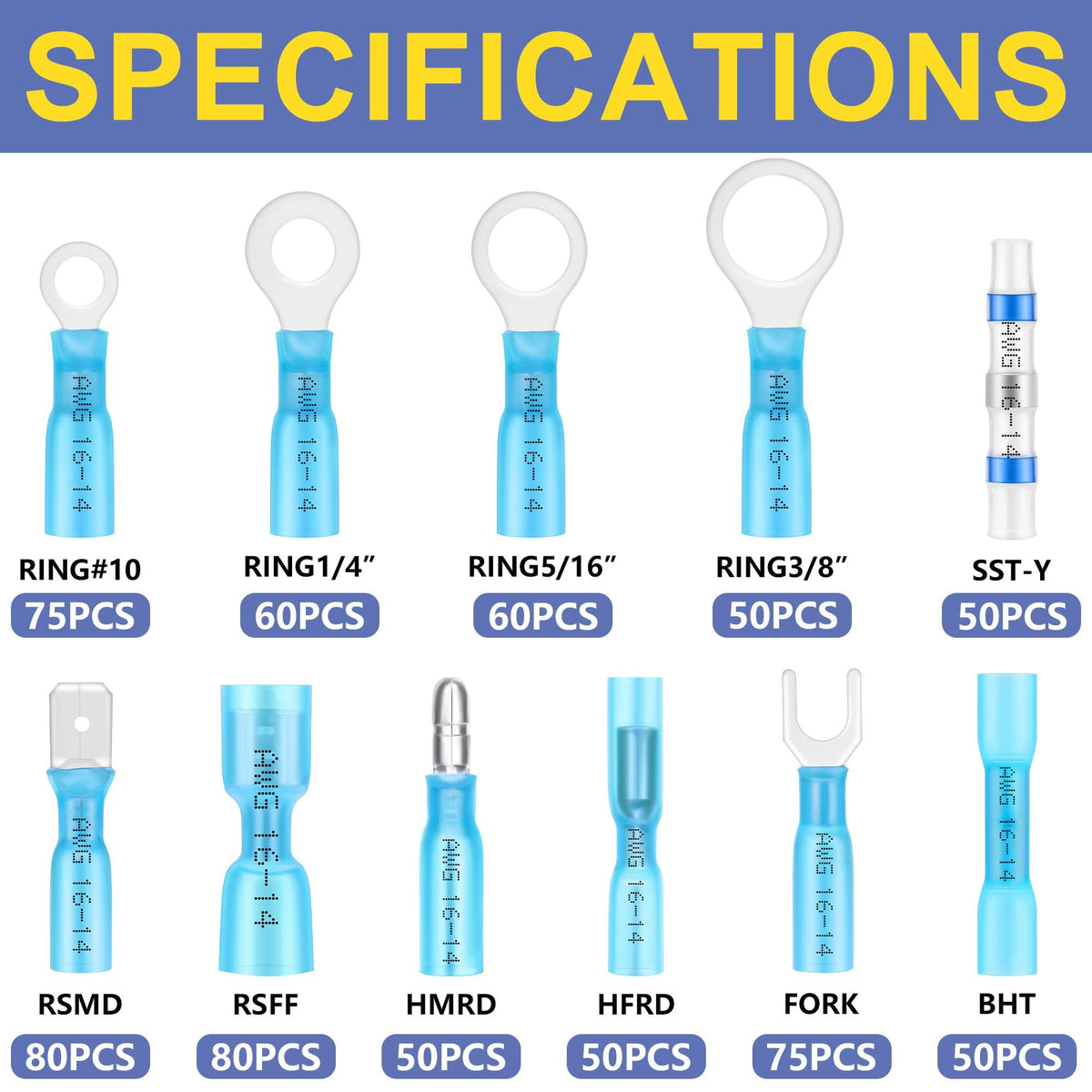
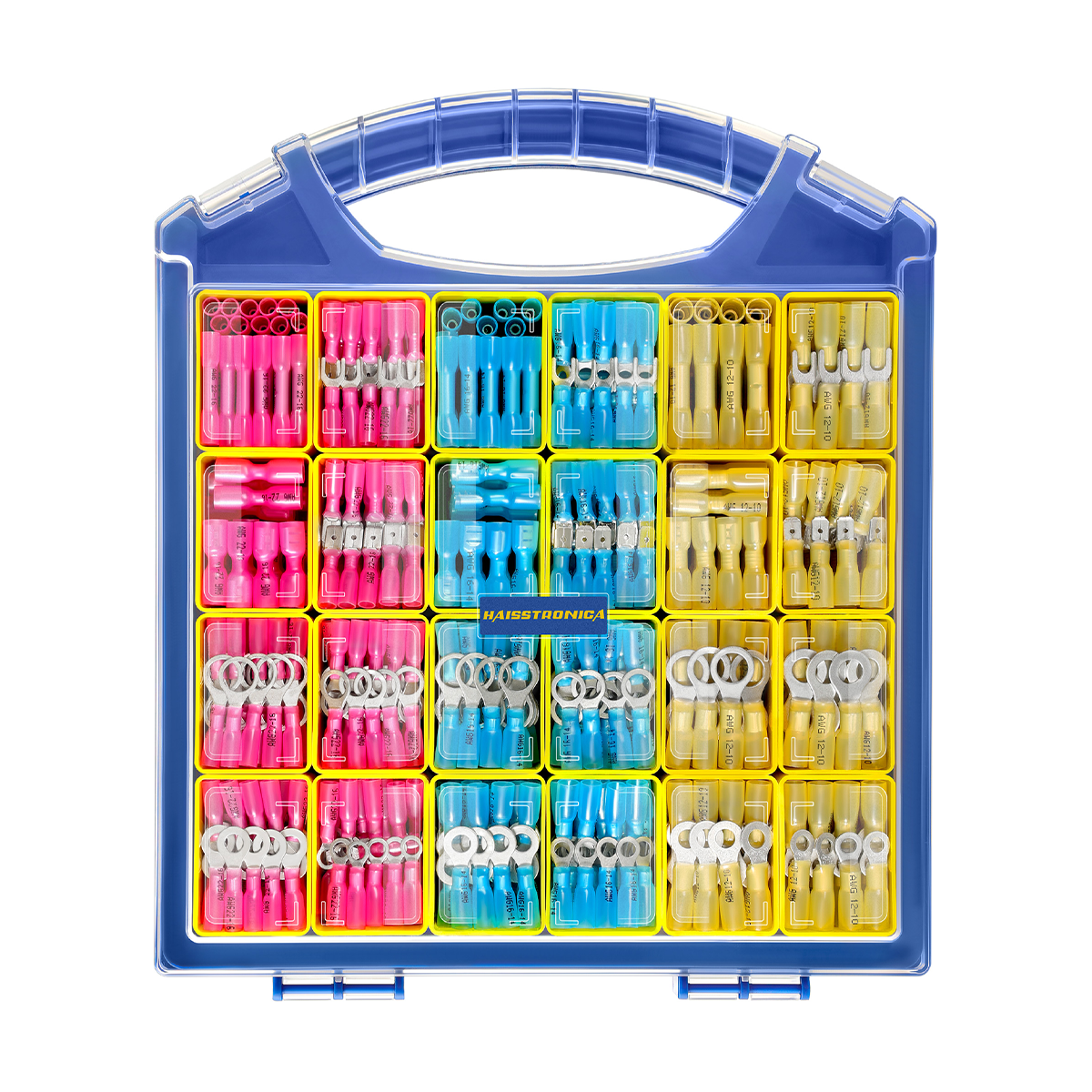
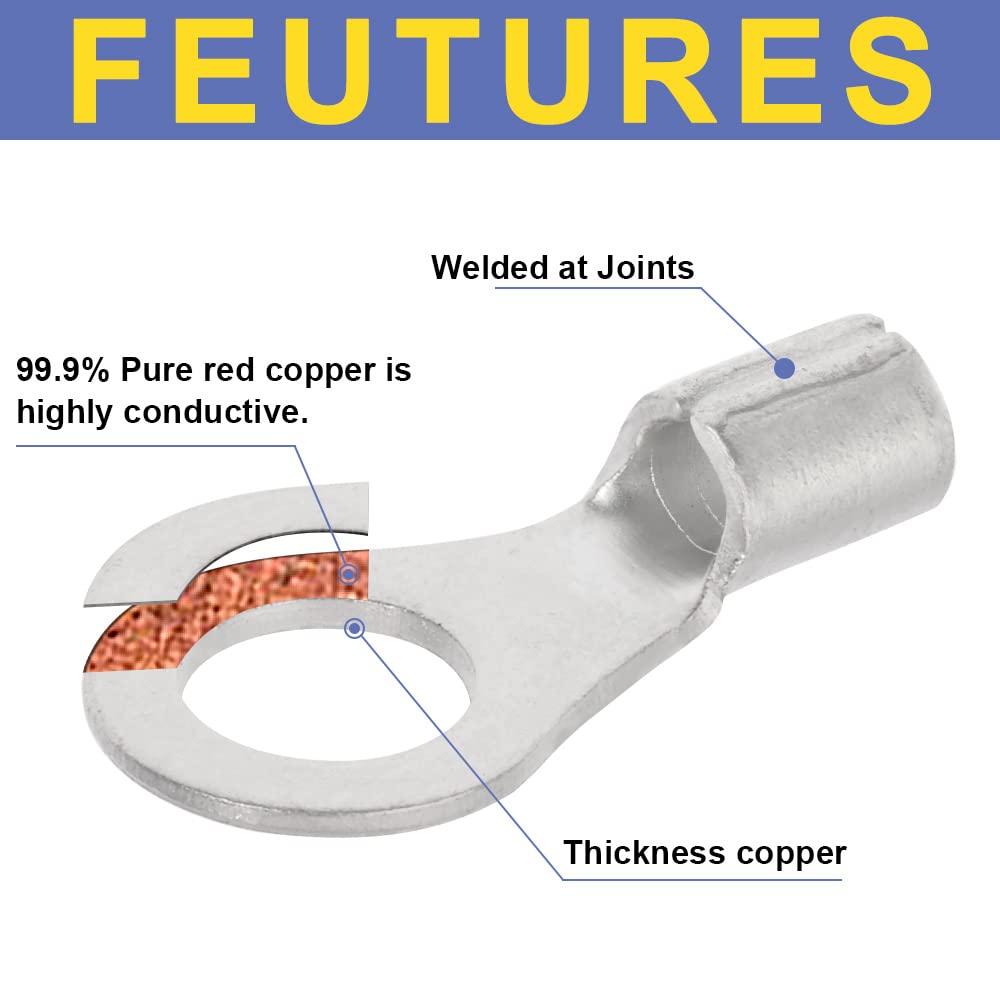
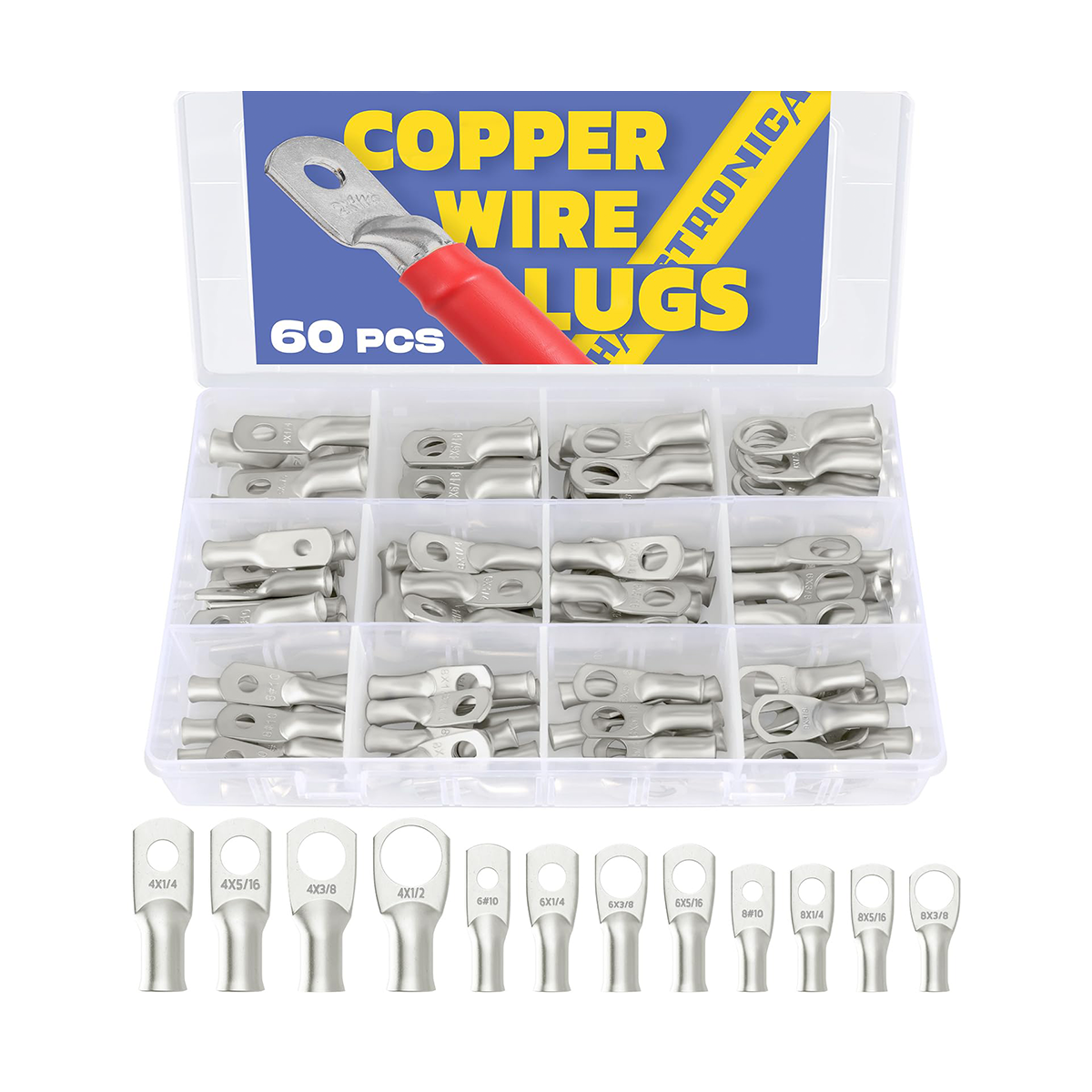
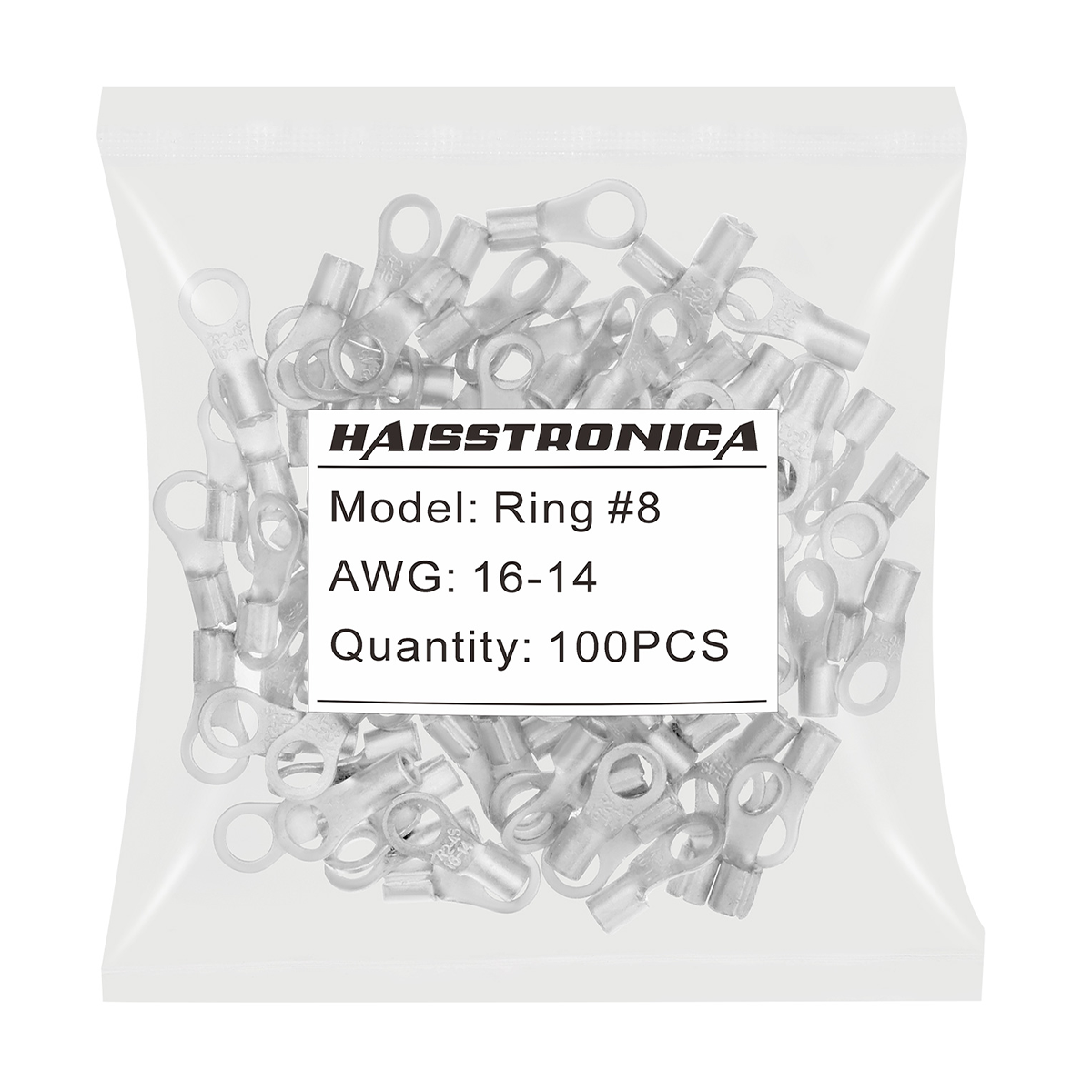
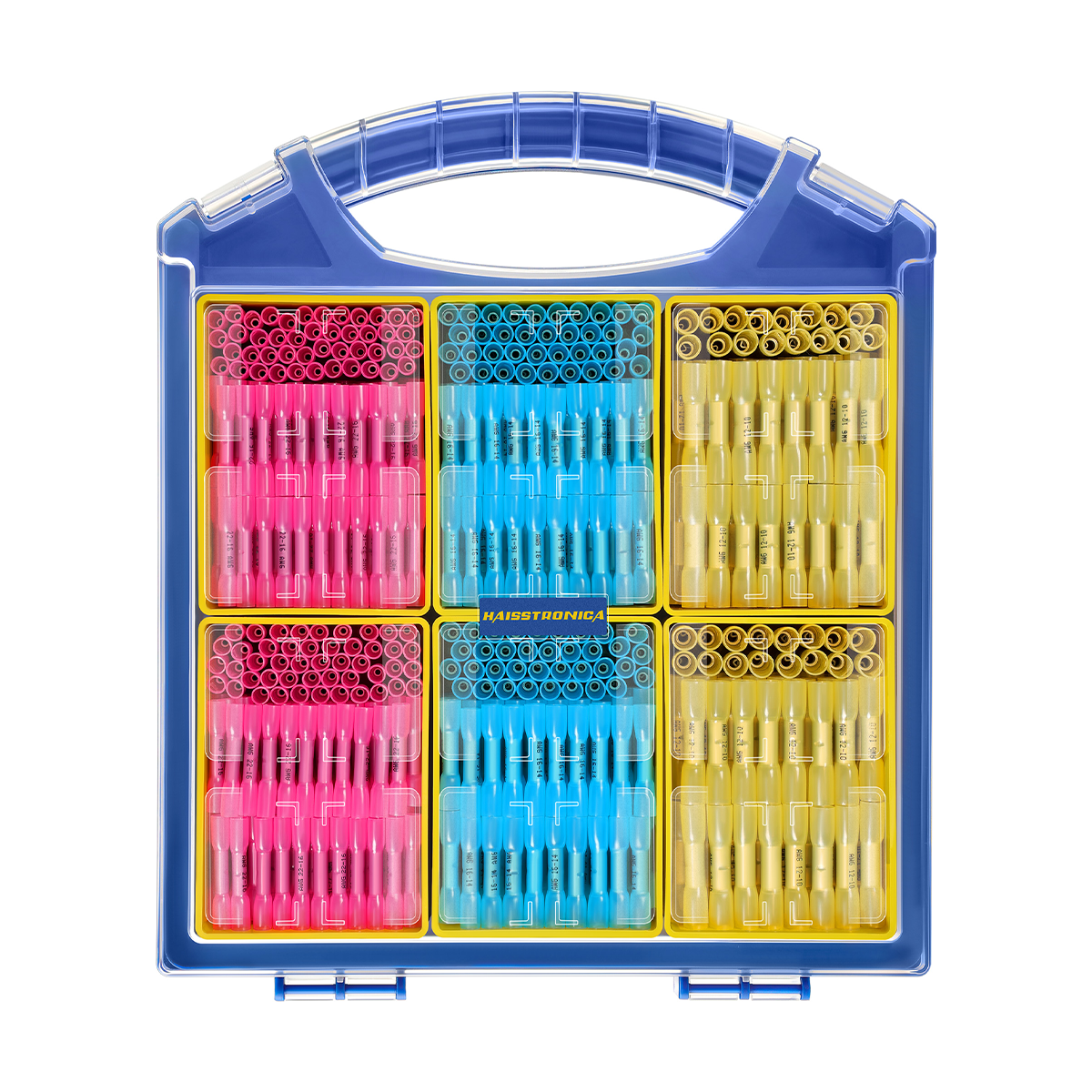
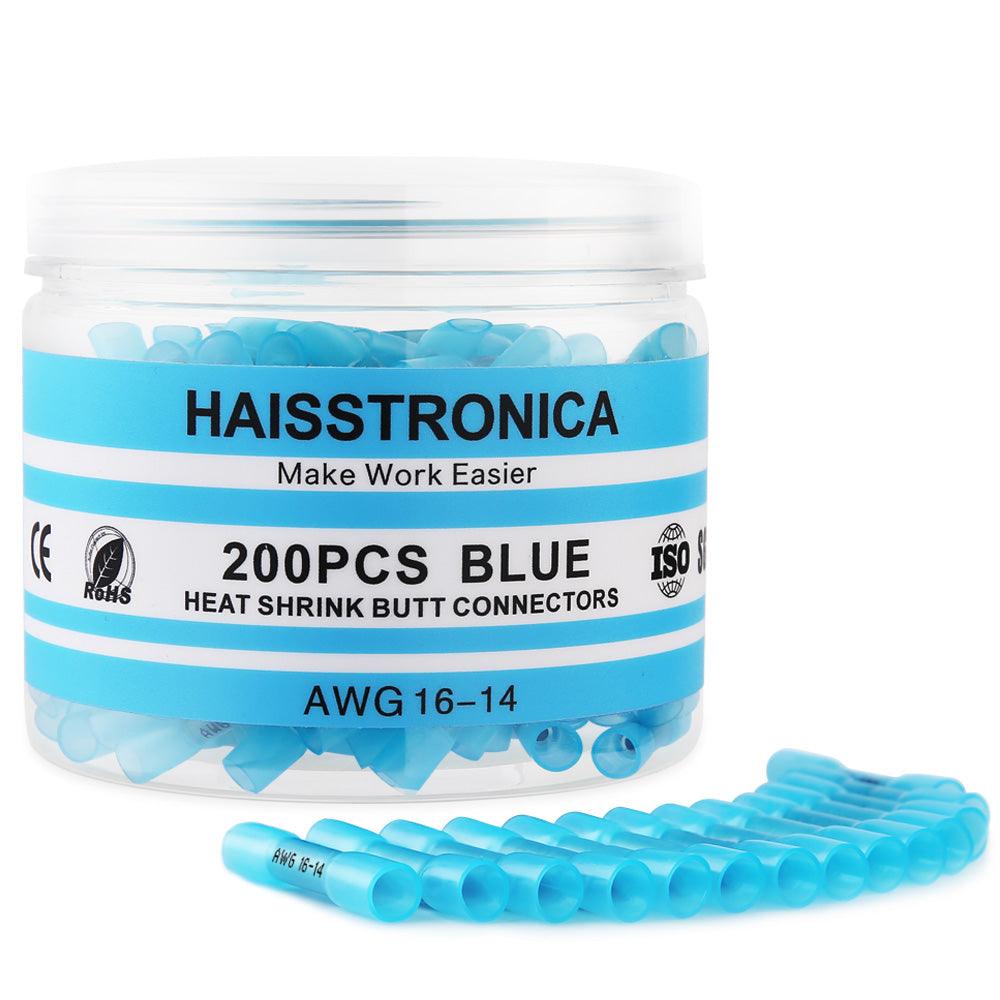
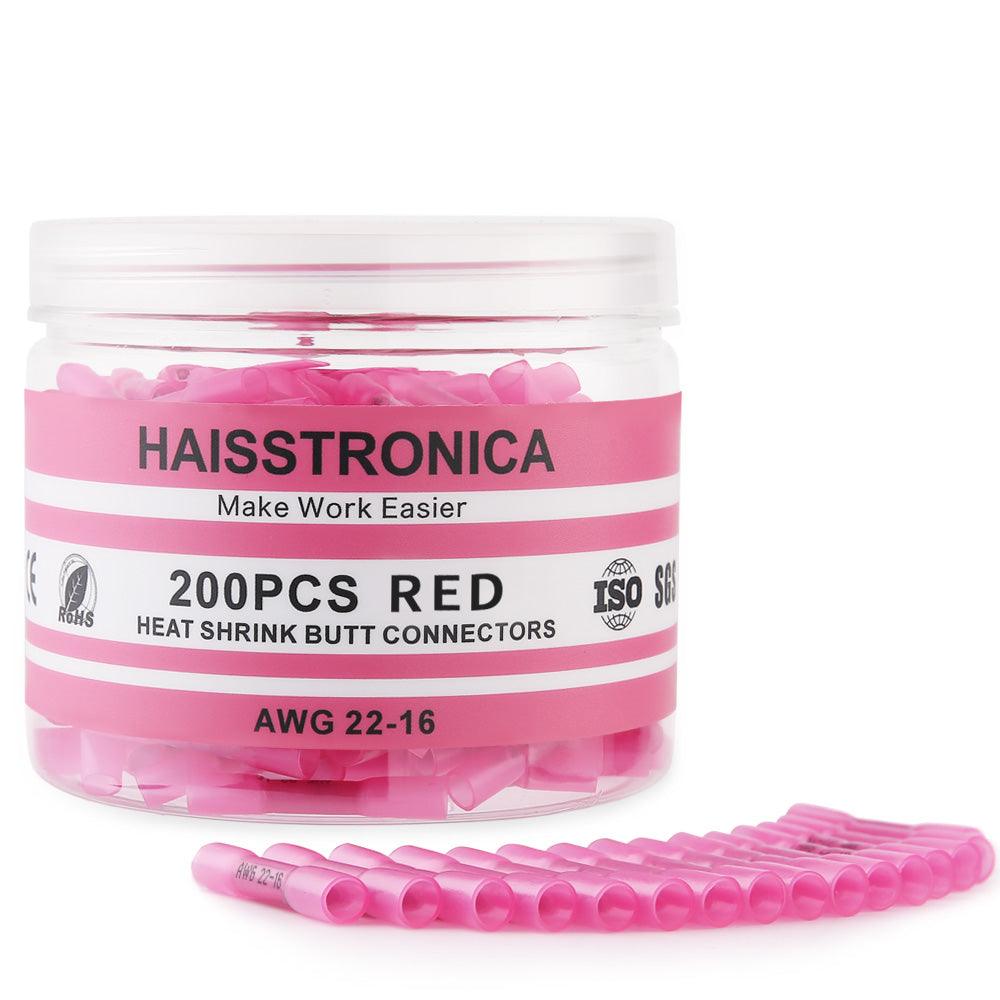
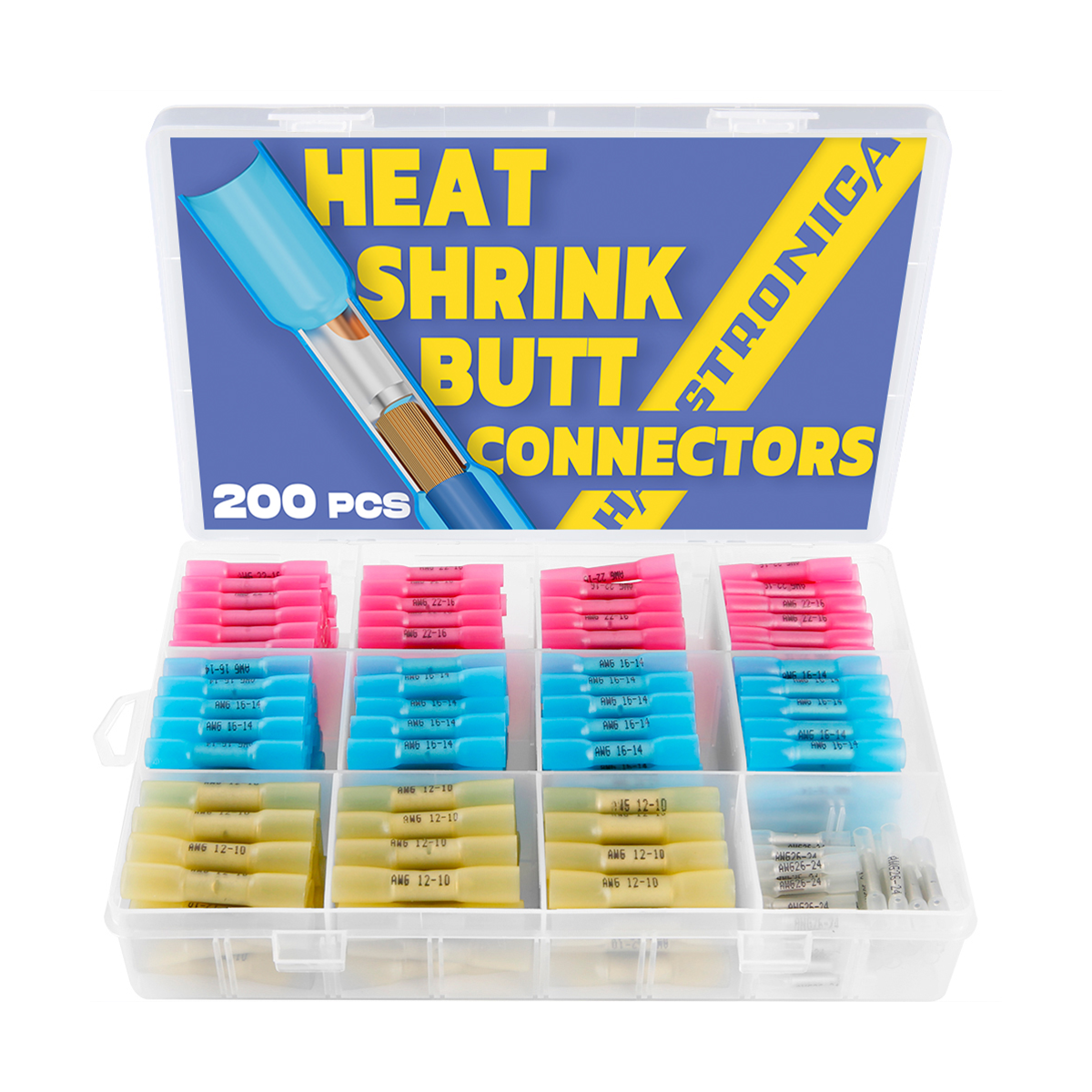
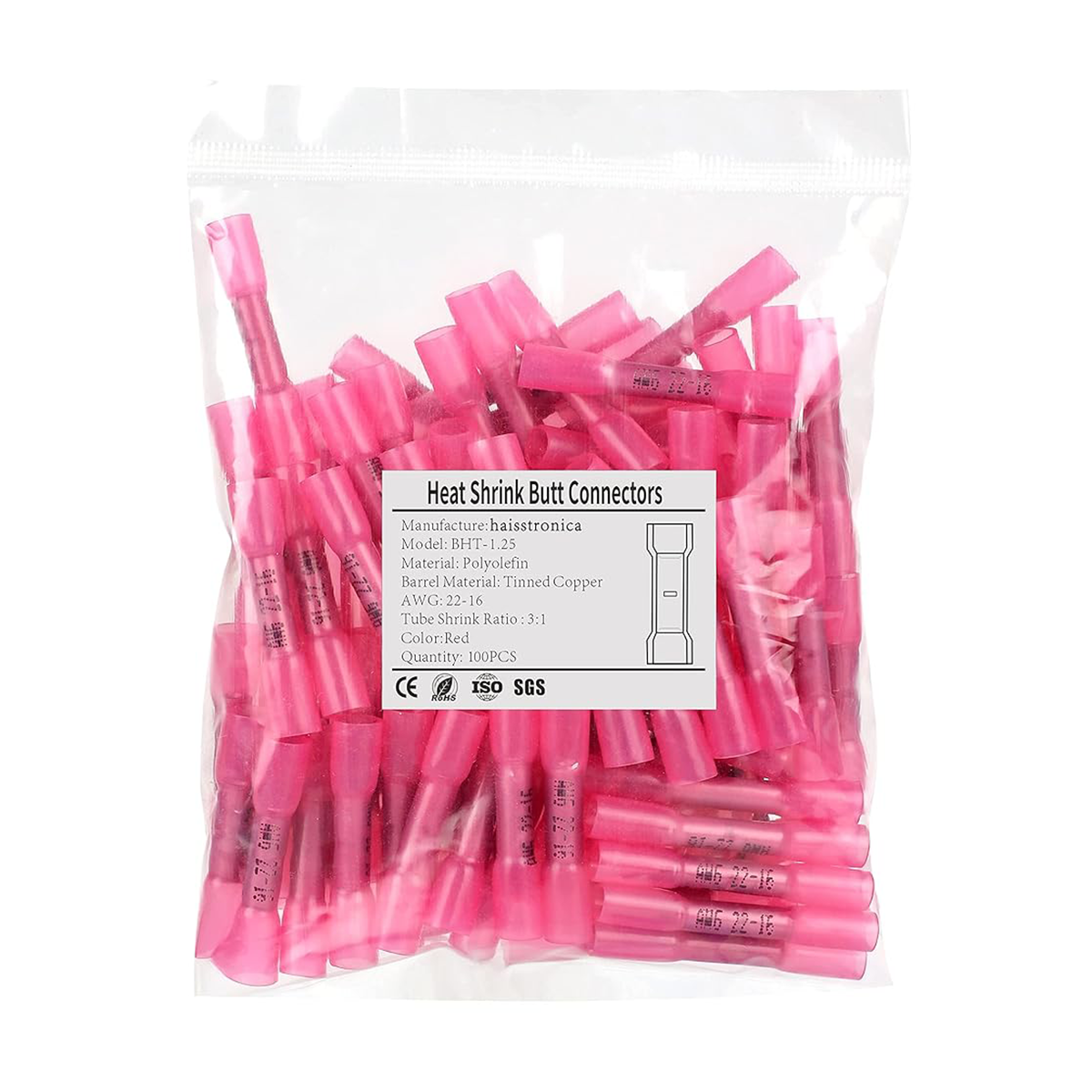
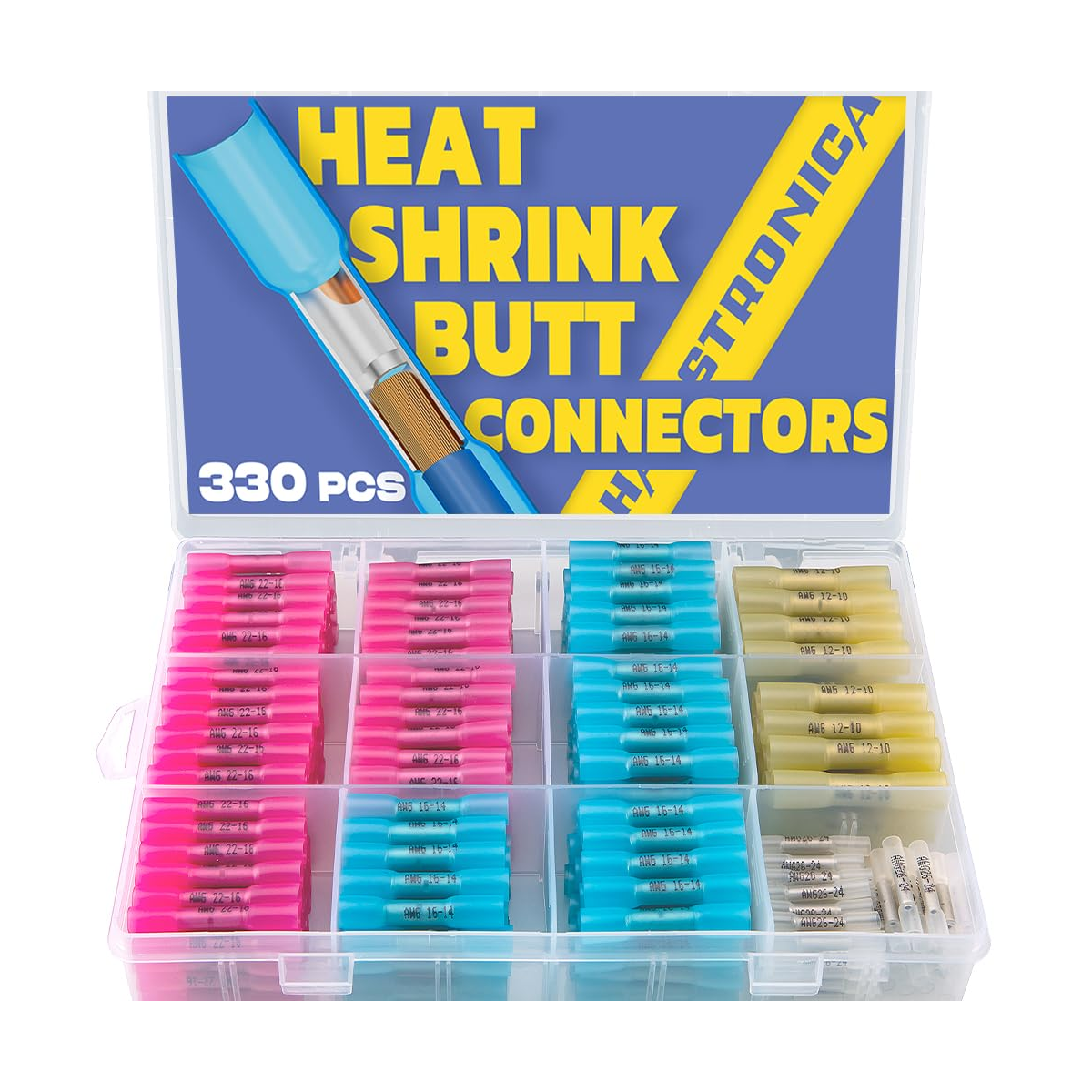
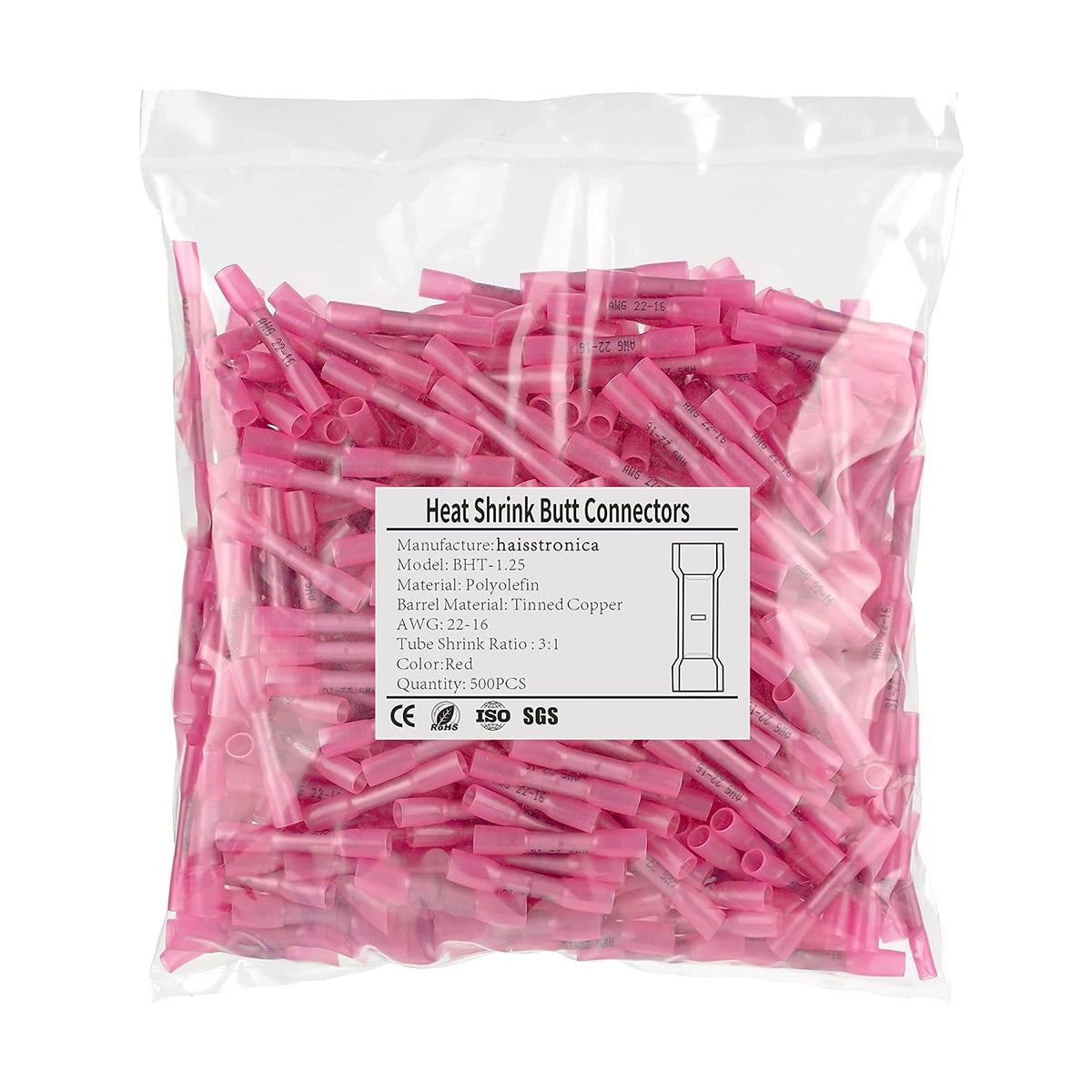
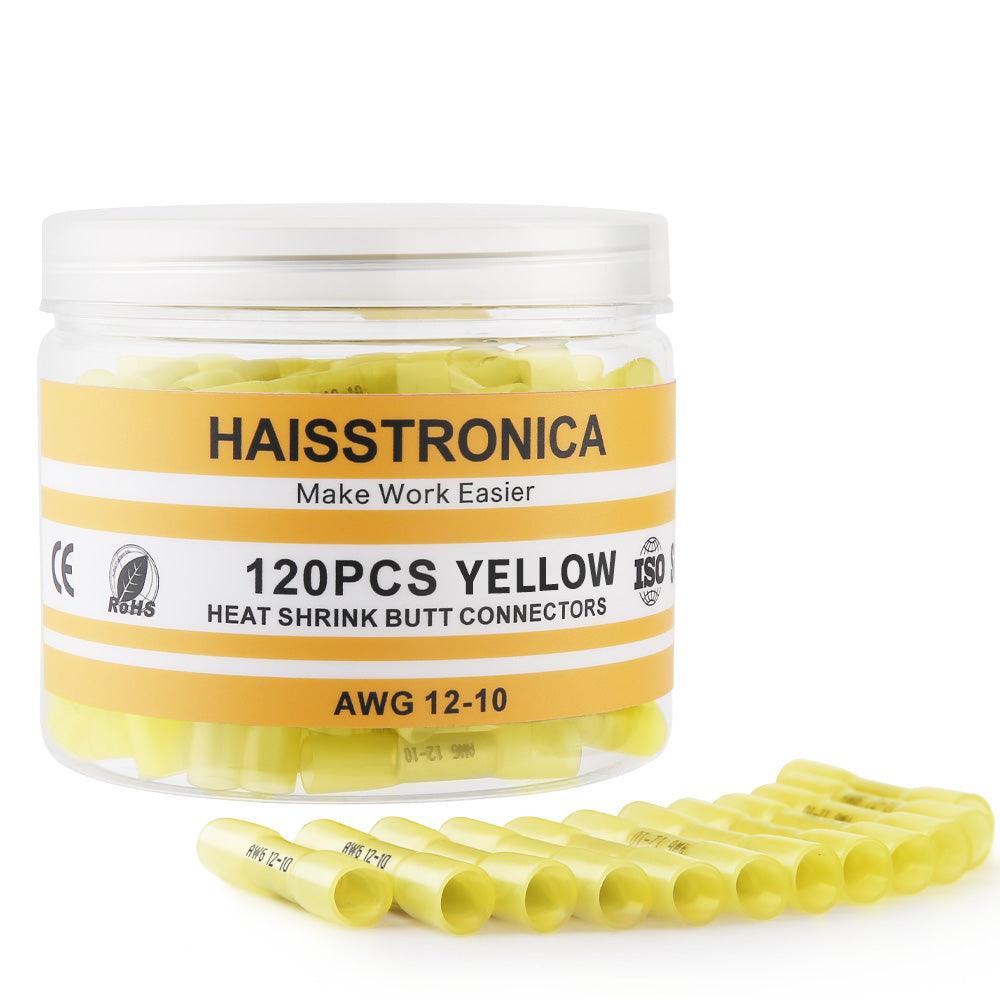
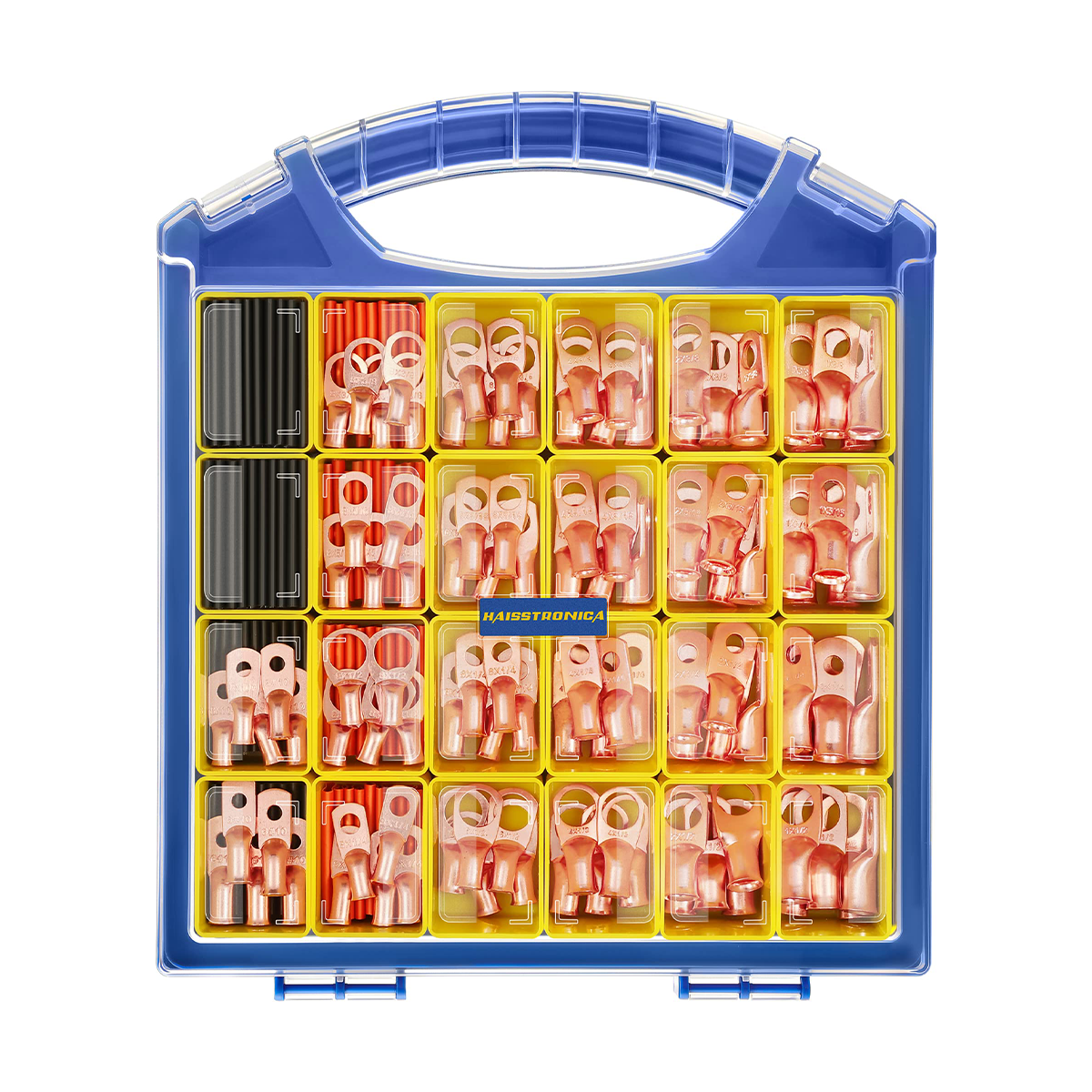
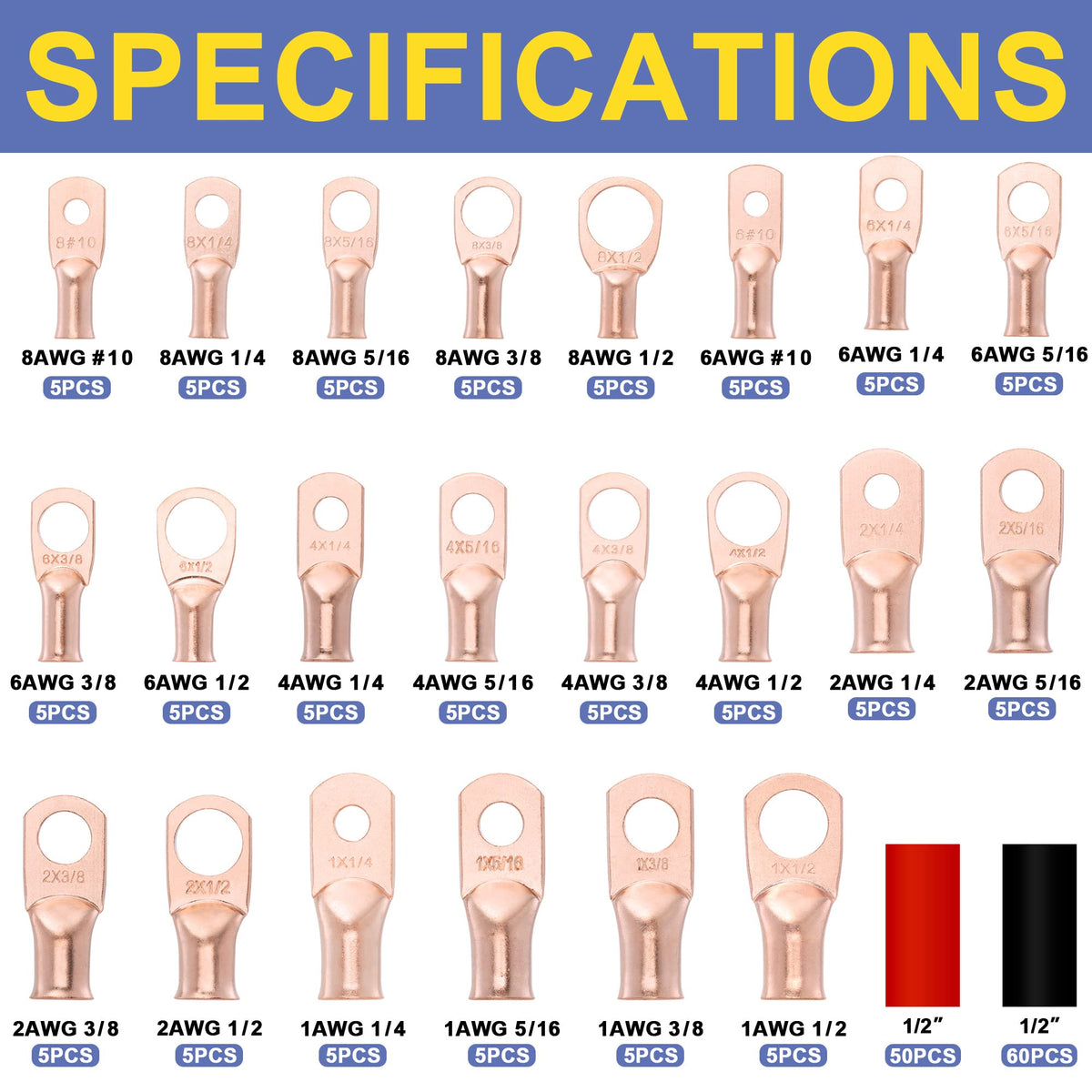
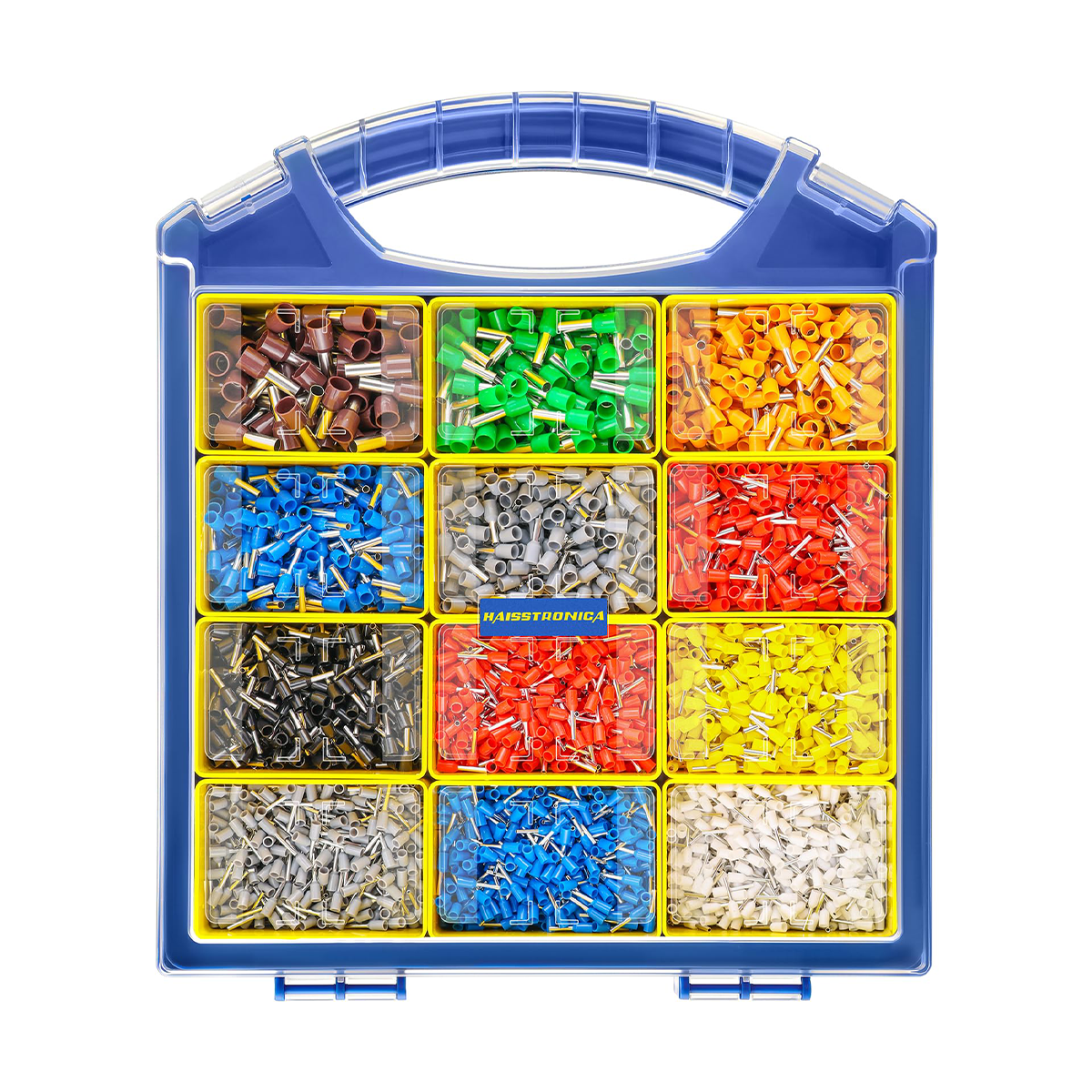
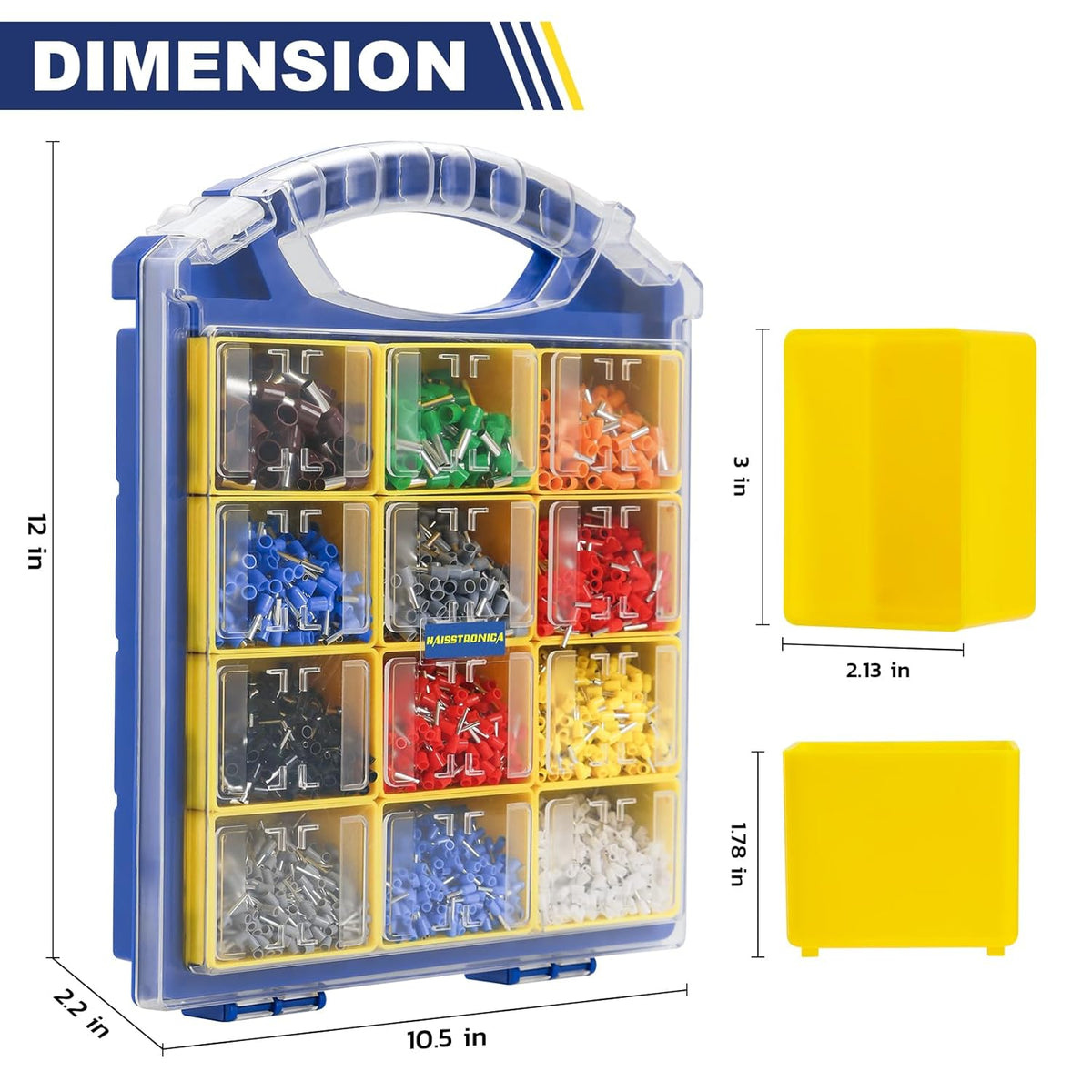
Before you start to crimp wires, it’s important to understand the terminals (connectors) you’ll be using. There are many types of electrical crimp connectors – for example, ring terminals for attaching to screw posts, spade/fork terminals for quick connections under a screw head, and butt splice connectors for joining two wire ends. Each of these crimp connectors is designed for specific wire sizes (measured in AWG), and using the correct size is critical. The terminal’s size must match the wire gauge to achieve a secure connection. Manufacturers make this easier by color-coding common insulated terminals by gauge: as a quick reference, red terminals typically fit 22–18 AWG wires, blue terminals fit 16–14 AWG, and yellow terminals fit 12–10 AWG. Always double-check the packaging or markings on your connector to confirm it’s rated for your wire’s gauge – using an undersized or oversized terminal will result in a weak crimp.

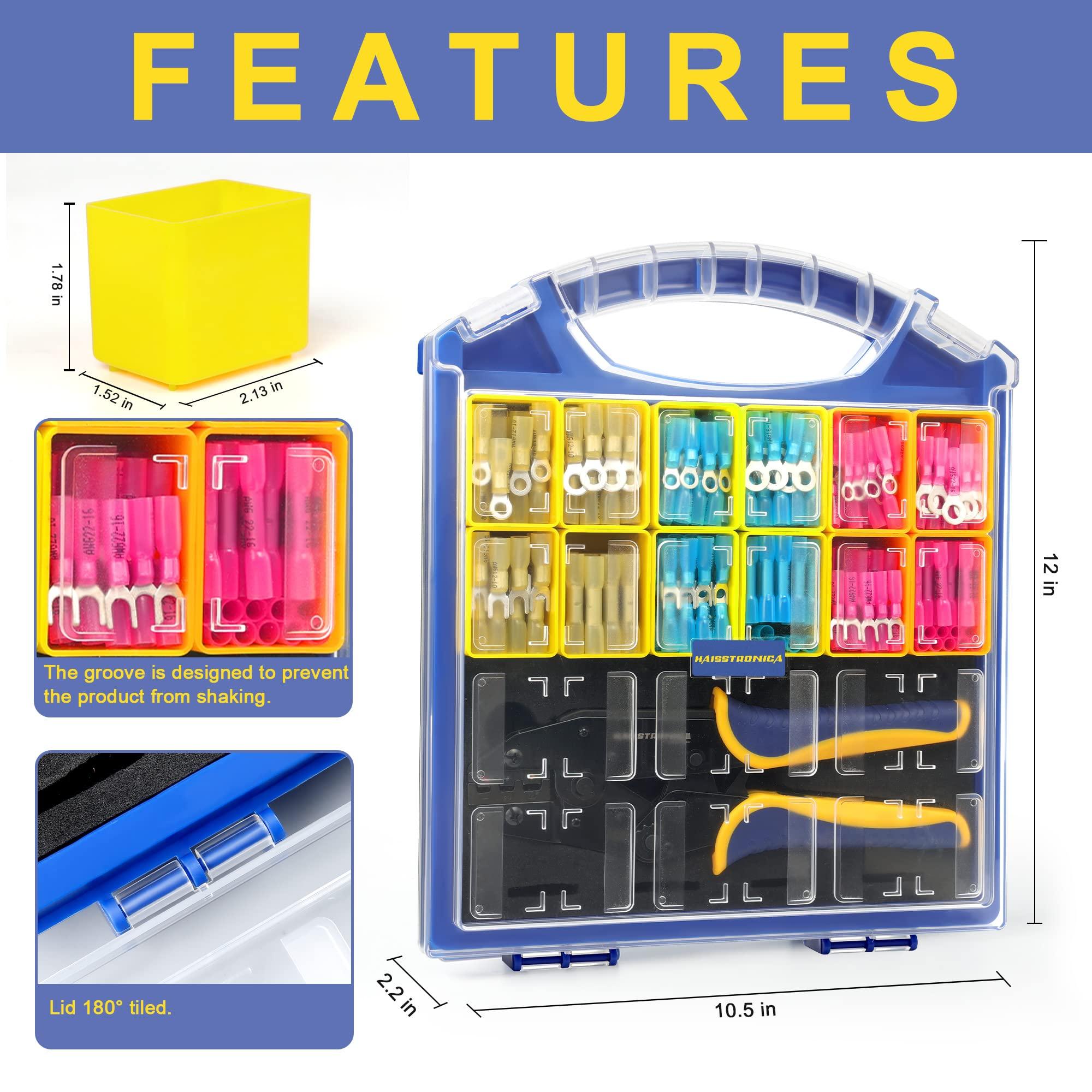
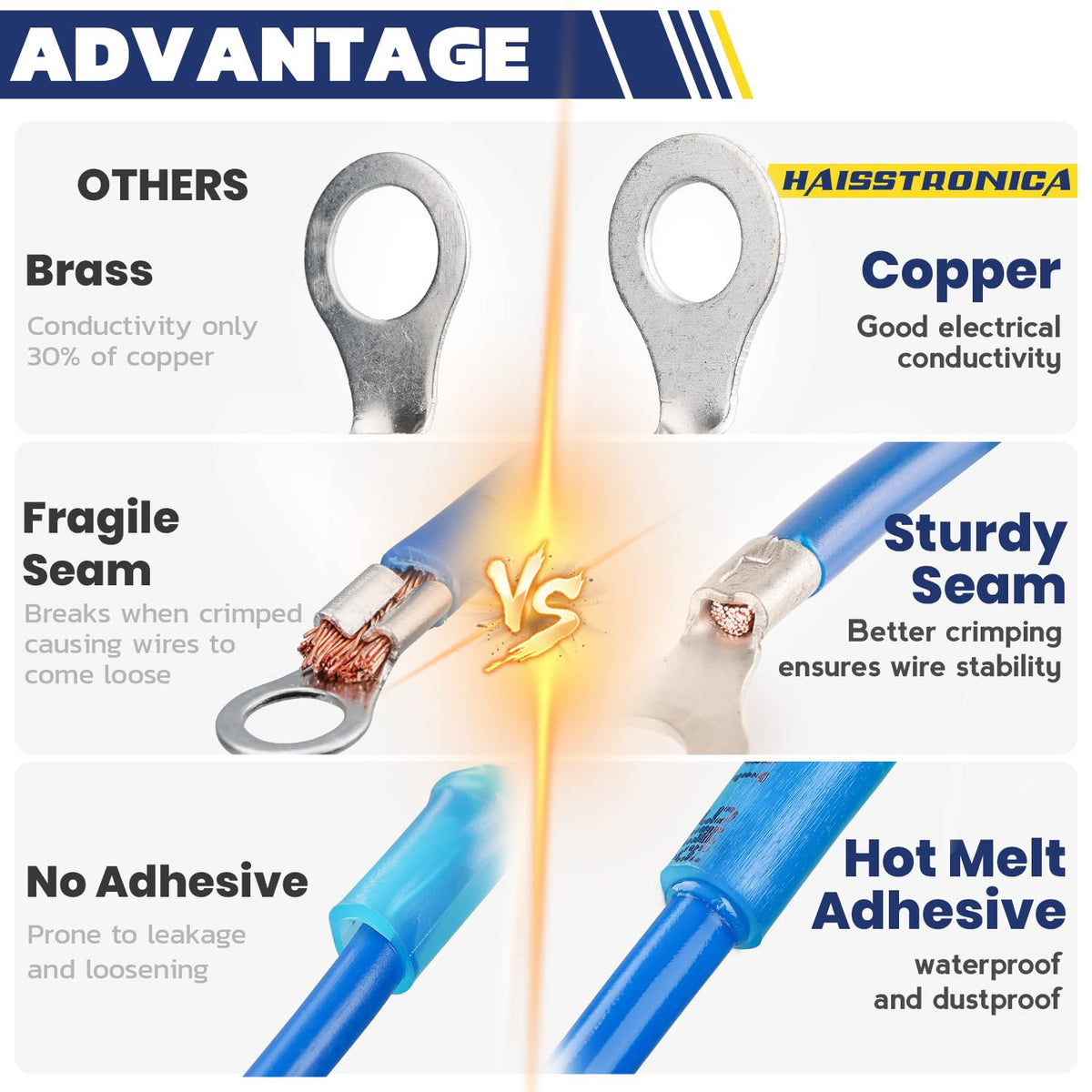
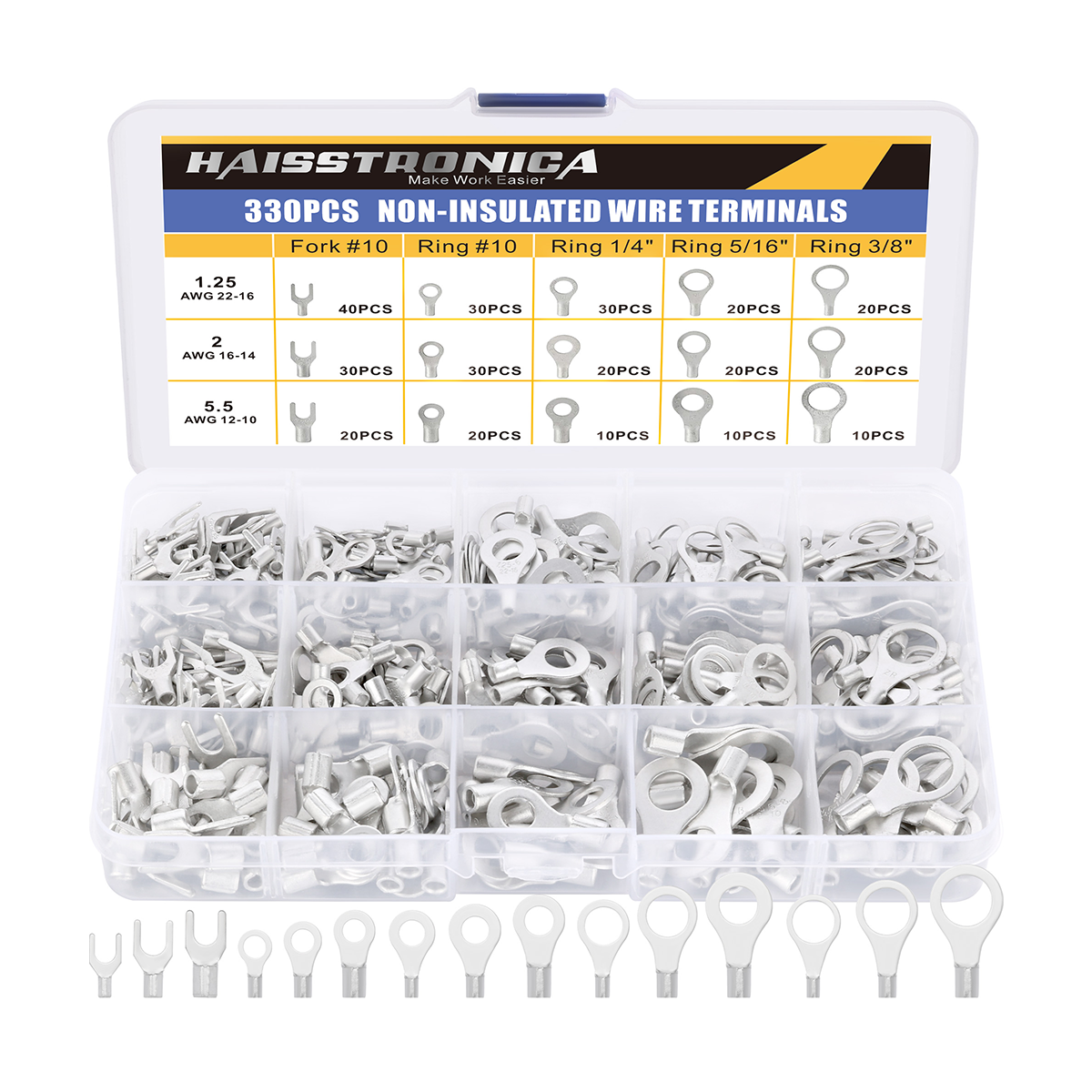
At the same time, choose the right type of terminal for your project. Insulated terminals have a protective sleeve (vinyl, nylon, or heat-shrink material) to prevent shorts and corrosion, while non-insulated terminals are bare metal (used when insulation isn’t needed or a separate insulation method is applied). Match your terminal type with the appropriate application and ensure you have the corresponding crimping tool or die for that type. For instance, do not use a crimper intended for non-insulated connectors on an insulated terminal, or vice versa – the crimping jaws are shaped differently for each, and mixing them can lead to a poor crimp. In short, knowing your terminals – their gauge range, insulation type, and purpose – is the first step toward successful wire crimping. Using quality connectors that suit your wire, and pairing them with a reliable crimping tool (like Haisstronica’s), ensures your wiring projects start off on the right foot with secure, electrically sound connections. (Haisstronica offers a variety of color-coded wire connectors and terminals to cover 22-10 AWG needs, so you can always find the right match for your wiring project.)

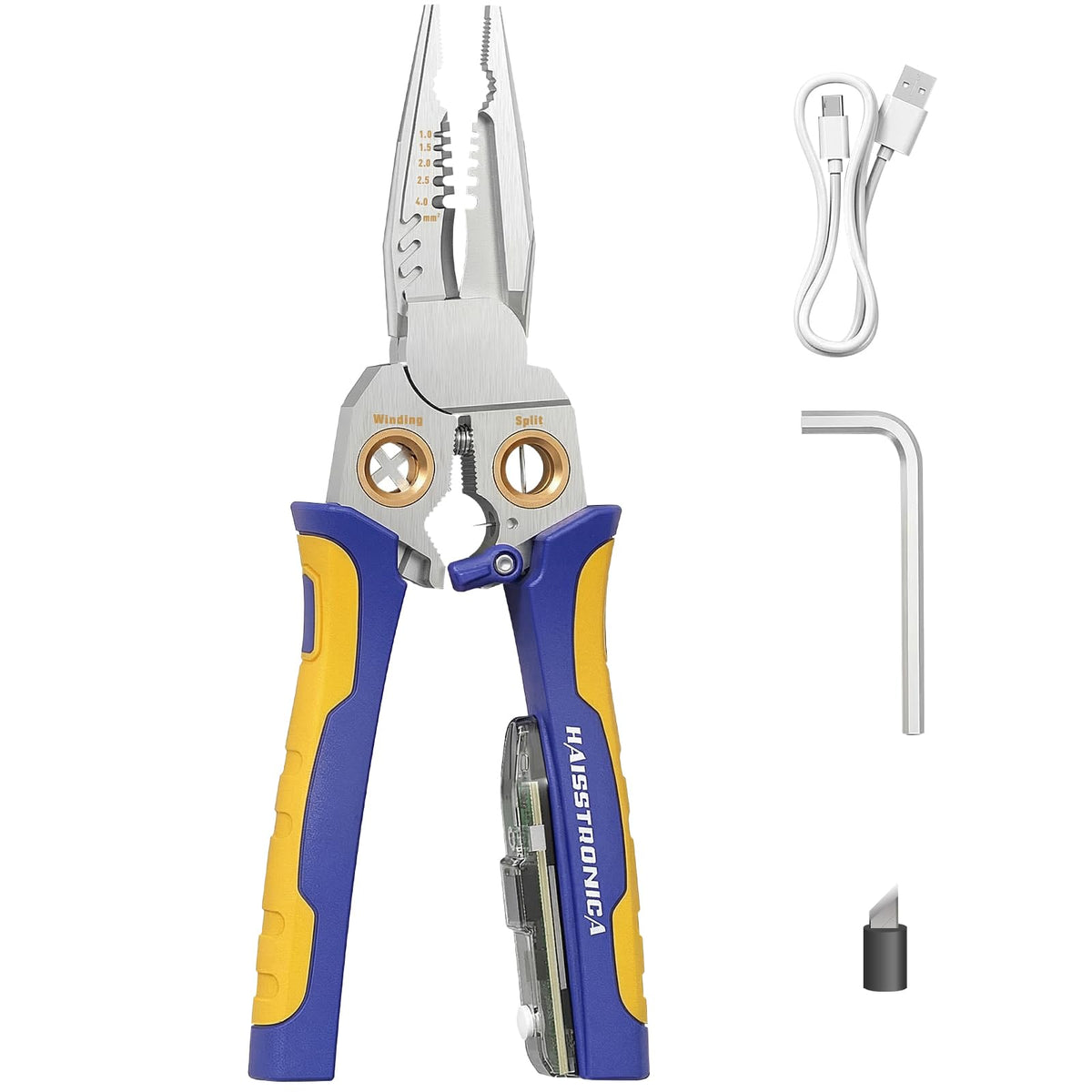
Haisstronica tool crimping spark plug terminals (single/dual crimp) with multi-functional jaws for stripping and crimping.

Tool & Die Matching (Choosing the Right Crimping Tool)

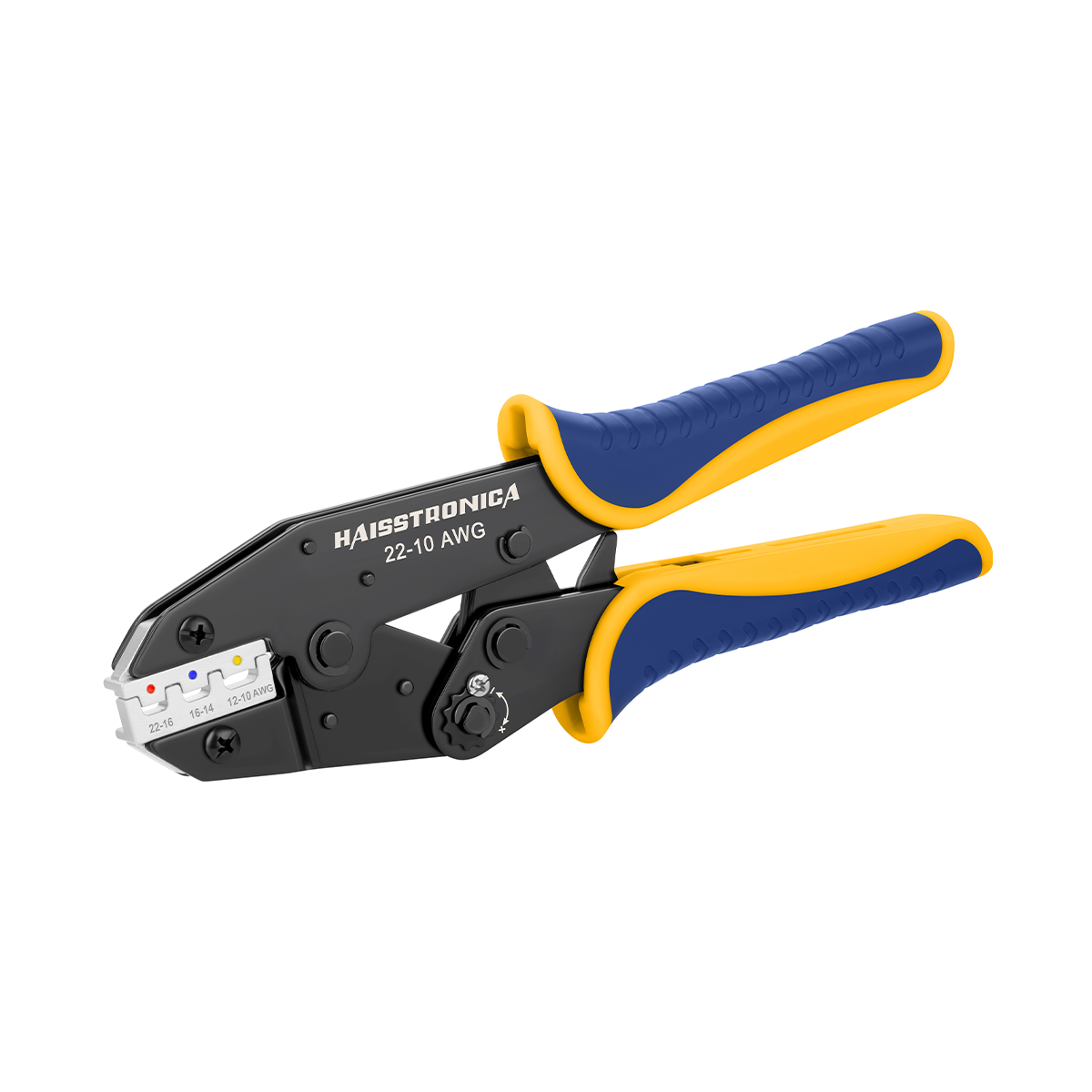
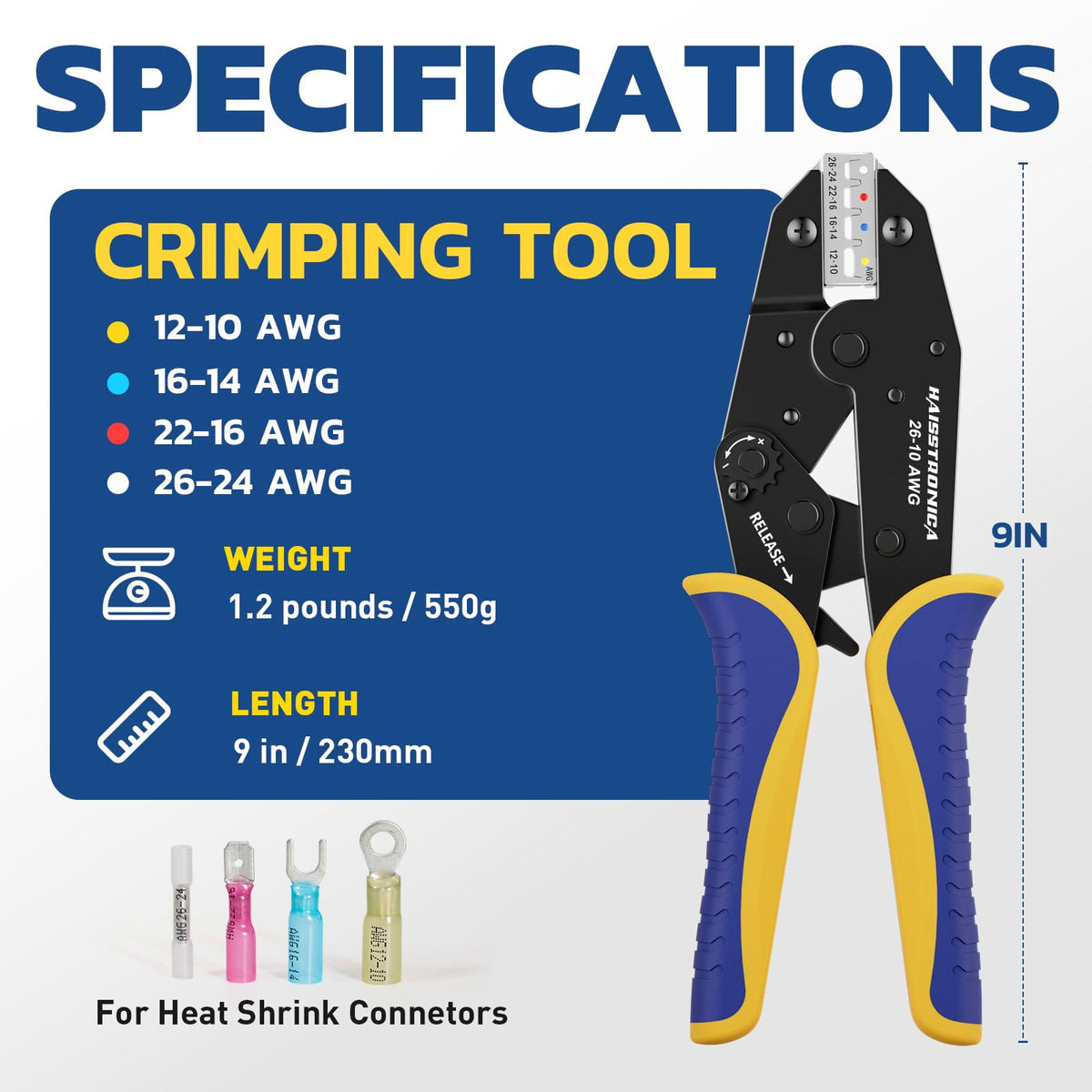
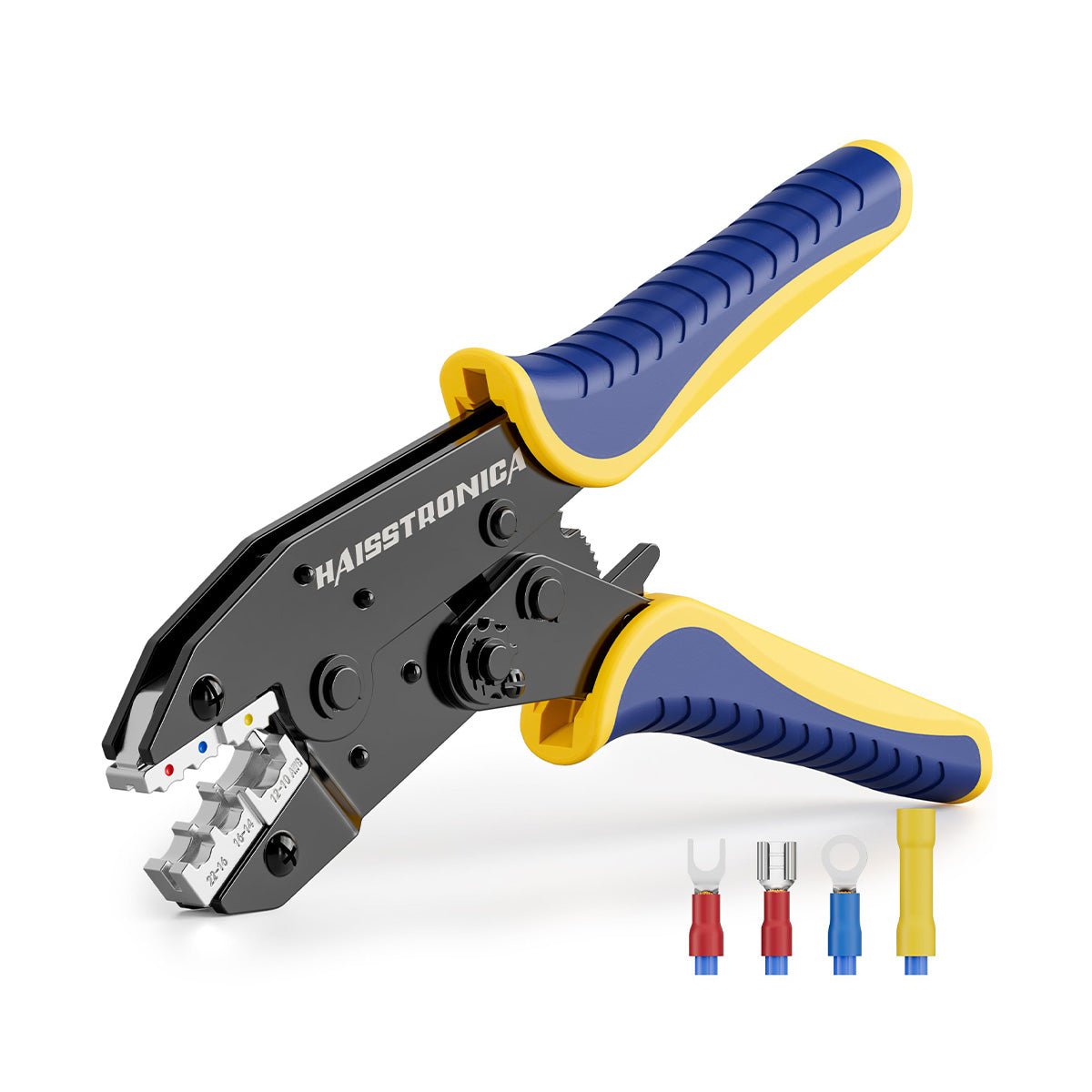
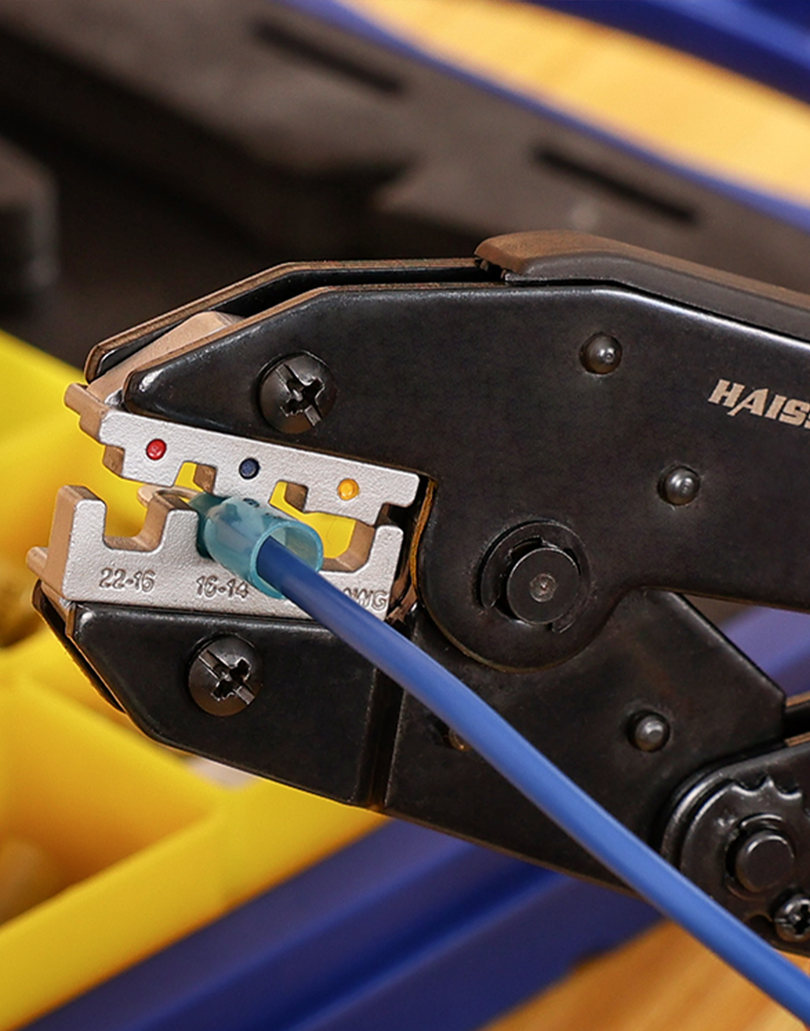
Equipping yourself with the right crimping tool is just as important as picking the right terminal. Crimpers come in different styles – from simple plier-style crimpers to advanced ratcheting crimpers – and they often have multiple jaw sizes (dies) corresponding to wire gauge ranges. For 22-10 AWG insulated terminals, a ratcheting wire crimp tool is highly recommended. Why? Ratcheting crimpers apply consistent pressure and won’t release until the crimp is fully compressed, ensuring a proper crimp every time. In fact, many ratcheting tools (including Haisstronica’s) have color-coded or labeled die cavities (red, blue, yellow) that align with the connector’s insulation color, giving you a visual cue that you’re using the correct slot for the wire gauge. This feature takes the guesswork out of die selection and helps even beginners use the tool correctly.

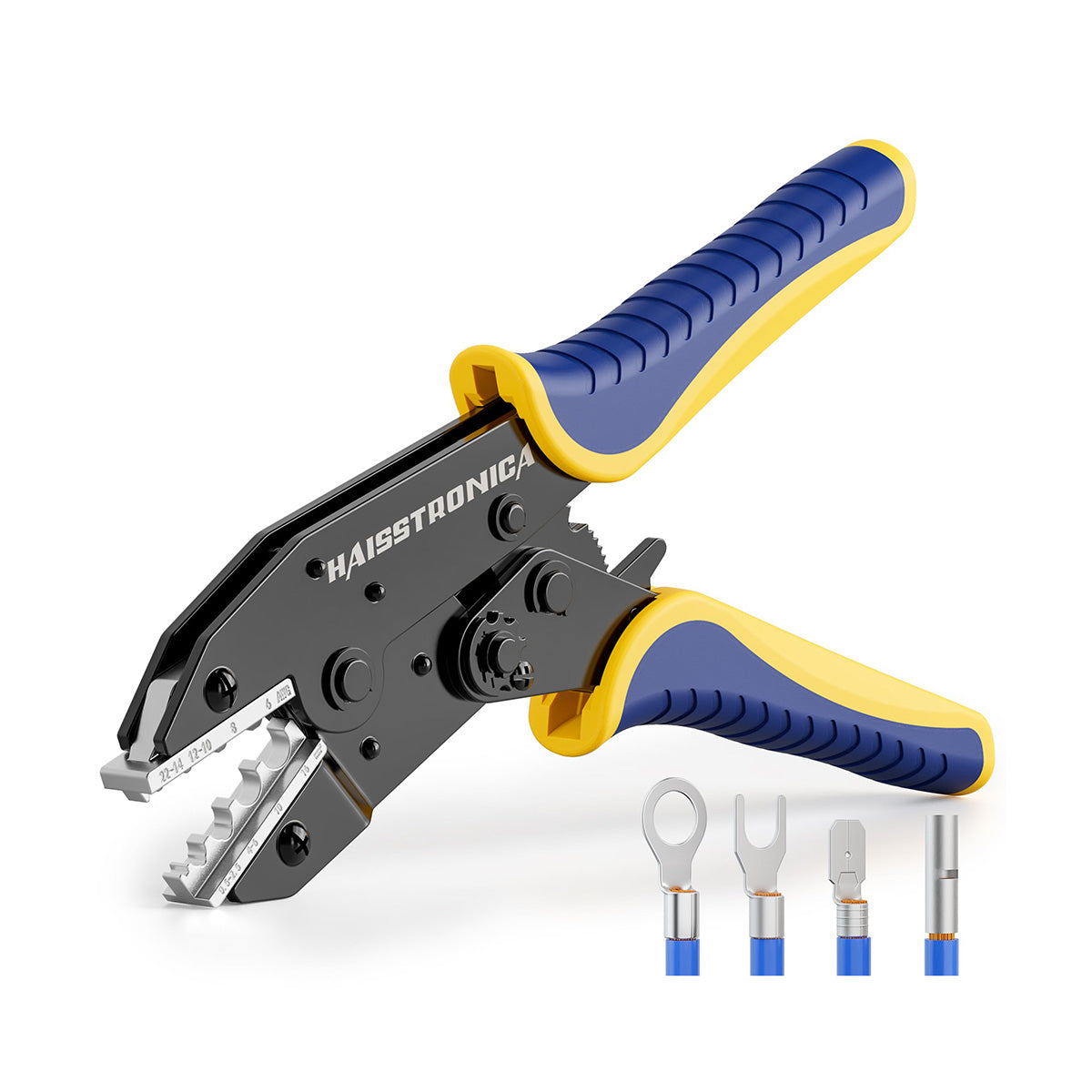
When matching tool and die to your connector, always use the tool recommended for that type of terminal. Manufacturers design their terminals to be crimped with specific crimp profiles and pressure. Using the wrong tool – or improvising with pliers – can result in crimps that don’t meet the designated specs and may fail under stress. For example, an insulated butt connector requires a crimper jaw that compresses the connector and its insulation properly; a tool meant for bare terminals might just flatten an insulated connector without gripping the wire correctly. Always ensure the crimper’s die size range covers your wire gauge and that it’s intended for your connector’s style. If your tool has interchangeable dies, select the die marked for the correct AWG (or the corresponding color code).

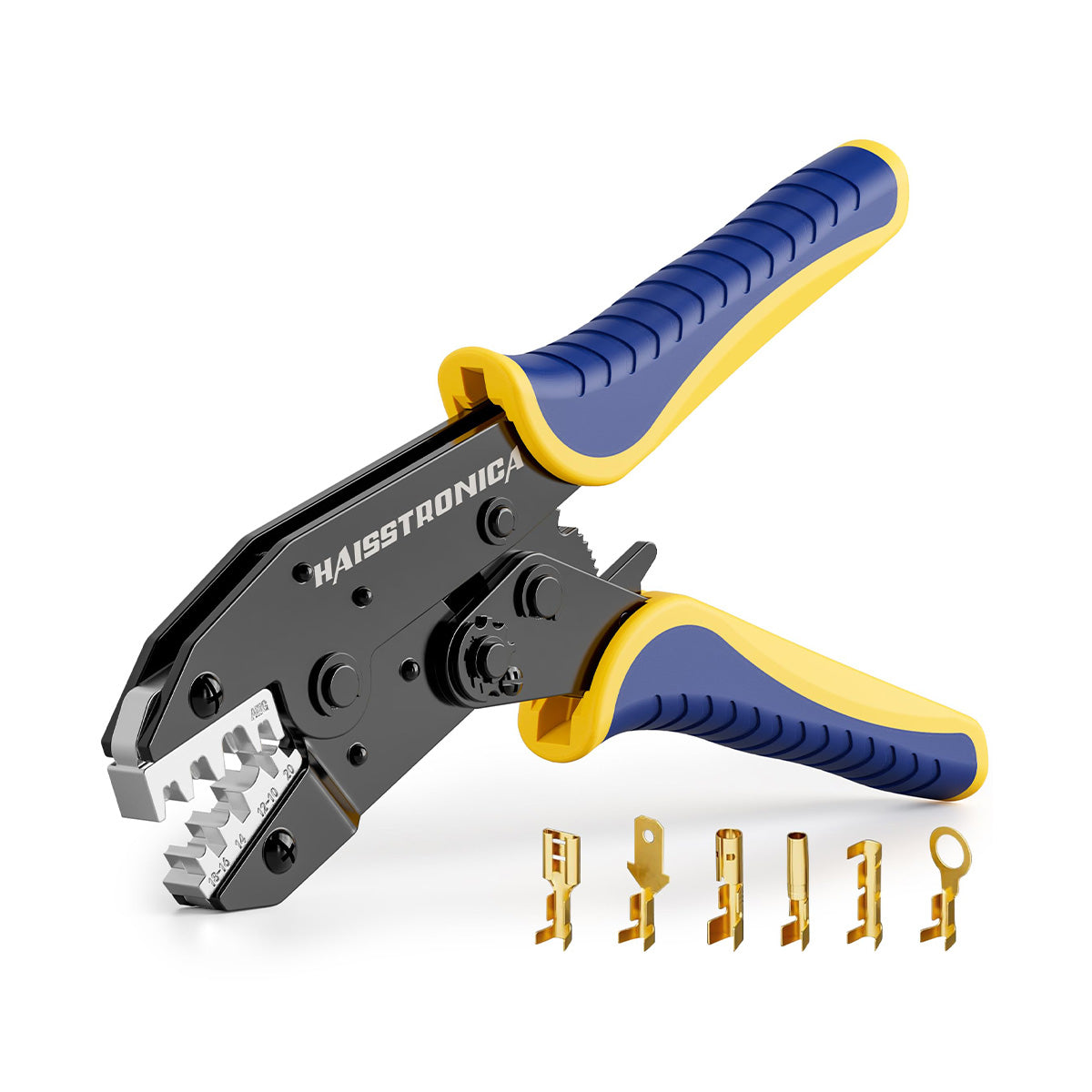
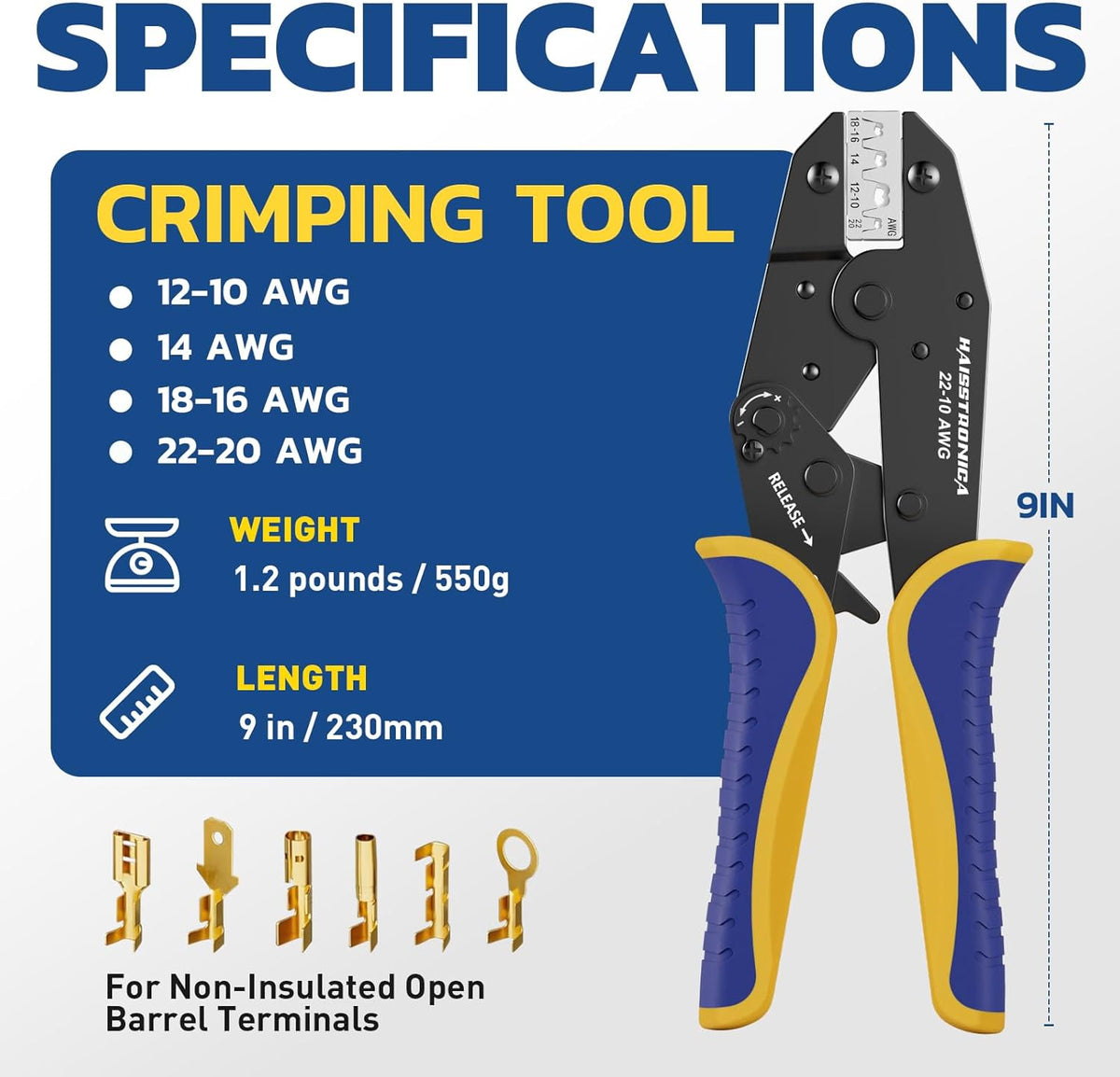
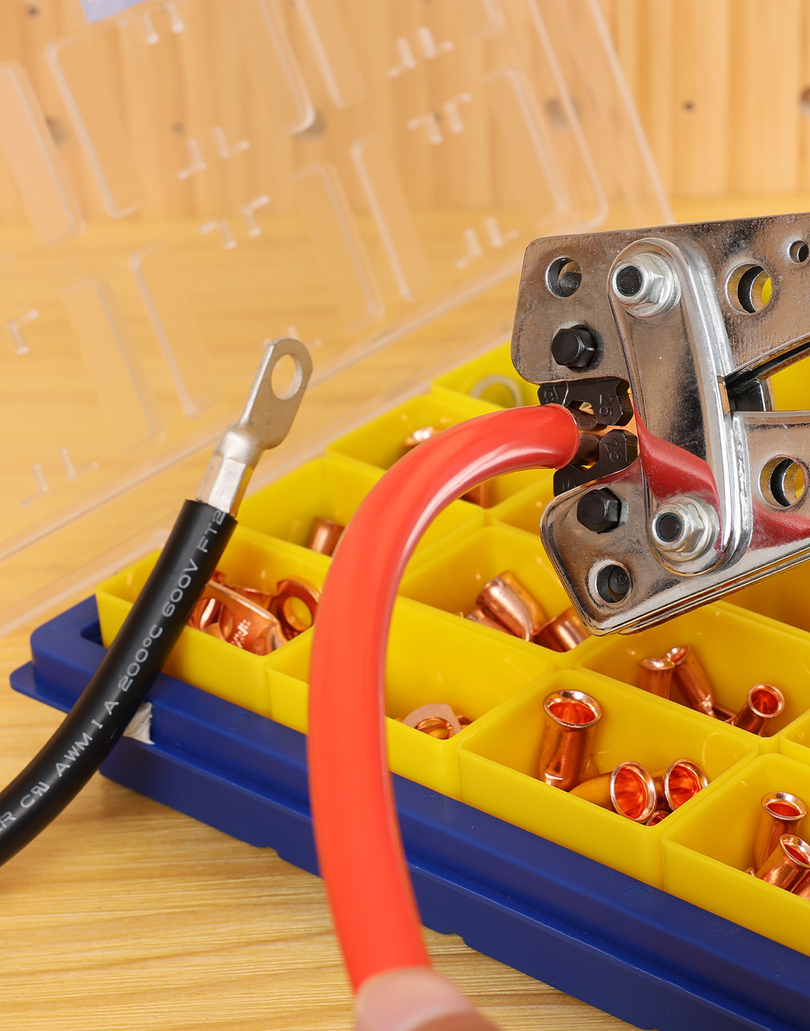
Many DIYers ask if they can use generic tools or even squeeze connectors with regular pliers – the answer is no if you want a reliable result. A purpose-made wire crimping tool is designed to create a gas-tight crimped connection that standard pliers can’t achieve. Instead of risking a bad crimp, invest in a quality ratcheting crimper. Haisstronica’s ratchet crimping tool for 22–10 AWG, for instance, is engineered for insulated electrical connectors and features a precise ratchet mechanism. According to industry standards, a good ratchet tool “will not release until the handles have been fully closed”, meaning your crimp is fully compressed before the tool lets go. This design ensures maximum tensile strength in the crimp and prevents incomplete crimps. Bottom line: the right tool and die mean the difference between a flimsy connection and a professional, long-lasting one. Haisstronica’s ratcheting wire crimper takes out the guesswork and effort – it’s a crimping tool that consistently produces secure crimps, making it a smart choice for beginners and experienced electricians alike. (Using a high-quality ratchet crimper like Haisstronica’s ensures you’re getting the best crimp every time – it’s one of the best wire crimp tools you can have in your toolbox for electrical projects.)

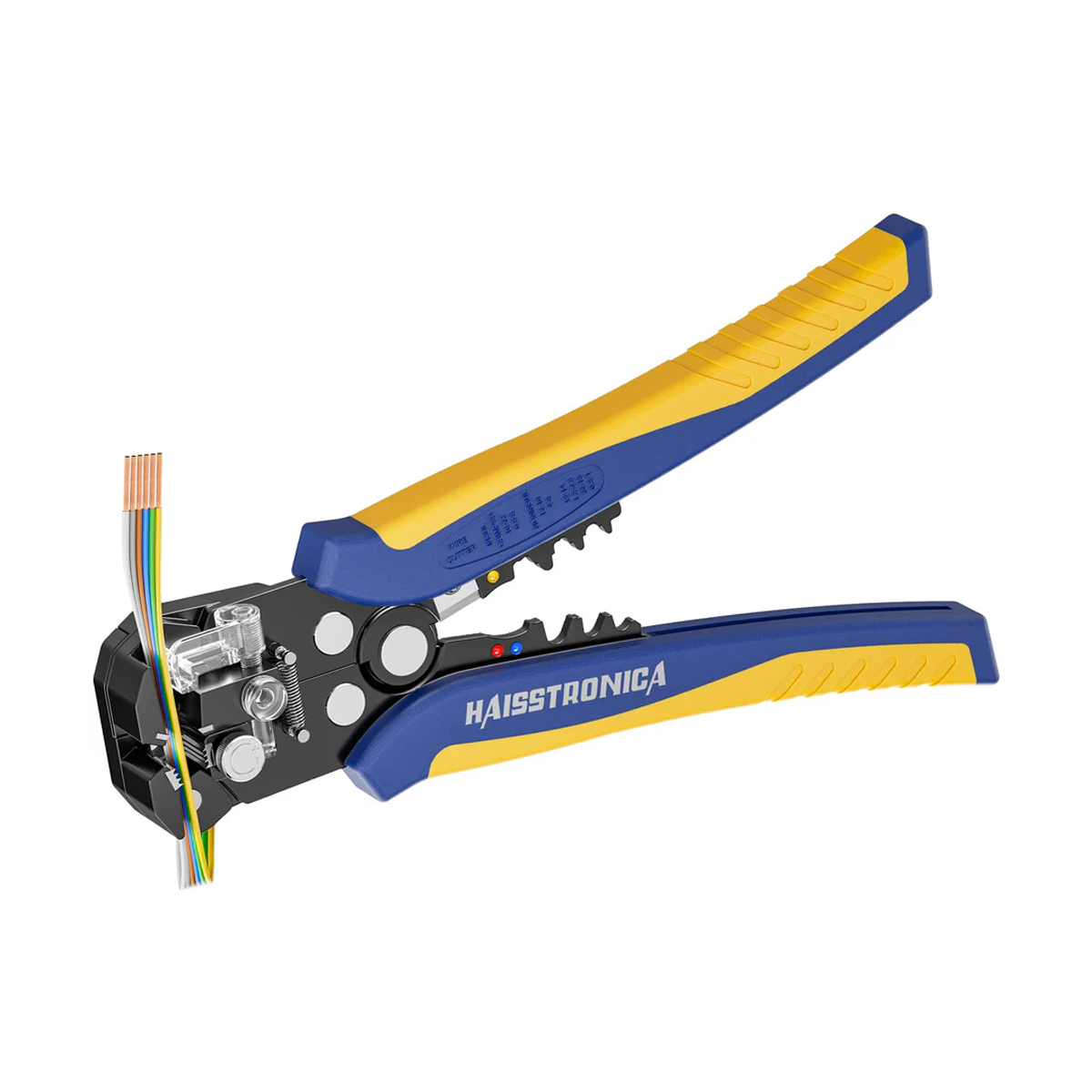
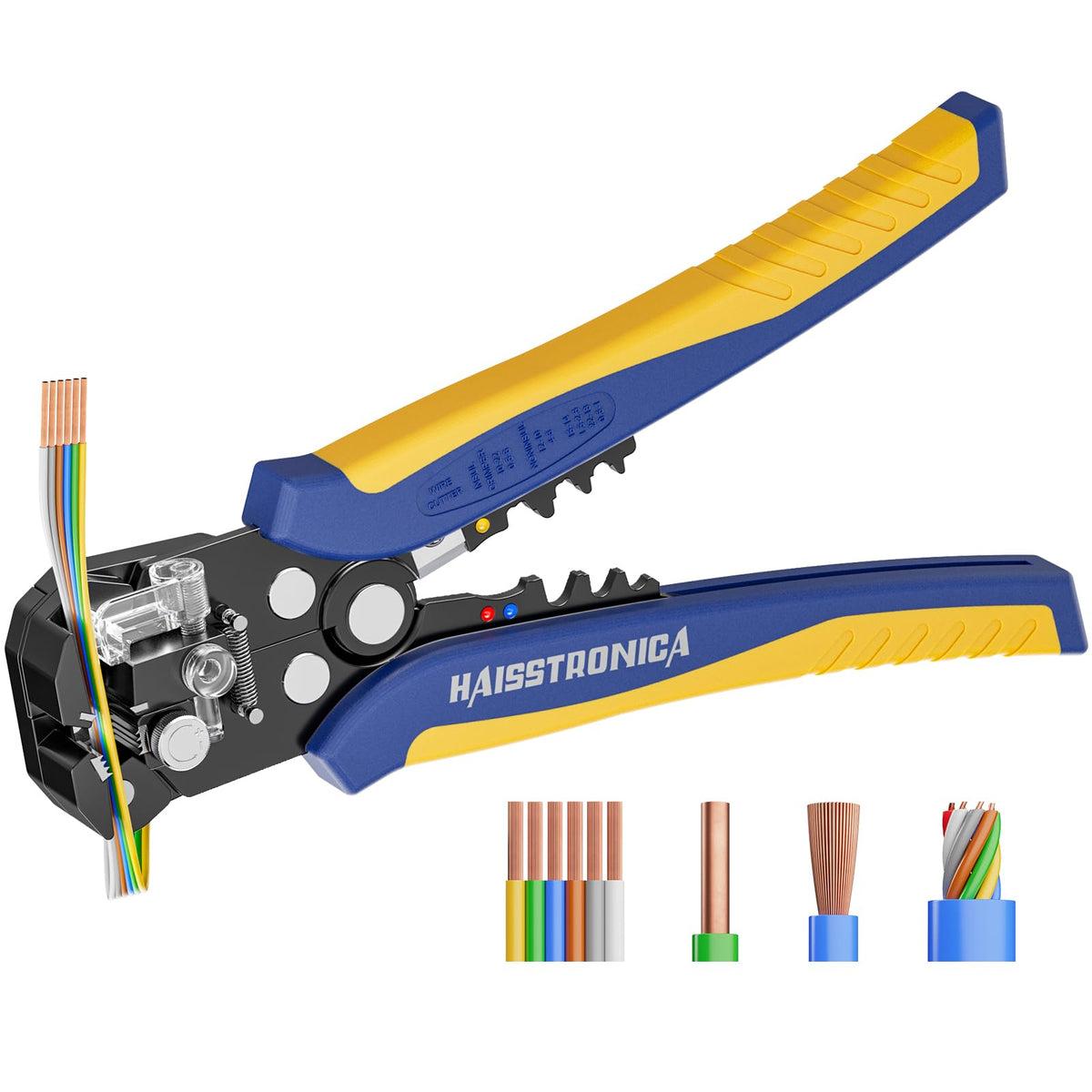
Haisstronica electric wire stripper, WEDM CrMoV jaws, HRC55-60, 10-24AWG (0.2-6mm²), insulated terminals.

Strip Length & Prep (Preparing Wires for Crimping)

With the correct connector and crimp tool in hand, the next step is preparing your wire. Proper strip length and wire prep are crucial for a perfect crimp. Start by stripping the wire’s insulation to the length that matches the terminal’s barrel. Check the terminal manufacturer’s recommended strip length if available – often, it’s about 1/4 inch (6mm) or so for common insulated terminals, but it can vary. The stripped portion of the wire should be just long enough that when inserted into the connector’s barrel, no bare wire is exposed outside the connector, and the insulation is nearly flush with the barrel end. Many crimp connectors have a stop or window that helps indicate the right strip length. If you’re unsure, err on the side of stripping a tiny bit less, test fit the wire, and trim more if needed; you want all the bare strands inside the metal barrel for the strongest crimp.

When stripping insulation, take care not to nick or cut the copper strands. Use a good quality wire stripper of the correct gauge setting so it only cuts the insulation, not the wire. Nicked strands reduce the wire’s cross-sectional area (lowering its ampacity) and can break off, weakening the connection. After stripping, inspect the exposed conductor: it should have all strands intact and untapped. If some strands were accidentally severed, it’s best to cut off that segment and strip fresh wire. Once stripped, you can twist the strands gently together with your fingers. This isn’t mandatory for crimping, but lightly twisting can keep the strands bundled tightly so they all slide into the terminal easily without splaying. (Do not over-twist or tin the strands with solder – more on that in a moment.)

Another key preparation step: never solder-tin the wire ends before crimping. It might seem like a good idea to coat the stranded wire in solder to make insertion easier, but this actually undermines the crimp’s performance. Tinned (solder-coated) wire ends are soft and will deform under the crimp’s pressure over time, loosening the connection. Experts and standards bodies warn that solder creeps under load and can lead to corrosion and intermittent faults in a crimped joint. In other words, a proper crimp is meant to be a metal-to-metal cold weld between the connector and bare copper strands – introducing solder prevents the crimp from achieving a gas-tight, spring-like grip. So, always crimp wires with clean, untinned bare strands for maximum reliability. If you need extra environmental protection, use connectors with heat shrink insulation or slide a piece of heat-shrink tubing over the wire beforehand – you can shrink it over the connection after crimping instead of soldering the conductor.

Finally, ensure everything is ready for assembly: the correct terminal is selected, stripped wire is the right length and in good condition, and (if you’re using any separate insulation like a heat-shrink tube) it’s positioned on the wire before you crimp. Preparation might seem trivial, but it sets the stage for the crimp tool to do its job. By properly preparing your wires, you’re paving the way for a flawless crimp. When you combine well-prepped wires with a quality ratchet crimping tool such as Haisstronica’s, you’re setting yourself up for crimping success every time. (Haisstronica’s ratchet crimper even comes with built-in wire stripping capabilities in some kits, ensuring you can strip and crimp with one reliable tool – making wire prep easier than ever.)

Haisstronica wire/cable stripper, cutting & crimping, blue/yellow, press shear, easy crimping.

Step-by-Step Technique: Crimping Wires Perfectly

Now for the main event – actually crimping the wire to the connector. In this section, we’ll walk through a step-by-step crimping technique using a ratcheting crimp tool. Follow these steps to crimp wires perfectly:

  1. Select the right terminal for your wire: Verify that you have the correct connector type and size for the wire gauge. The wire’s AWG should fall within the terminal’s range (e.g. use a yellow insulated connector for a 10–12 AWG wire, a blue connector for 14–16 AWG, red for 18–22 AWG, etc.). Also ensure you’re using the matching insulation type (insulated connector with an insulated crimp die, etc.). Using the proper connector is the foundation for a successful crimp – you want it to fit snugly on the wire and in the crimper’s die. (Having an assorted kit of Haisstronica terminals on hand can make it easy to find the perfect connector for any 22-10 AWG wire you’re working with.)

  2. Prepare and strip the wire: Cut the wire to your desired length (if not already cut) and strip off the insulation to the length required for the terminal. As discussed in the prep section, remove just enough insulation so that the bare wire fits fully inside the terminal’s metal barrel with little or no excess exposed. For most common connectors, about 1/4″ of bare wire is a good starting point. Use a wire stripping tool with the correct gauge slot to avoid damaging the strands. After stripping, check that all wire strands are intact and not nicked. If the strands are fraying, twist them gently together so the end is neat and can insert smoothly into the connector.

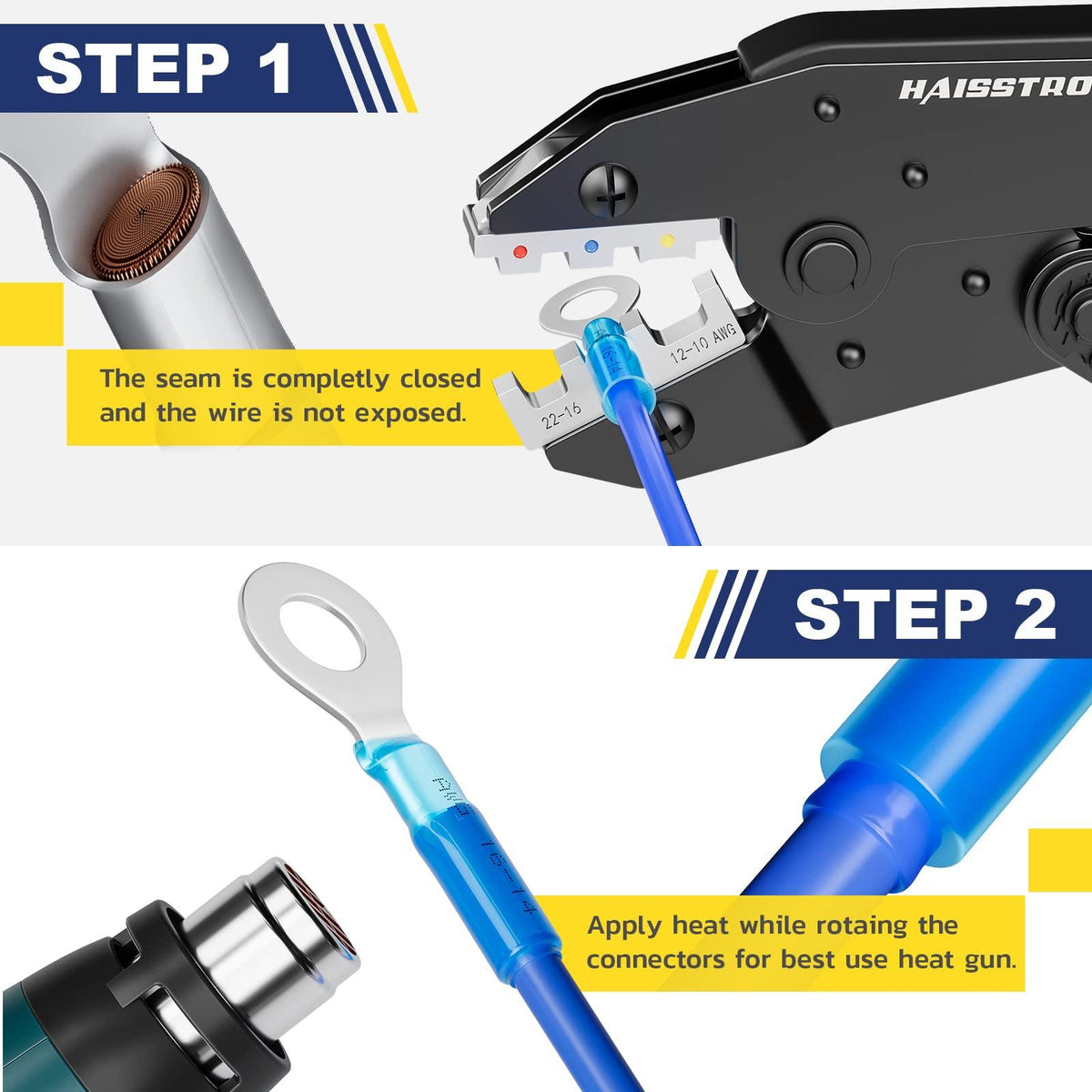
  3. Place the terminal into the crimping tool: Open your ratchet crimping tool to the fully open position. Identify the correct crimping die (jaw slot) for the connector – on a 22-10 AWG ratchet crimper, you’ll typically see three color-coded or labeled slots (red, blue, yellow) corresponding to the connector’s color/gauge. Place the terminal into the appropriate slot. For an insulated terminal, position it so that the crimper’s jaw will compress the metal barrel (usually the side opposite the seam on the connector will face the indenter part of the die). If your tool has a locator or nest, seat the terminal accordingly. Squeeze the handles slightly to close the jaws just enough that the terminal is held in place (the ratchet mechanism will click a step or two). The connector should now be lightly trapped in the jaws, allowing you to let go of it – this “pre-crimp” positioning holds the terminal steady for the next step. (If you’re using Haisstronica’s ratchet crimper, you’ll notice how the tool’s precise jaws align perfectly with the connector, making this positioning easy.)

  4. Insert the stripped wire into the terminal: With the terminal secured in the crimper, take your stripped wire and insert it into the terminal’s barrel from the open end. Push it in until the wire’s insulation meets the back of the terminal and the copper strands are fully inside. Ideally, you might see the end of the wire just flush with the end of the barrel or peeking out slightly through any inspection window the connector has. It’s important that all the bare strands are inside the barrel – if a few strands bunch up or fold out, release the crimp tool and start over, because those stray strands won’t be crimped and could cause a poor connection. Once the wire is inserted properly, you’re ready to crimp.

  5. Crimp the connector onto the wire: Now, squeeze the crimp tool handles firmly and steadily through the full ratcheting cycle. The ratchet will progressively tighten the jaws around the terminal. Apply enough force to completely compress the terminal – on a ratcheting tool, you’ll feel increased resistance and then a final release click when the crimp is complete. The tool will not release until the crimp has been fully pressed, ensuring you’ve achieved the necessary compression. As you crimp, the metal barrel of the connector will deform around the wire. For insulated terminals, you’ll notice the crimper also compresses the insulation grip (if the connector has one). When the handles hit the fully closed position, the ratchet should automatically release. Do not stop or release early – make sure you go all the way until the tool opens after the final click. A proper crimp will result in the terminal being indented or an “uneven” flattened shape and the wire locked firmly in place.

  6. Remove and inspect the crimp: Open the crimper jaws and remove the now-crimped wire connector. Inspect the crimped connection closely. The connector’s barrel should be crimped tightly onto the wire – you’ll usually see an imprint or indentation where the die compressed it. The wire’s insulation should butt up close to or slightly into the connector’s insulation (for insulated types), and there should be no loose strands visible. Give the wire a gentle tug test: pull on the wire while holding the connector – the wire should not slide out of the crimp at all if it’s a good crimp. If the wire slips out or feels even slightly loose, the crimp is inadequate (perhaps the wrong slot was used, or the wire was too small/large for the connector, or the crimper wasn’t closed fully). In that case, do not leave it – cut off the failed connector and start over with a new one, repeating the process properly. It’s better to redo a crimp now than to have it fail in service later.

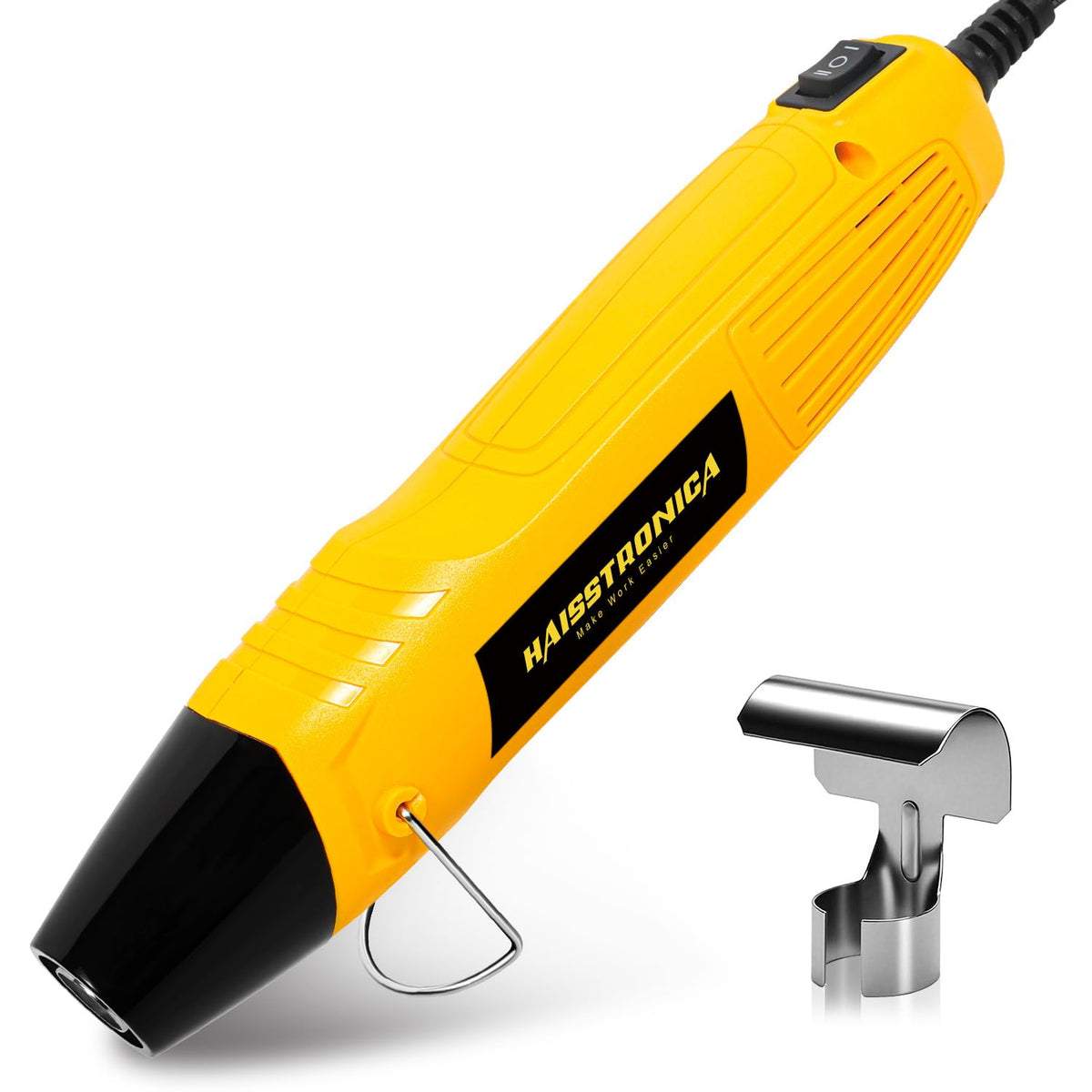
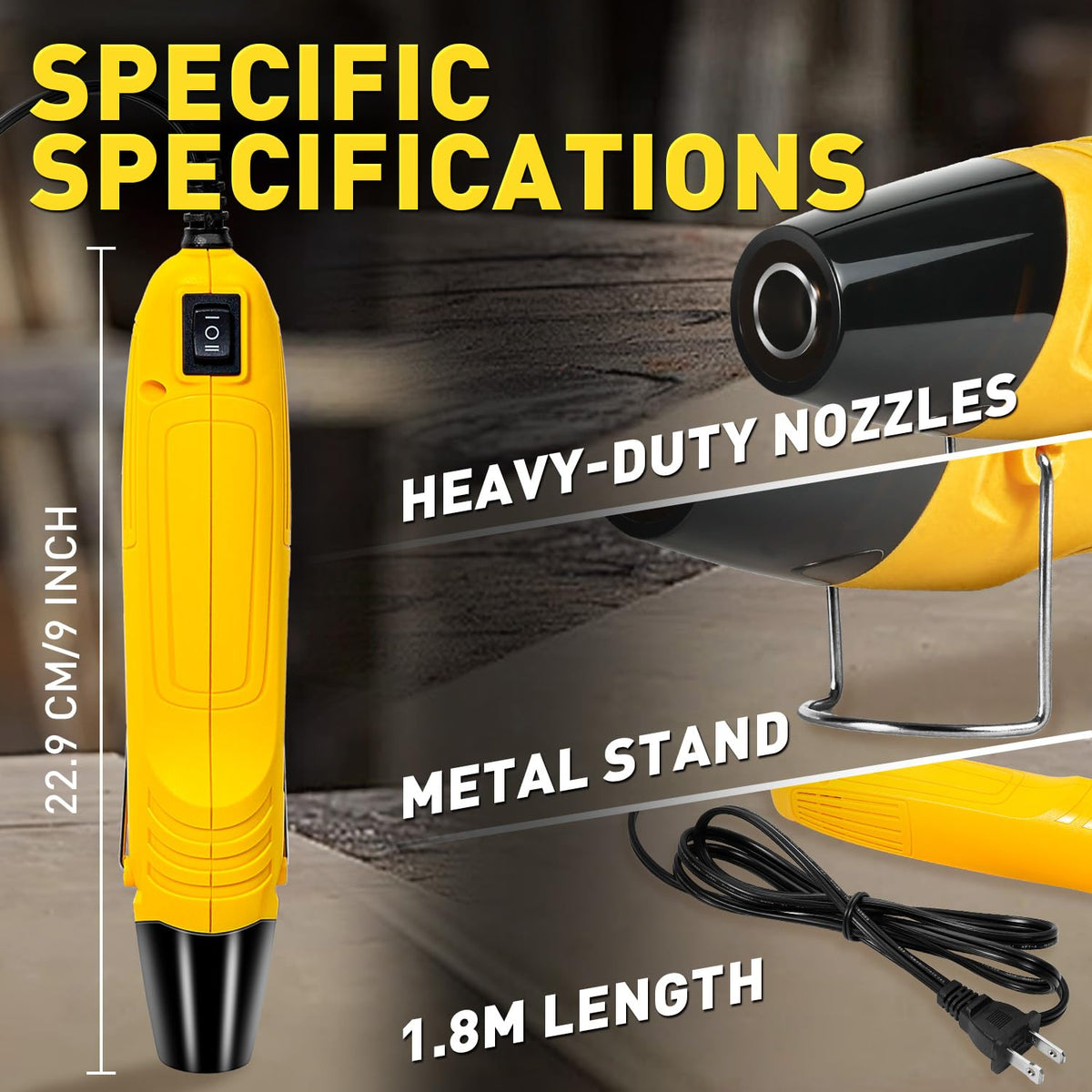
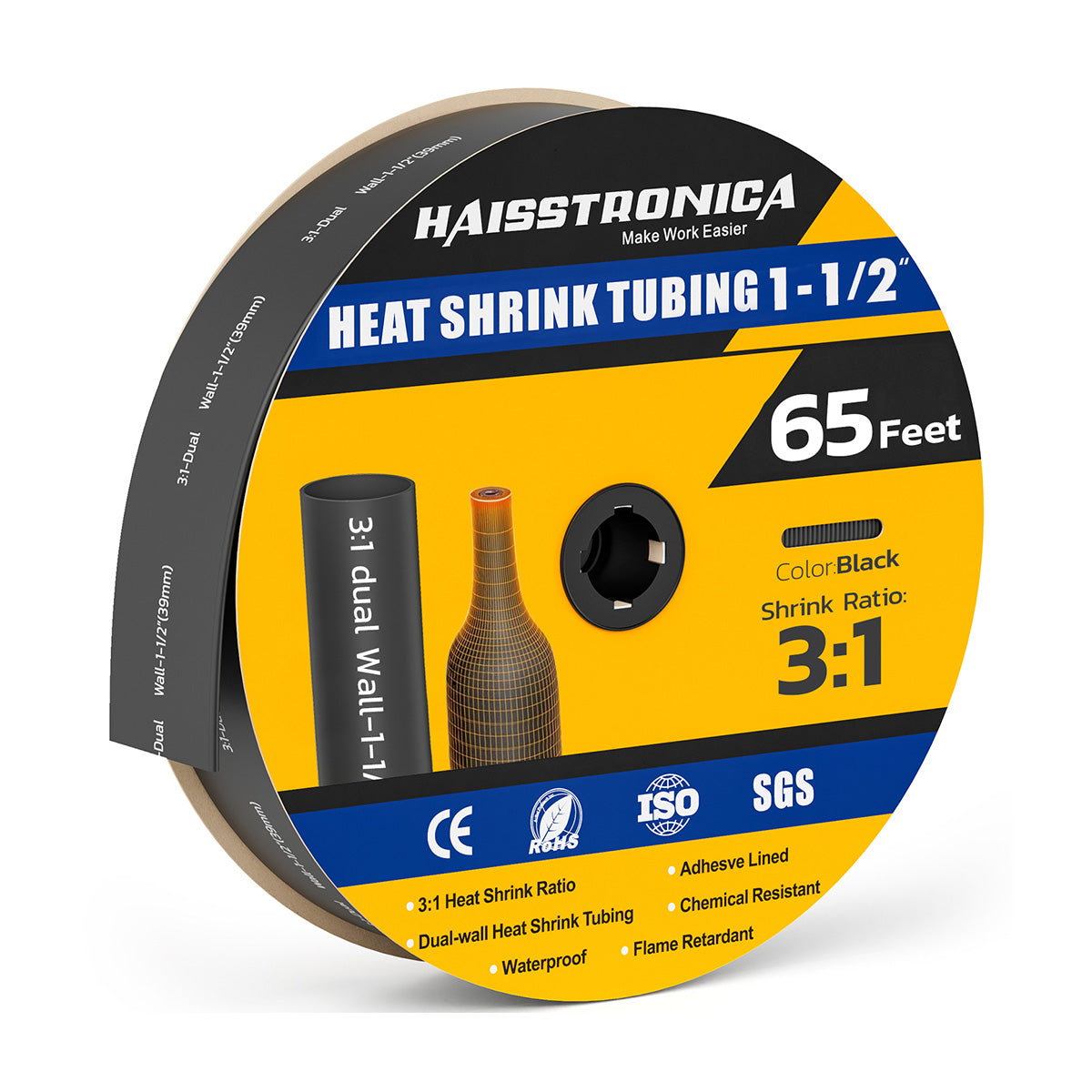
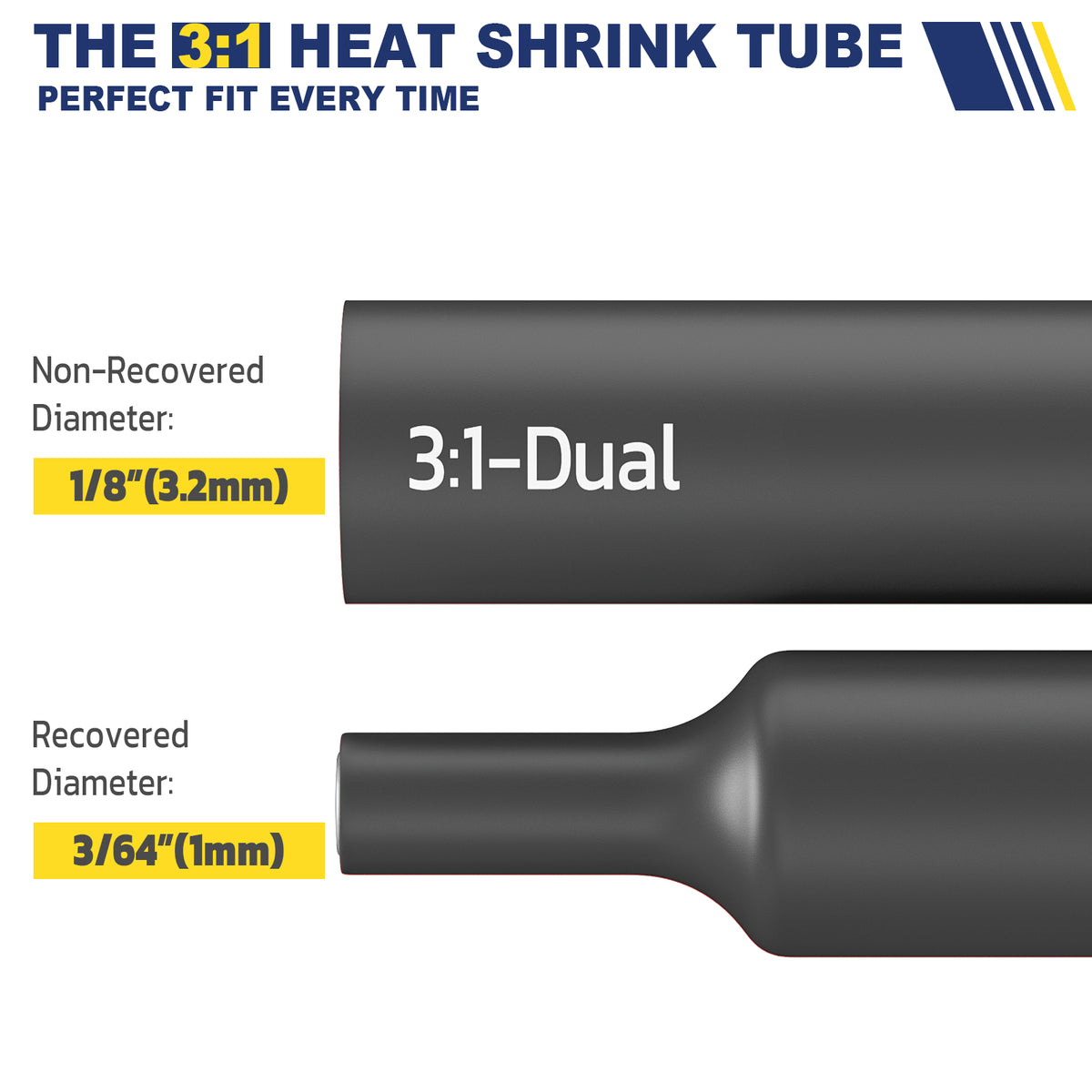
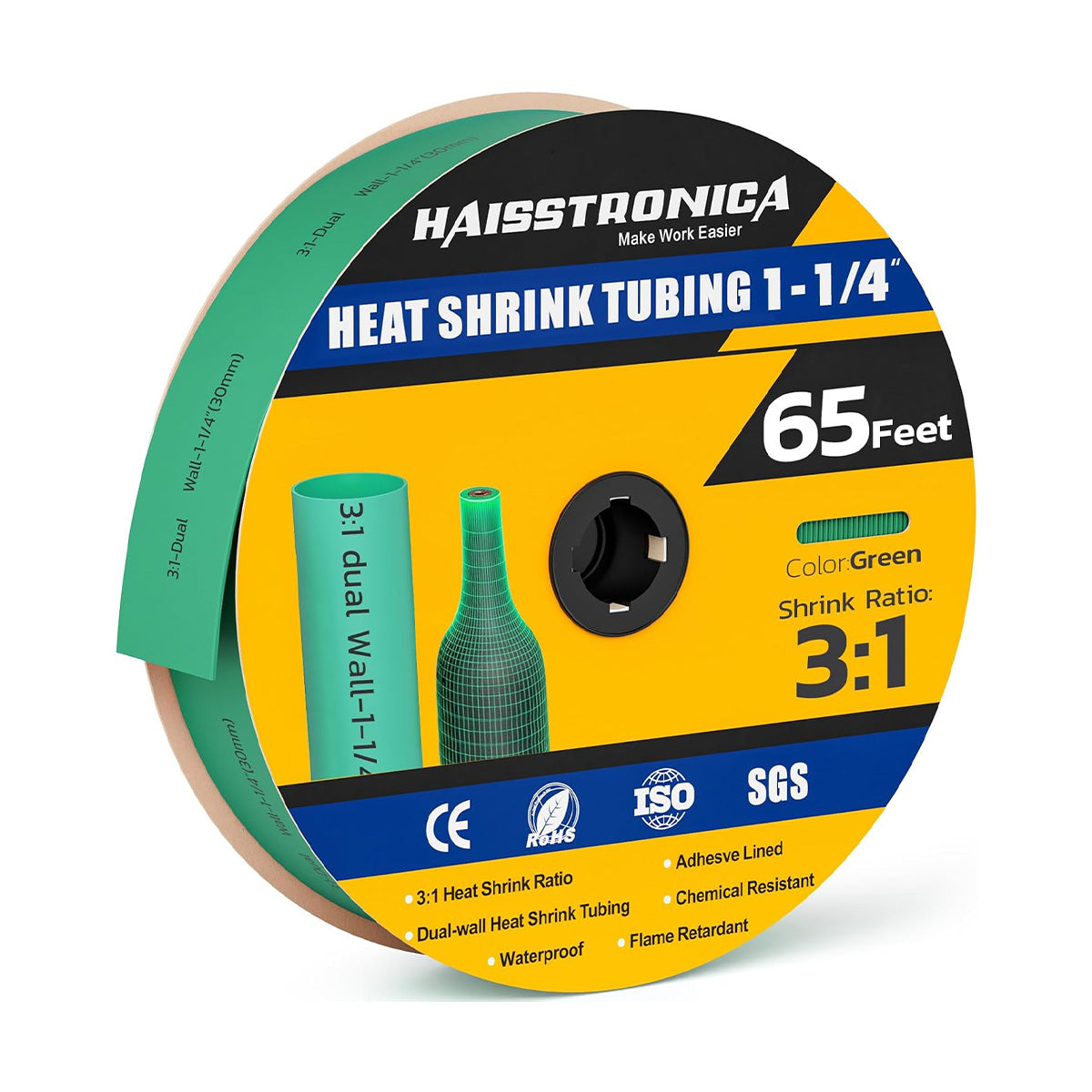
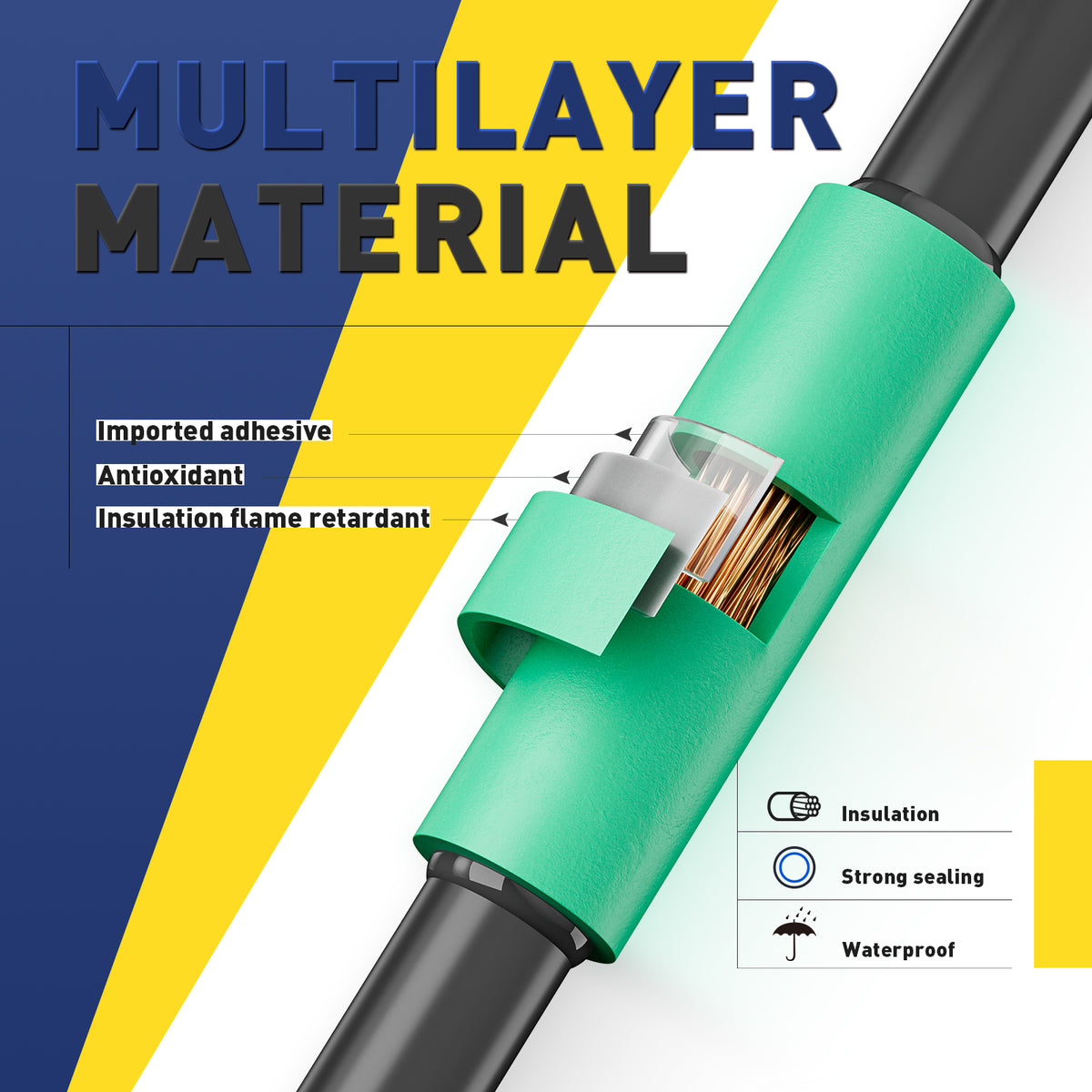
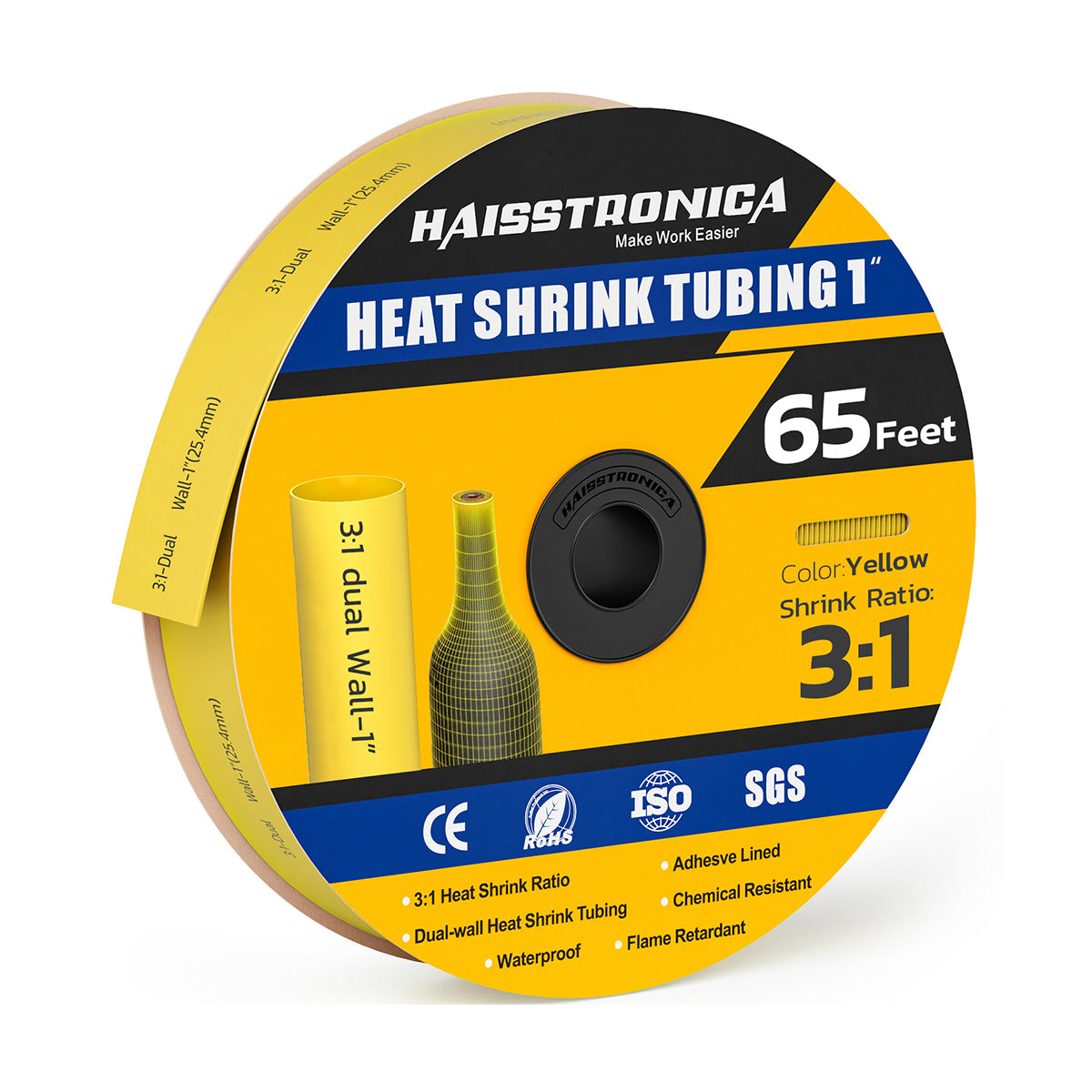
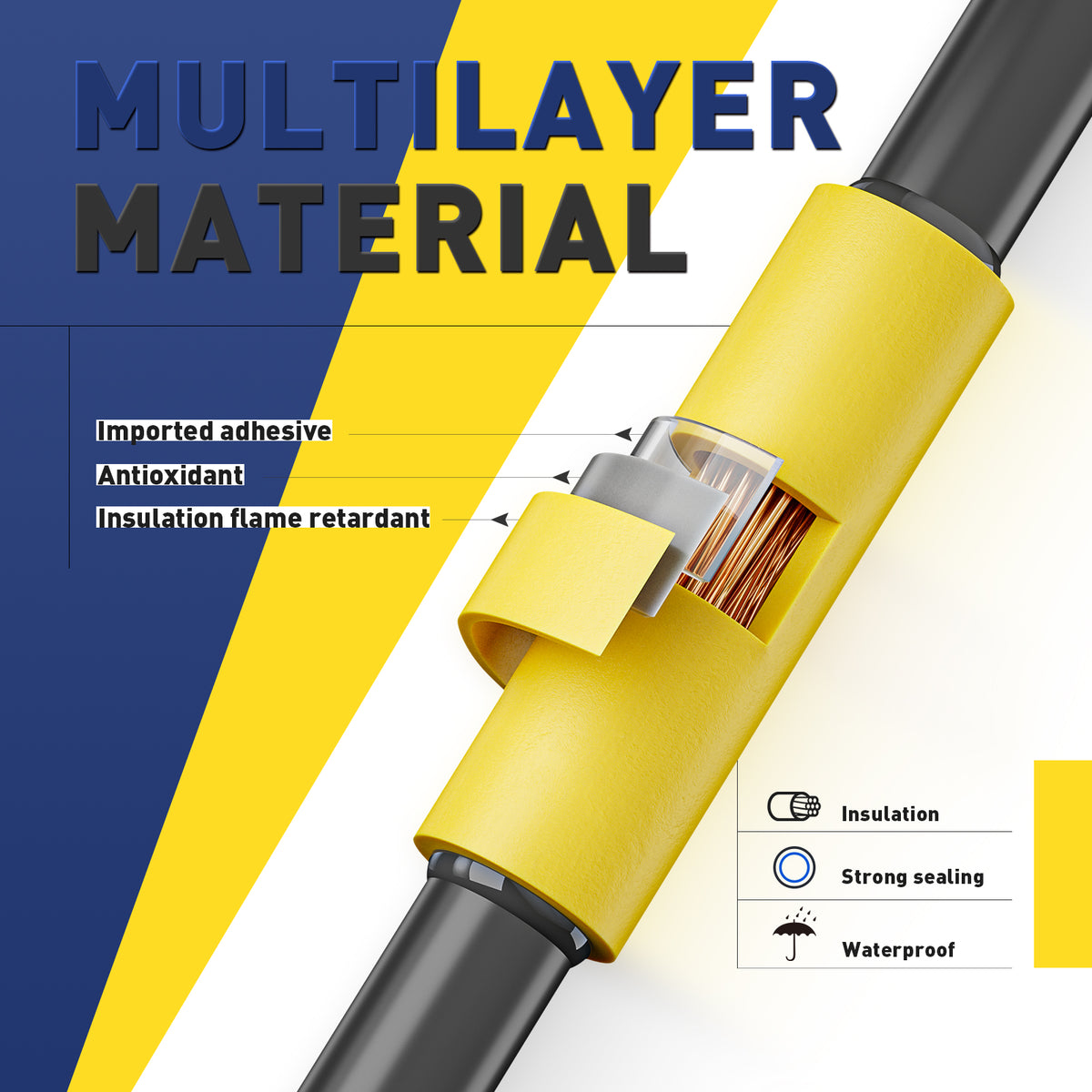
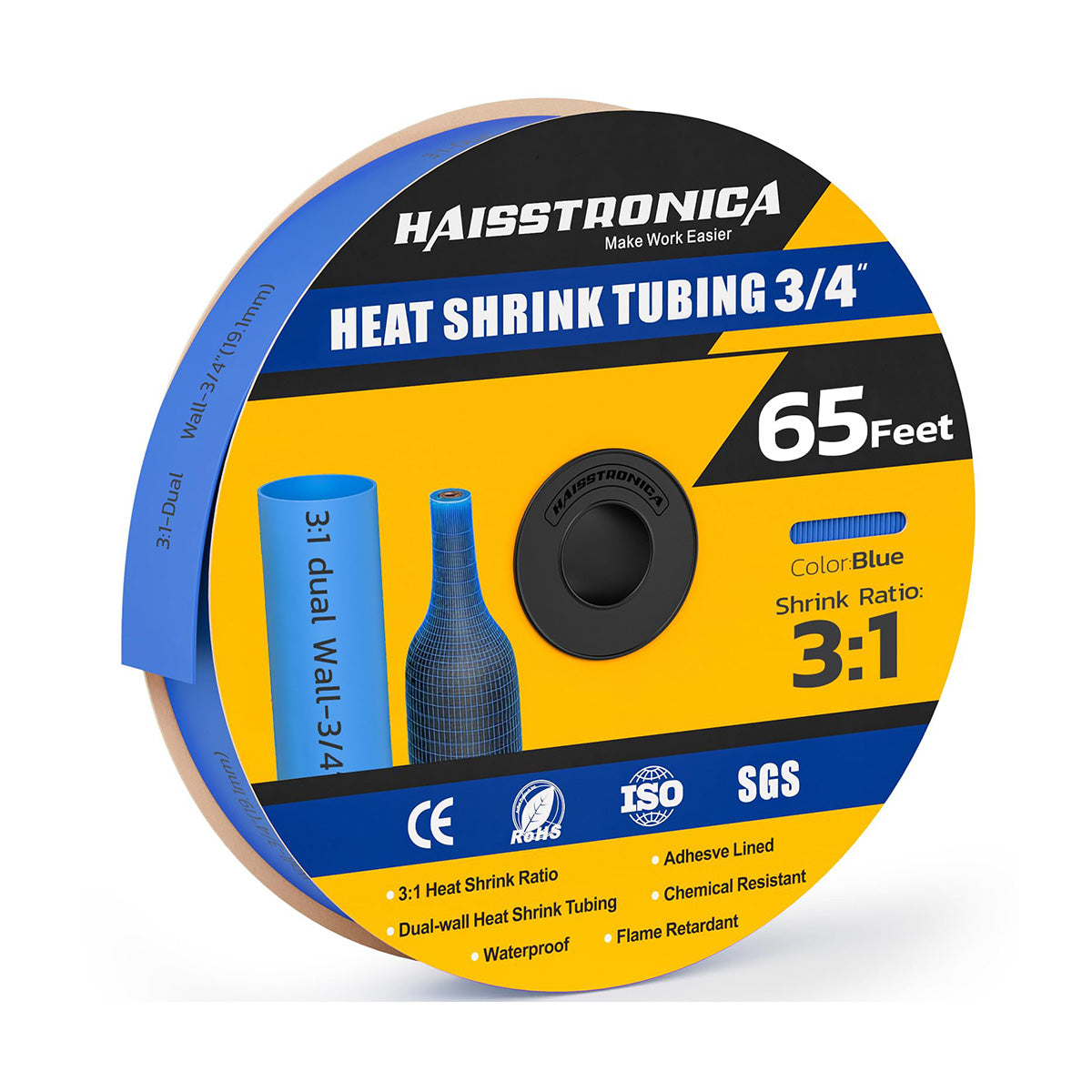
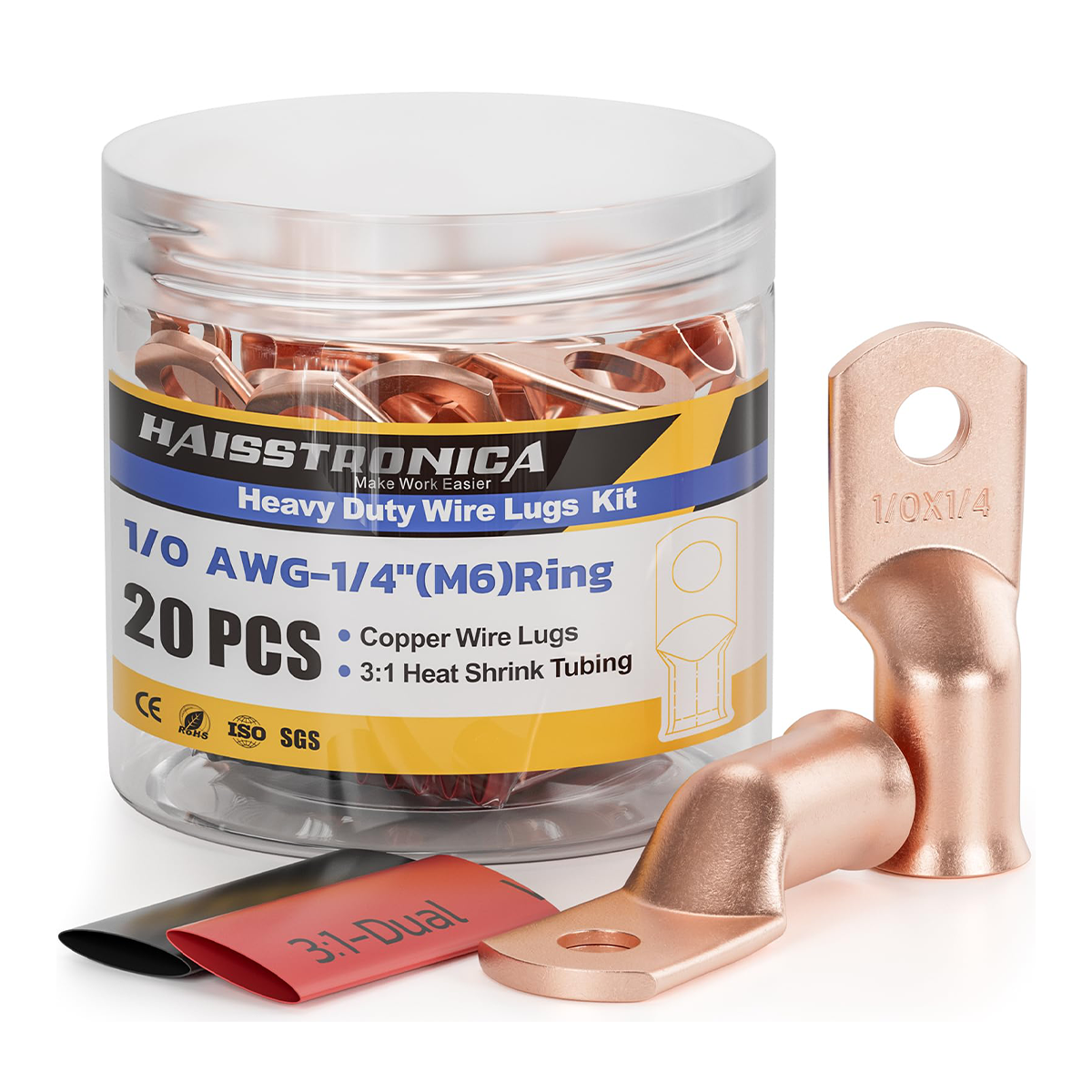
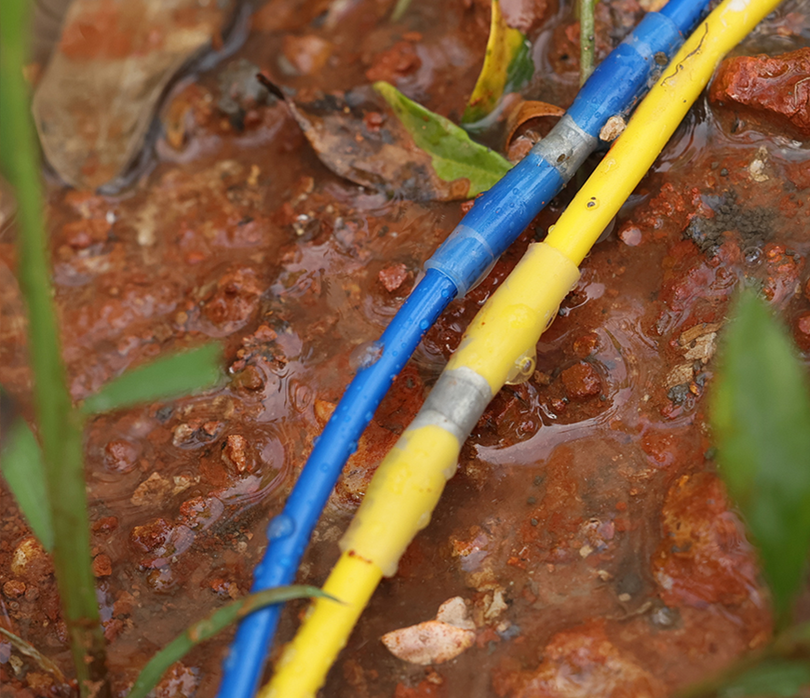
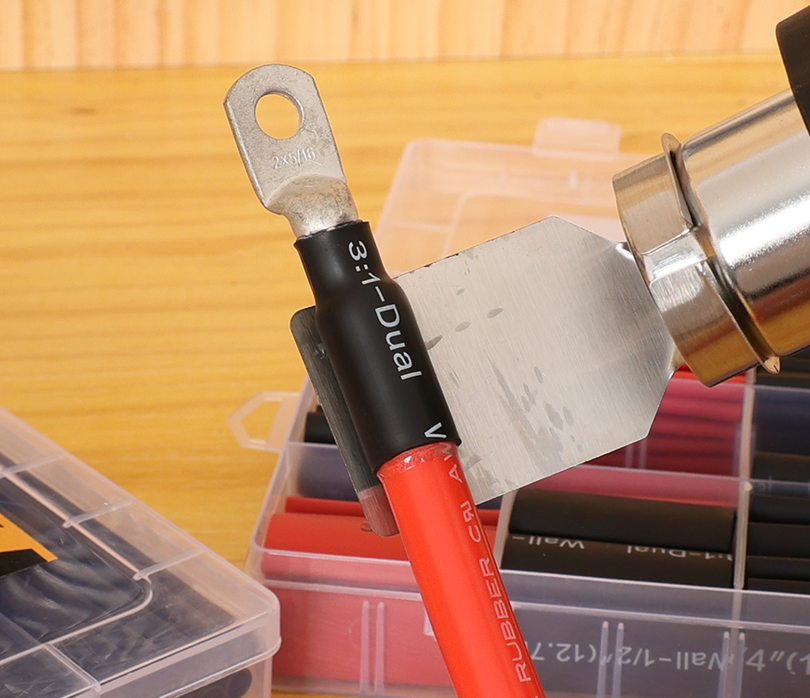
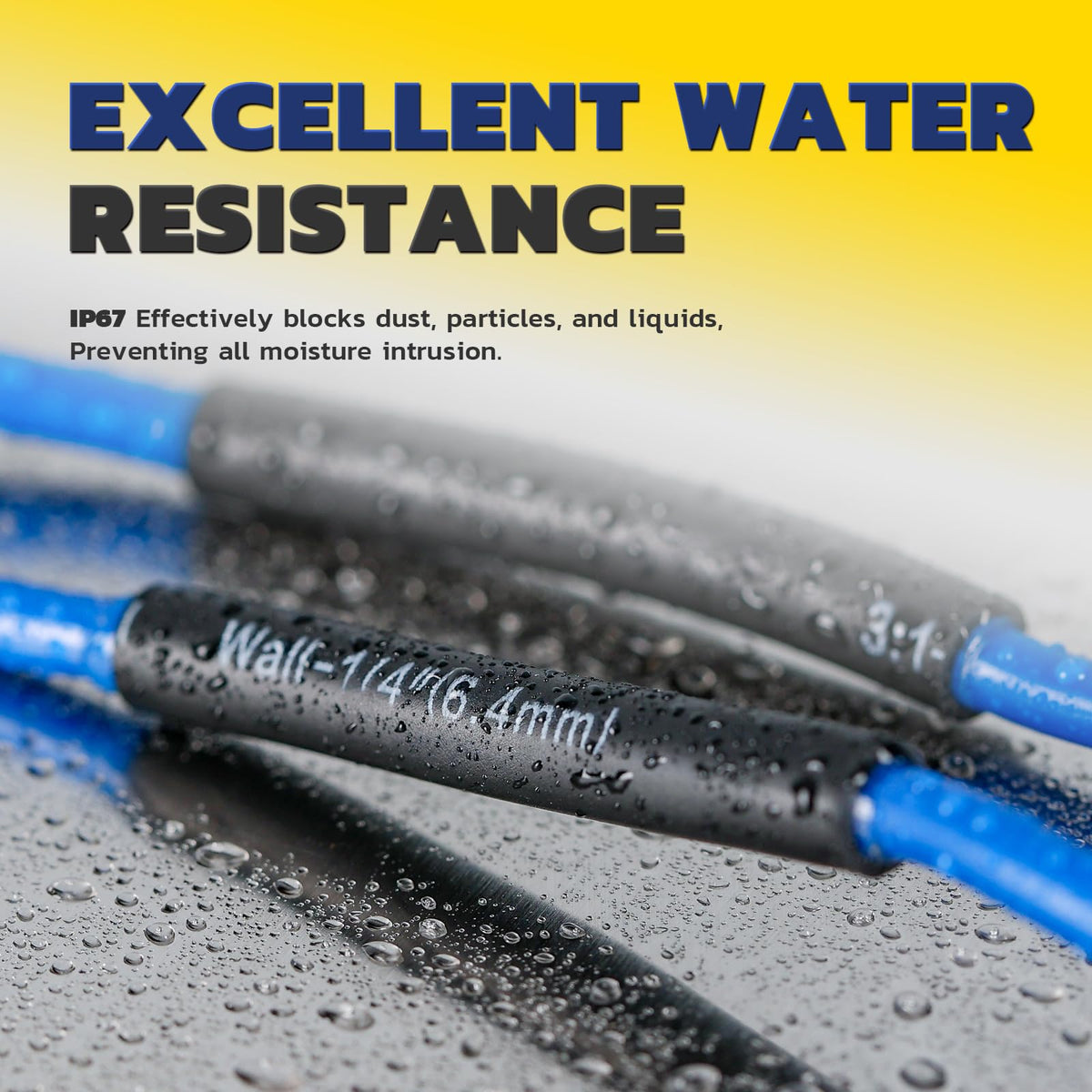
  7. Seal and finalize (if applicable): If you used a heat shrink crimp connector (the kind with a heat-shrinkable sleeve), the final step is to shrink the insulation for a sealed result. Using a heat gun or appropriate tool, heat the connector’s insulating sleeve until it fully shrinks and adheres to the wire insulation. This provides a waterproof, vibration-resistant seal over your crimp. (Haisstronica specializes in heat shrink connectors – their ratchet crimper is designed to work with these, and once you shrink the tubing, you get a professional-grade finish on your wiring.) If your connector isn’t heat-shrink, you may optionally slide a piece of heat shrink tubing over the joint for extra protection, or simply wrap with electrical tape if needed. Otherwise, your crimped connection is complete and ready for use!

A ratcheting wire crimper in action: By using the correct cavity for the terminal size and fully closing the tool, you create a strong, reliable crimp. A proper crimp “cold welds” the connector to the wire, ensuring good electrical contact and mechanical strength.

With these steps, you can confidently crimp wires and connectors like a pro. Remember that practice makes perfect – if you’re new to crimping, take a spare wire and a few extra connectors to practice this technique. You’ll quickly get a feel for how the ratchet crimping tool closes and how a good crimp should look and feel. Every successful crimp will have the wire securely captured, the connector snug, and no play or wobble in the joint. By following the above procedure and tips, you’ll achieve consistent, professional-grade crimps on all your 22-10 AWG wiring projects.

(Using Haisstronica’s ratcheting crimper simplifies this process even further, thanks to its ergonomic design and precise dies – it practically guarantees perfect crimps when you follow the steps. This ratchet crimp tool takes the guesswork out of crimping and lets DIY enthusiasts focus on building reliable electrical connections.)

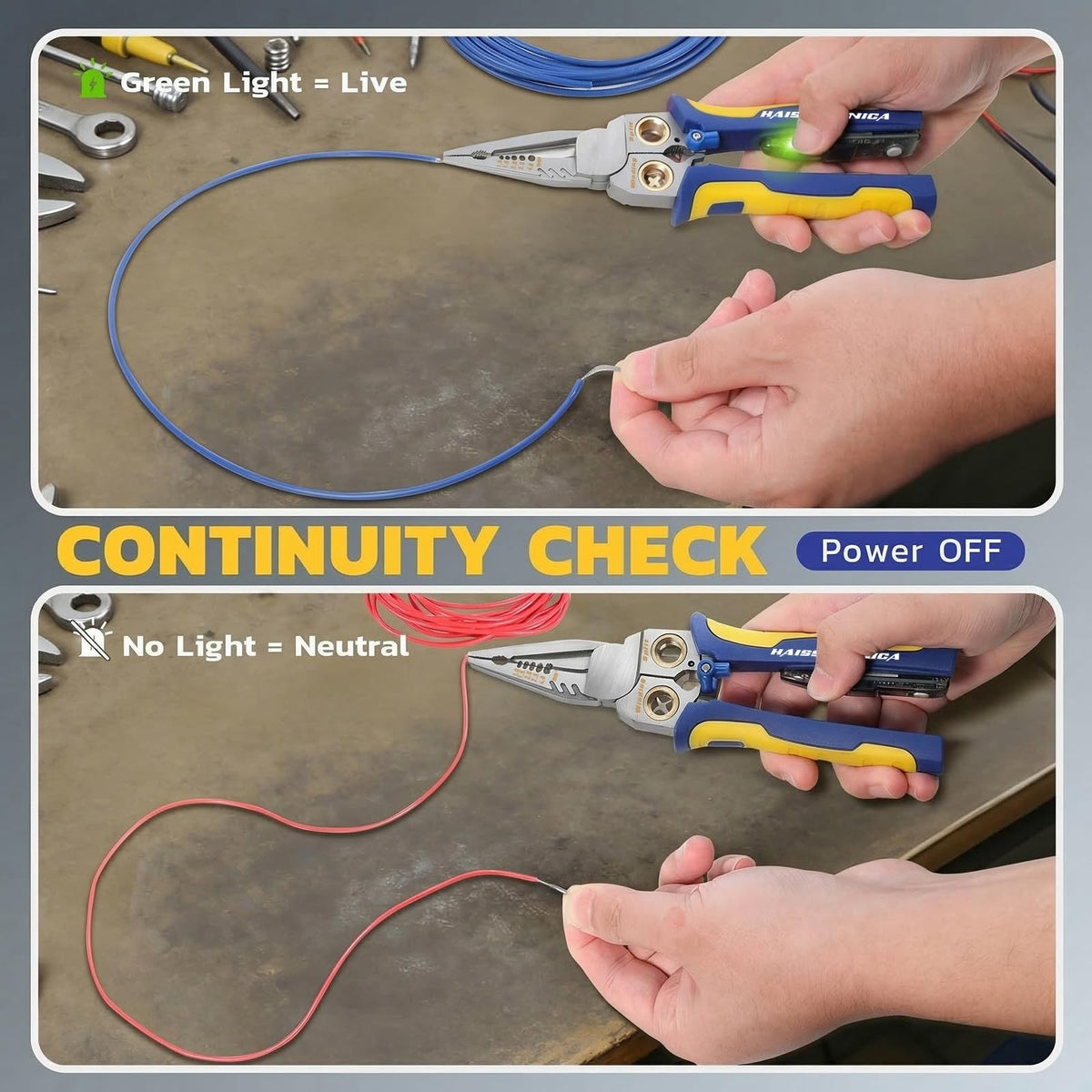
Haisstronica cable crimper, 2-in-1 crimp & strip, AWG 22-10, heat shrink compatible, non-THHN.

Conclusion

Crimping is a solderless wiring technique that, when done correctly, produces a strong, gas-tight connection that can withstand vibration, moisture, and years of use. For beginners, the key to crimping 22-10 AWG wires perfectly is understanding the components and the process: know your terminals and choose the right connector for the job; use a proper crimping tool (ideally a ratcheting crimper with matched dies) rather than makeshift methods; prepare your wires by stripping to the correct length and avoiding any damage to the strands; and follow a step-by-step technique to execute a consistent crimp every time. With a bit of practice, you’ll be able to crimp wires quickly and confidently.

Using a high-quality tool like Haisstronica’s 22-10 AWG ratchet wire crimper can greatly improve your crimping results – it ensures every crimp is fully compressed and meets industry standards for tensile strength and conductivity. No more worrying about poorly crimped connections or wires slipping out; a ratcheting crimper gives you repeatable, professional results. Plus, Haisstronica’s tool is designed for heat shrink connectors and nylon-insulated terminals, so you get versatility and reliability in one package.

In summary, crimping wires perfectly comes down to using the right parts and tools and following the right steps. This beginner’s guide has covered the essentials: terminal selection, tool and die matching, wire strip length and prep, and the crimping procedure itself. By adhering to these guidelines and leveraging a dependable crimping tool, even a DIY novice can achieve crimps that rival a professional electrician’s work. Your electrical connections will be secure, safe, and long-lasting. Now grab some wire, select the appropriate Haisstronica connector and crimp tool, and give it a try – you’ll be crimping with confidence in no time!

Ready to upgrade your crimping experience? Haisstronica’s Ratchet Wire Crimping Tool (AWG 22–10) is an ideal choice for beginners and pros alike – it’s engineered to make crimping electrical connectors easier, faster, and more reliable. With this tool in hand, you can tackle any wiring project and ensure every crimp is perfect. Happy crimping!

References:

Leave a comment

All comments are moderated before being published.

This site is protected by hCaptcha and the hCaptcha Privacy Policy and Terms of Service apply.

Free Shipping

Free Shipping On All Orders