
Why Traditional Stripping Workflows Slow You Down — stripping wires
Traditional stripping wires workflows often look “fast” in isolation: squeeze, pull, move on. But over a long batch, the hidden cost is stop-and-go motion. You restart every cycle: open the tool, align the notch, re-center the conductor, pull the insulation, then open again and clear the debris before you can insert the next wire. That restart is the bottleneck—especially when you alternate between gauges or insulation types and your stripper model needs frequent adjustment.
The second slowdown is quality-driven rework. Workmanship standards make it clear that defects at the stripping step are not “minor.” NASA’s wiring workmanship standard requires that remaining insulation after stripping must not show damage such as nicks, cuts, crushing, or charring, and the conductor must not be nicked or scraped to the point base metal is exposed. When traditional squeezing creates uneven cuts or strand disturbance, you don’t just lose seconds—you lose the entire end because you must cut back and repeat.
Finally, traditional workflows increase fatigue, and fatigue feeds slowdowns. Ergonomics guidance from NIOSH/Cal‑OSHA emphasizes selecting non-powered hand tools that can be used effectively with less force, less repeated movement, and less awkward positioning, because those factors increase injury risk and decrease performance consistency. When your workflow requires repeated resets and high-force corrections, your speed degrades over time—not just moment to moment. Build a fatigue-resistant electrician toolset with Haisstronica so your speed lasts all day.

What “No Reset Needed” Really Means — stripping wires
“No reset needed” does not mean you never open the tool; it means the tool and workflow return to “ready state” automatically or with minimal motion. The best benchmark is whether you can finish one strip and immediately insert the next wire without extra hand actions to clear, reopen, or re-align. Industry tool features show this idea clearly. Klein describes spring action for “fast self-opening” on a stripper/cutter—exactly the kind of function that reduces time between cycles.
In practice, “no reset needed” has three layers. First is mechanical return: the jaws and blades return to the open position automatically, reducing recovery time. KNIPEX explains that an opening spring “nestles the pliers gently in the user’s hand” and reduces strain in the hand muscles—showing that self-opening is both a speed and ergonomics feature.
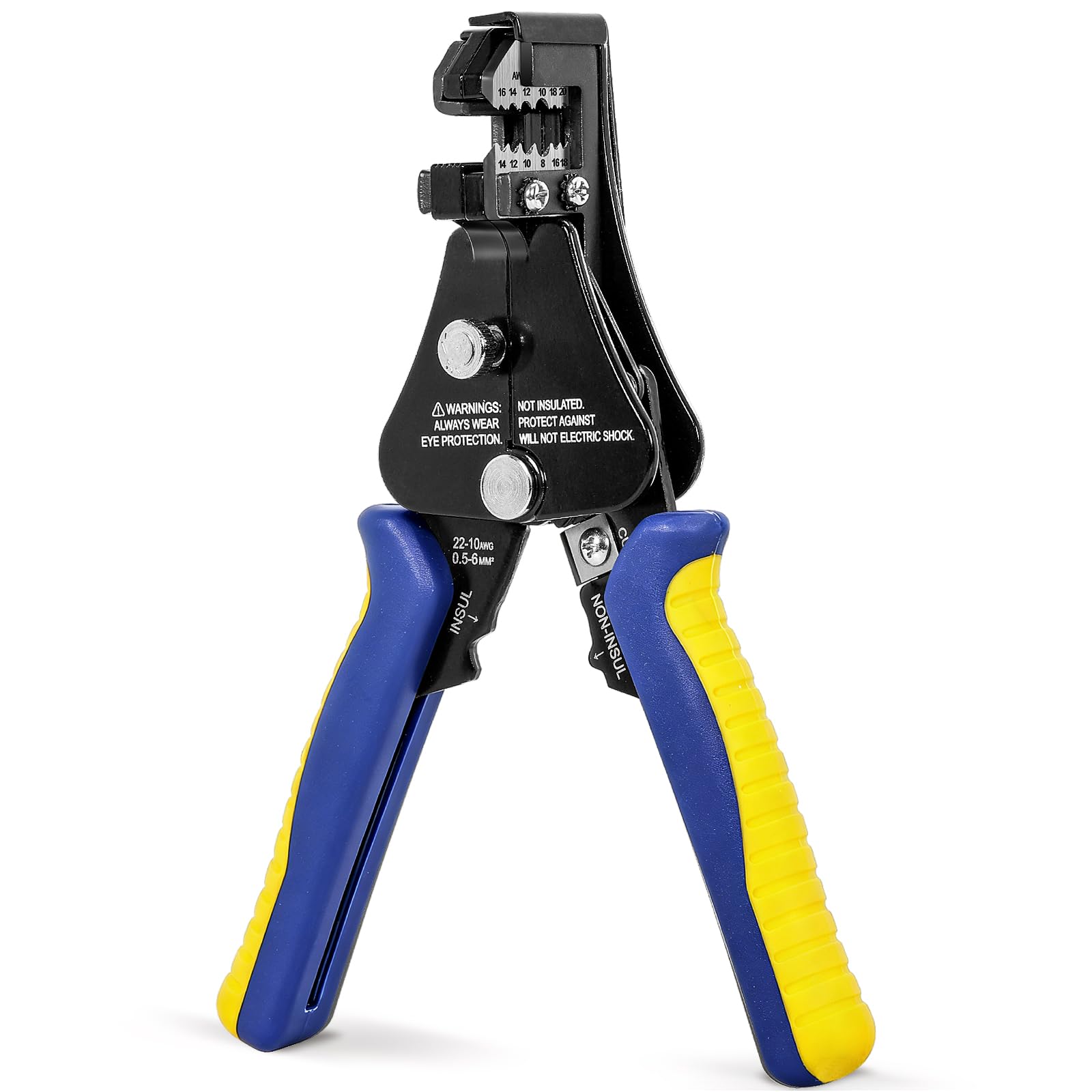
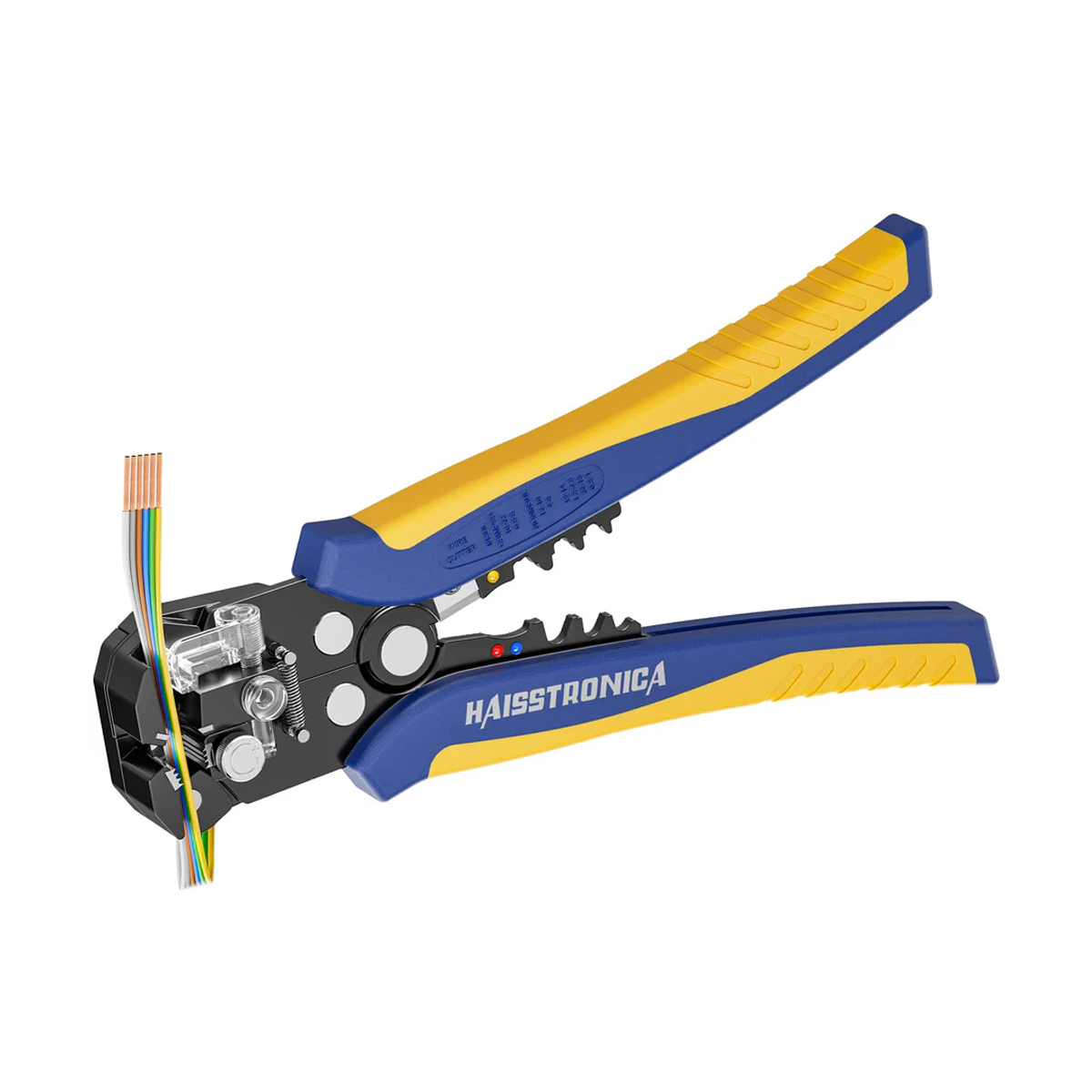
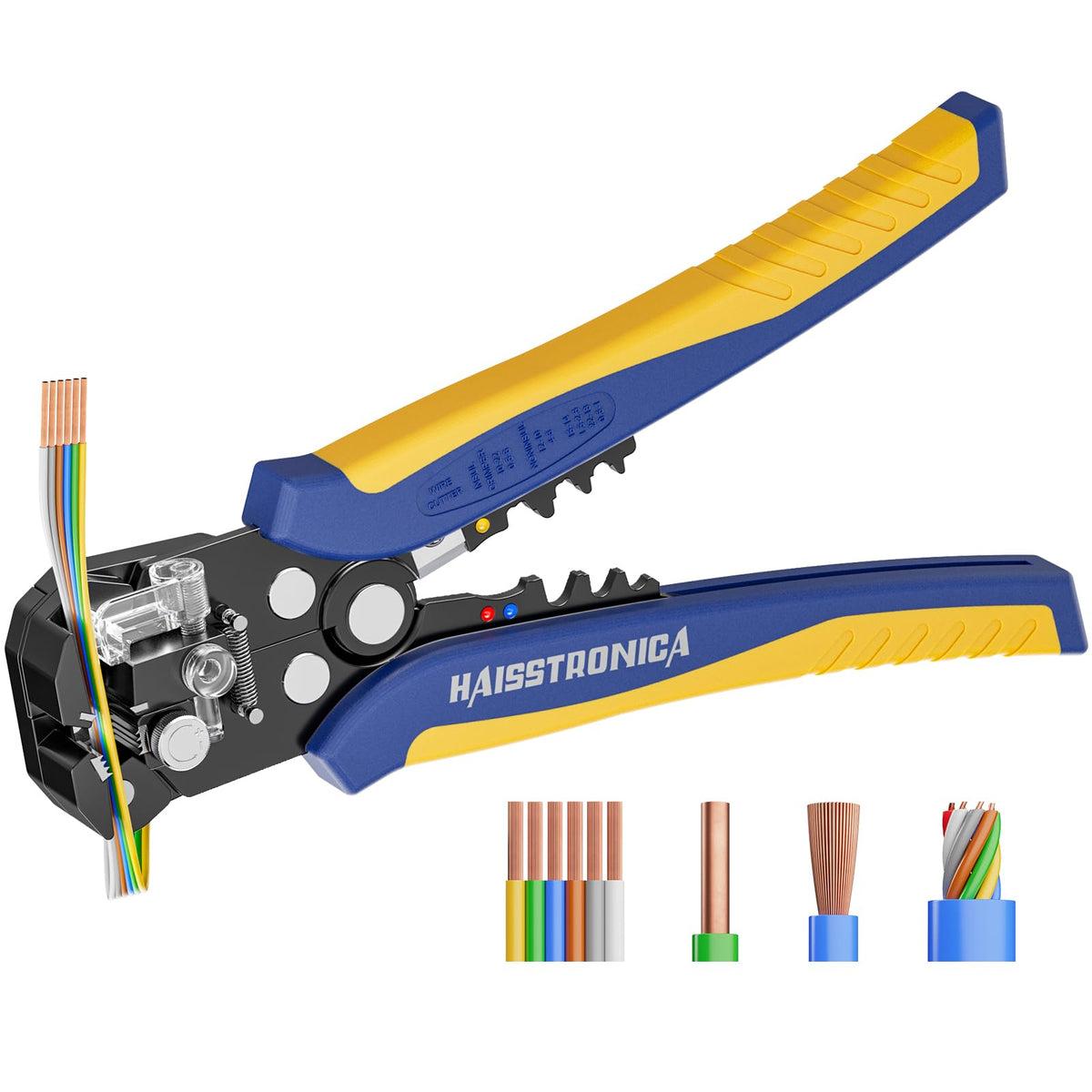
Second is adjustment elimination: you stop pausing to reconfigure the tool for each new wire gauge. Haisstronica positions its self-adjusting wire stripper as covering a stated AWG range and emphasizes stripping without the hassle of changing settings because it adapts itself to the wire gauge. This is the “no reset” that matters most in mixed-gauge electrical work: fewer decisions, fewer notch corrections, fewer trial strips.
Third is repeatable strip length. A continuous workflow collapses when strip length varies because you must re-measure or re-strip. Haisstronica’s instructions mention setting strip length using a guide ruler bar and adjusting pressure to prevent damage. With length and pressure controlled, you reduce both mistakes and the time you spend “checking your work” after each end. Choose Haisstronica to standardize stripping insulation from wire and keep your workflow moving.

How Continuous Stripping Workflow Improves Productivity — stripping wires
The productivity gain from continuous stripping wires is not only faster stripping—it’s fewer losses. Manufacturing uses OEE to quantify losses across availability, performance, and quality. UL’s wire-and-cable OEE guidance frames OEE as a way to maximize asset productivity and improve productivity by measuring and addressing losses. Your bench is not a factory line, but your workflow still has the same three loss types: time lost to setup/reset, time lost to slow cycles, and time lost to rework.
Continuous stripping also enables batching and flow. Instead of alternating between tools for every wire, you can batch cut with an electrical wire cutter tool, then batch strip, then batch connect—reducing tool swaps and preserving muscle memory. TE’s wire-preparation guidance warns that poor cutting technique (like distorting conductors) can increase strip force and cause strand splay, which slows stripping and worsens quality. A continuous workflow starts with clean cuts, then uses controlled stripping so every end looks the same.
It also improves downstream speed: consistent strip length and intact strands make connectors and crimps faster. For fast splicing, WAGO’s 221 lever connector process is designed around quick insertion once the conductor is stripped—pull the lever up, insert conductor, push down. When your stripping step stays continuous, your splicing step stays continuous too, whether you’re doing an auto wire splice repair or building harness pigtails.
Finally, continuous stripping raises the ceiling for throughput. Industrial systems show the effect of eliminating changeovers and keeping a stable cycle: an automated stripping/crimping system profiled by ASSEMBLY was reported to produce 360 cables per hour and handle many cable types without changeover—demonstrating how powerful “no reset/changeover” can be at scale. You won’t match factory automation with hand tools, but you can copy the principle: minimize between-cycle interruptions and stabilize the process. Start that upgrade path with Haisstronica and you’ll feel the difference within the first batch.

Speed Is Only Half the Story: Why Workflow Consistency Matters — stripping wires
A continuous stripping workflow only works if results stay consistent. Otherwise, you gain speed on the front end and lose it on the back end through inspection and rework. NASA’s workmanship requirements draw the boundary: insulation after stripping must not show damage, and conductors must not be nicked to exposed base metal; for stranded wire, strand lay should be restored as nearly as possible if disturbed. That means a “fast” tool that damages strands is slower than a controlled tool that produces clean ends the first time.
Consistency is also why industrial stripping designs include retract/return behaviors. TE’s Stripping Module documentation describes adjustable clamping force to avoid damaging insulation, blades that precisely cut, and a feature that pulls blades back slightly (“way-back”) to avoid damaging conductors—showing that return/retract behavior is part of conductor protection, not just speed. A bench-level equivalent is using pressure adjustment and stable insertion depth so the tool does not crush or nick conductors when you run fast.
To maintain consistency, treat strip length as a controlled dimension—not an eyeballed guess. Haisstronica’s guide ruler bar for strip length and knob adjustment for pressure exist for a reason: they support repeatability, which means fewer checks and fewer redo cycles in continuous work. Once strip length stabilizes, your termination steps become easier: connectors seat smoothly, crimps align correctly, and you spend less time “fixing” strands. Upgrade to Haisstronica and lock in consistency that makes speed sustainable.
Less Hand Movement, Less Fatigue — stripping wires
Continuous workflows win because they reduce total hand movement per end. Less reaching, less re-gripping, fewer high-force squeezes, fewer wrist deviations. Ergonomics guidance from NIOSH/Cal‑OSHA makes the goal explicit: select hand tools that require less force and reduce awkward posture and repetitive motion. Less movement doesn’t just prevent injury—it preserves speed and precision across the entire shift.
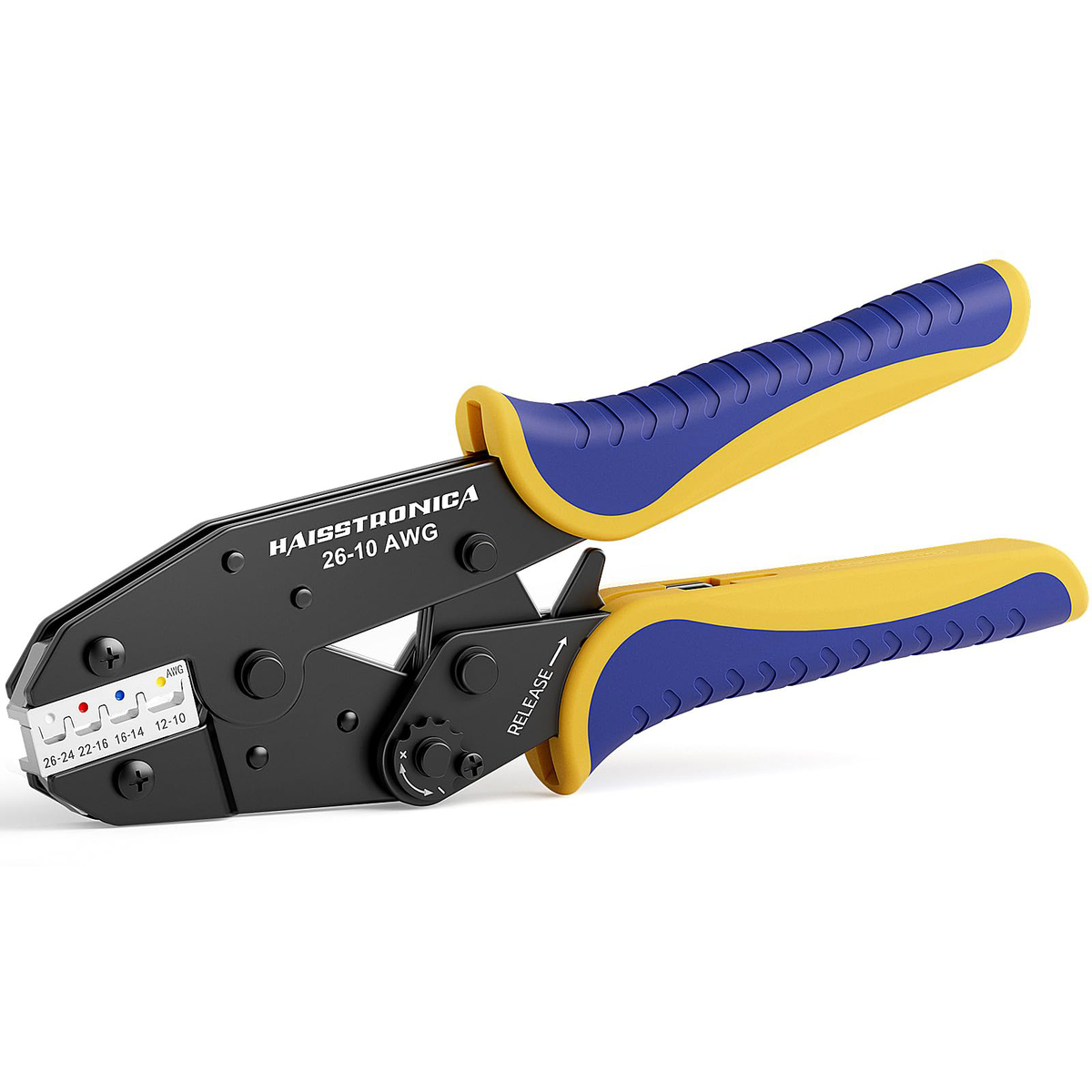
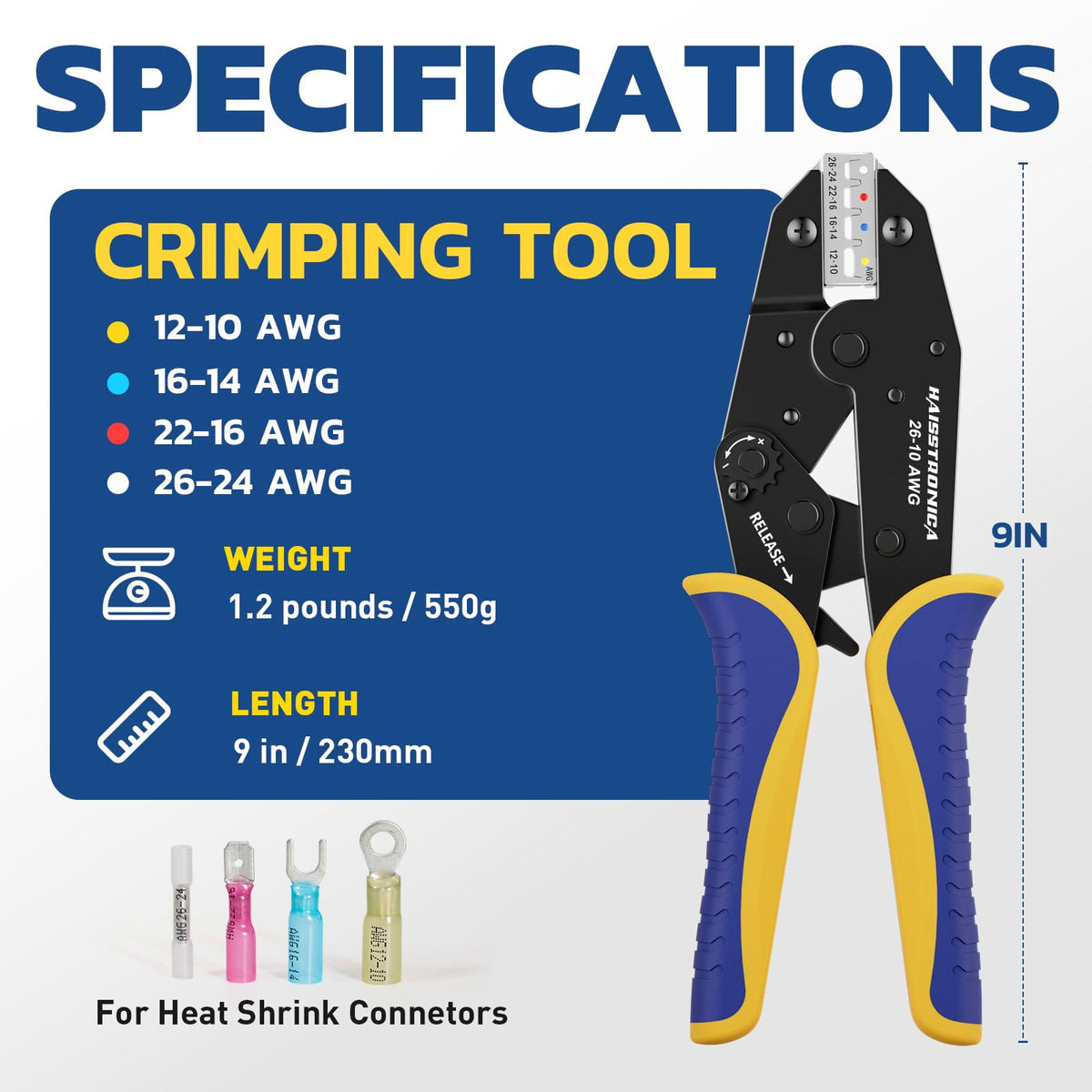
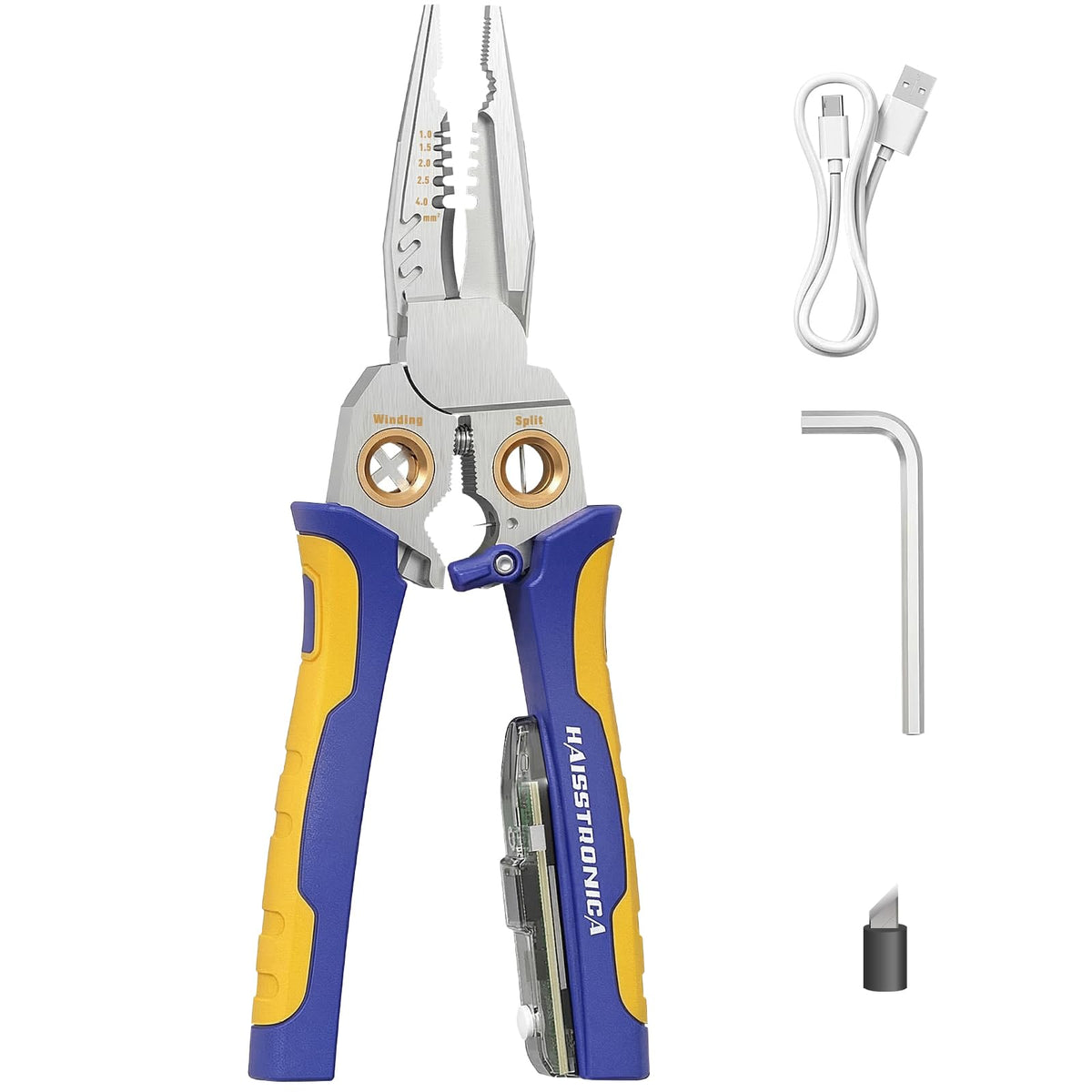
Here’s what “less movement” looks like in a pro bench setup. Stage your electrical wire cutter tool in a fixed location, place the stripper directly in front of your dominant hand, keep connectors/terminals within a short reach, and run a three-step rhythm: cut → strip → connect. If you terminate after stripping, keep wire strippers and crimpers staged so your hands don’t “cross over” or hunt for tools. If the job includes jacket removal, reserve a dedicated cable jacket stripper so you don’t compensate with force and awkward posture. TE’s preparation guidance underscores why the right cutting/stripping approach matters; distorted ends and poor technique increase stripping difficulty and strand splay.
Fatigue reduction also improves results in tight spaces. When your non-dominant hand is controlling bundles or holding a splice terminal connector in position, tools that minimize resets and maintain ready state help you keep the job stable. Self-opening and auto-return style mechanisms (like spring action for fast self-opening noted on Klein-type tools) reduce the between-cycle “open/clear” tax and reduce unnecessary grip effort. Choose Haisstronica and turn continuous stripping wires into a smooth, one-motion routine even in cramped work areas.

Conclusion
A “no reset needed” continuous workflow is not a slogan—it’s a measurable process upgrade. Traditional stripping slows down because resets (reopening, clearing, re-centering, rechecking gauge) consume more time than the cut itself, and because fatigue increases defects and rework. Ergonomics guidance supports reducing force, repeated motion, and awkward posture, while workmanship standards make quality non-negotiable by prohibiting insulation damage and conductor nicks. A continuous process—enabled by self-adjusting tools, repeatable strip length, and a staged bench—reduces these losses the same way OEE programs seek to reduce losses in wire and cable operations. If you want faster stripping wires with fewer interruptions and fewer do-overs, start by standardizing your tool and workflow around Haisstronica. Shop Haisstronica today and turn “reset time” into finished connections.