

When should I use non-insulated vs. insulated connectors?
Non-insulated connectors are ideal for high-current applications where heat dissipation matters.
Panier
Votre panier est vide
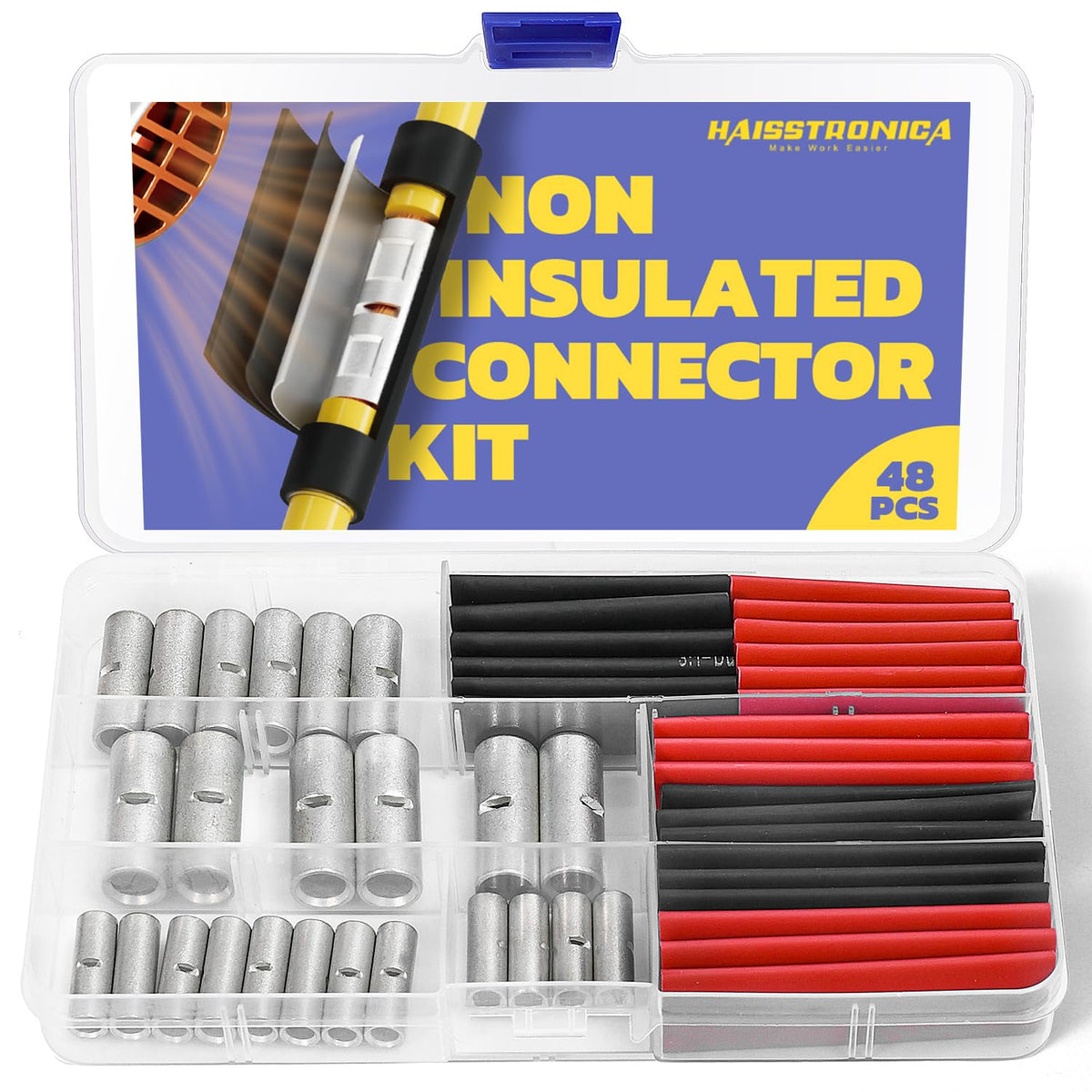
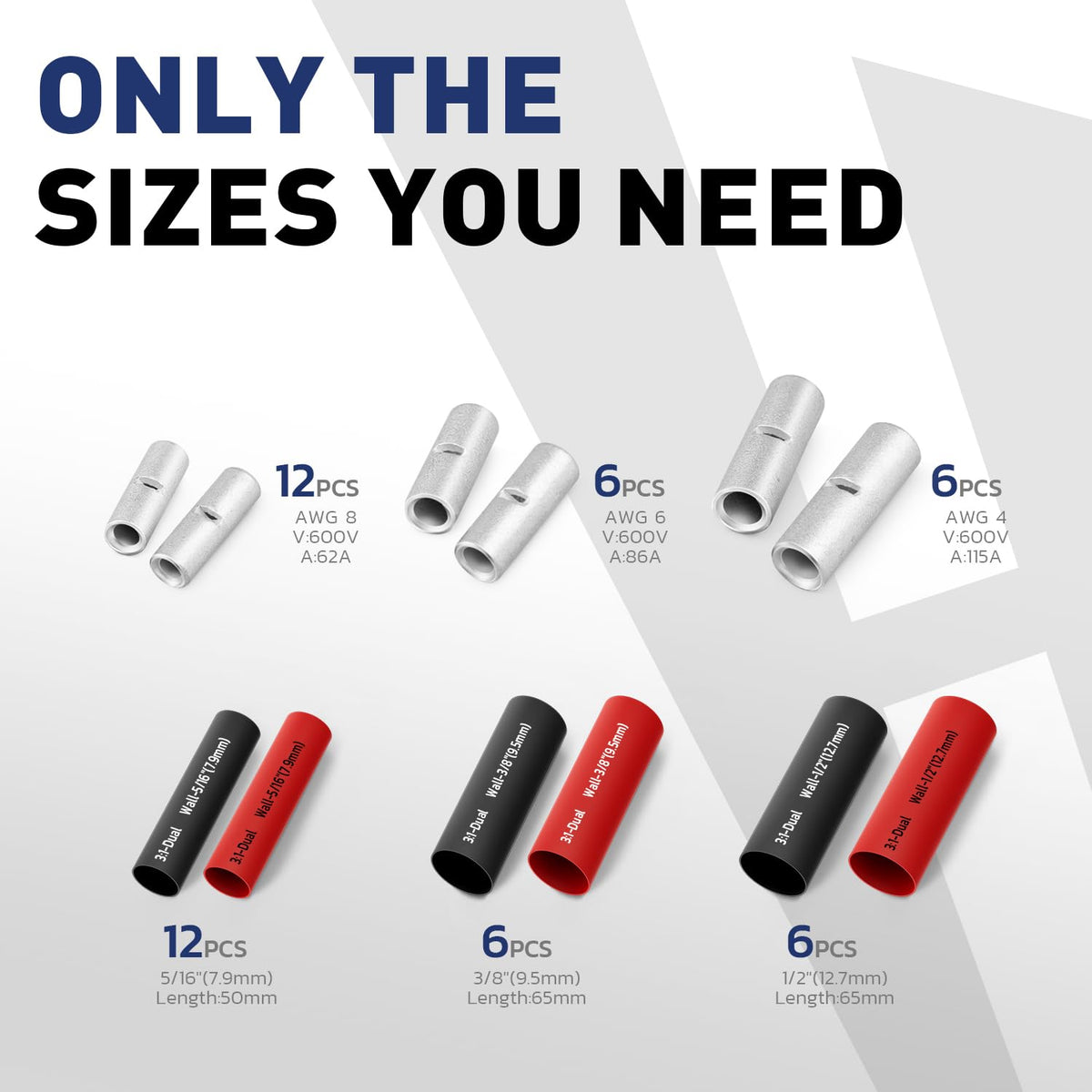
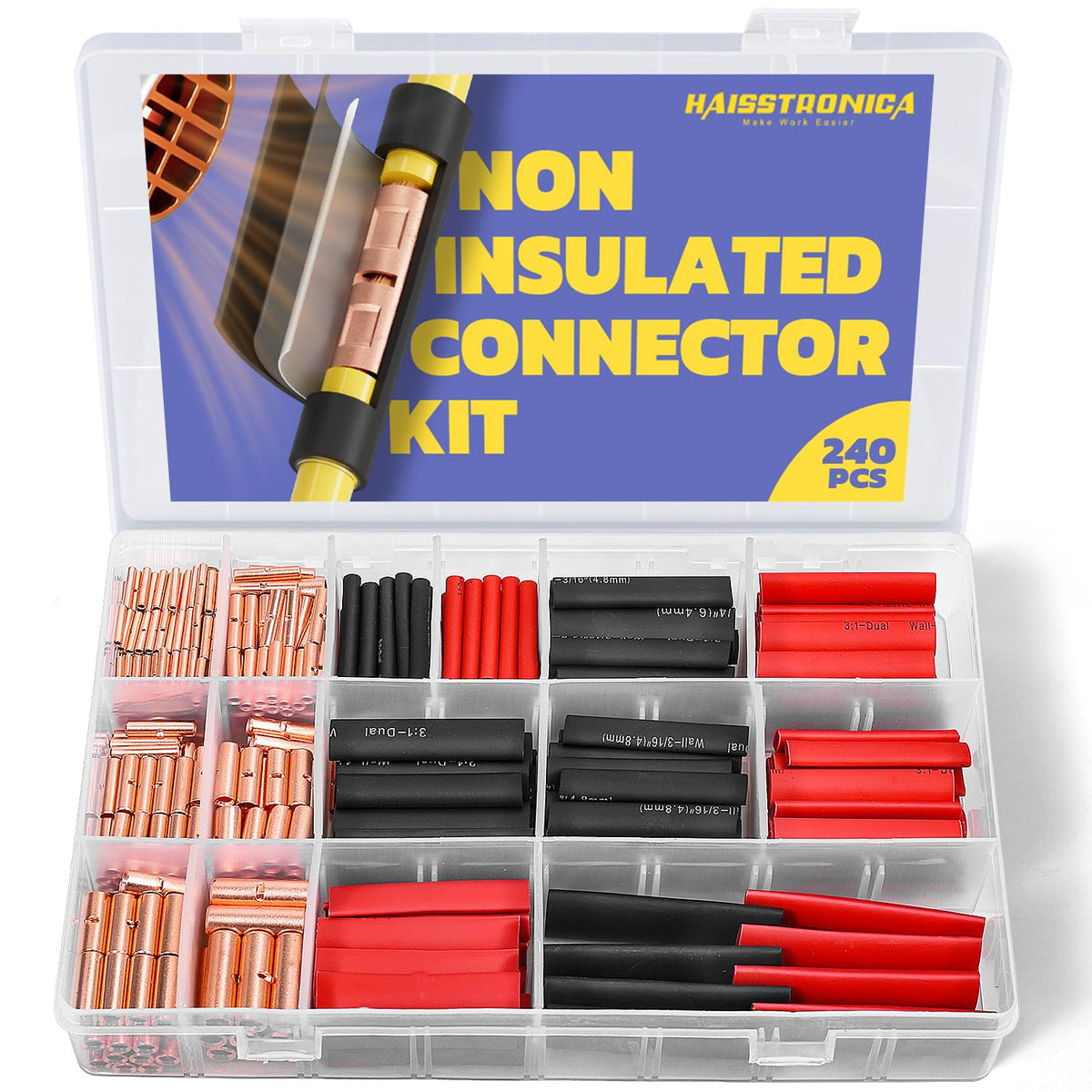
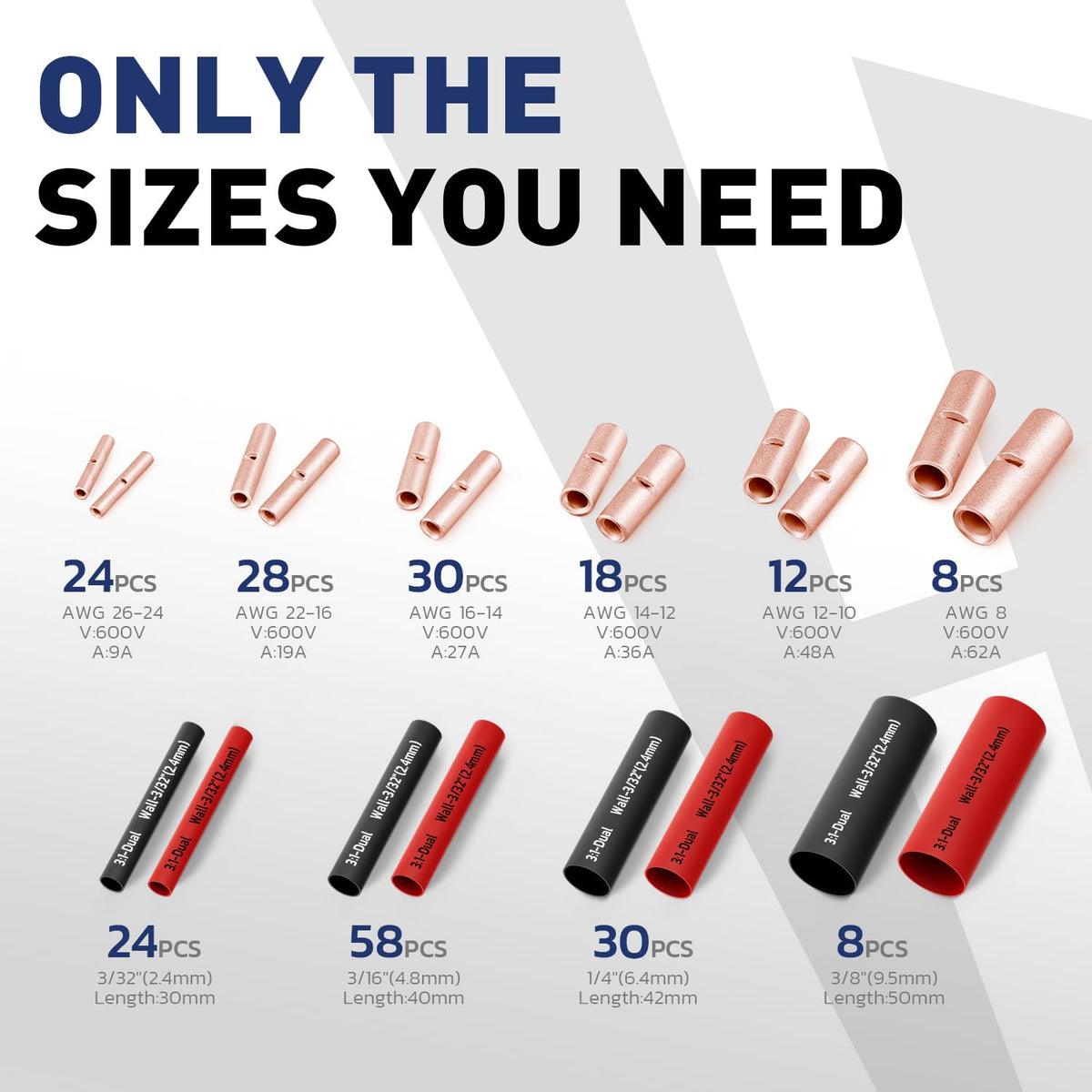
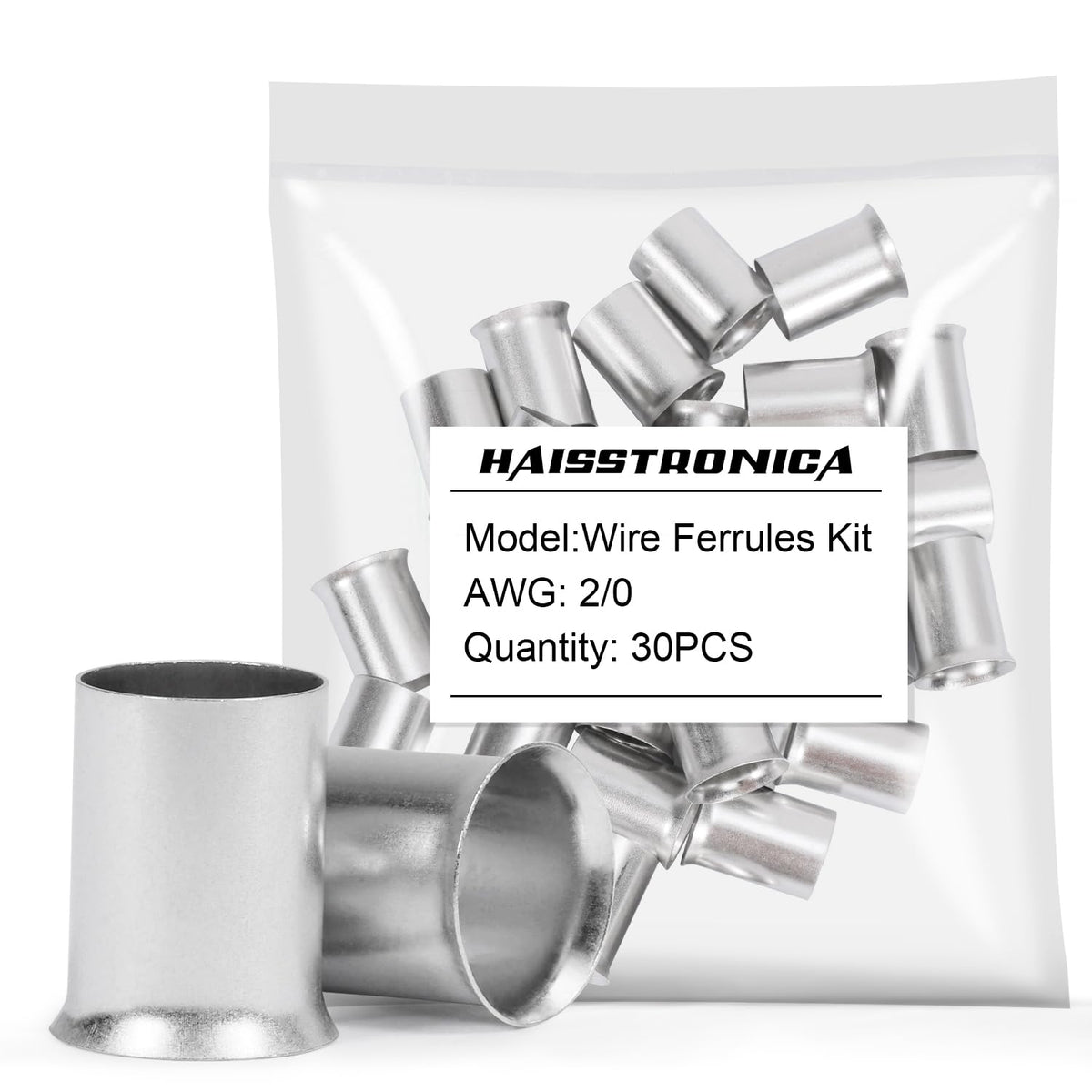
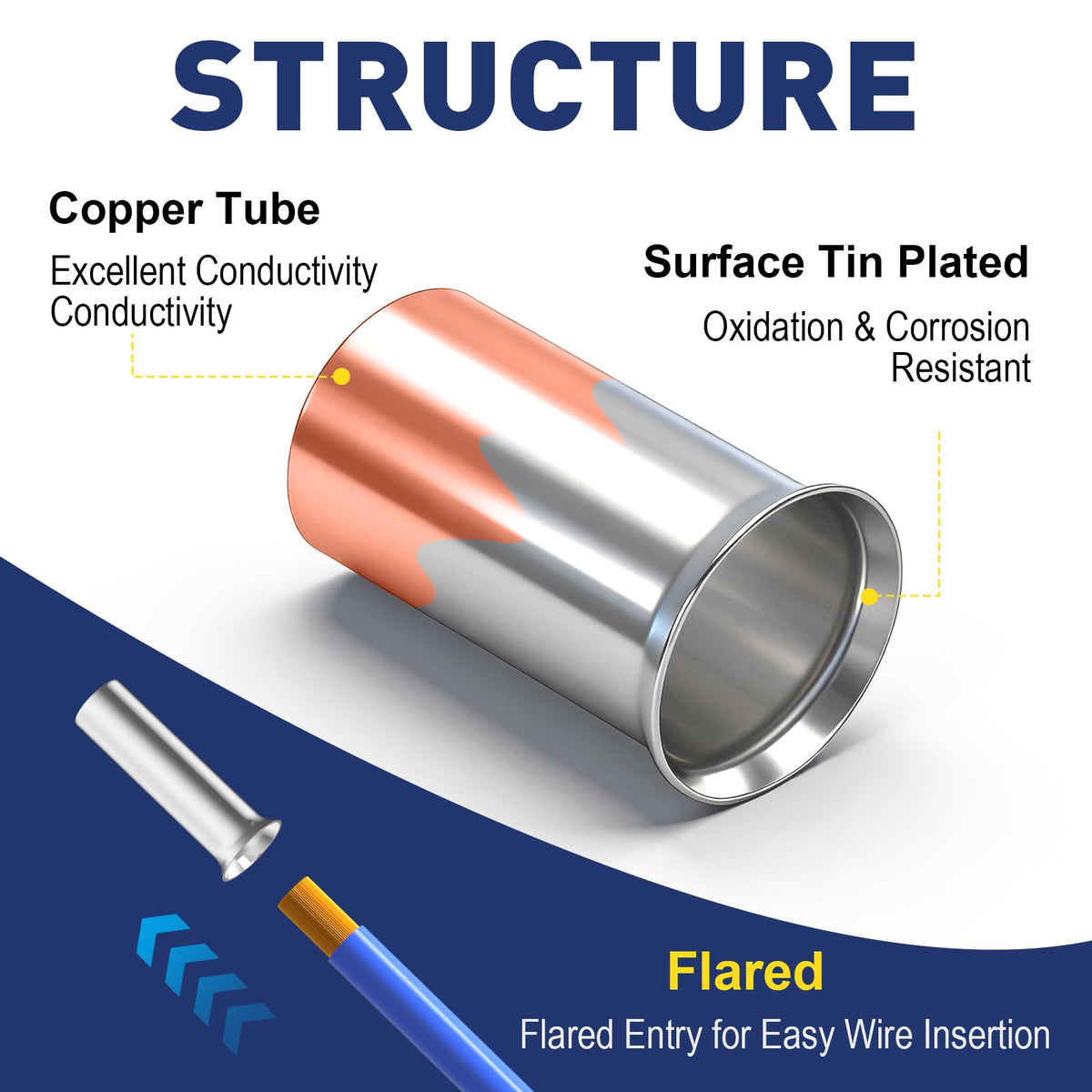
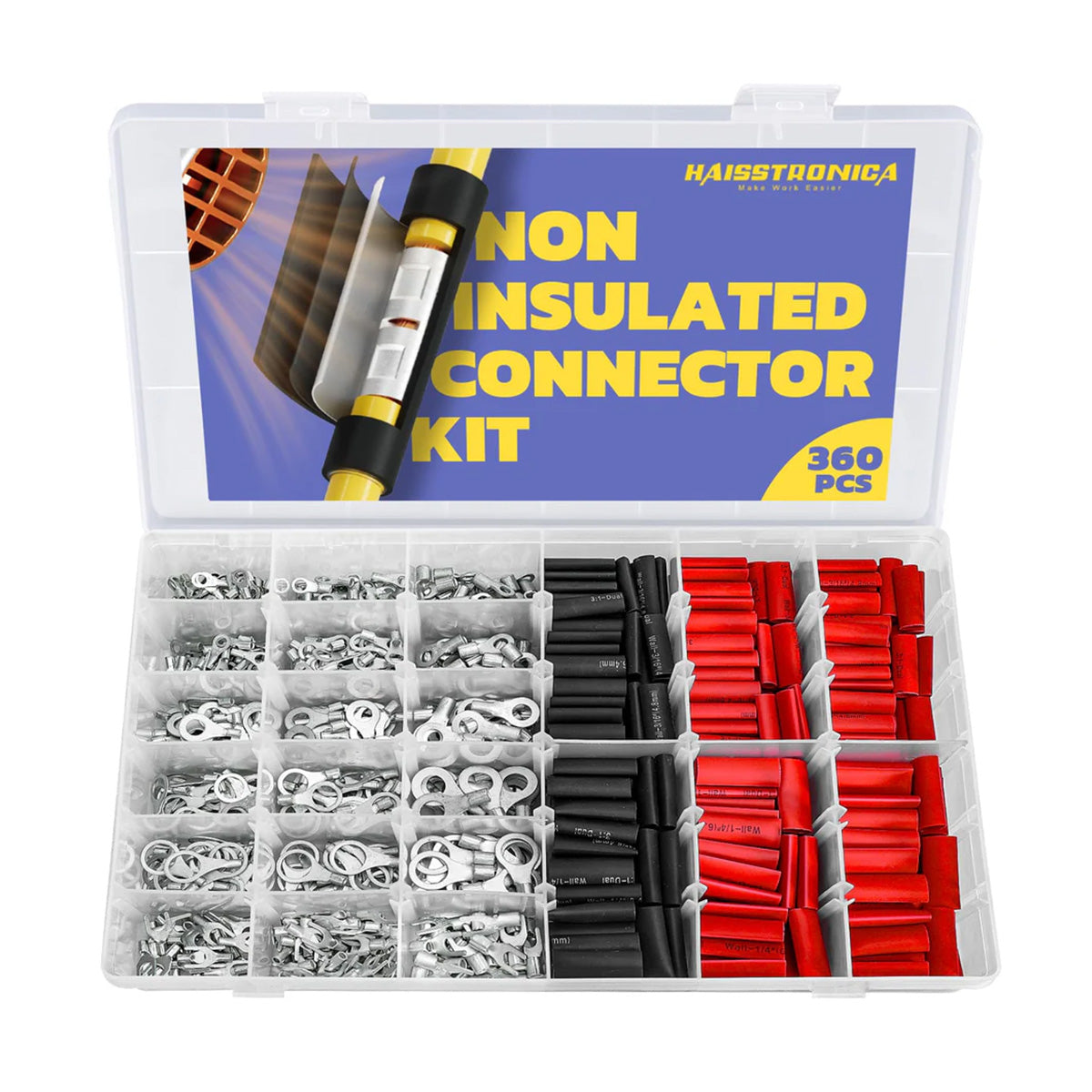
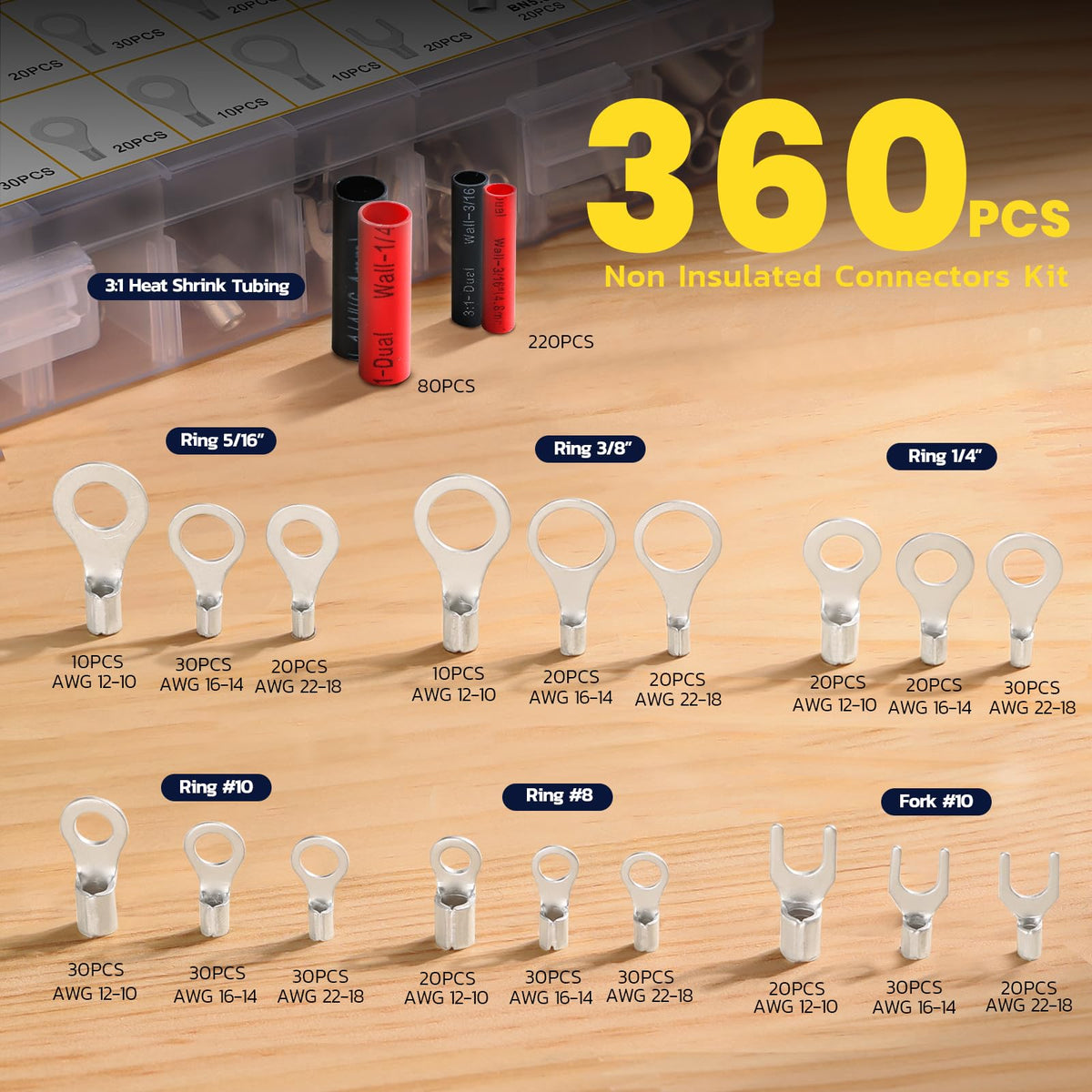


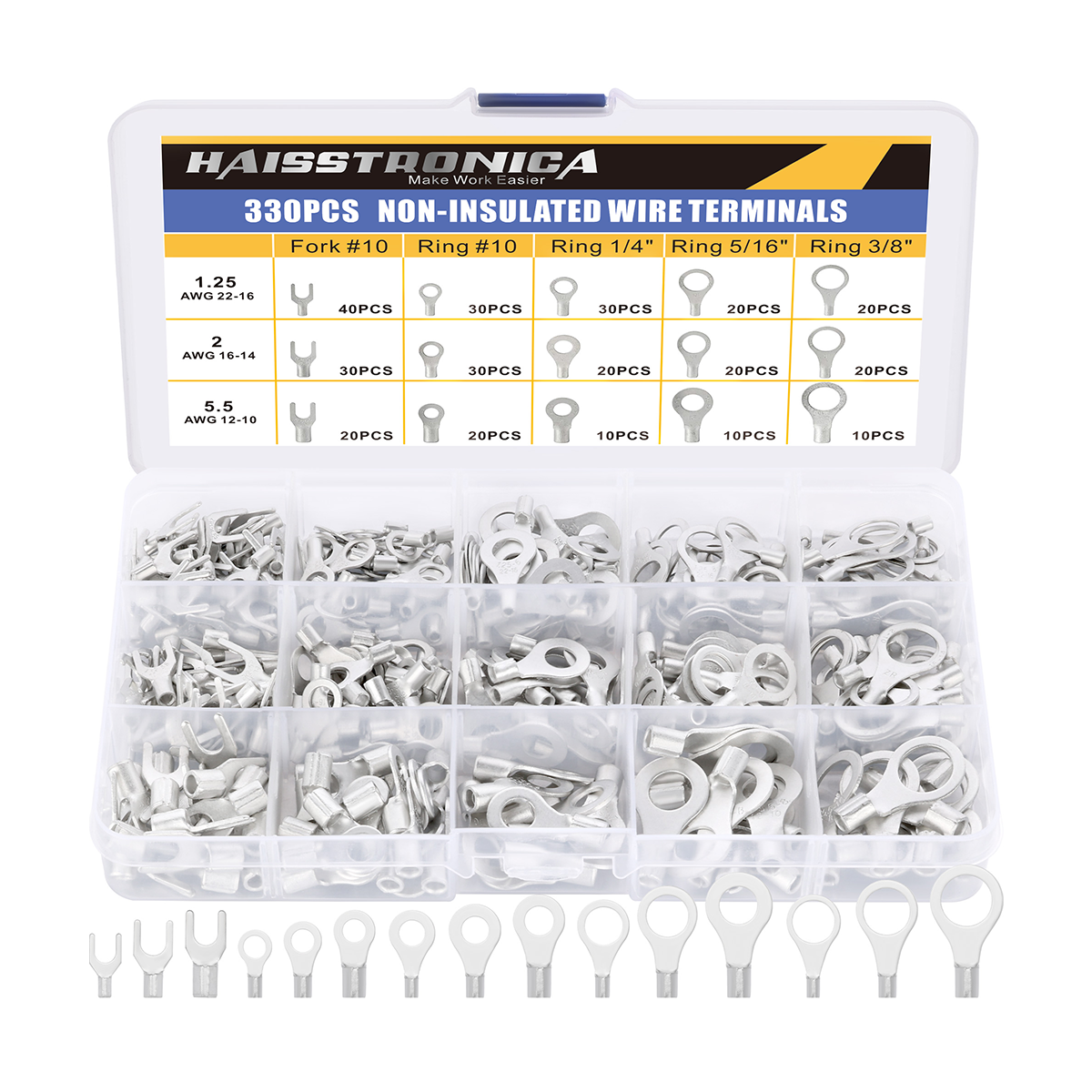
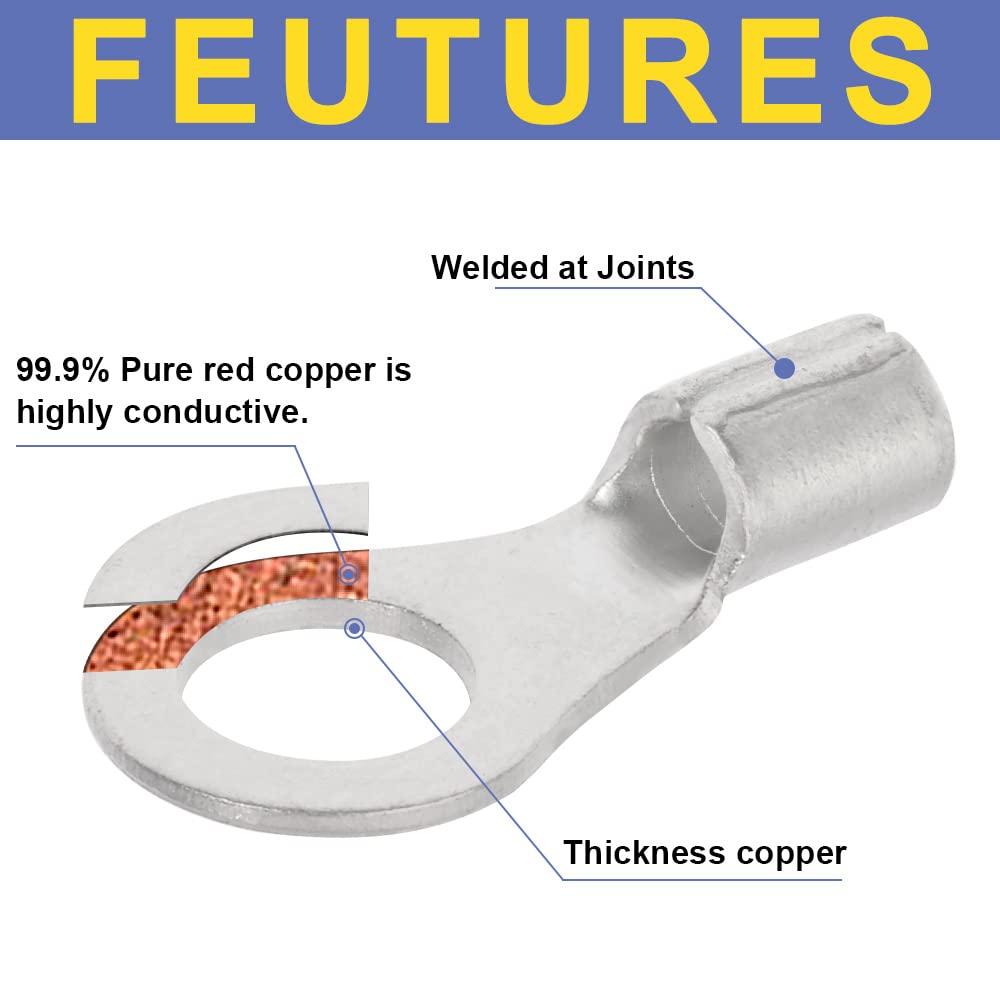
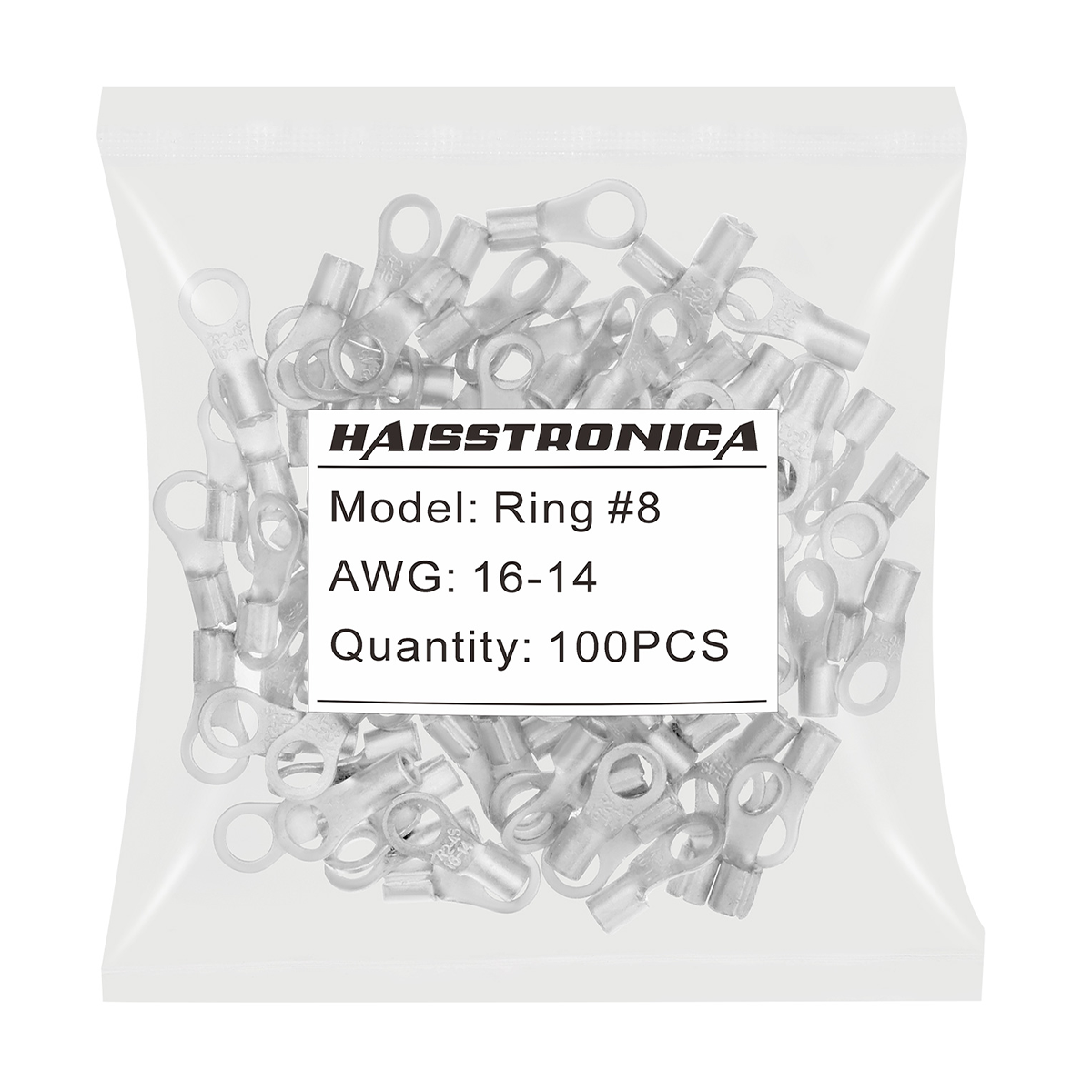
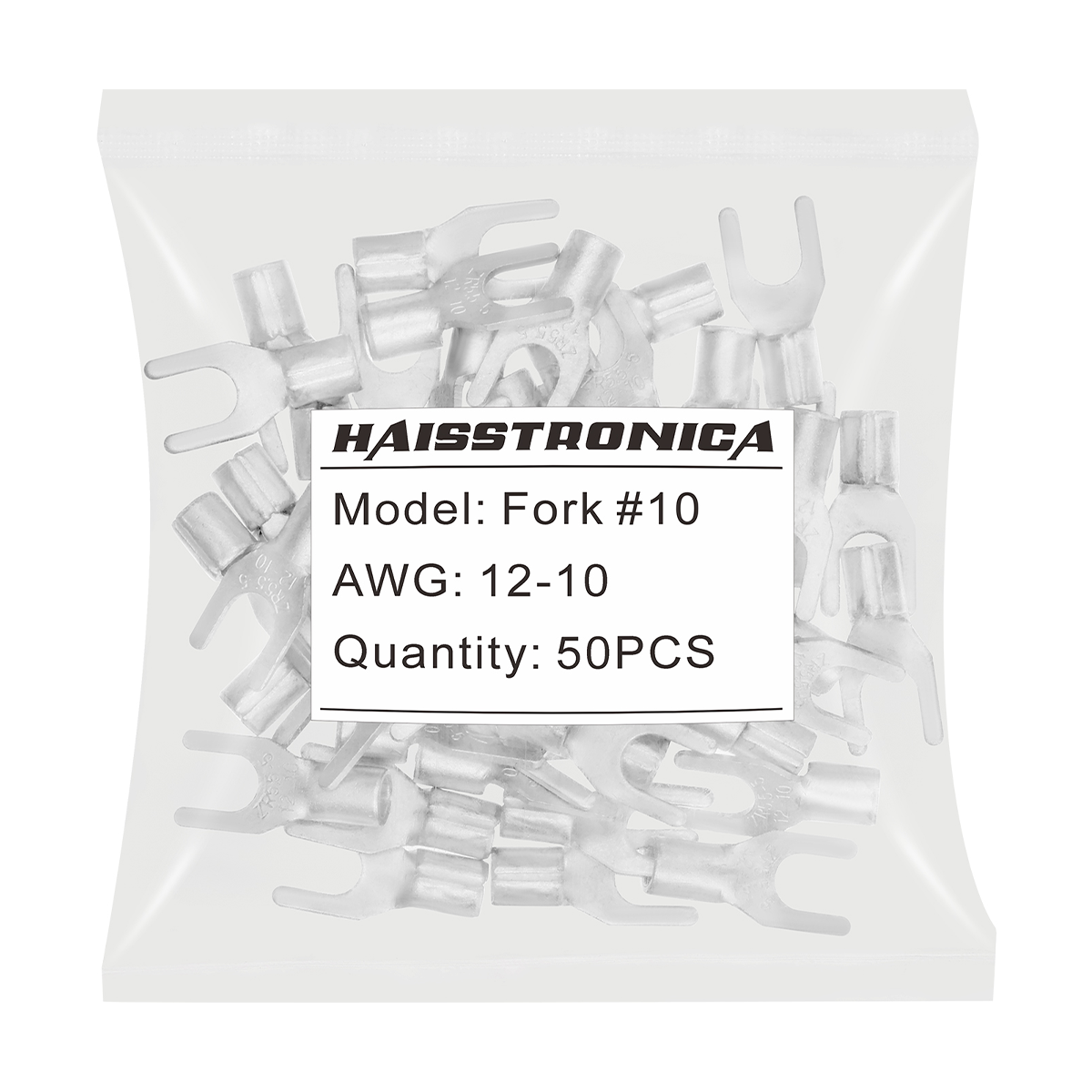
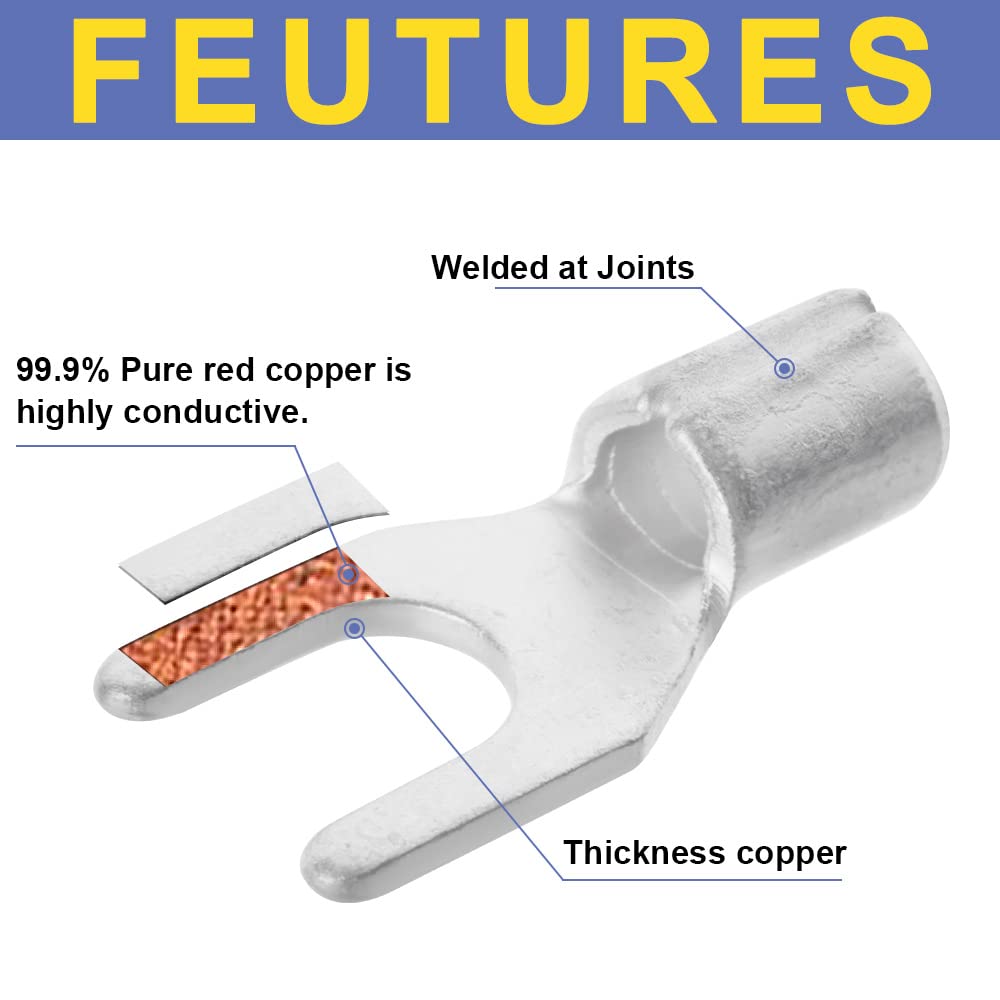
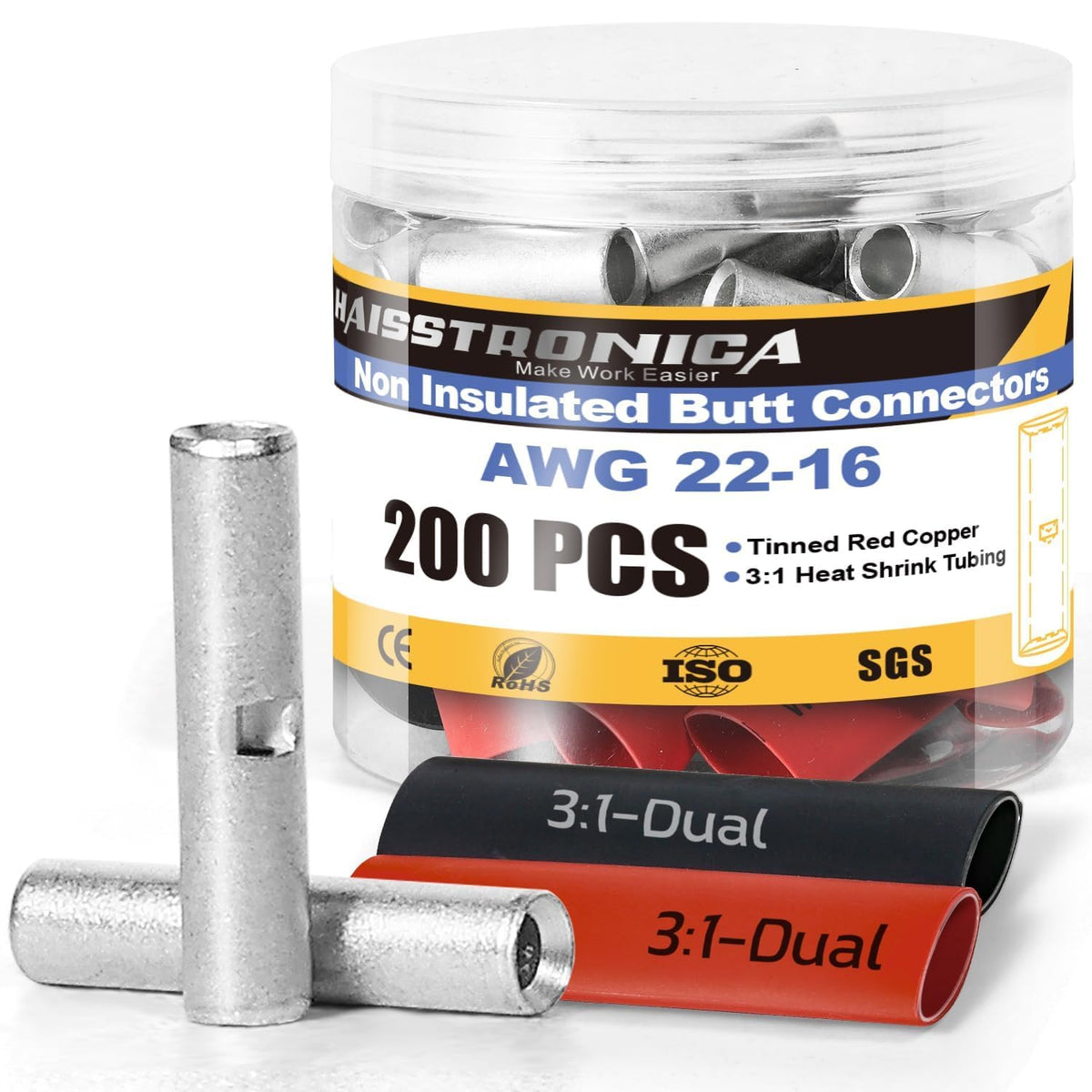
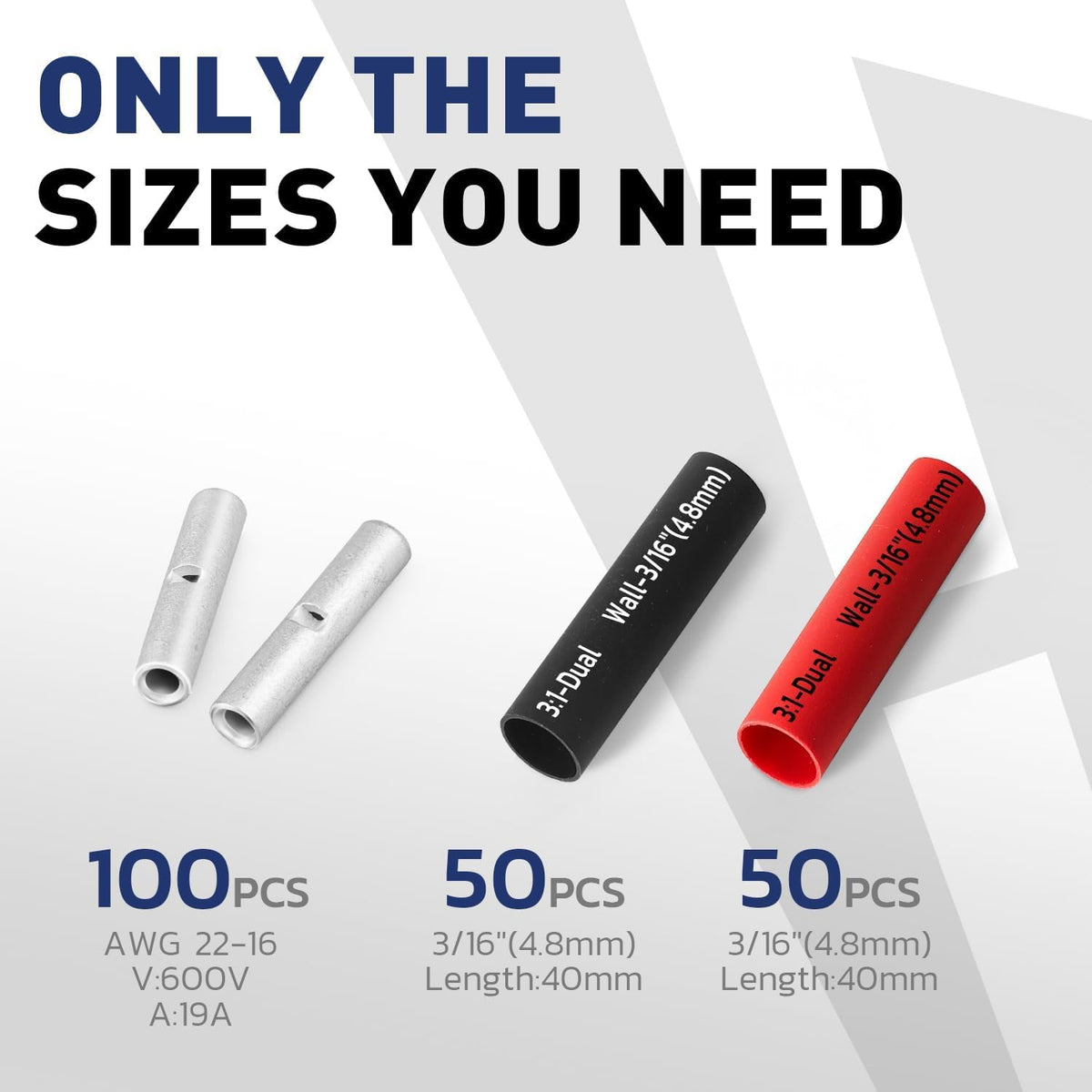
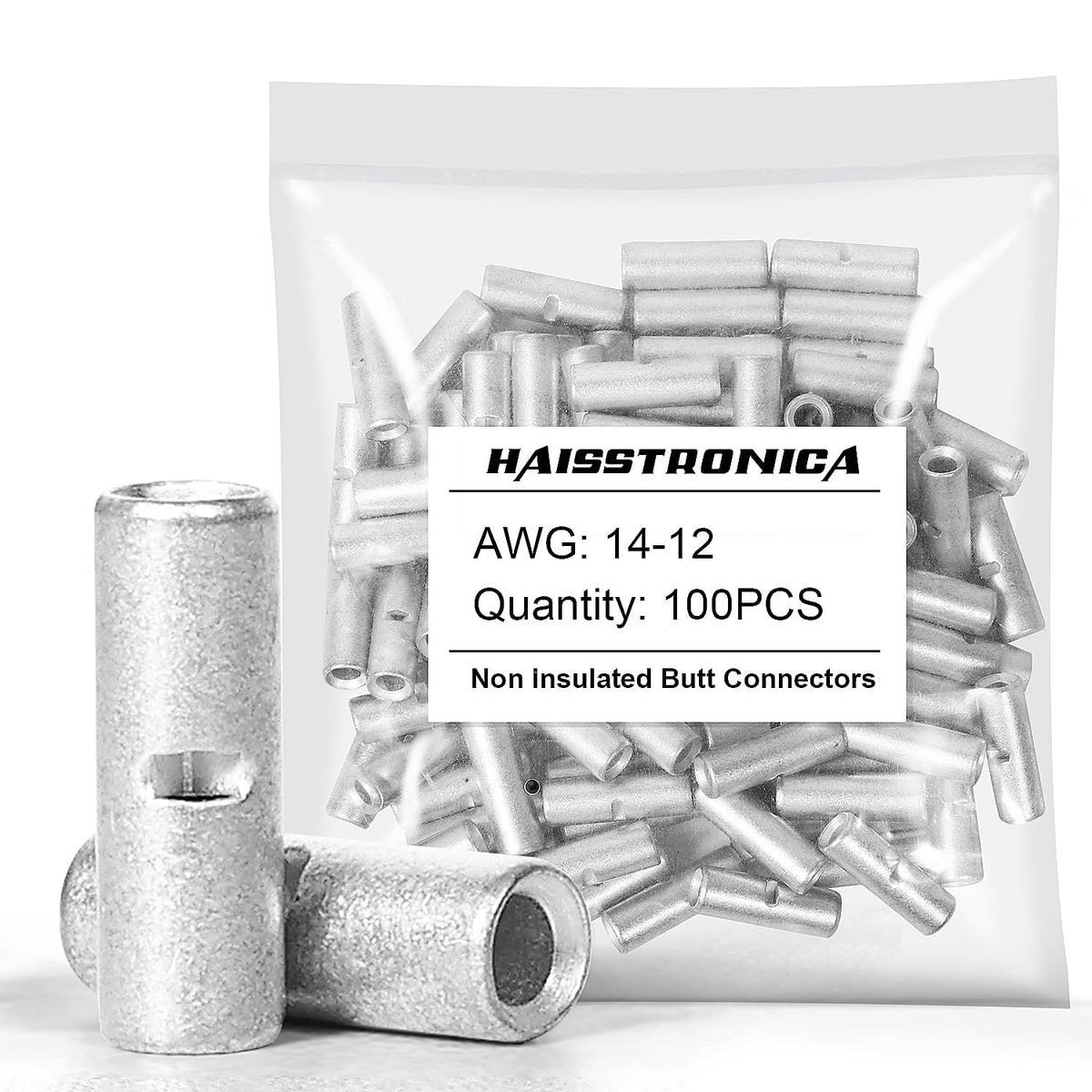
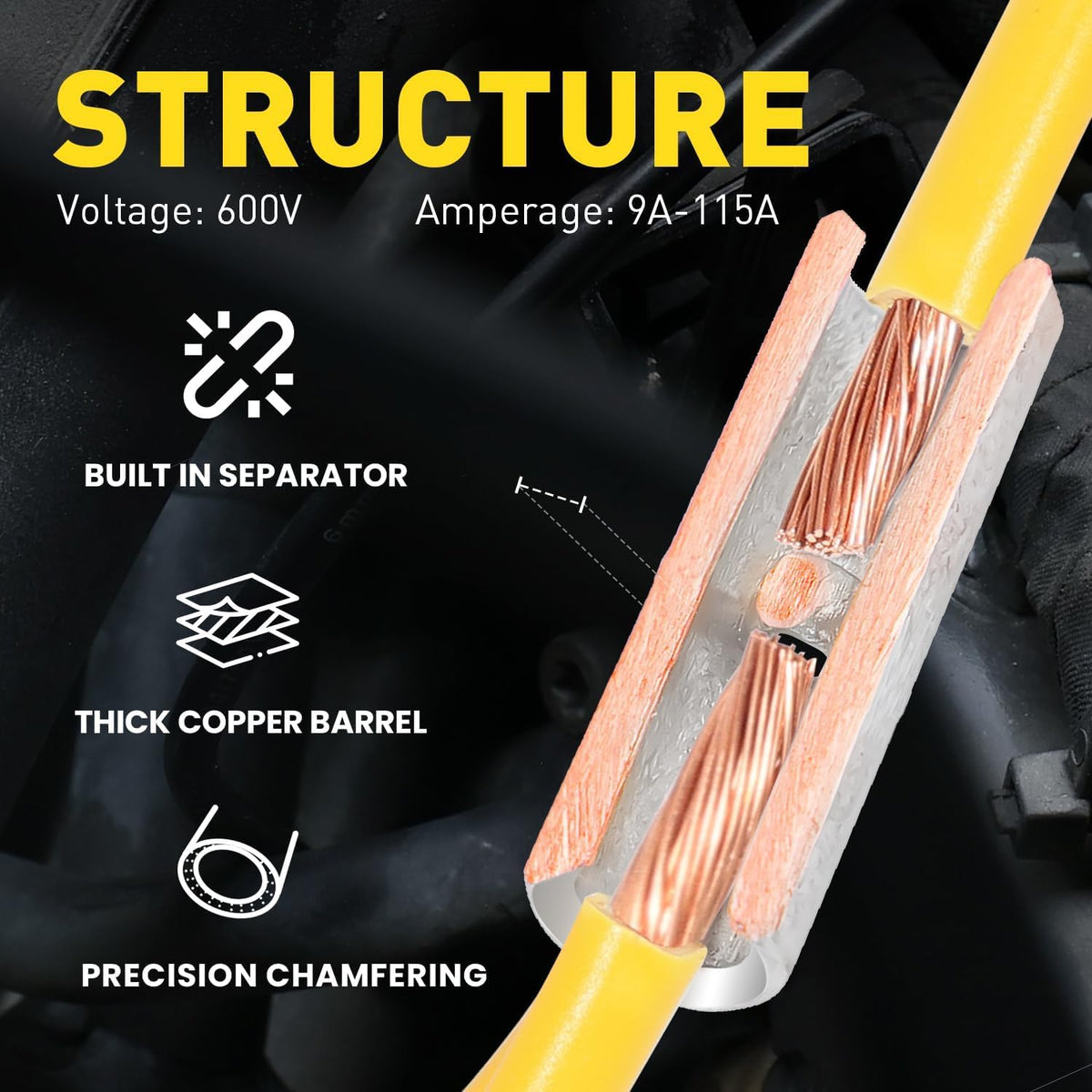
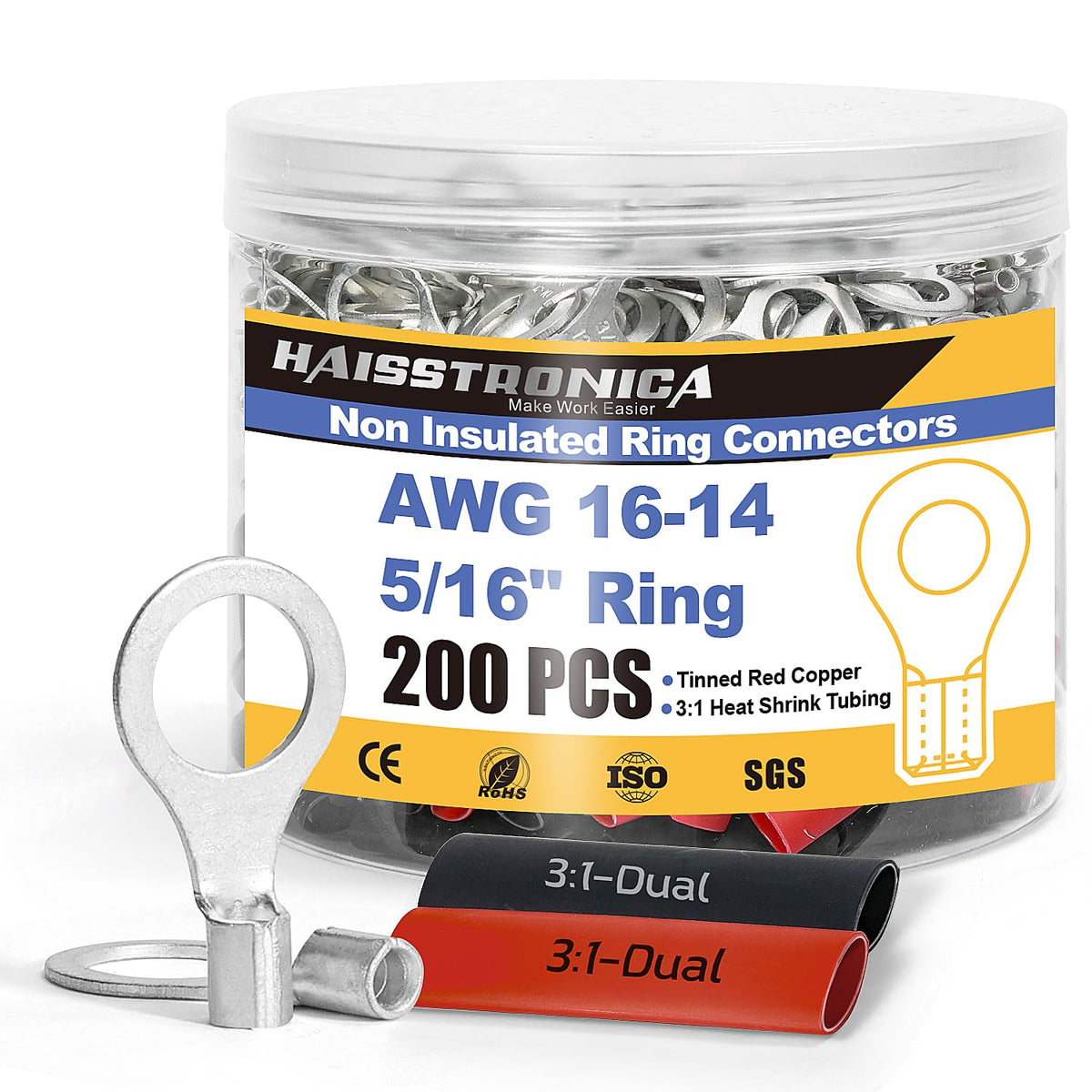
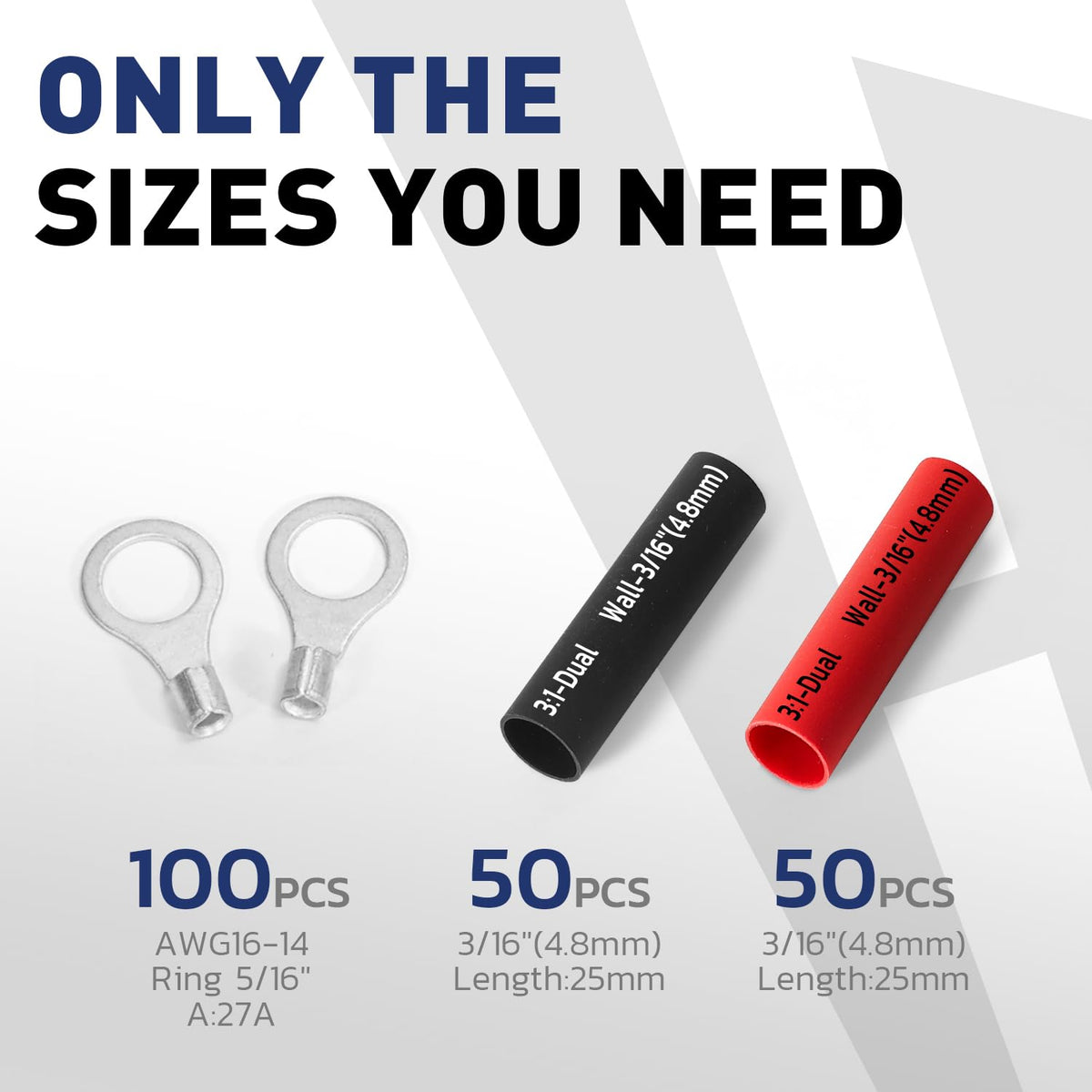
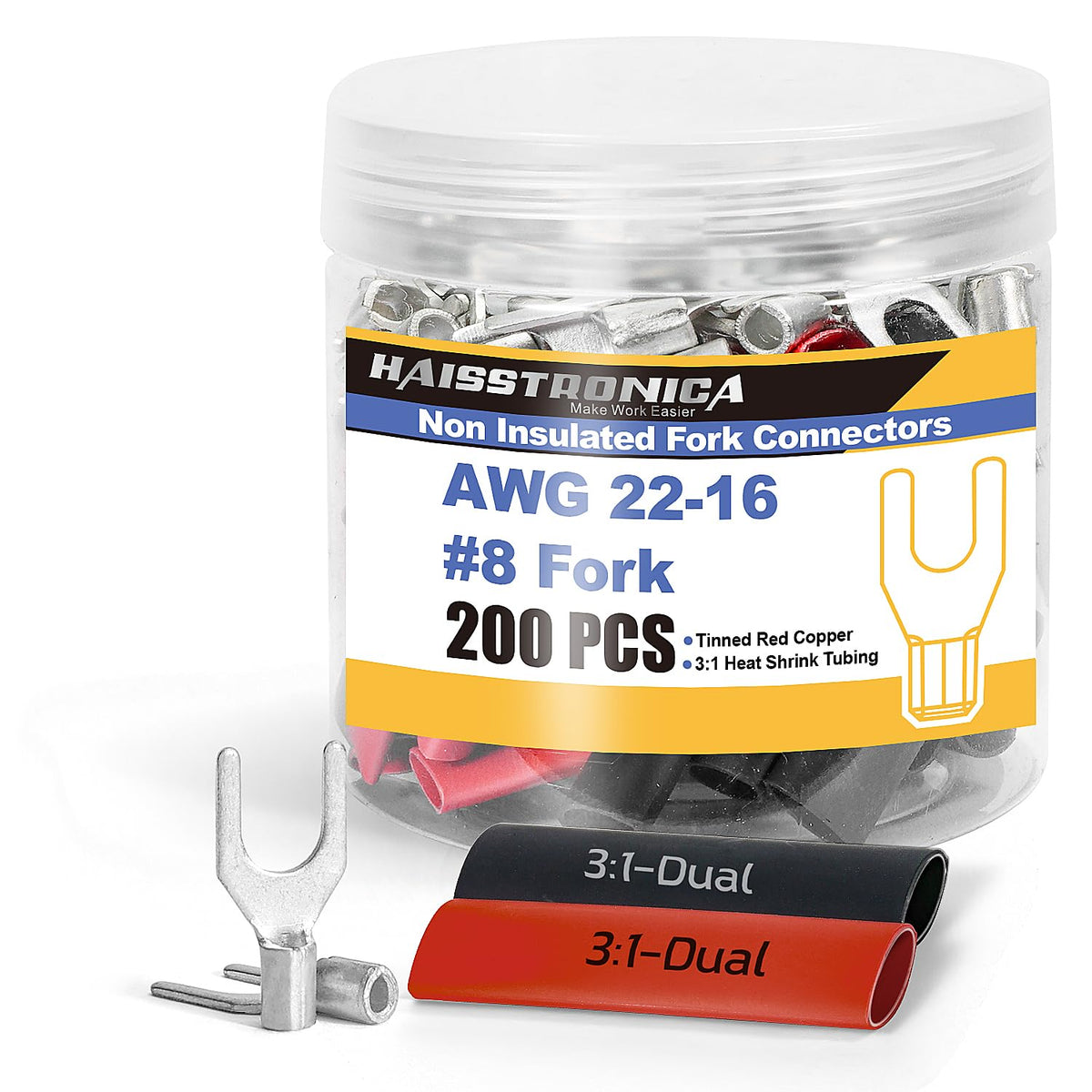
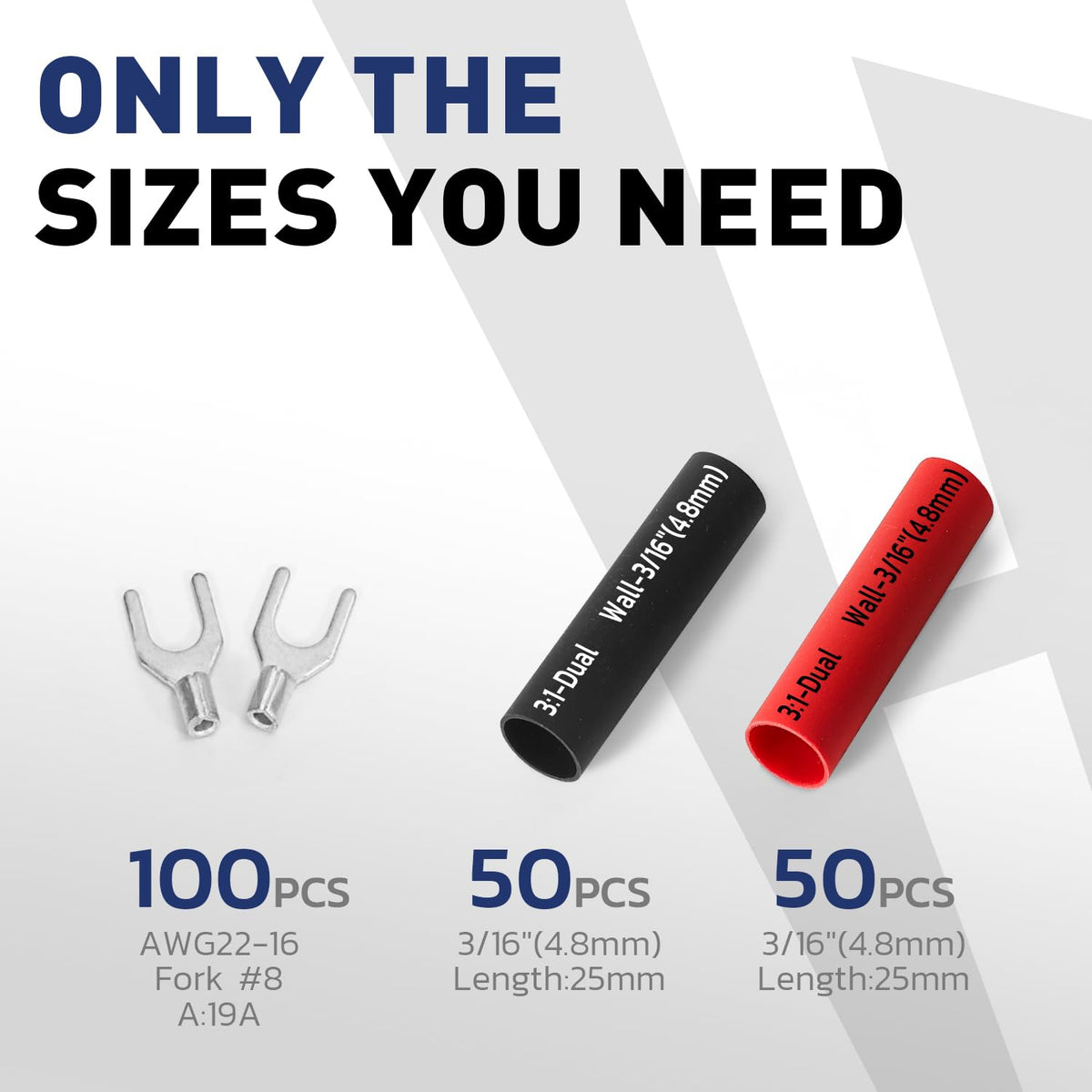
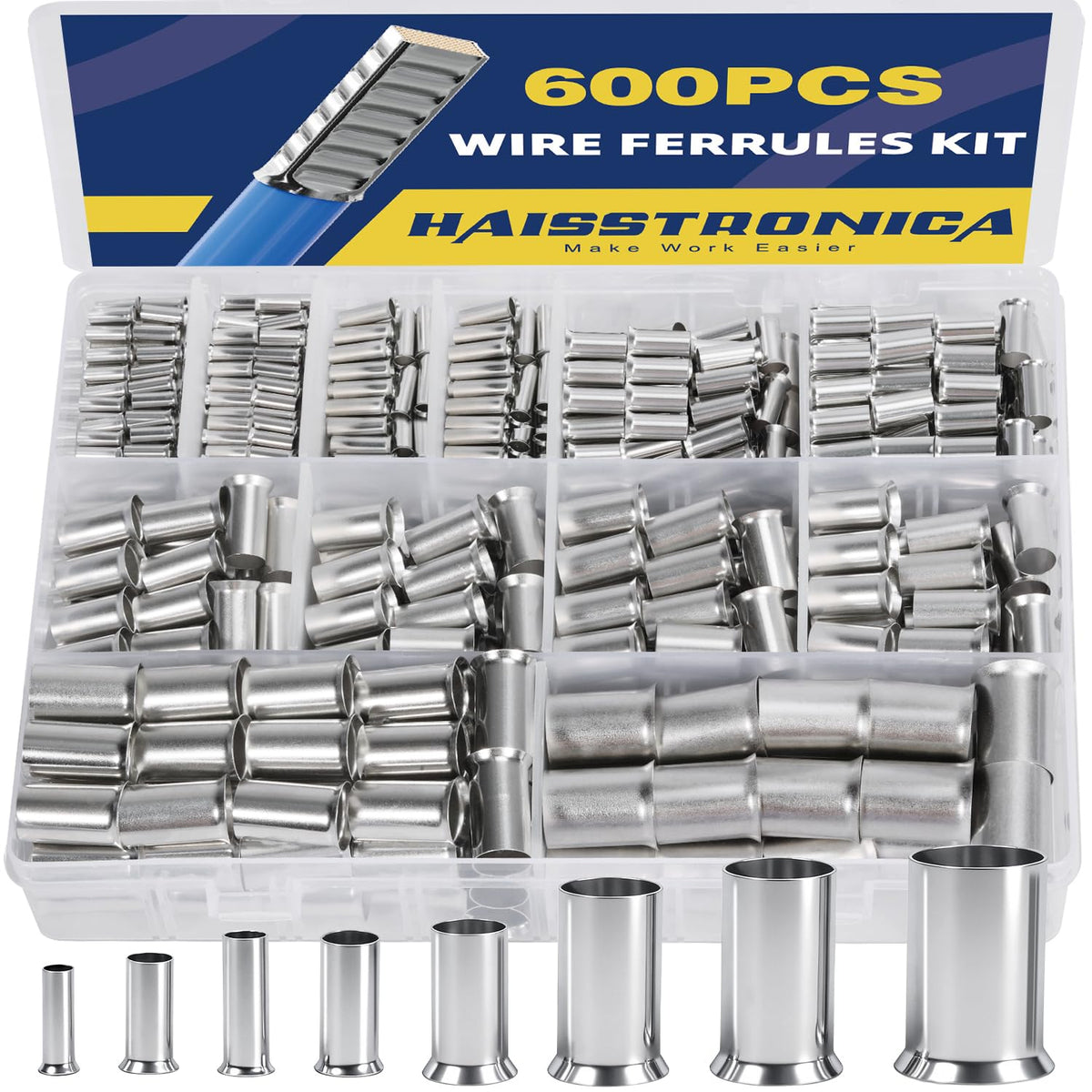
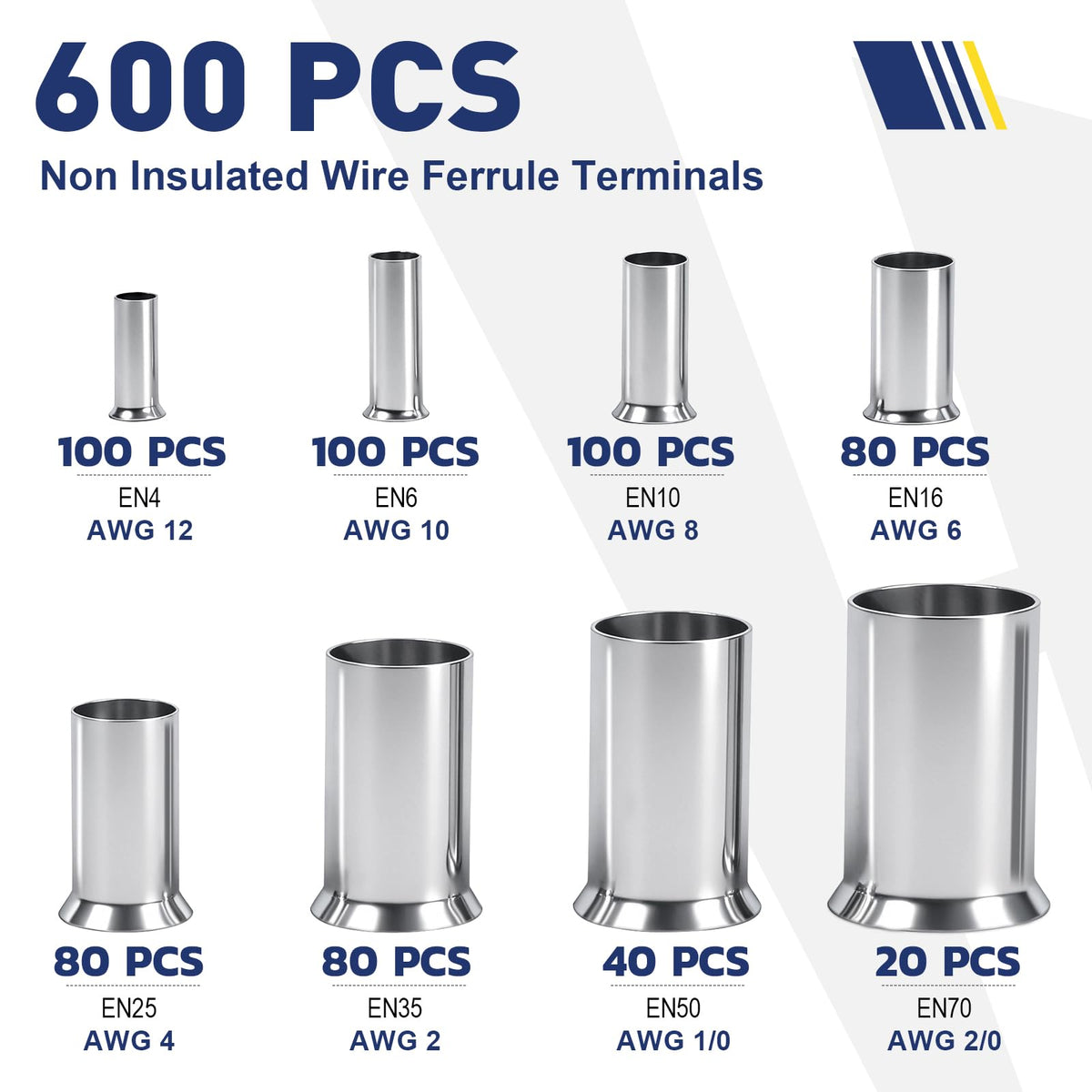
Non-insulated connectors provide compact bare copper crimp terminals for inspectable wire terminations in automotive harnesses, terminal blocks, control panels, marine equipment, and protected electrical repairs.
For straight wire-to-wire splices, browse the dedicated non-insulated butt connectors subcategory. This main Collection covers the wider range of ring, fork, ferrule, and mixed terminal kits.
Non-insulated connectors are best when you need a compact metal terminal, precise crimp inspection, or a connection that will be protected separately with heat shrink tubing or a terminal housing. Use this guide to choose the right connector before you buy.
| Decision Point | Non-Insulated Connectors | Insulated Terminals | Best Choice |
|---|---|---|---|
| Best Use Case | Automotive harness work, compact terminal blocks, spade/ring terminals, and repairs where space is limited. | General electrical repairs where the crimp sleeve needs built-in insulation and quick visual color coding. | Choose non-insulated connectors when space is tight or when you plan to add separate insulation. |
| Crimp Inspection | The metal barrel remains visible, making it easier to inspect crimp shape and conductor placement. | The insulation sleeve can hide part of the crimp, so tool match and wire gauge selection matter more. | Use non-insulated connectors when visible crimp quality is important. |
| Tool Needed | A crimping tool or die matched to non-insulated terminals. | A ratcheting crimper matched to insulated terminals or heat shrink terminals. | Match the connector style to the correct crimper before installation. |
| Weather Protection | Usually needs heat shrink tubing, a boot, or a protected housing for outdoor use. | Heat shrink insulated terminals can add sealing in one step. | For exposed waterproof repairs, pair non-insulated terminals with heat shrink tubing or choose heat shrink terminals. |
| When to Buy | Buy non-insulated connectors for clean, compact, inspectable crimps in automotive, marine, and DIY electrical projects. | Buy insulated terminals when you want a fast repair with built-in sleeve protection. | Use both types in a full wiring kit if you handle different repair environments. |
Non-insulated connectors are ideal for high-current applications where heat dissipation matters.
Yes, they are made from tinned oxygen-free copper that resists corrosion.