CABLE TERMINATIONS · BUYING GUIDE
Cable Lugs for Fine Stranded Wire: Can Standard Copper Lugs Work?
Some copper lugs can terminate fine-stranded wire or welding cable, but matching the AWG size is not enough. The lug must support the conductor’s material, size, and strand construction, and you must use the specified crimping method. A cable sliding into the barrel does not establish compatibility. Klauke, for example, identifies conductor classes and crimping conditions for its copper lug families. Klauke
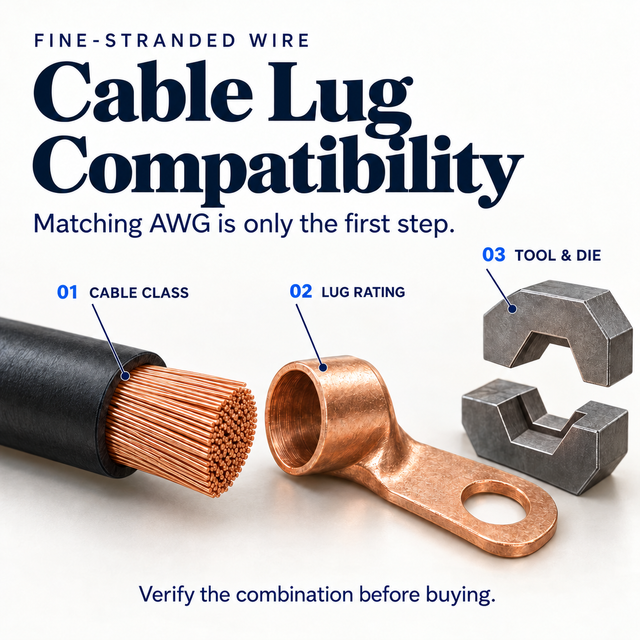
This guide explains how to select cable lugs for fine stranded wire before buying a battery-cable crimper or terminal assortment. It covers component selection—not live electrical work or high-voltage vehicle repairs.
01Why wire gauge alone does not identify the right lug
AWG and square millimeters describe conductor size. Conductor class describes its construction. Two cables with the same nominal size can have different strand arrangements and different physical bundle dimensions. Nexans distinguishes nominal conductor cross-section from the diameter you would measure with calipers. Nexans
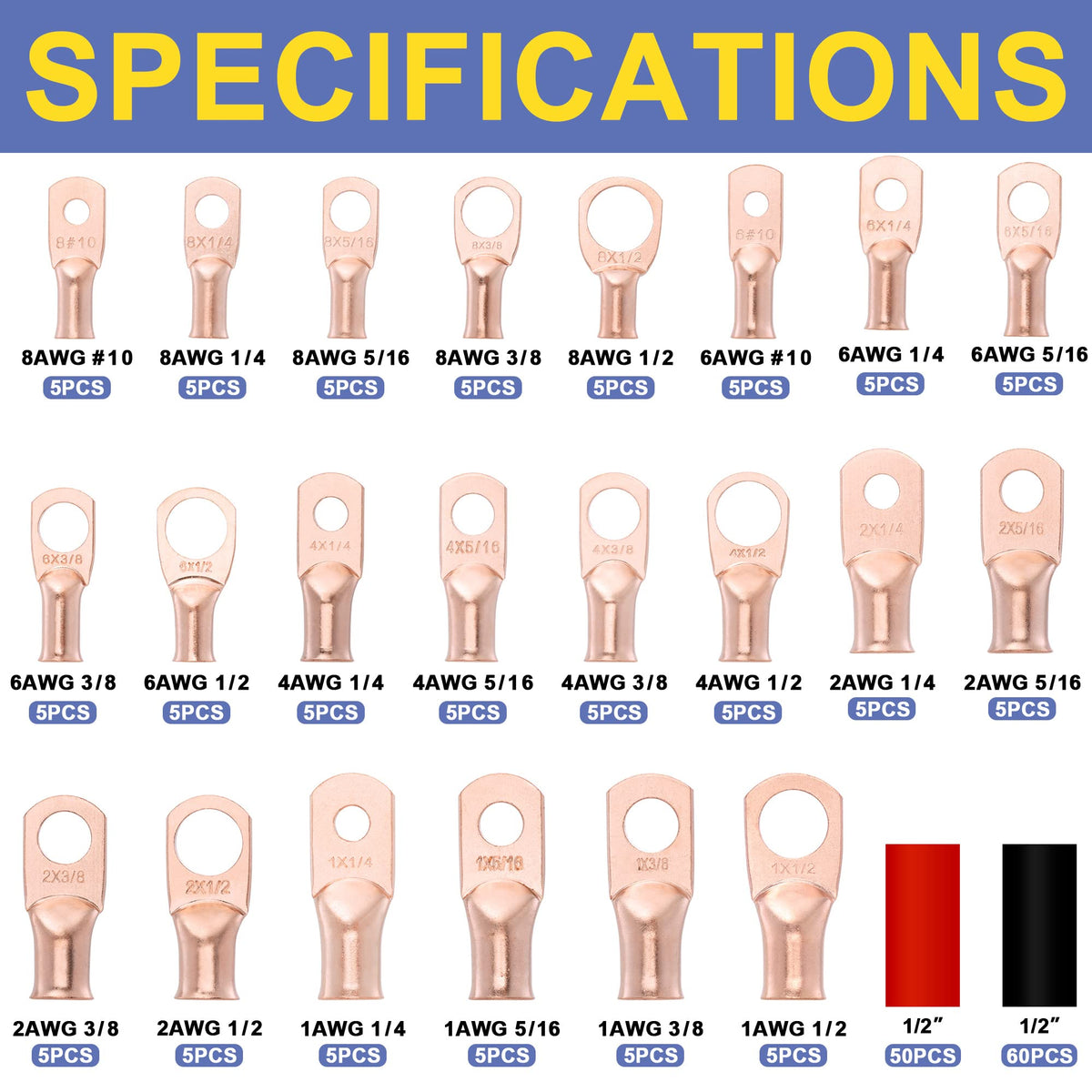
The lug’s barrel is the hollow section that receives the conductor. Its stud hole is the opening in the flat palm that fits the equipment’s mounting stud. These dimensions answer different questions. Manufacturer specifications list conductor compatibility separately from stud size. Hubbell BURNDY
| Specification | What you need to establish |
|---|---|
| AWG or mm² | The cable’s documented nominal conductor size |
| Conductor material | Bare copper, factory-tinned copper, aluminum, or another construction |
| Strand class | The exact construction identified by the cable manufacturer |
| Lug barrel | Compatibility with that conductor, not merely room for it |
| Stud hole | A match for the equipment’s specified connection hardware |
| Tool and die | An approved method for forming that particular termination |
Treat this as a documentation checklist, not a method for selecting parts by appearance. A large enough barrel and a correctly sized bolt hole do not answer the tooling question.
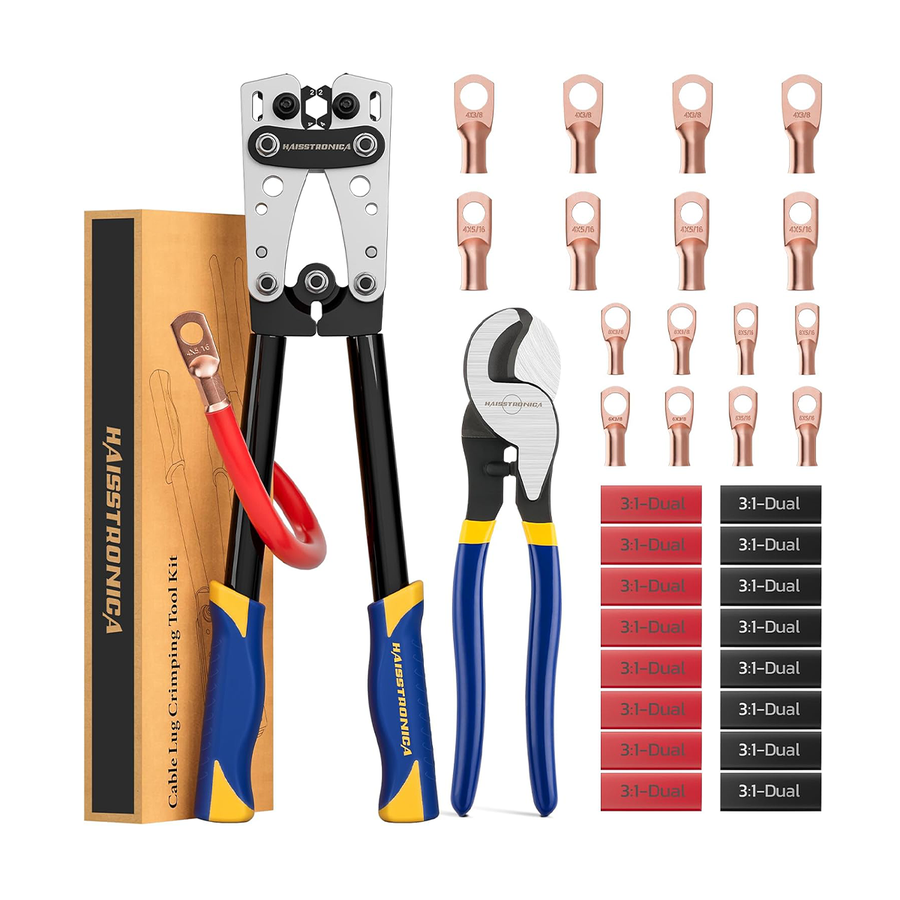
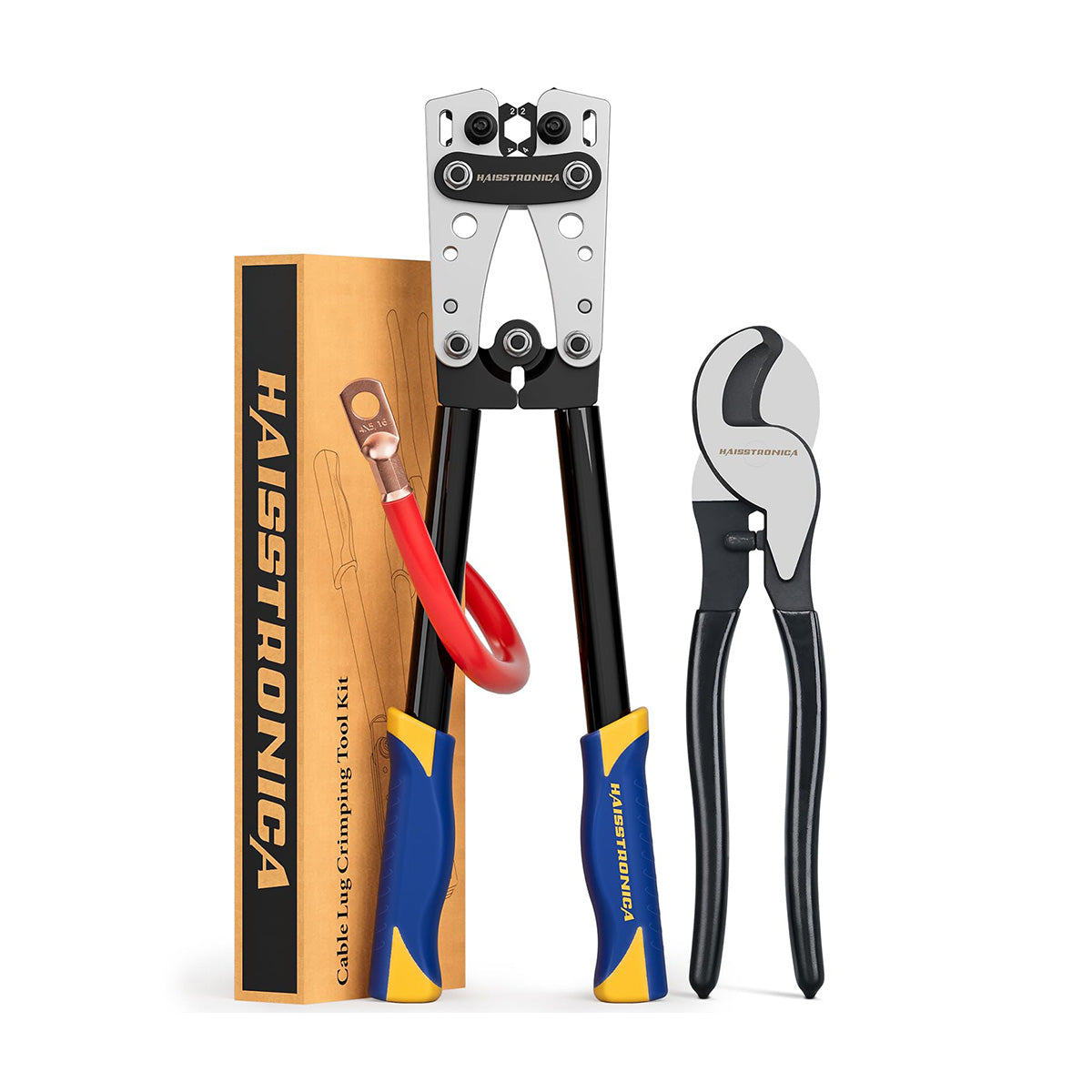
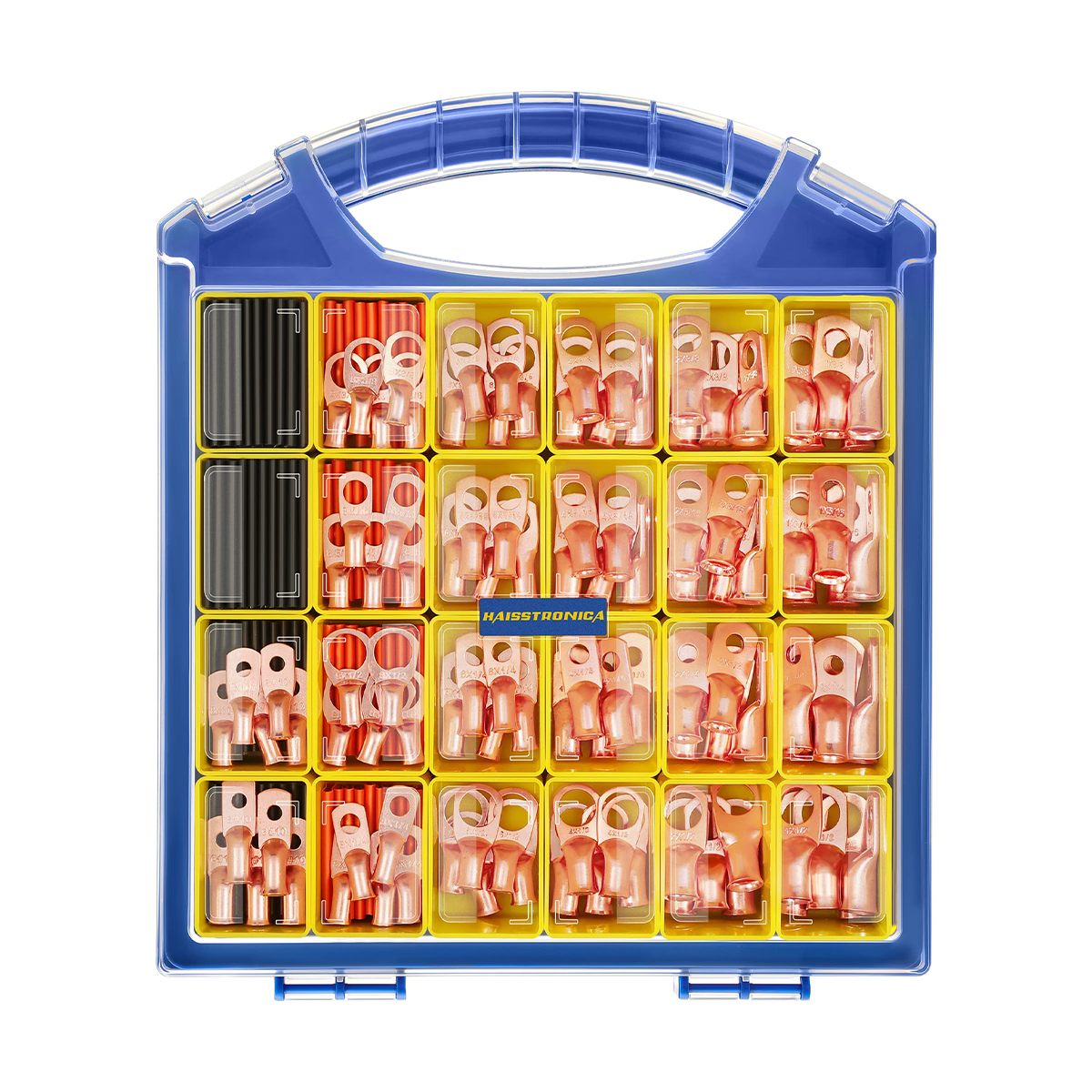
Haisstronica Battery Cable Lug Crimping Tool Kit AWG 8–1/0
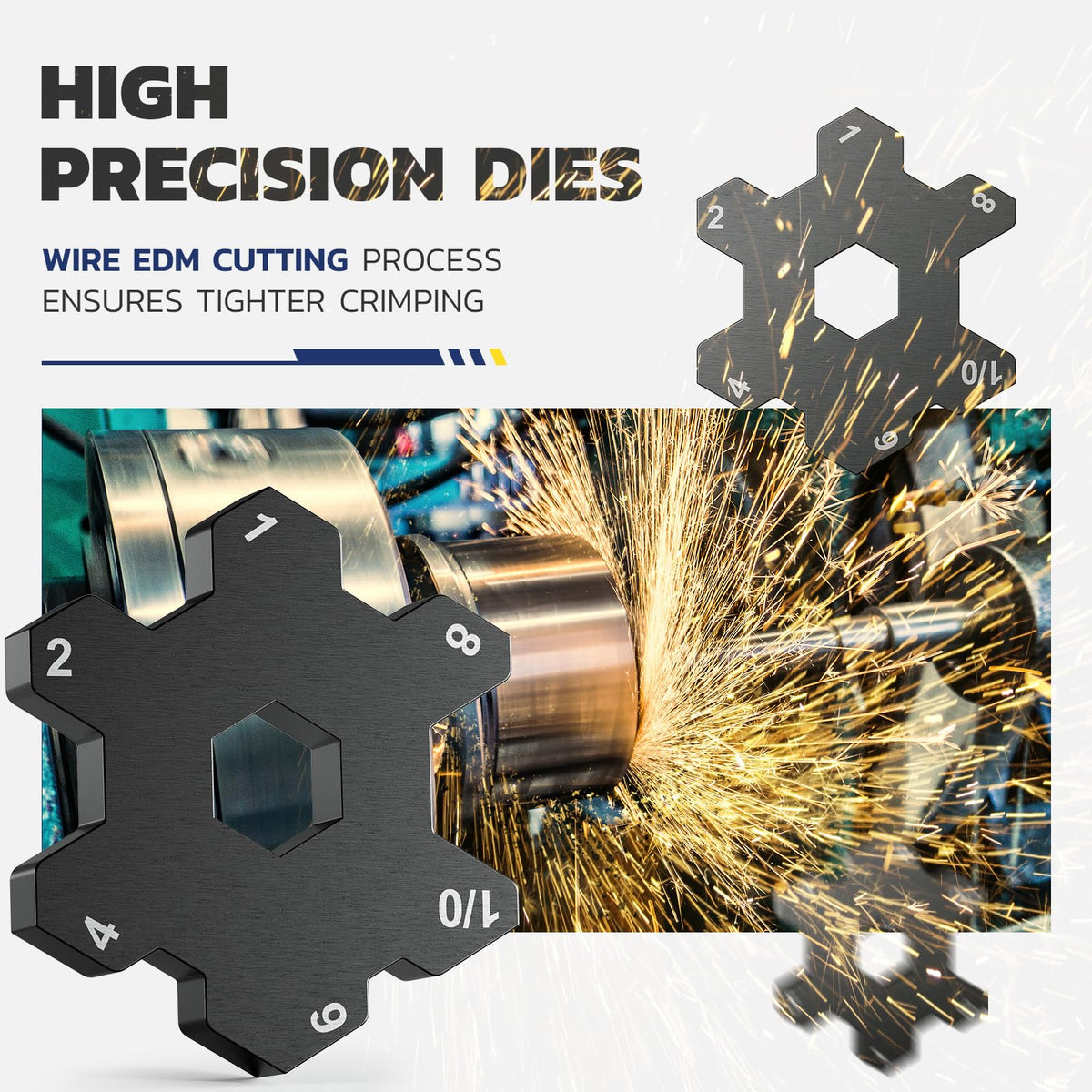
Rotating hex dies cover AWG 8, 6, 4, 2, 1, and 1/0. Confirm the cable class and lug specifications before choosing your tooling.
View Kit & Specifications02Welding cable is not one conductor class
“Welding cable” is a product description, not a complete terminal specification.
Prysmian’s Carolprene welding cable uses Class K bare copper conductors. Its Super Vu-Tron welding cable uses Class M bare copper conductors. Both are welding cables, but their published constructions differ. Therefore, “works with welding cable” needs clarification: which cable, size, and class? Prysmian North America
You may also encounter the IEC classification system. Nexans describes Class 5 as flexible conductors made from many fine wires and Class 6 as highly flexible conductors with still finer wires. Do not assume that an IEC class and a letter-based class are interchangeable approvals; obtain the applicable manufacturer cross-reference. Nexans
For welding cable lug compatibility, start with the cable’s exact part number and datasheet. If the jacket only shows gauge and a trade name, ask the cable supplier for the construction information.
Also check where the cable may be installed. Prysmian’s Super Vu-Tron documentation, for example, makes particular application statements tied to cable size. Flexibility alone does not establish suitability for every battery compartment, building installation, or marine environment. Cable suitability and termination suitability are separate checks. Prysmian North America
03Can an ordinary copper lug be compatible?
Yes—provided its actual specifications cover the intended conductor and installation method. “Ordinary” is not a technical rating.
Klauke’s L-series copper lugs include applications for IEC Class 5 conductors, with compatibility dependent on cross-section and crimping form. Its F-series specifically addresses fine and superfine stranded conductors. These examples show why neither appearance nor a broad “copper lug” label settles the question. Klauke
Fine strands can spread at the barrel entrance. Klauke uses a larger internal diameter and flared entry on its F-series to help receive the complete conductor bundle without losing strands. A flared entrance is useful geometry, but it does not independently approve every flexible cable. Klauke
A real example: one lug, different conductor-size ratings
BURNDY’s YA3CLB specification lists 3 AWG stranded copper and 4 AWG flexible copper in identified classes, including K and M. The same product has separate conductor entries rather than one universal gauge claim. Hubbell BURNDY
This is not a recommendation to buy that lug for a Haisstronica tool. It illustrates how to read a manufacturer’s compatibility data.
Do not convert this example into an “always buy one size larger” rule. Other lug designs have different ratings. Use the exact part’s conductor table and installation instructions.
Haisstronica Battery Cable Lug Crimping Tool Kit AWG 8–1/0
A lug fitting over the cable does not establish compatibility. Check the terminal’s conductor rating and required crimping method before selecting this kit.
View Kit & Specifications04Check the complete cable–lug–tool combination
1. Identify the cable before choosing the terminal
Record the cable manufacturer, part number, nominal size, conductor material, and strand class. Keep a photo of the jacket marking with the datasheet.
Look beyond the words “copper wire.” Factory-tinned copper, for example, has a different surface finish from bare copper. A manufacturer may approve both, but that approval should be documented. Factory-tinned strands are also not the same thing as dipping the assembled conductor end into solder. IHI Connectors
For imported cable labeled in mm², do not select an AWG lug solely from a rounded conversion. Ask for a documented cross-reference that includes the conductor construction, not just a similar area.
2. Read the terminal’s class-specific rating
Look for a table or written statement identifying your conductor class at your size. “For stranded wire” is not a useful substitute when the strand construction is unspecified.
In its panelboard guidance, Schneider Electric emphasizes identifying terminals for the particular fine-stranded conductor classes involved. That is guidance for the stated equipment context—not a declaration that every automotive battery connection follows panelboard rules. Schneider Electric
Likewise, a reference to UL 486A–486B does not tell you that every product supports every conductor construction covered by that standard. The published scope includes multiple materials and conductor types; the individual connector’s evaluation and instructions determine its usable combinations. ANSI Webstore
For work in the United States or Canada, verify the approvals and installation requirements applicable to the actual equipment and location. Do not treat a standard number in an online listing as complete compatibility documentation.
3. Verify the crimping tool and die
A tool’s gauge range describes its stated capacity; it does not approve every lug carrying that gauge number.
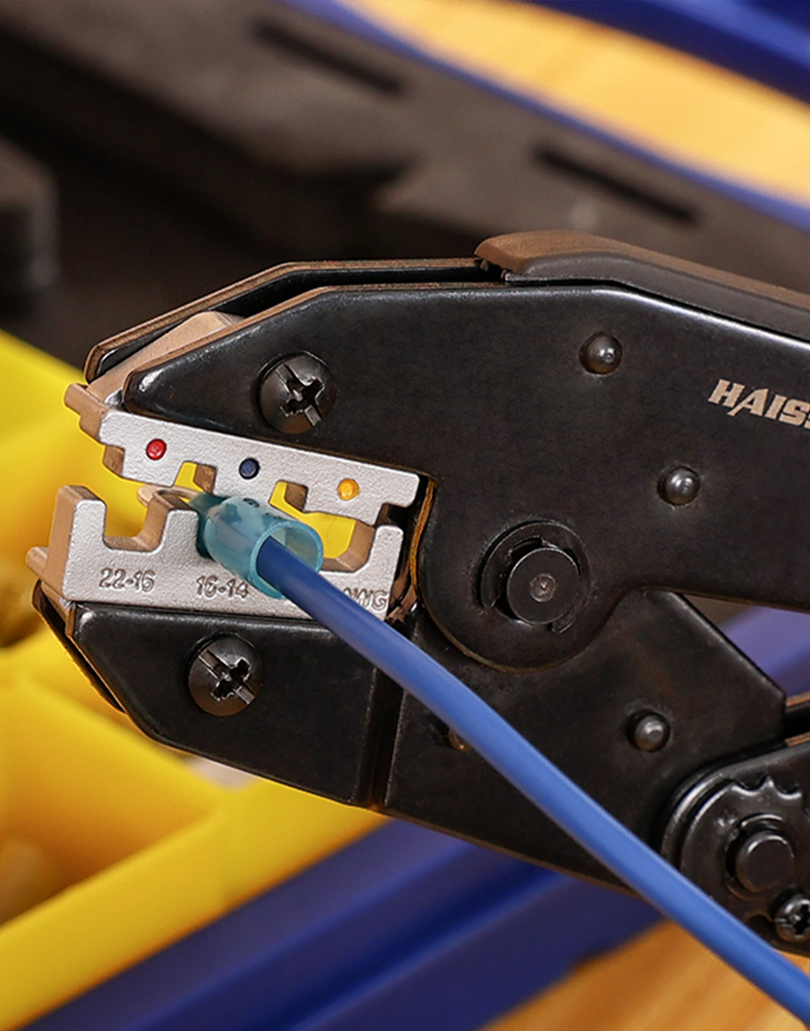
Check the specified tool, die identifier, crimp profile, and any restrictions associated with the cable class. A hex die and an indenting tool are not automatically substitutes. Klauke’s F-series guidance, for example, describes suitable quad-point or notch crimping methods for that product family. Klauke
“Hex-compatible” is therefore only part of the answer. The particular barrel and tooling must still match.
Consider an illustrative purchase: you already own fine-stranded cable, find a terminal explicitly rated for it, and see that your crimper covers the same gauge. Two requirements appear satisfied, but the purchase decision remains open until the lug’s tooling requirements are confirmed.
4. Confirm the equipment-side connection
Read the lug’s stud-size specification separately from its wire-size rating. Also check that its palm fits the equipment’s intended contact area without modification. Klauke warns against altering a lug palm to force it into an unsuitable connection space. Klauke
Use the equipment manufacturer’s requirements for hardware, mounting, and tightening. No conductor-class label provides a universal installation torque.
05What the Haisstronica AWG 8–1/0 kit tells you
The Haisstronica Battery Cable Lug Crimping Tool Kit AWG 8–1/0 lists rotating hex dies for AWG 8, 6, 4, 2, 1, and 1/0. Its detailed specification identifies a non-ratcheting lever-compression mechanism. Haisstronica
Those specifications help screen tool capacity and crimp shape. They do not, by themselves, establish approval for Class K, Class M, or IEC Class 5/6 conductors.
BEFORE YOU ORDER
The product page does not identify a class-specific cable–lug–die compatibility table. For a fine-stranded cable purchase, request written confirmation of the exact combination before ordering. Missing documentation means compatibility is unverified—not that every such combination necessarily fails.
Send Haisstronica the cable datasheet and intended lug part number. Ask which tool setting and installation instructions apply. A reply that only repeats the AWG range does not resolve the conductor-class question.
Haisstronica Battery Cable Lug Crimping Tool Kit AWG 8–1/0
Manual, non-ratcheting lever compression with rotating hex dies. Request written confirmation for the exact fine-stranded cable, lug, and die combination.
View Kit & Specifications06What not to do when fine strands will not fit
Do not cut away strands to make the conductor enter a smaller barrel. Do not fold the conductor to fill a larger barrel, or tightly twist it into a narrower rope. These are not substitutes for selecting the correct terminal. Haisstronica’s wire-preparation guide explains the difference between gently gathering loose strands and excessively twisting them. Haisstronica
Do not add solder to make an unverified combination seem secure. Solder pretinning changes the termination condition; it is not equivalent to factory-tinned individual strands. Use it only where the applicable connection instructions explicitly require or permit it. IHI Connectors
A ferrule is not a universal adapter either. The UL 486A–486B scope recognizes evaluated ferrule and adapter arrangements under defined conditions. It does not authorize inserting any ferrule into any closed-barrel battery lug. Confirm the complete arrangement before adding components. ANSI Webstore
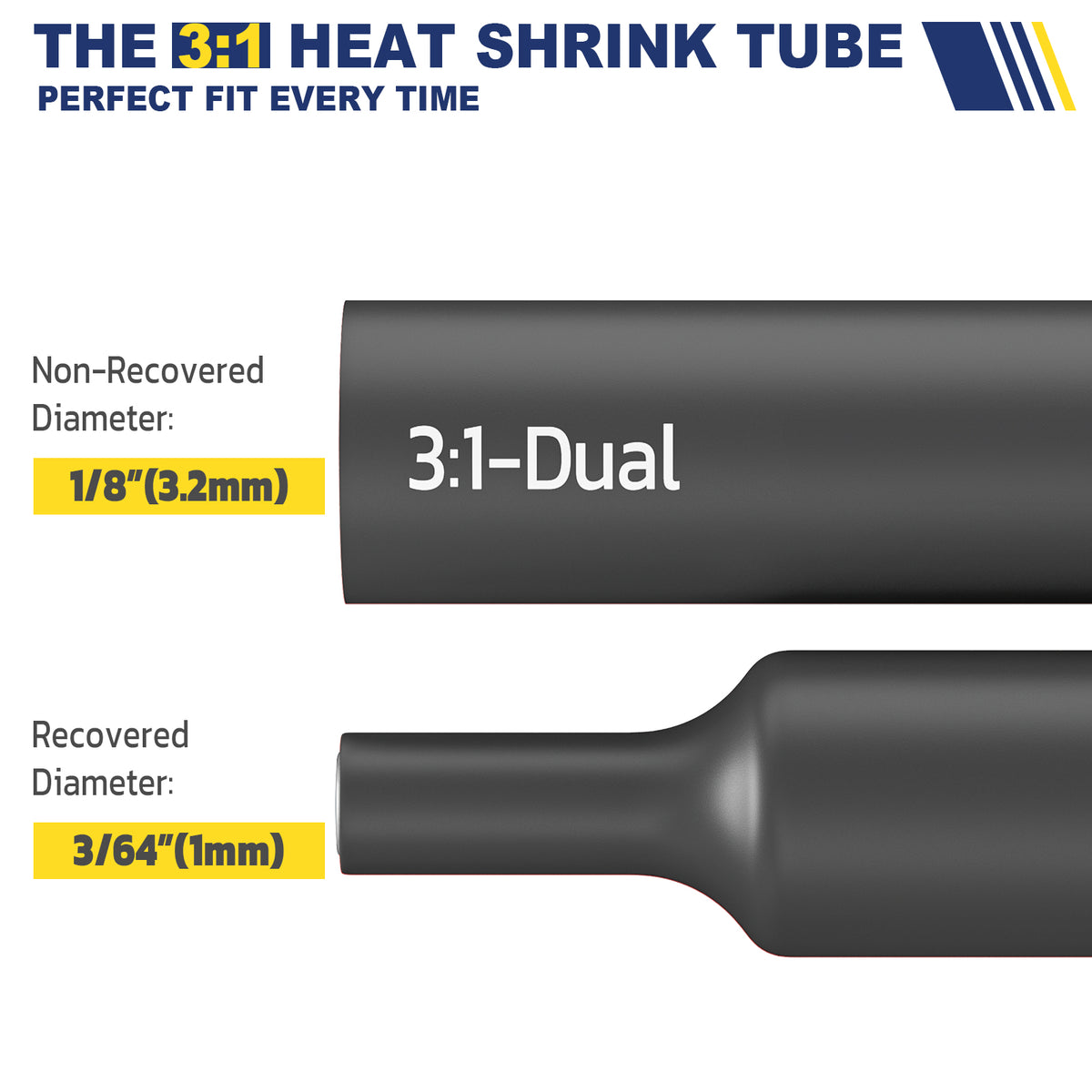
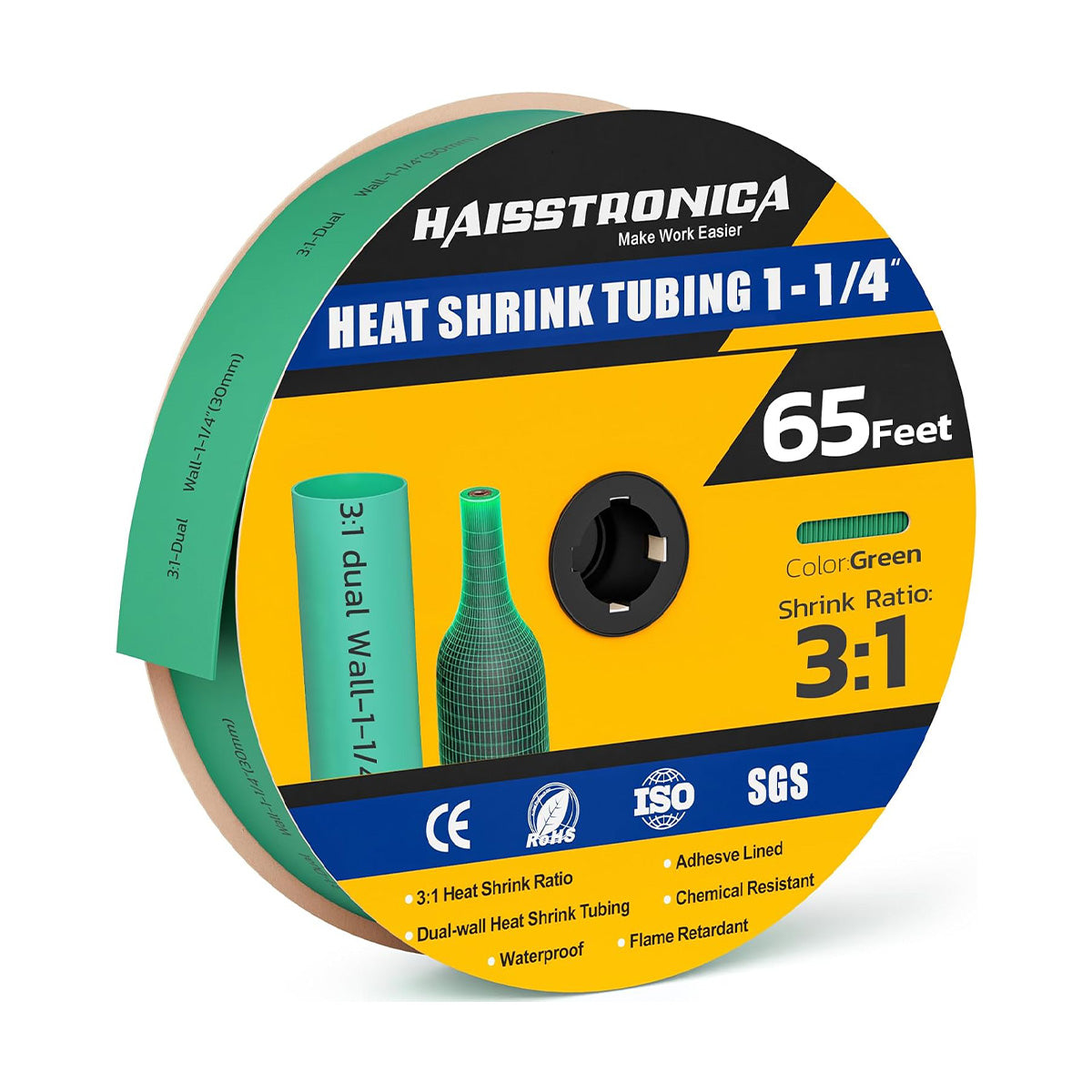
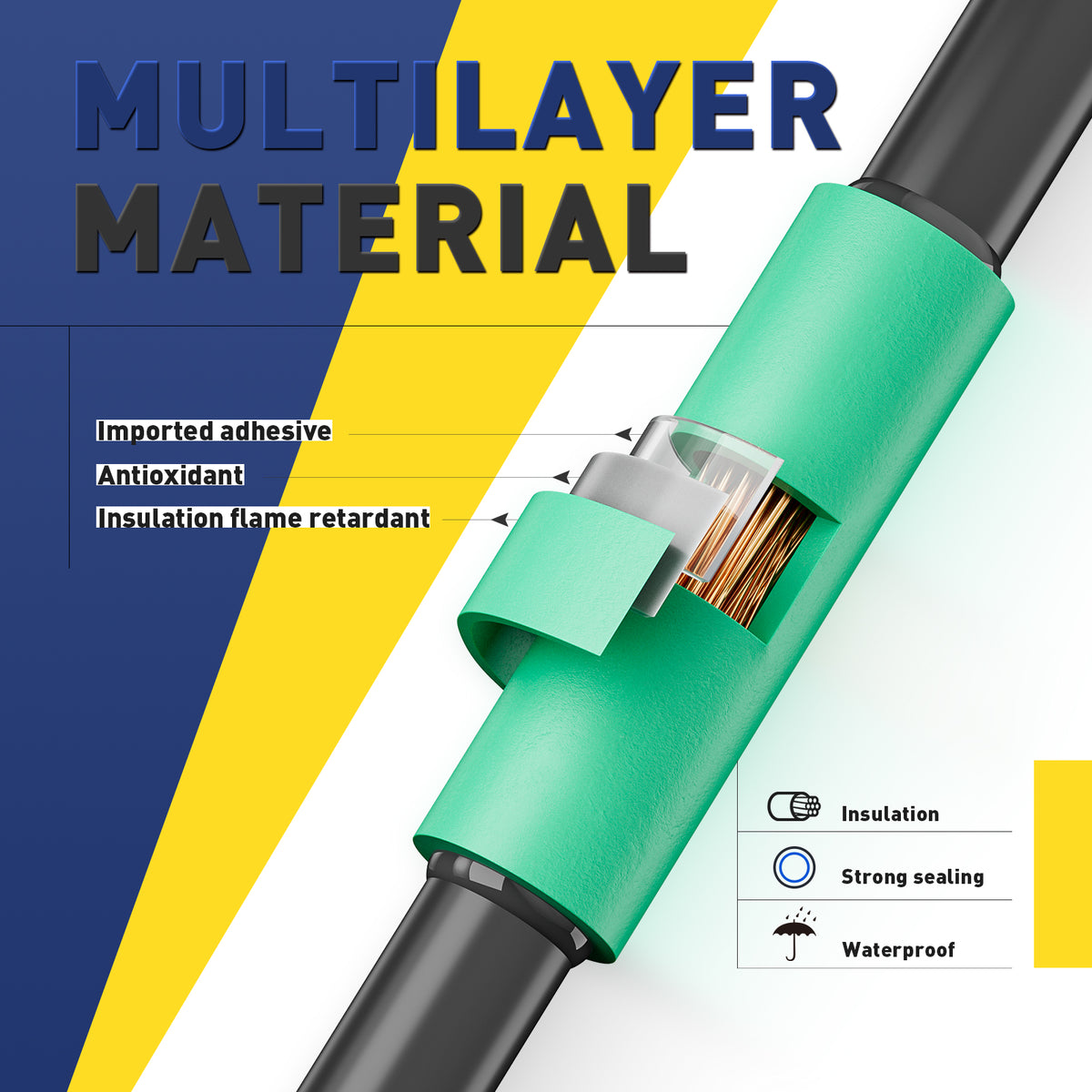
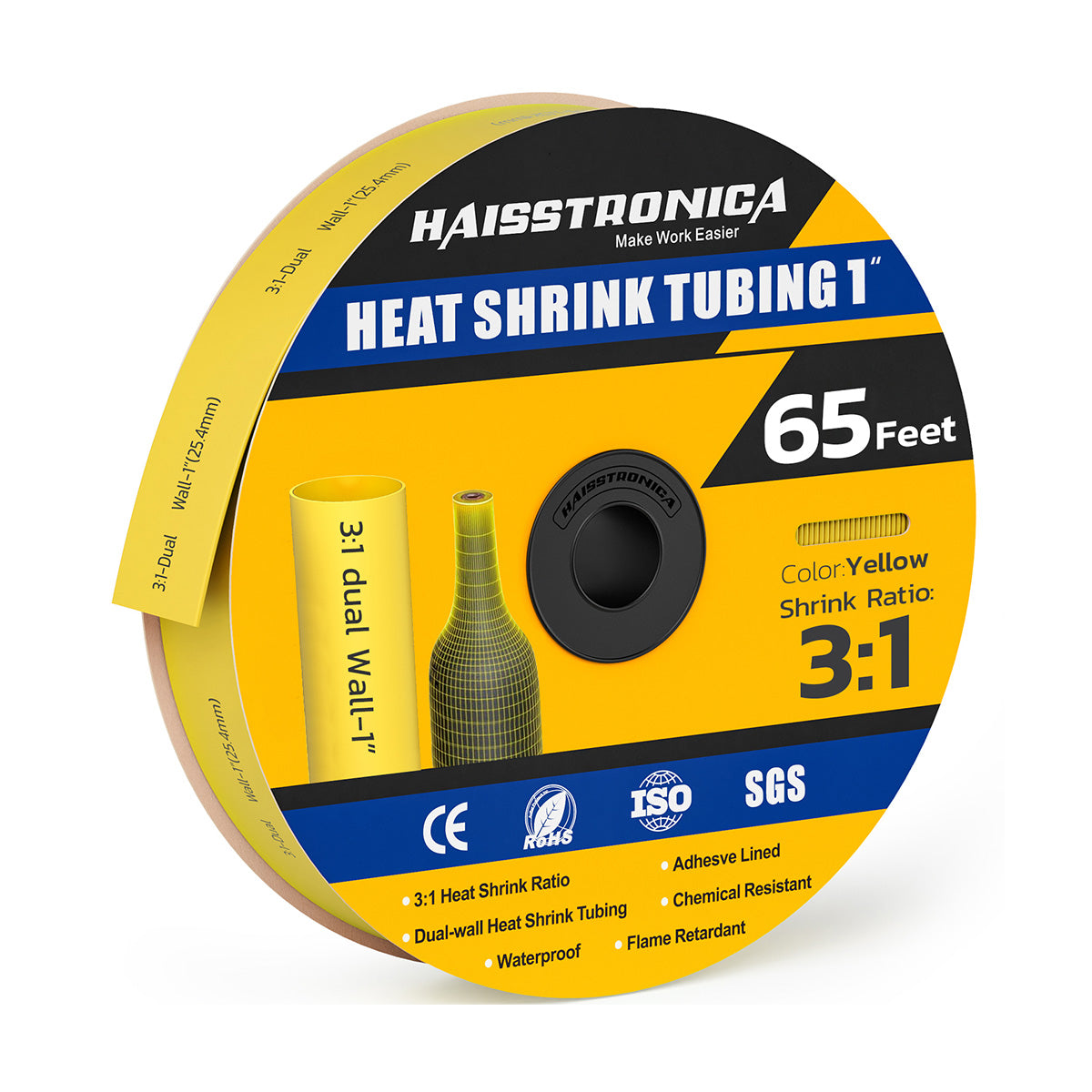
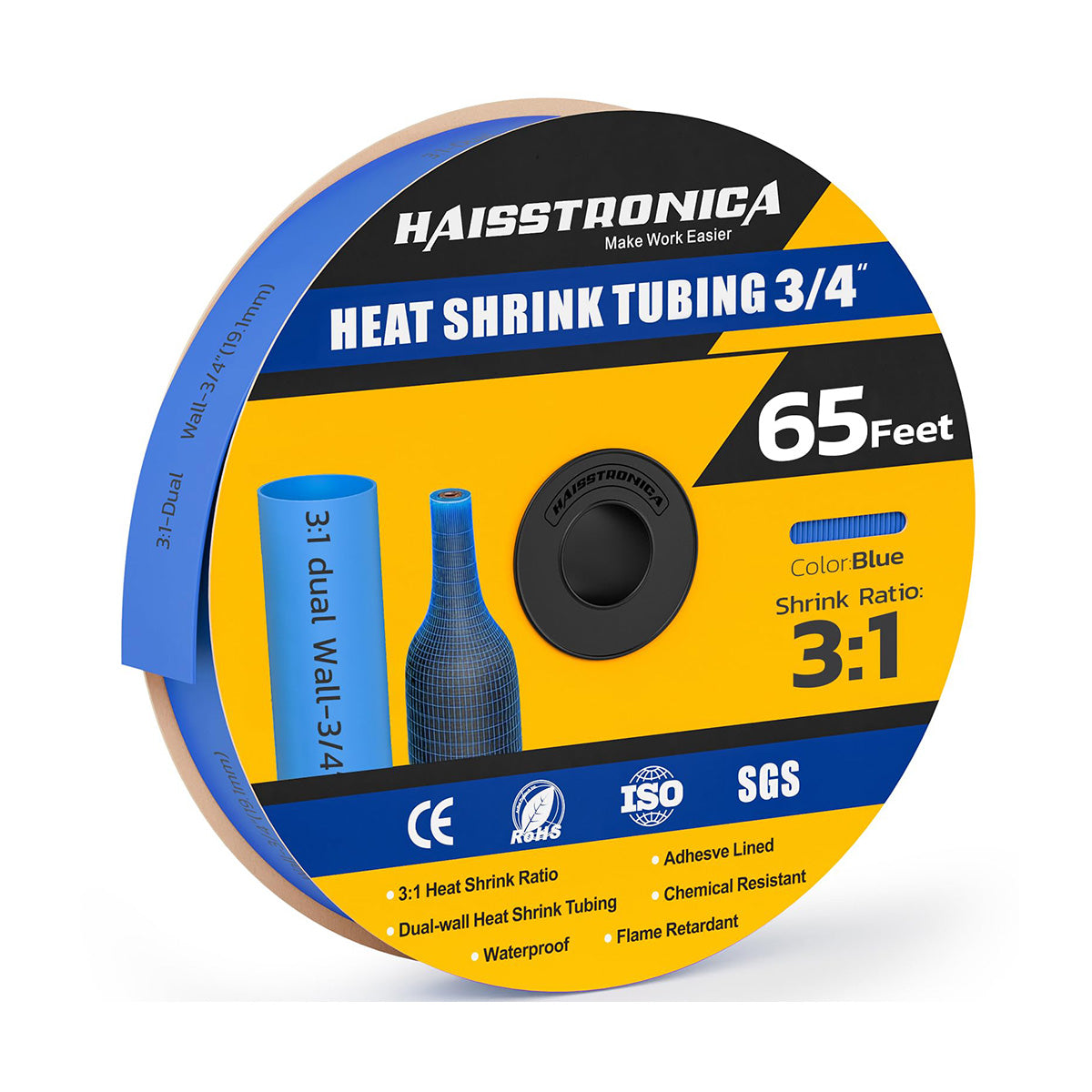
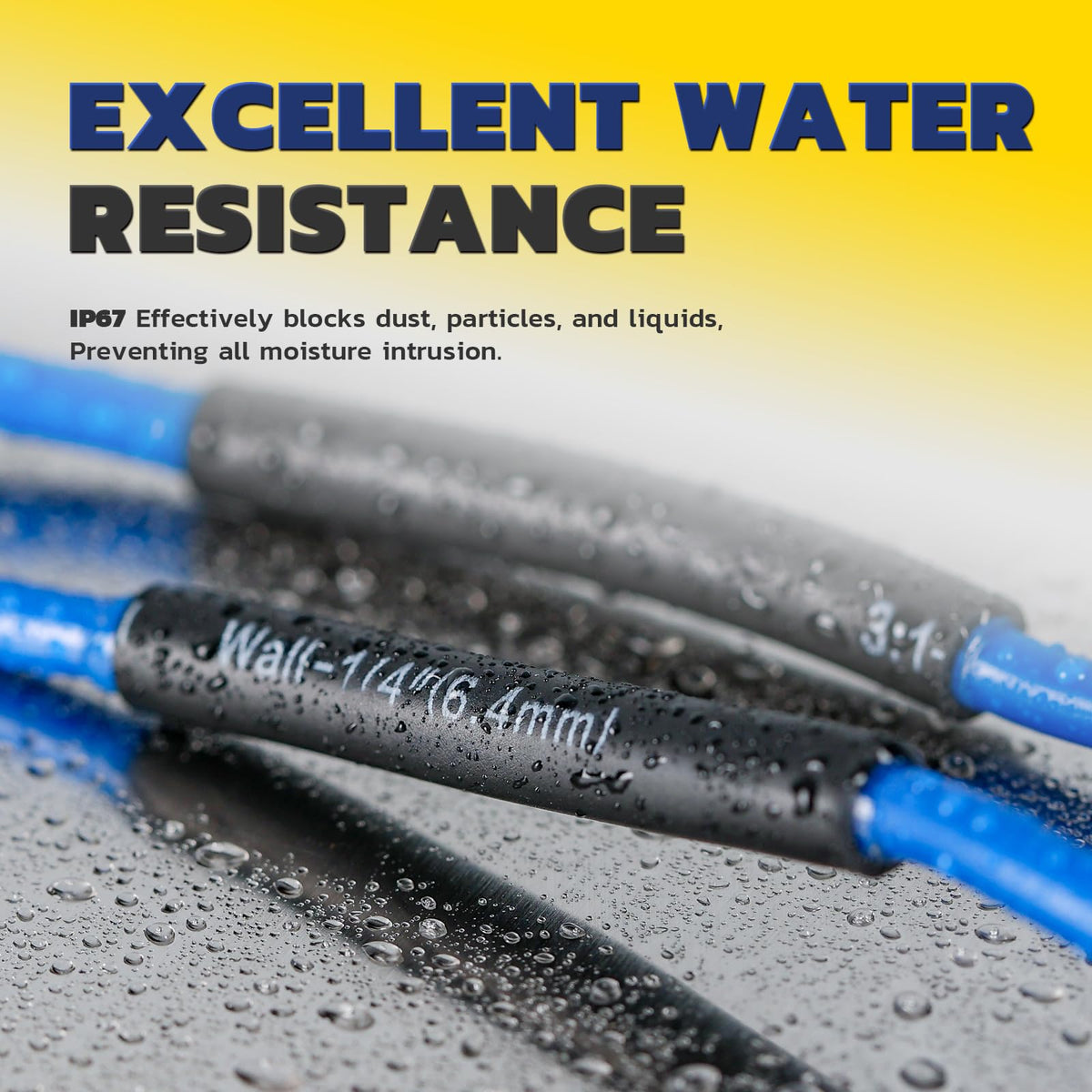
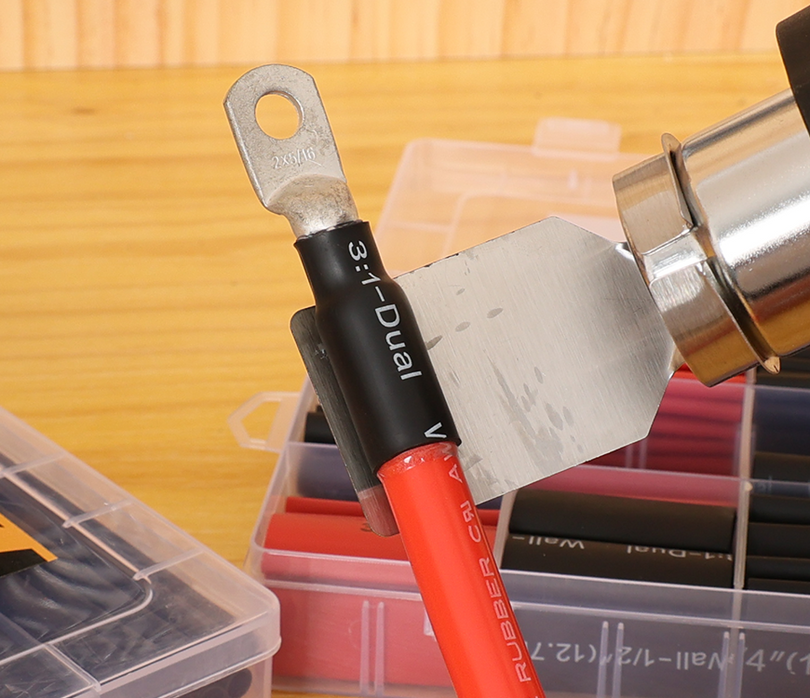
Heat-shrink tubing should not be used to hide protruding strands, incomplete insertion, or a questionable crimp. Correct the underlying connection rather than covering it. Haisstronica
07After selection: installation and verification still matter
Before handling exposed conductors, isolate all relevant power sources and follow the equipment’s shutdown procedure. A disconnected charger does not necessarily remove battery power. Keep conductive tools from bridging battery terminals, wear appropriate eye protection, and leave unfamiliar multi-source or high-voltage systems to qualified personnel. Haisstronica
Follow the applicable instructions for stripping, conductor insertion, crimp location and count, insulation, and cable support. Do not let a heavy cable place avoidable bending or pulling loads on the connection.
Inspection must follow the termination’s requirements. A hand pull can reveal an obviously loose conductor, but it is not a calibrated pull-force test or proof of electrical performance. Likewise, a neat-looking barrel does not establish that an undocumented cable–lug–tool combination is approved. Haisstronica’s heavy-wire lug installation guide covers the broader preparation and finishing workflow; class-specific compatibility must come first. Haisstronica
Haisstronica Battery Cable Lug Crimping Tool Kit AWG 8–1/0
Prepare your cable with a lug crimper and cable cutter, then follow the approved termination instructions. Lug and heat-shrink contents depend on the selected variant.
View Kit & Specifications08Before buying, ask one complete compatibility question
Instead of asking, “Will this work with welding cable?” send the supplier:
Please confirm which lug part number, stud option, crimper, and die are approved for the cable identified in my attached datasheet. Please include the applicable installation instructions.
For fine stranded cable terminals, the useful answer identifies components and conditions—not just a reassuring adjective.
The decision rule for conductor class lug compatibility is straightforward: identify the cable, verify the lug’s rating, confirm the tooling, and check the equipment connection before purchasing. That sequence is more reliable than choosing by fit, color, or a shared gauge marking.