
Why Thin and Thick Wires Create Different Stripping Challenges — stripped wire
Thin and thick conductors don’t just “feel different”—they behave differently under a blade. With thin wire (like 24 AWG), small errors in blade depth and squeeze force can remove strands or nick the conductor; with thicker wire (like 10 AWG), the insulation is often tougher and the force required rises, which can tempt you to squeeze harder and misalign the conductor. That combination makes the stripped wire outcome highly sensitive to tool control and technique.
Workmanship standards explain why this sensitivity matters. NASA’s wiring workmanship standard requires that the insulation remaining after stripping must not show nicks, cuts, crushing, or charring, and that the conductor must not be nicked or scraped to the point base metal is exposed. On thin wire, strand damage can be subtle; on thick wire, insulation damage can be dramatic. In both cases, the defects are not “cosmetic”—they’re reliability risks that drive rework.
The physics behind gauge also matters. Wire gauge charts exist because AWG is standardized; tables relate AWG size to diameter and other properties. Moving from 24 AWG to 10 AWG is not a minor change—it’s a large jump in cross-sectional area and stiffness. As size increases, stripping often requires higher force and better leverage, which is where a large wire stripper can help, but too much force without control increases defect risk.
Finally, mixed workflows include more than single conductors. If you alternate between single wires and stripping cables (outer jacket removal), you add another layer of depth-control risk. Manufacturer guidance emphasizes that jacket stripping depth must be controlled to avoid damaging insulation beneath the jacket—showing why “precision” is different for cable strip vs conductor strip. Use a Haisstronica wiring tool kit so you’re equipped for both conductor and jacket work without improvisation.

Why Most Tools Need Adjustment Between Gauges — stripped wire
Most traditional tools are notch-based. They assume you will select the correct hole or notch for the conductor size, then apply the right force. That’s manageable if you strip one gauge all day, but it becomes a bottleneck in mixed work. Every gauge change introduces two time taxes: a decision tax (“which notch?”) and a quality tax (“did I pick the right depth?”). That’s why people search for the best wire stripping pliers or best tool to strip wire—they’re trying to eliminate tool-change friction.
Adjustment is also needed because cutting and stripping interact. TE’s wire-preparation guidance explains that cutting method affects stripping: diagonal cutters can distort conductors, flatten strand ends, increase strip force, and cause strand splay during stripping. When ends are distorted, notch tools behave less predictably, which forces more “test strips” and adjustments. This is why a proper electrical wire cutter tool is a speed tool as much as a cutting tool.
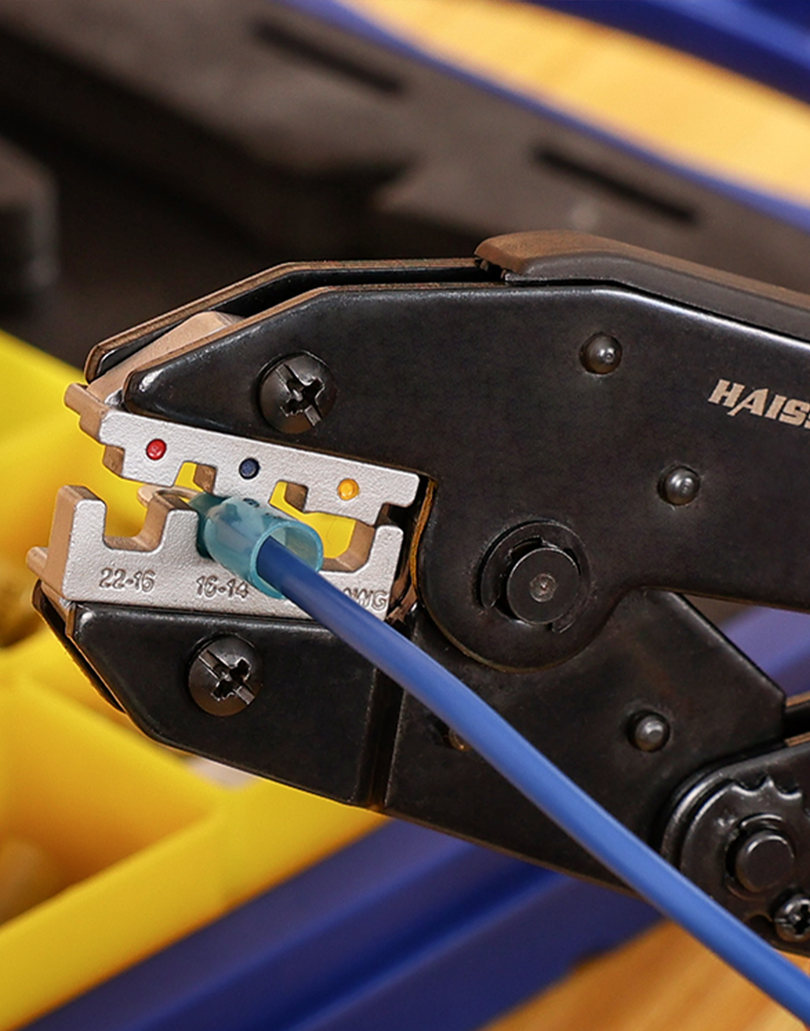
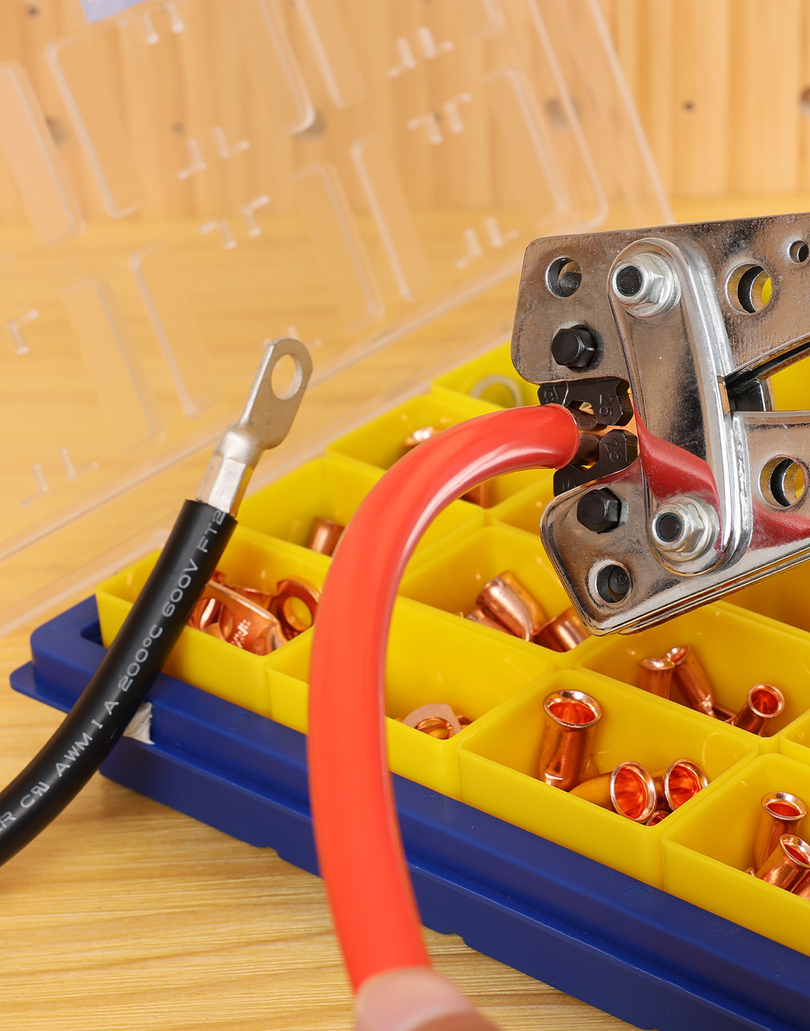
The downstream risk is termination failure. TE’s crimping guide emphasizes proper wire preparation and strip length as essential for consistent crimp quality. If stripping is inconsistent across gauges, your crimping tools kit becomes inconsistent: strand count, barrel fill, and insertion depth vary. That’s why many pros keep multiple strippers—small wire strippers for fine work and heavier tools for big conductors—yet still lose time switching. Simplify your station with a Haisstronica stripper kit approach designed for 24–10 AWG continuity.

What “One Setting” Really Means in Wire Stripping — stripped wire
“One setting” does not mean “zero control.” It means you stop reconfiguring for every wire gauge and instead rely on a mechanism that adapts to diameter while keeping the core settings stable. In practice, that typically includes:
Self-adjusting clamping and stripping geometry that adapts to insulation diameter (reducing notch selection).
A stable strip-length reference (so strip length is repeatable across many wires).
A controllable pressure setting to prevent damage as insulation hardness changes.
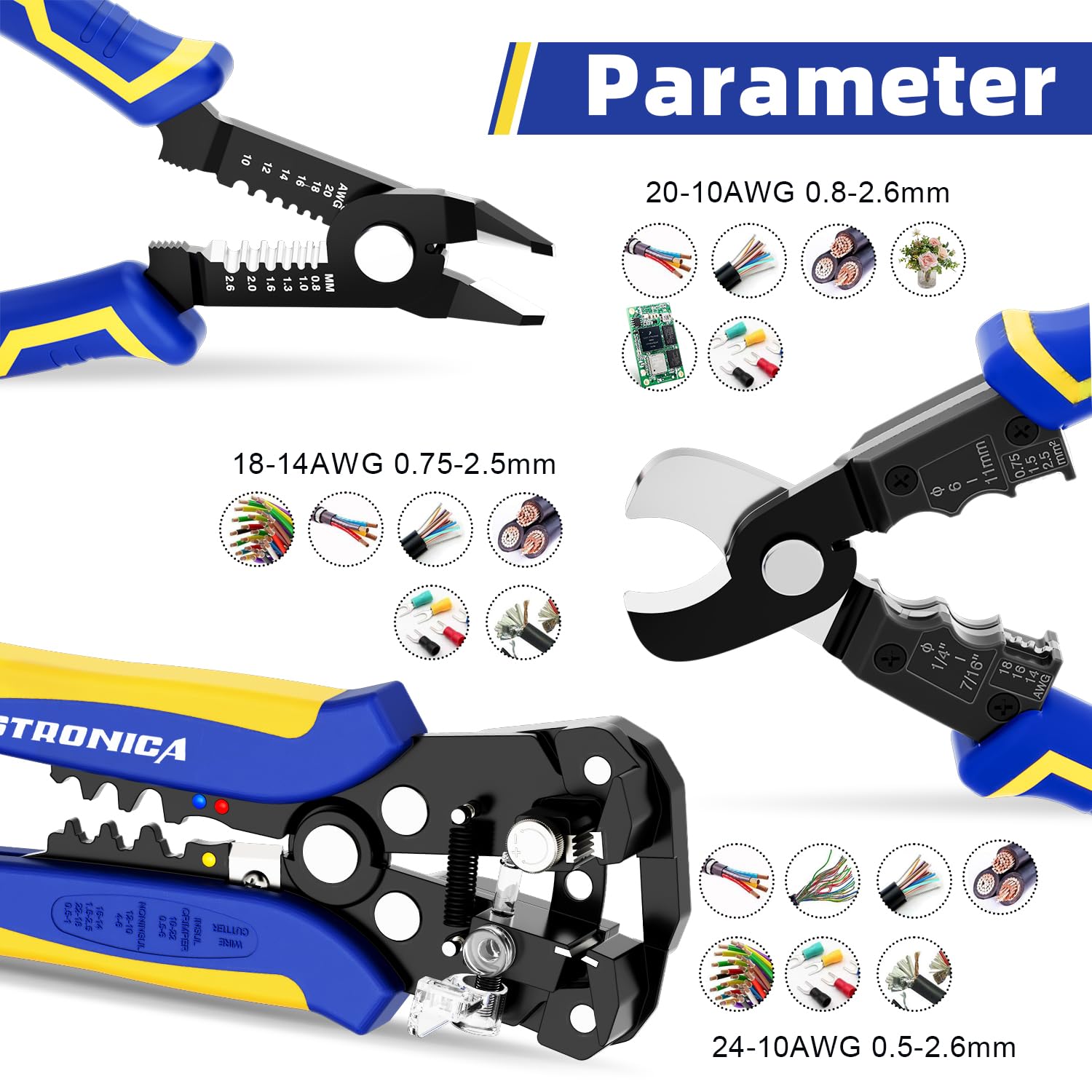
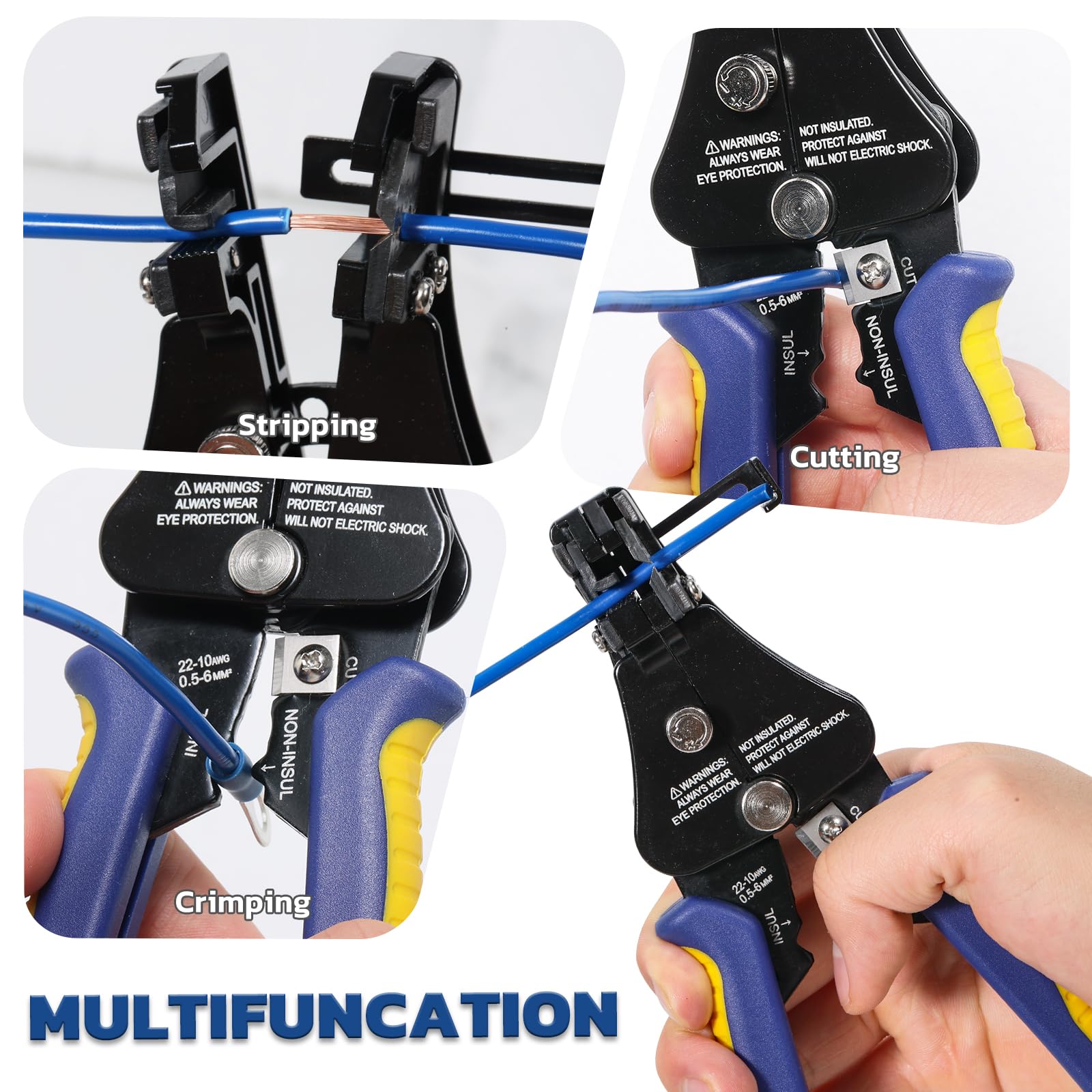
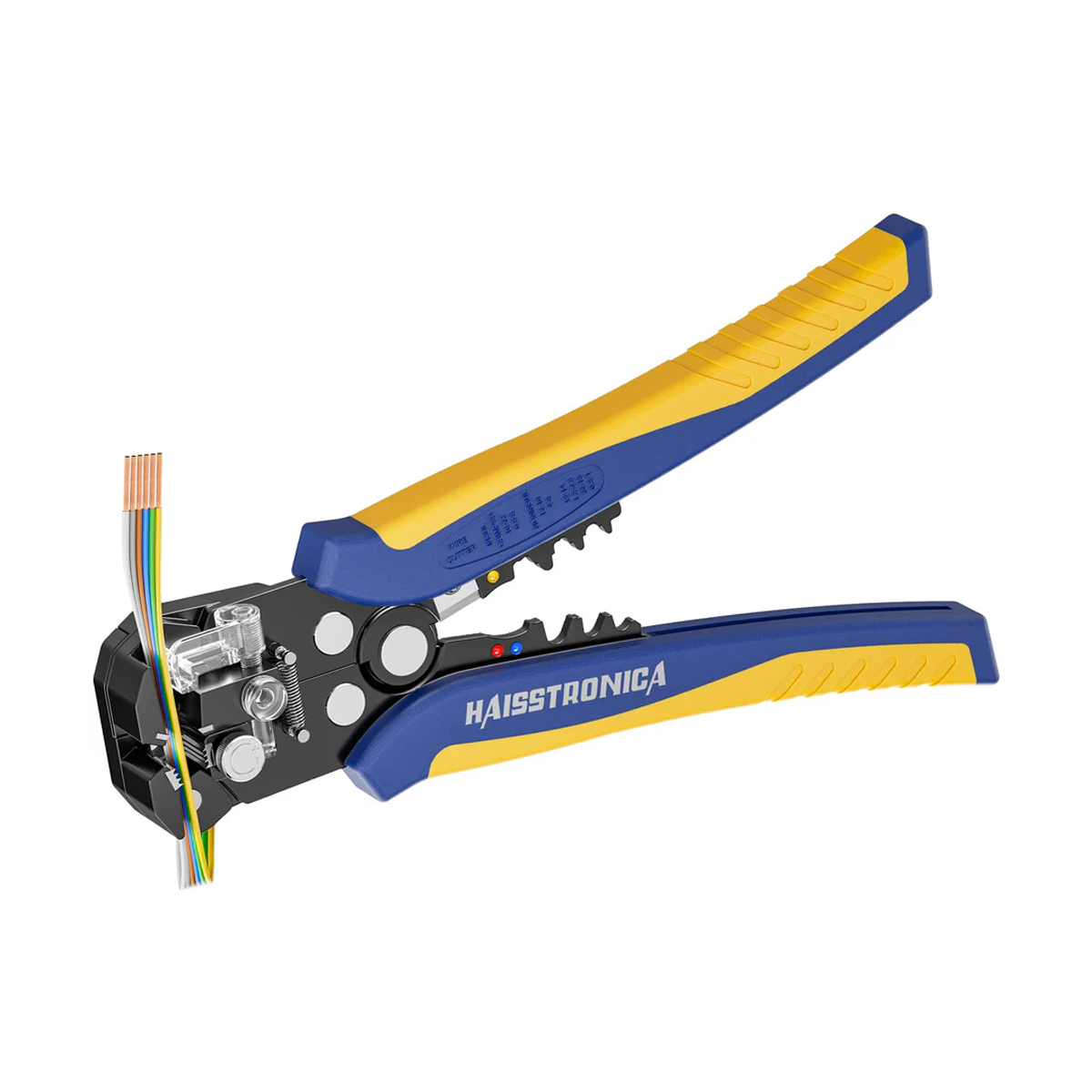
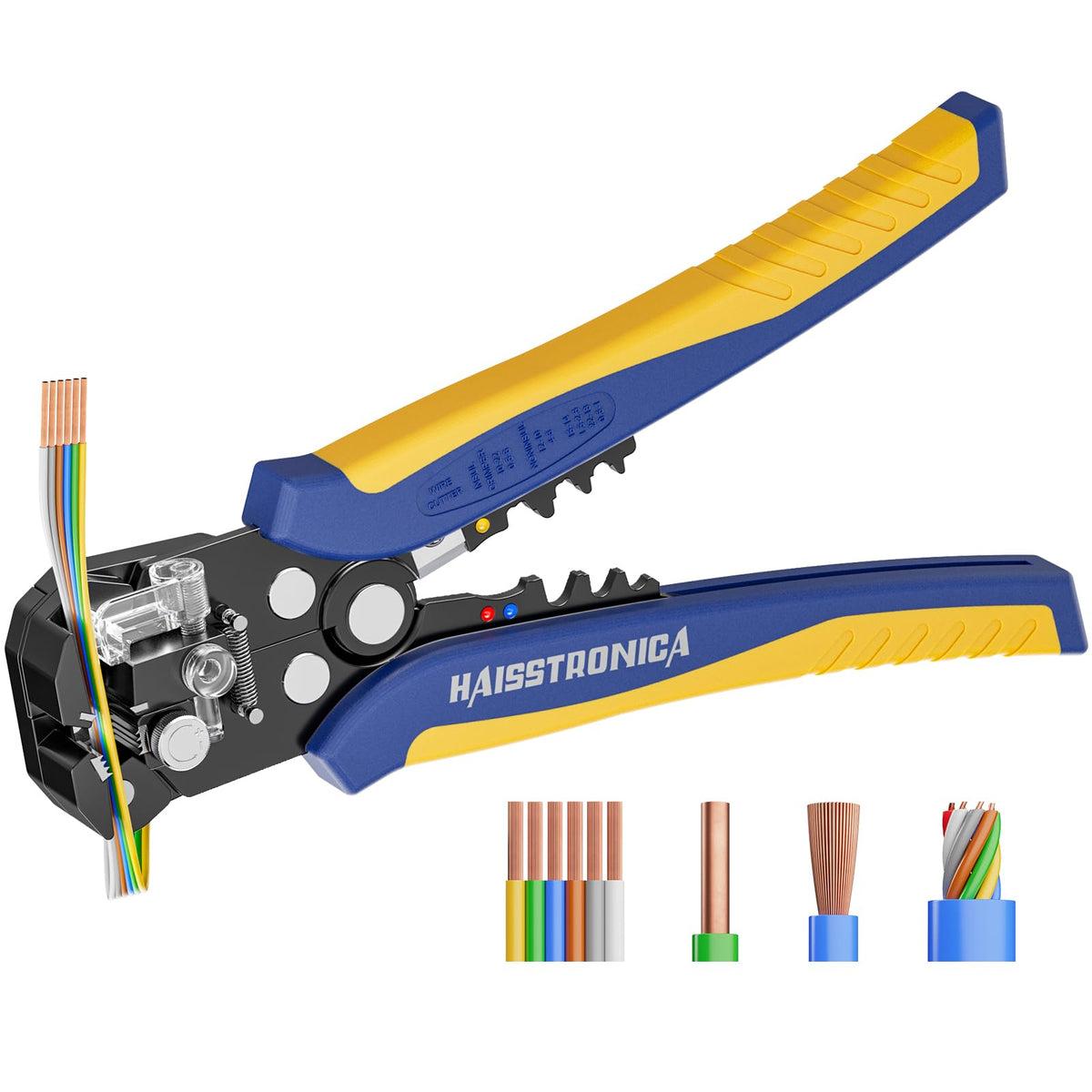
Haisstronica’s self-adjusting wire stripper is positioned to cover AWG 24–10 and emphasizes stripping without changing settings by adjusting itself to wire gauge for clean cuts. That is exactly what “one setting” should mean for a real bench: you can pass from thin to thick across typical shop gauges without stopping to change notches.
The “setting” that still matters most is avoiding damage at both ends of the range. Haisstronica’s operating instructions call out an adjustment knob to control pressure and help prevent wire damage, and a guide ruler bar to set stripping length before inserting the wire and squeezing to complete stripping. In other words, “one setting” is “set once, then run.” If you do change pressure, it’s a purposeful shift for insulation type—not a notch-by-notch struggle.
Finally, “one setting” must be judged by quality, not convenience. If your ends show conductor nicks or damaged insulation, you didn’t get a real one-setting workflow—you got a fast way to make scrap. NASA’s standard makes clear what you must avoid: insulation nicks/cuts/crushing/charring, and conductor nicks to exposed base metal. Choose Haisstronica so you can keep pace without compromising workmanship.

How a Single Setting Supports 24–10 AWG Performance — stripped wire
To support 24–10 AWG, a tool must handle two extremes: very small conductors that are easy to damage, and thick conductors that demand higher stripping force. A self-adjusting design helps by clamping in a way that adapts to diameter without requiring a different notch each time.
Haisstronica’s product positioning focuses on that adaptability: the tool adjusts itself to wire gauge and claims quick, easy stripping across its stated range. In a mixed workflow, that reduces both time and errors because the tool is less dependent on perfect notch selection.
But mechanical adaptation alone isn’t enough; you need length control. A strip-length guide makes the same exposed copper length repeatable whether you’re preparing for a connector, a crimp, or to splice wire. Haisstronica’s guide ruler bar exists specifically to support repeatable stripping length. Repeatable strip length reduces downstream rework because terminations are easier to perform correctly when input geometry is consistent. TE’s crimping guide reinforces the importance of proper strip length and preparation for reliable crimps.
A final support pillar is ergonomics. Mixed gauge work increases fatigue because you alternate between delicate control (thin wire) and higher force (thick wire). NIOSH guidance highlights selecting tools that can be used effectively with less force and less awkward positioning. A one-setting workflow reduces the repeated micro-motions that increase fatigue: fewer re-grips, fewer resets, fewer “test strips.” Upgrade to Haisstronica and keep your workflow fast and comfortable through long runs.

Speed Gains: Why Fewer Adjustments Mean Faster Work — stripped wire
Speed gains from “one setting” come from eliminating three kinds of loss:
Decision loss: time spent identifying gauge, choosing a notch, and double-checking.
Reset loss: time spent opening tools, clearing slugs, re-aligning, re-inserting.
Rework loss: time spent cutting back, re-stripping, and re-terminating after defects.
Manufacturing productivity frameworks (like OEE) exist to measure and reduce these losses. UL describes OEE as a method to maximize asset productivity and improve productivity by measuring and improving losses in wire and cable operations. While you may not measure OEE at the bench, the idea maps perfectly: fewer adjustments and fewer defects increase “effective output.”
A practical way to feel the speed gain is to run a mini time-and-quality comparison over 30 wires that alternate between thin and thick sizes. Record total time and record defects (nicked conductor, damaged insulation, inconsistent strip length). Workmanship standards tell you what not to accept, and TE and NASA guidance explain why damage is unacceptable. The “winner” is not the fastest stopwatch number; it’s the best combination of speed and first-pass quality.
Once stripping is consistent, everything downstream accelerates—especially splices. For example, lever connectors are designed to speed installation once conductors are stripped consistently; WAGO describes a simple insert-and-close workflow with levers. When stripped wire is consistent, splicing becomes predictable, and your best way to splice wires workflow speeds up. Pair Haisstronica stripping with your connector strategy and complete more assemblies per hour.

Conclusion
Stripping 24–10 AWG on “one setting” is achievable when “one setting” means: reduce gauge-by-gauge reconfiguration, maintain repeatable strip length, and control pressure to prevent damage. Thin and thick wires create different failure modes, and basic tools often force constant adjustment and test strips—slowing the workflow and raising defect risk. Workmanship standards show why defects matter: insulation damage and conductor nicks are unacceptable and lead to rework and reliability risk. A self-adjusting approach reduces resets and improves speed, and strip-length guidance ensures downstream crimps and splices become more consistent. This is exactly the type of transition from “guess and redo” to “set once and run” that makes real productivity gains—without compromising quality.
Haisstronica’s self-adjusting wire stripper is positioned to cover 24–10 AWG, reduce setting changes, and support controlled stripping with pressure adjustment and a strip-length guide. Choose Haisstronica today and build a one-setting workflow that delivers clean stripped wire from thin to thick.