

2:1 or 3:1? Choose the fit—not just the bigger number.
Choose 2:1 when its documented recovery range already fits your wires. Consider 3:1 when you need a wider recovery range. In either case, the connector must match the conductor AWG, insulation outside diameter and intended environment.
A higher shrink ratio does not automatically mean a waterproof, marine-approved or electrically compatible splice.
Check AWG + wire OD first →What does heat shrink ratio actually mean?
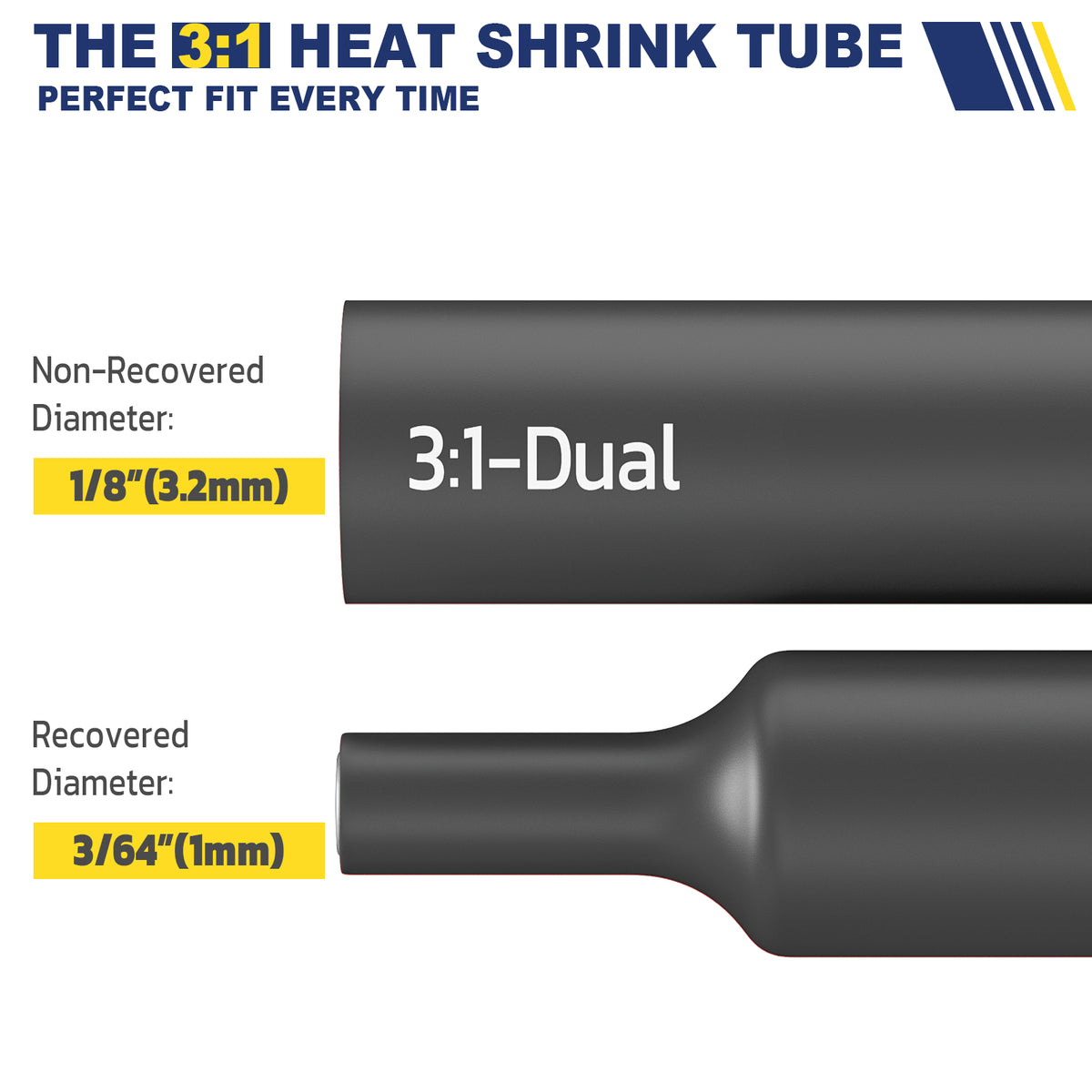
Shrink ratio compares the tubing’s supplied inside diameter with its fully recovered inside diameter under the specified heating conditions. Nominally, 2:1 tubing can recover to half its supplied diameter; 3:1 can recover to one-third. Tubing installed over a wire stops shrinking against that wire—it does not necessarily reach its free-recovered diameter.
| Same starting ID | 2:1 recovery | 3:1 recovery |
|---|---|---|
| 6 mm | About 3 mm | About 2 mm |
Illustration only, not a connector size recommendation. Use the exact product’s expanded and recovered dimensions, tolerances and recommended application range. The ratio describes diameter—not solder quantity, wire gauge or sealing strength.
Compare fit, sealing and cost separately
| Check | 2:1 | 3:1 |
|---|---|---|
| Diameter coverage | Suitable when the measured diameters fit its recovery window. | A wider recovery window for the same supplied ID; still check both wire ends. |
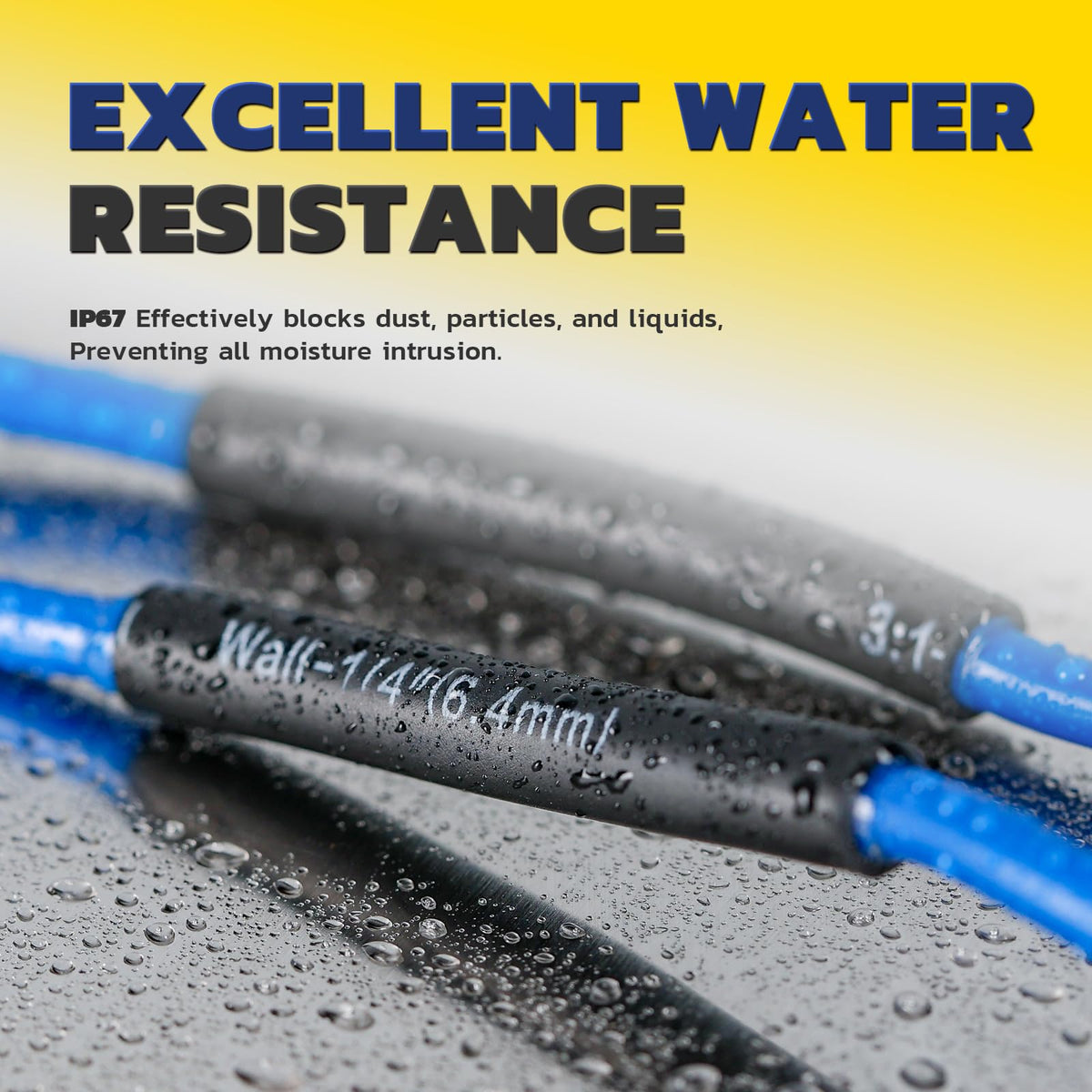
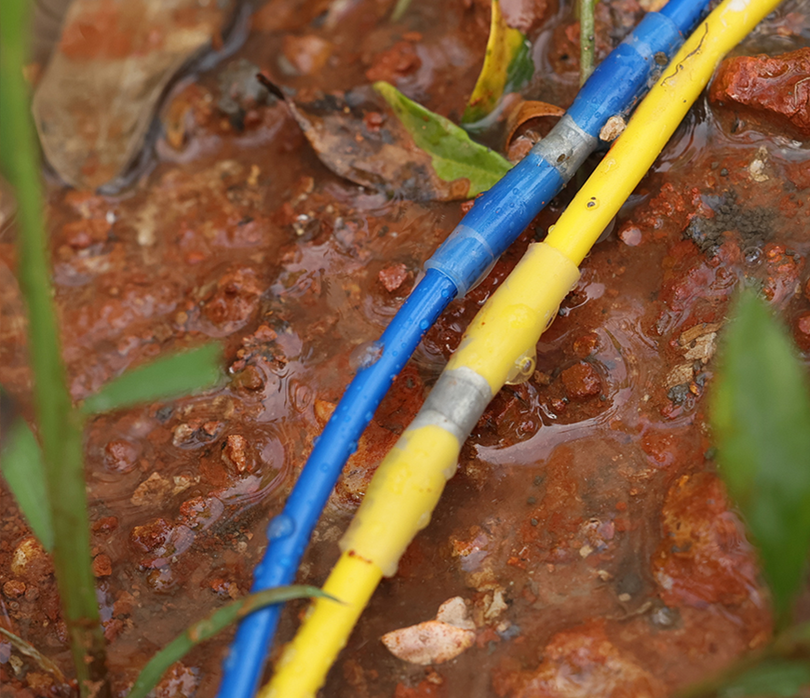
| Moisture sealing | Requires the correct adhesive, fit and installation. | The same requirements apply. Ratio alone does not establish a water-resistance rating. |
| Finished profile | Check recovered wall thickness and flexibility. | Check those same specifications; ratio alone does not tell you stiffness. |
| Total cost | Compare cost per usable, correctly sized connection. | Extra recovery is valuable only if the job needs it; include scrap and rework costs. |
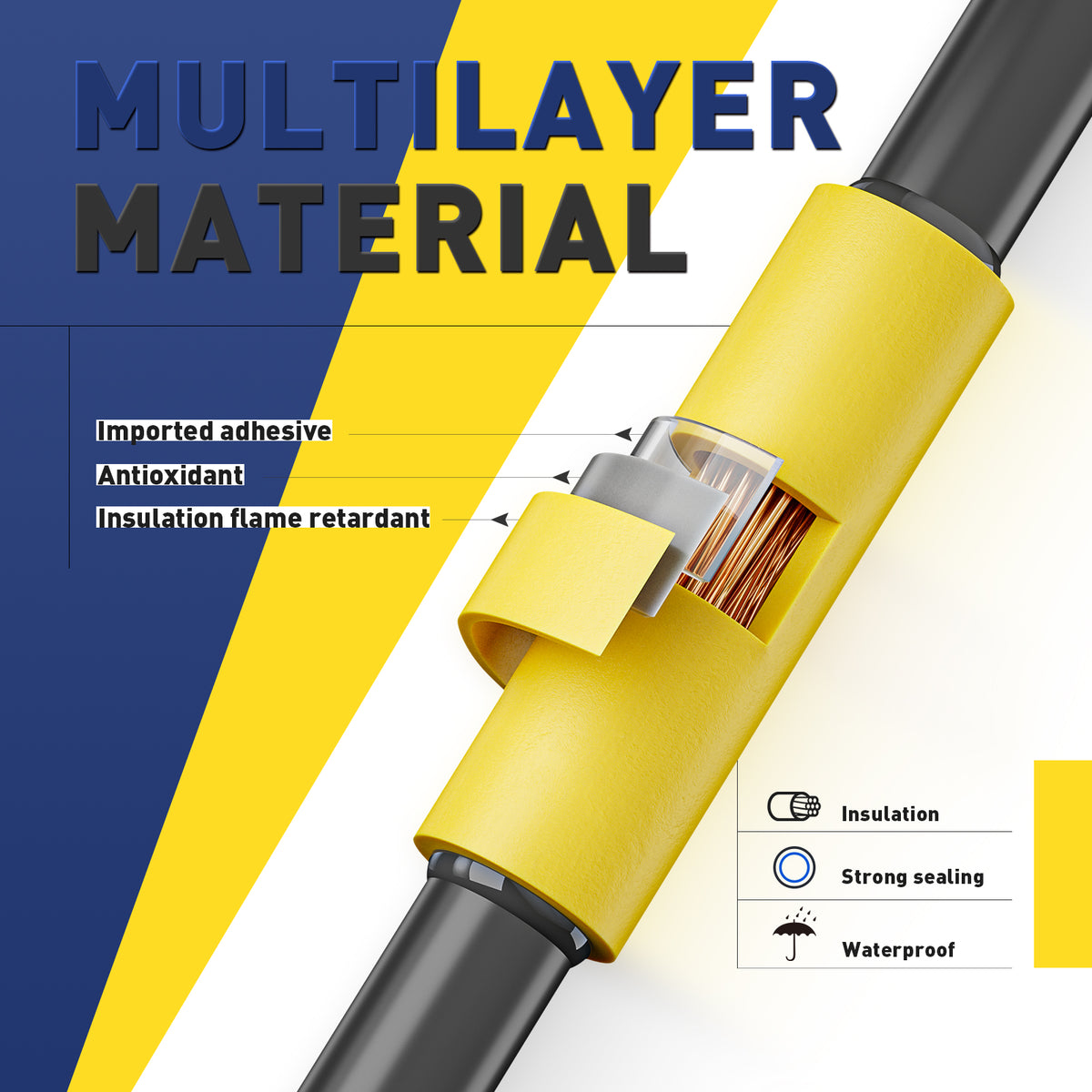
Keep two products distinct: a solder seal connector contains solder, sealing material and a sleeve. Separate heat shrink tubing insulates or seals a connection made by another approved method. A “3:1 tubing” specification in a bundle does not prove that its solder seal connectors are also 3:1.
Before choosing a size: check AWG and wire OD
- Match the conductors. Confirm the connector’s approved AWG range, conductor material and wire arrangement. More shrink does not permit an otherwise unsupported gauge or number of wires.
- Measure both jackets. AWG describes the conductor, not insulation thickness. Measure the outside diameter where each end of the sleeve will seal, plus the largest section the sleeve must pass over.
- Check the complete size window. The supplied opening must provide insertion clearance, while the recovered size must allow a proper fit on the smaller sealing surface. Stay within the manufacturer’s recommended application range, not simply at a theoretical limit.
- Dry-fit before applying heat. Position the conductor joint under the solder ring and the sealing sections over intact insulation, as instructed. If the fit or dimensions are uncertain, confirm them before buying or heating. Do not move to a larger solder connector solely to accommodate a thick jacket if that loses the correct conductor fit.
Color is a starting point—not a substitute for dimensions
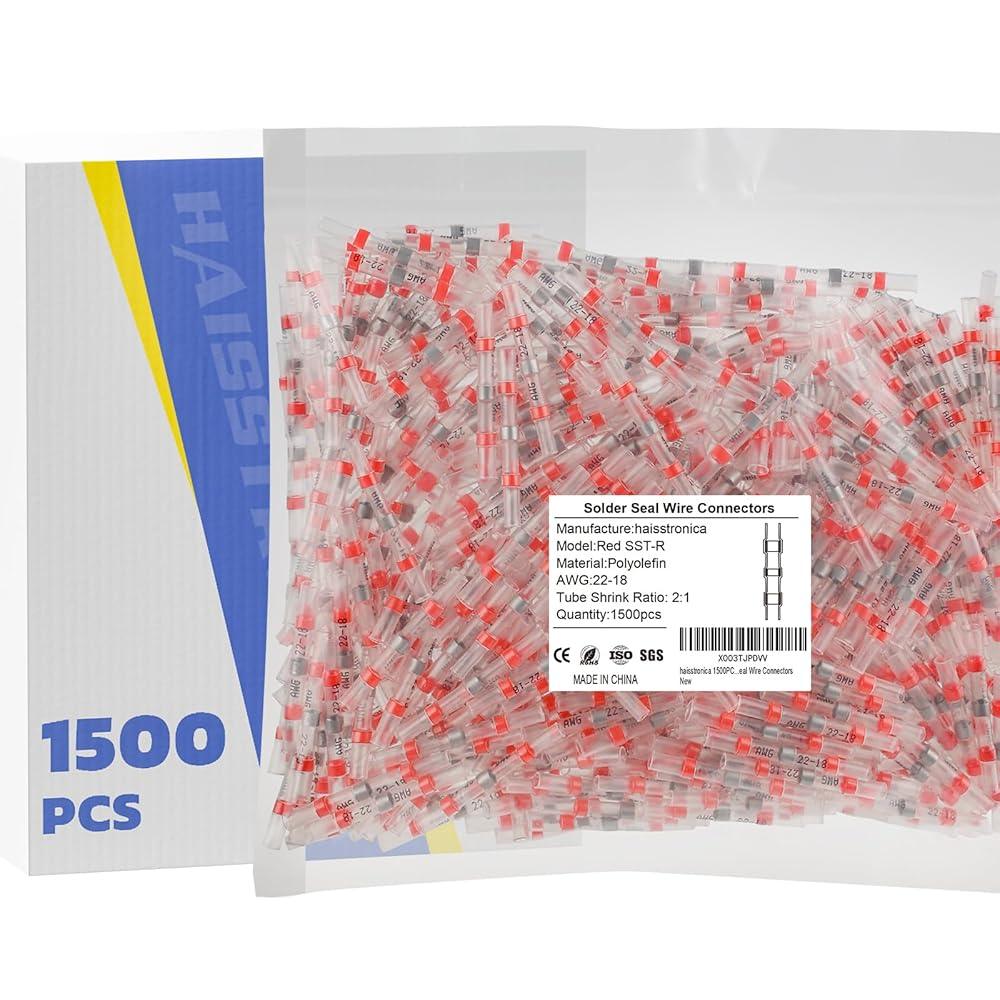
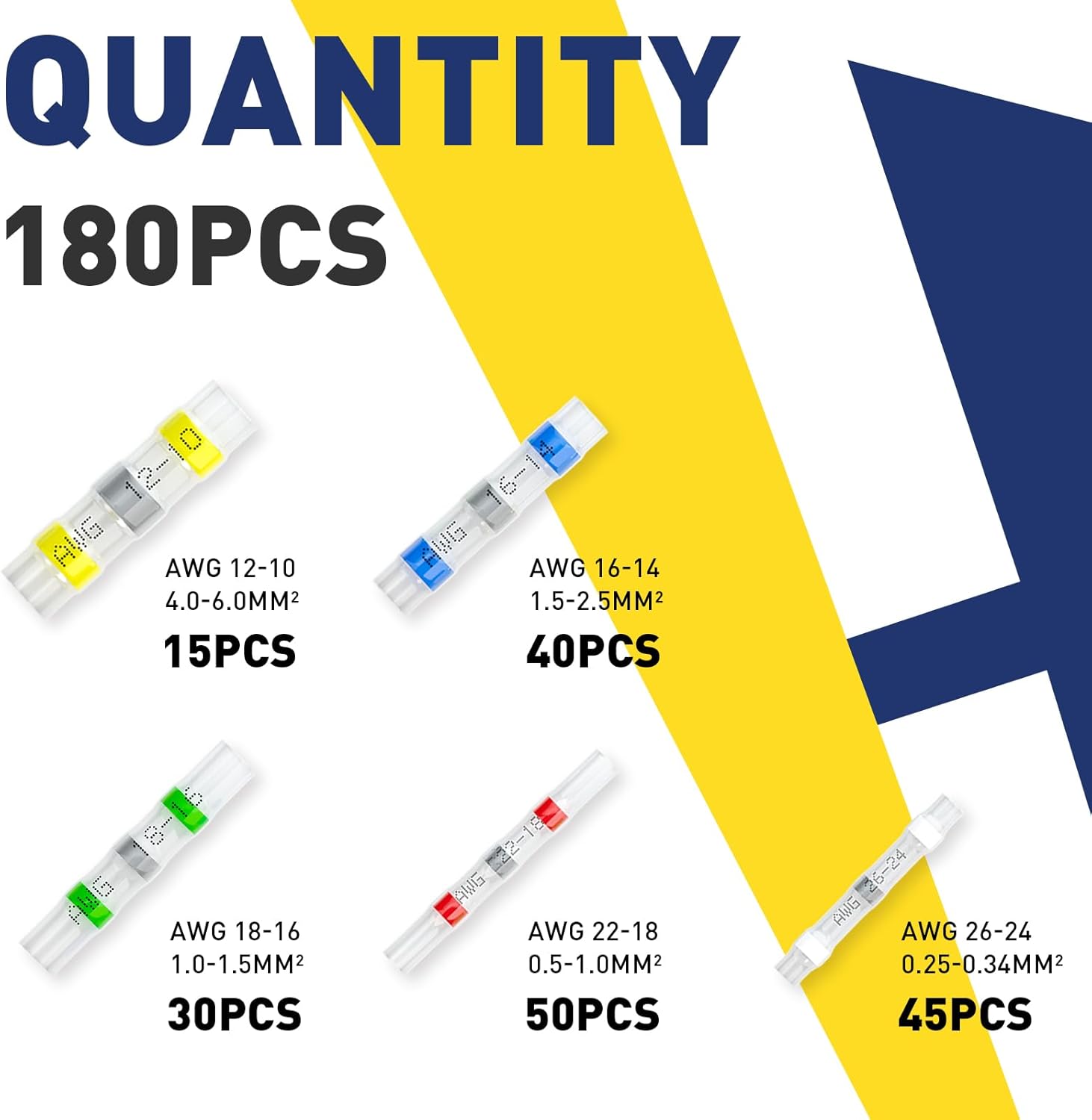
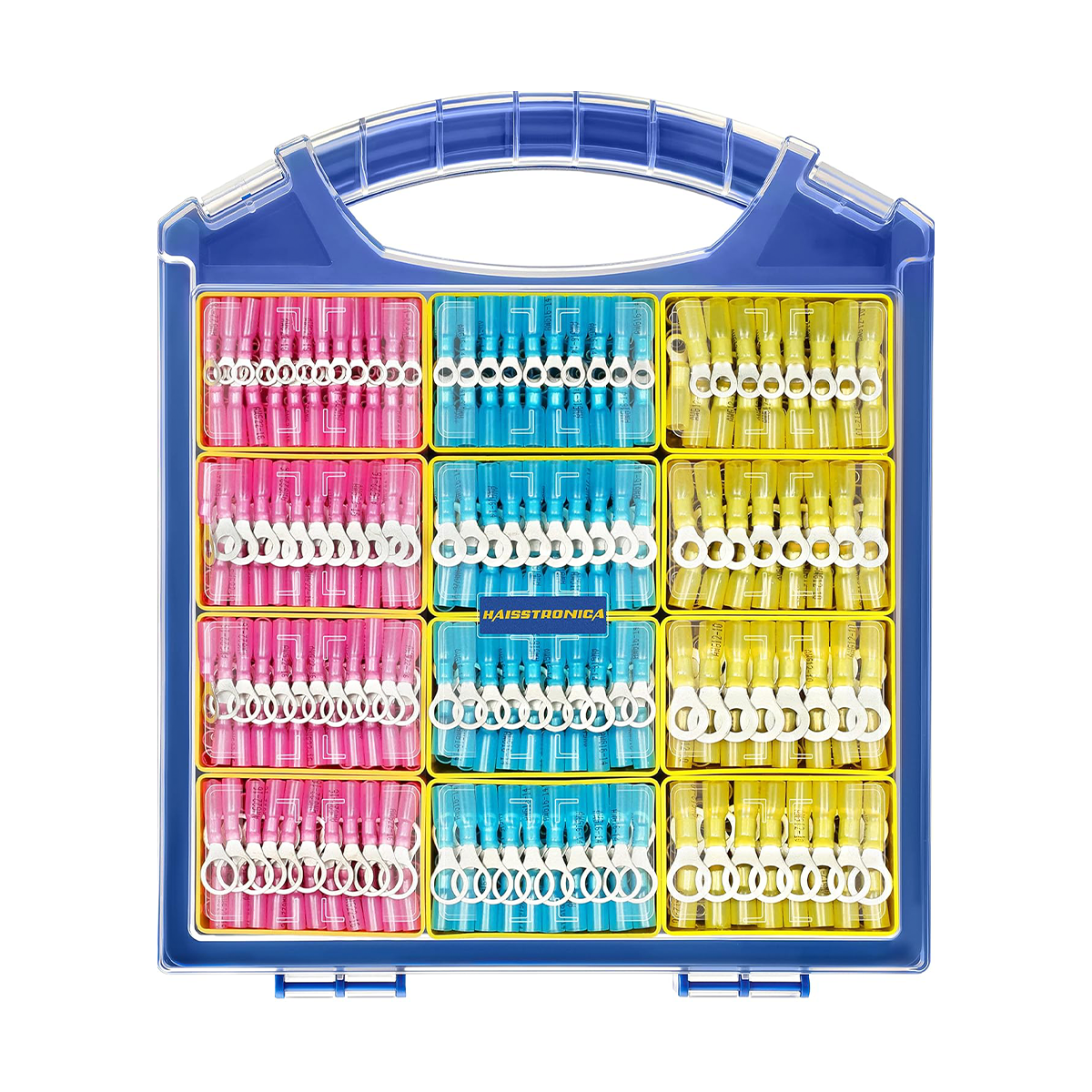
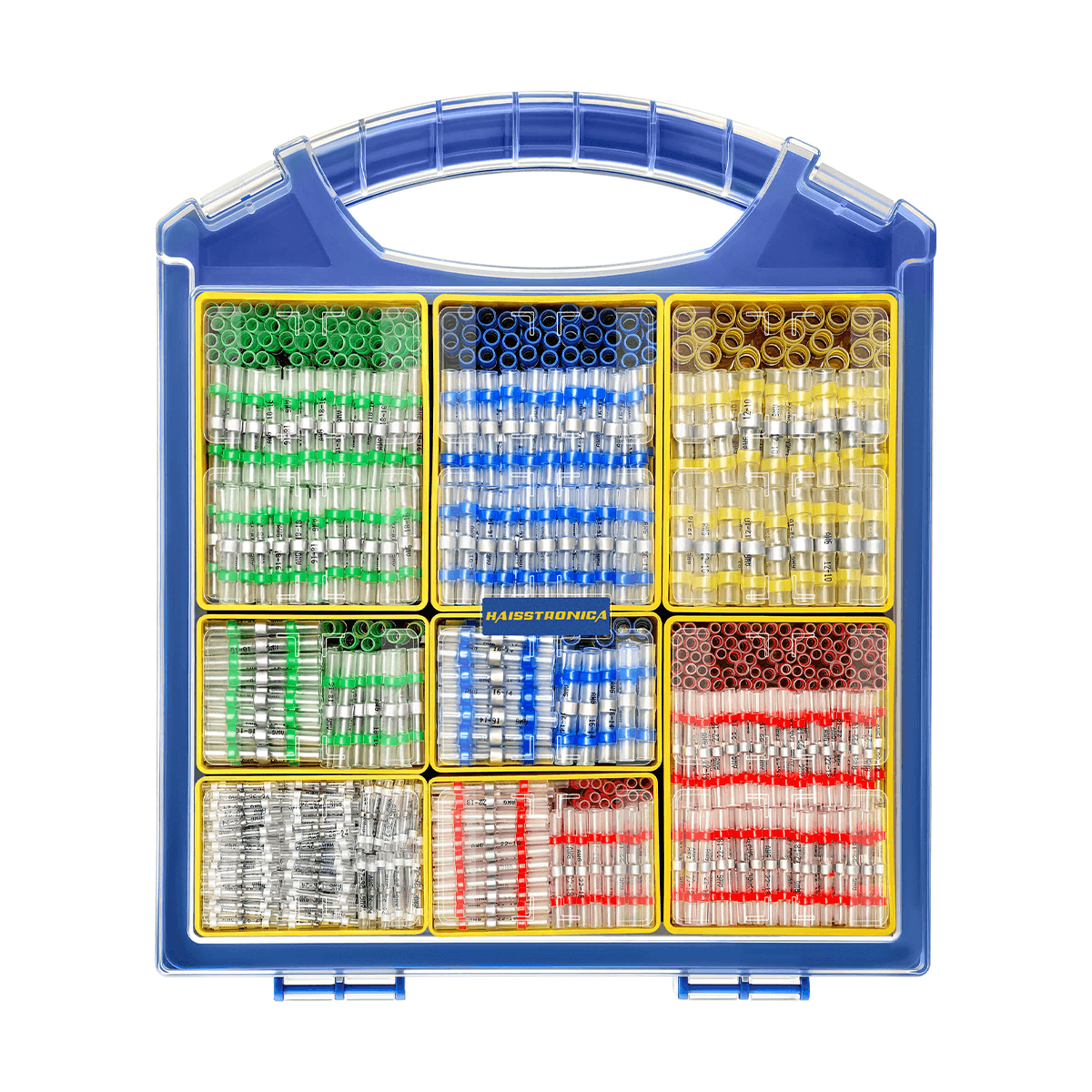
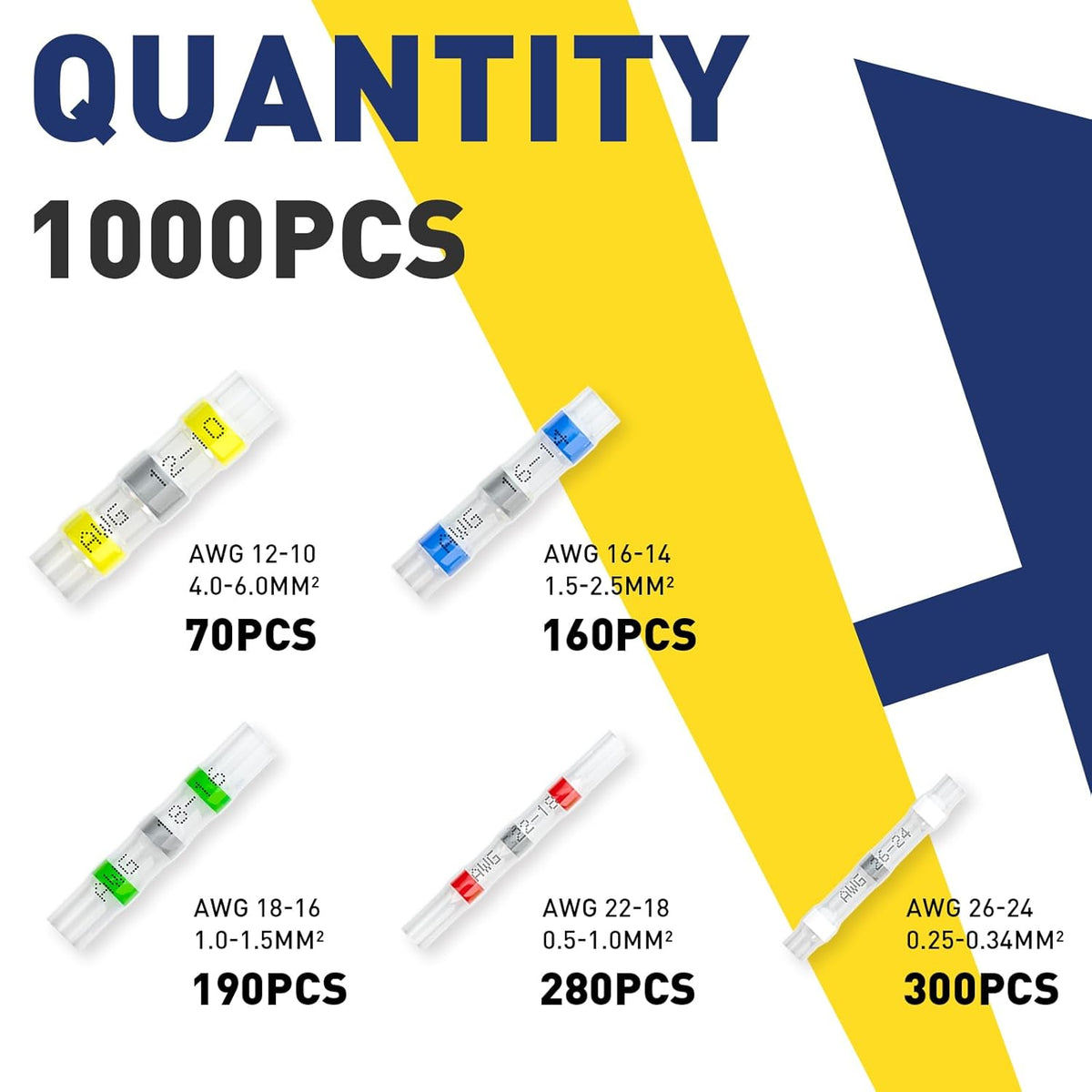
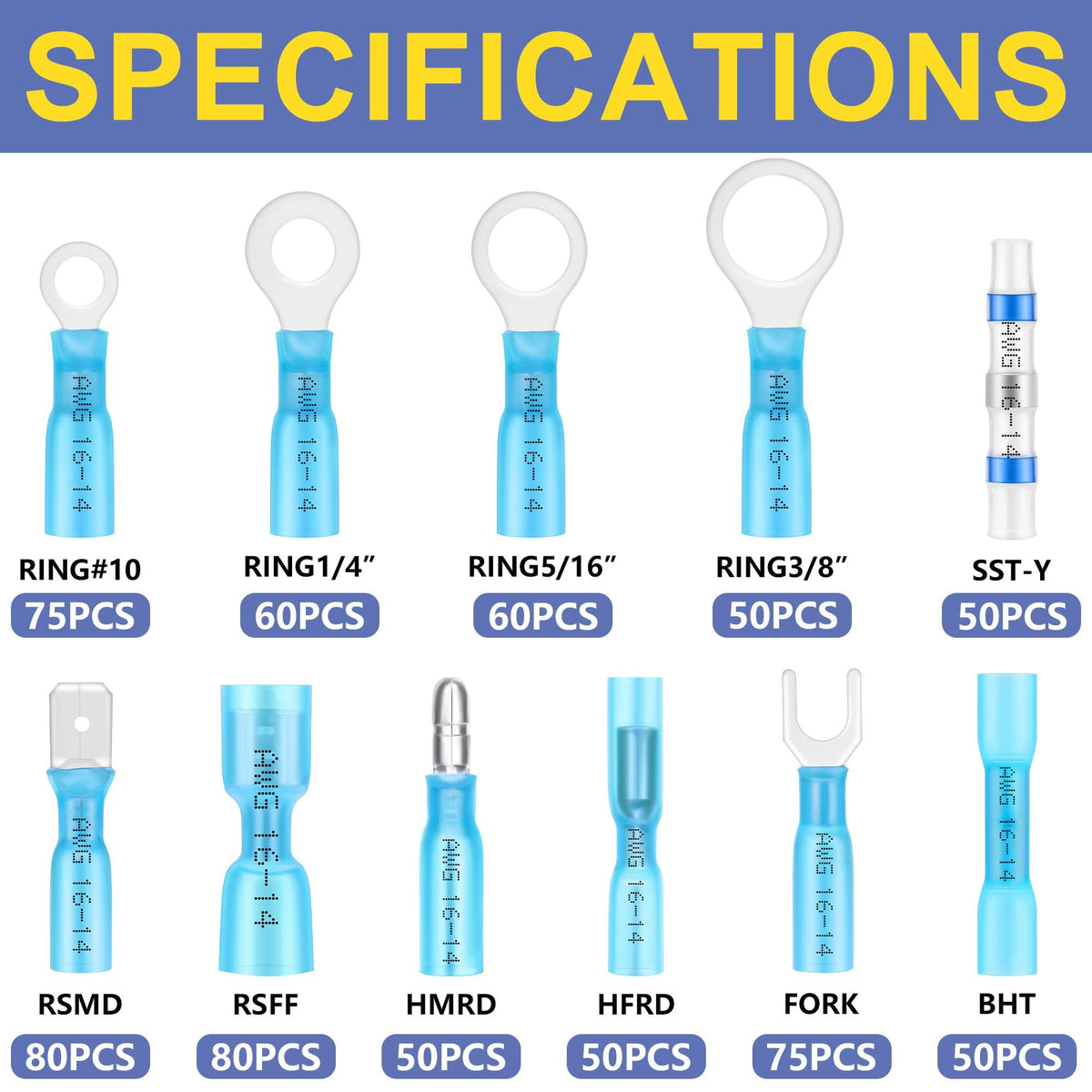
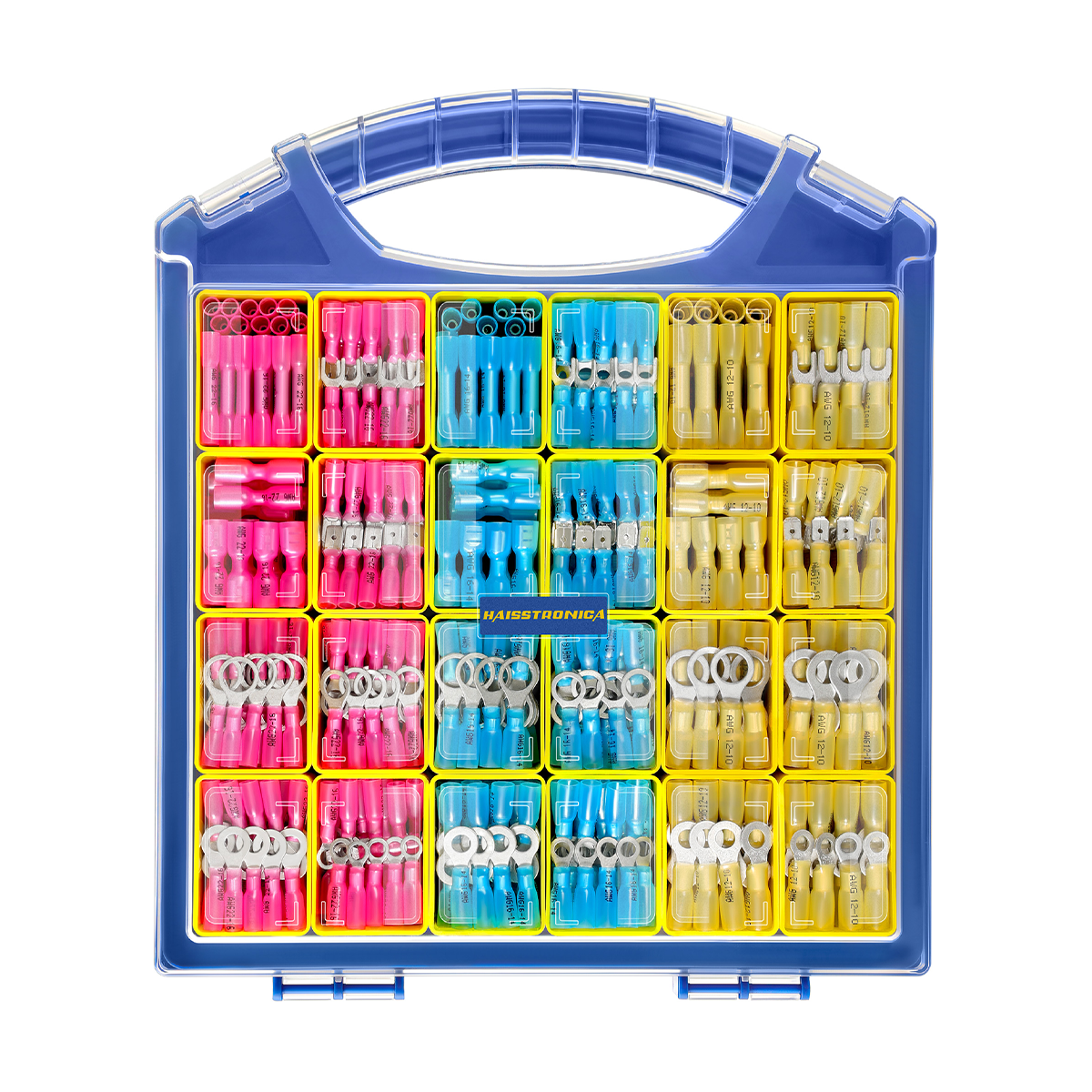
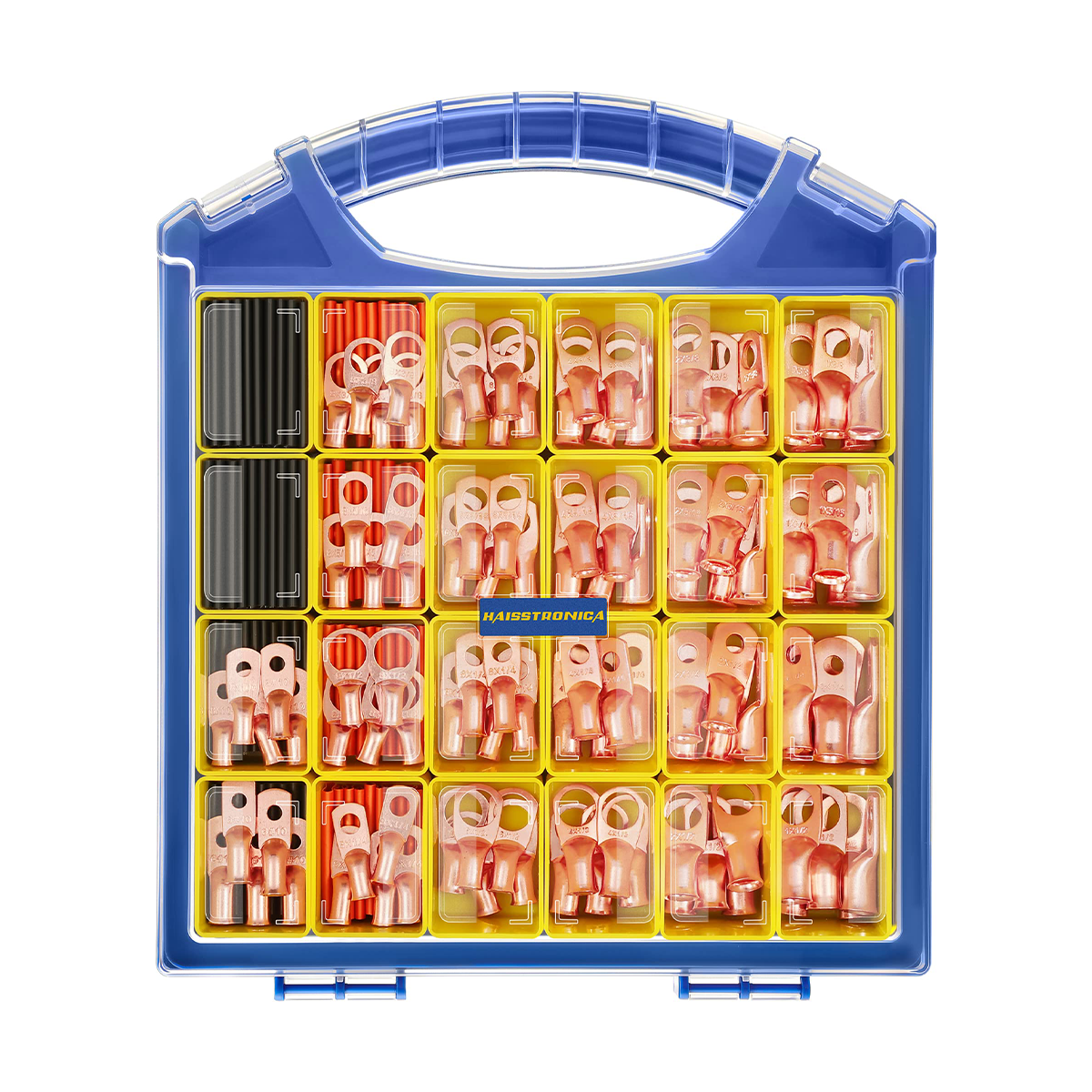
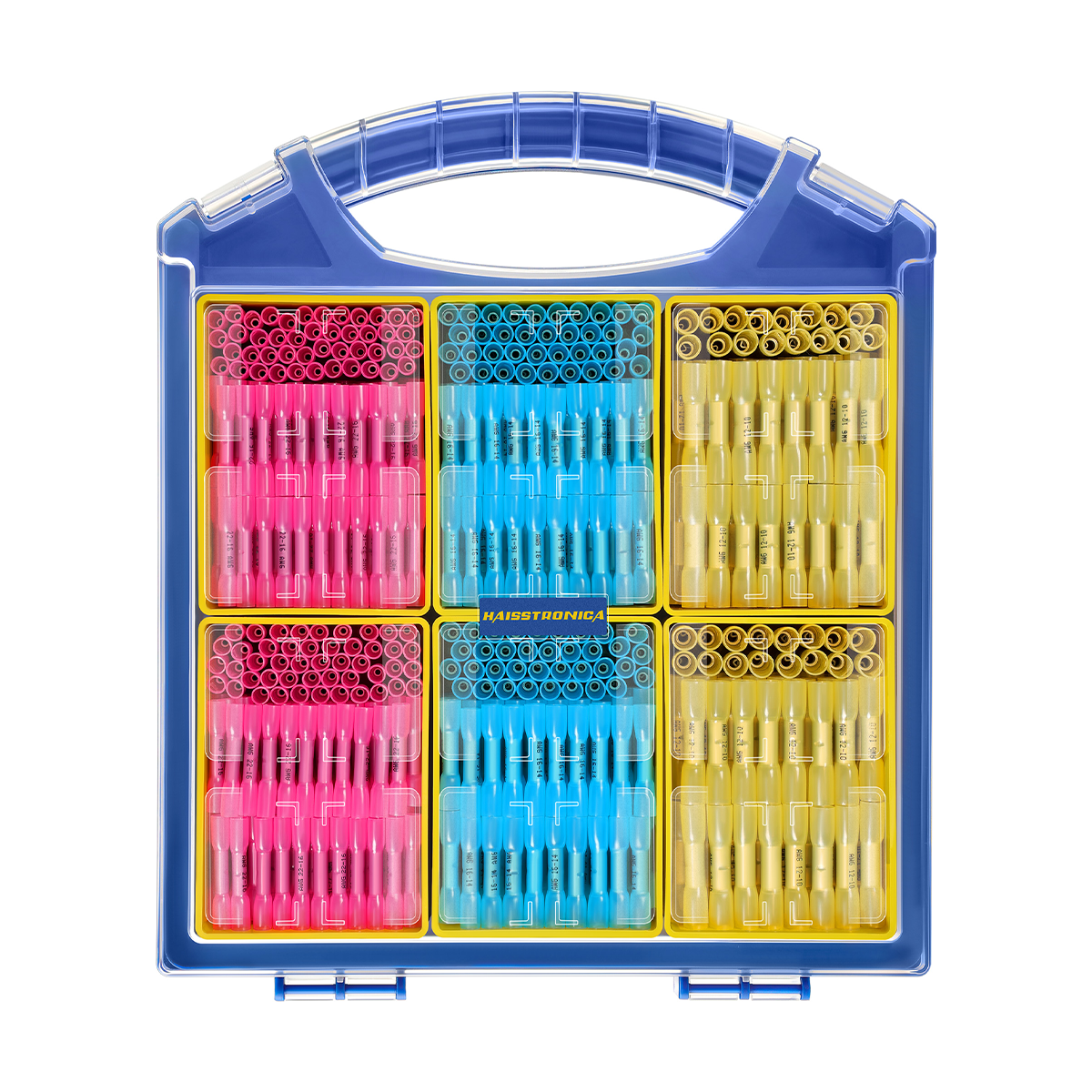
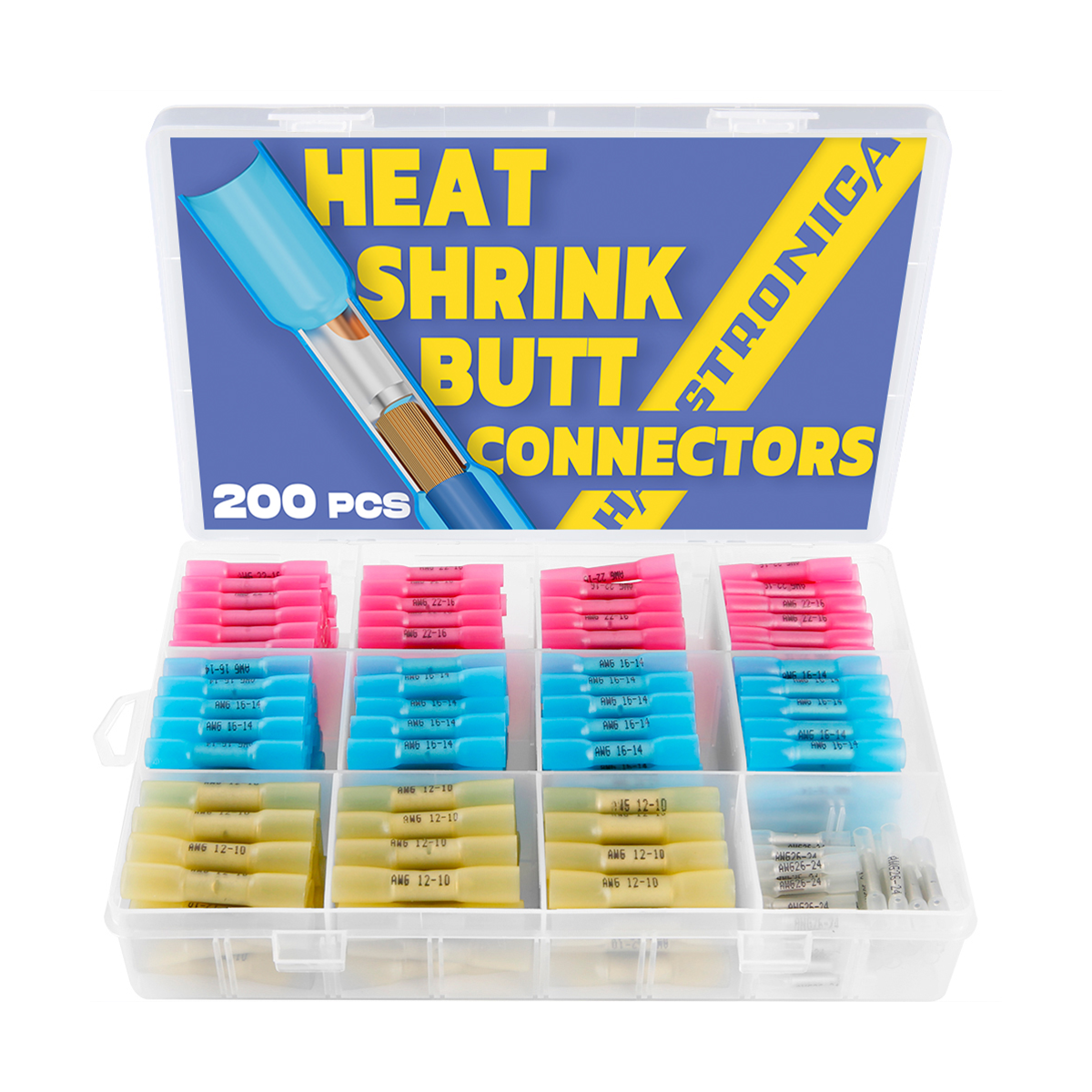
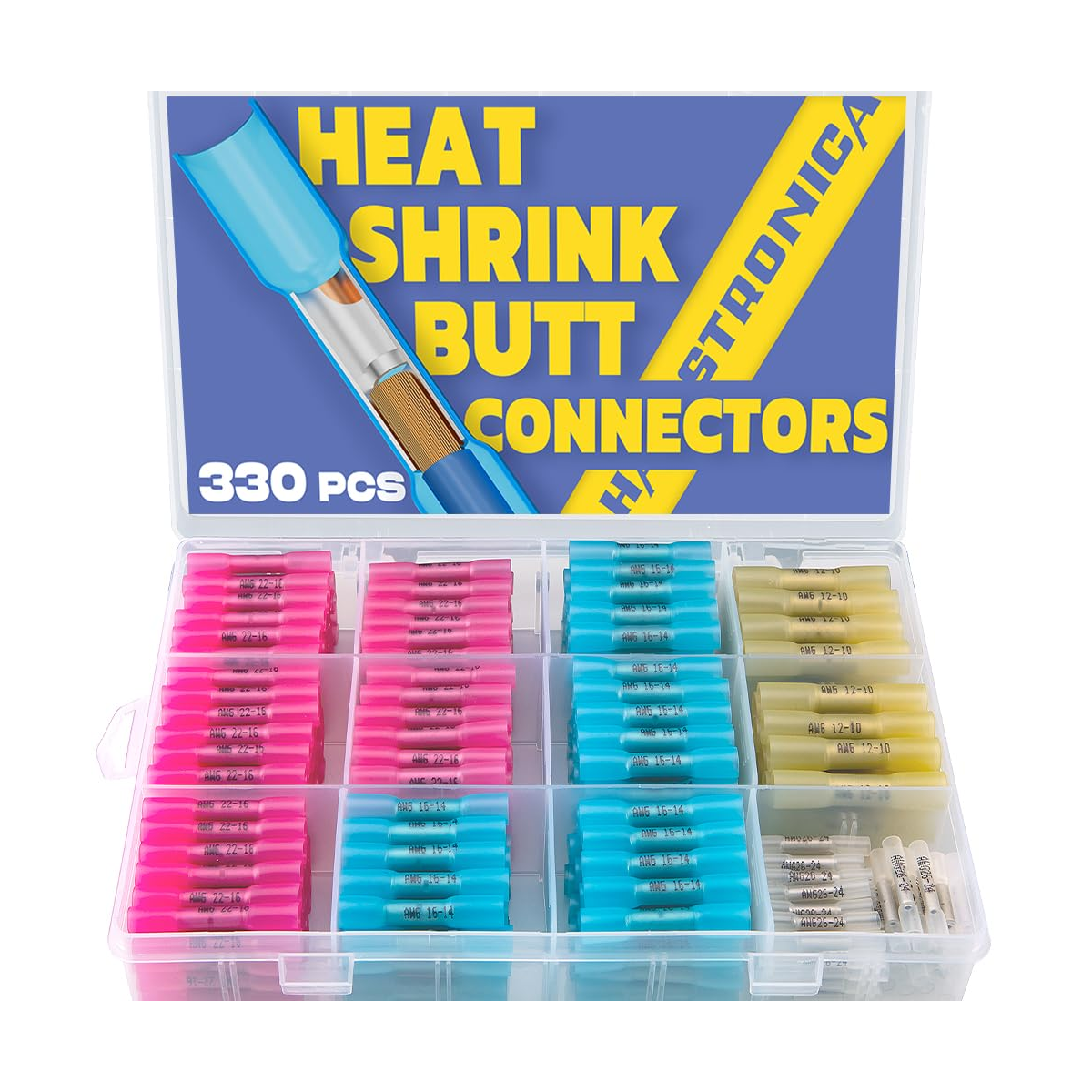
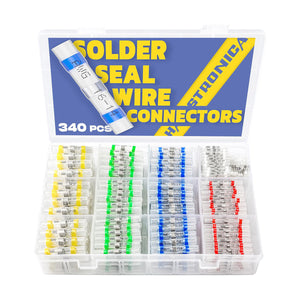
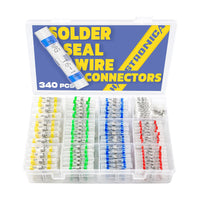
The following AWG ranges are shown for the Haisstronica 340PCS mixed-gauge kit. Check the exact package and product chart; do not assume every brand uses the same colors.
| Sleeve color | Listed AWG range | Still verify |
|---|---|---|
| White | 26–24 | Insulation OD at both ends |
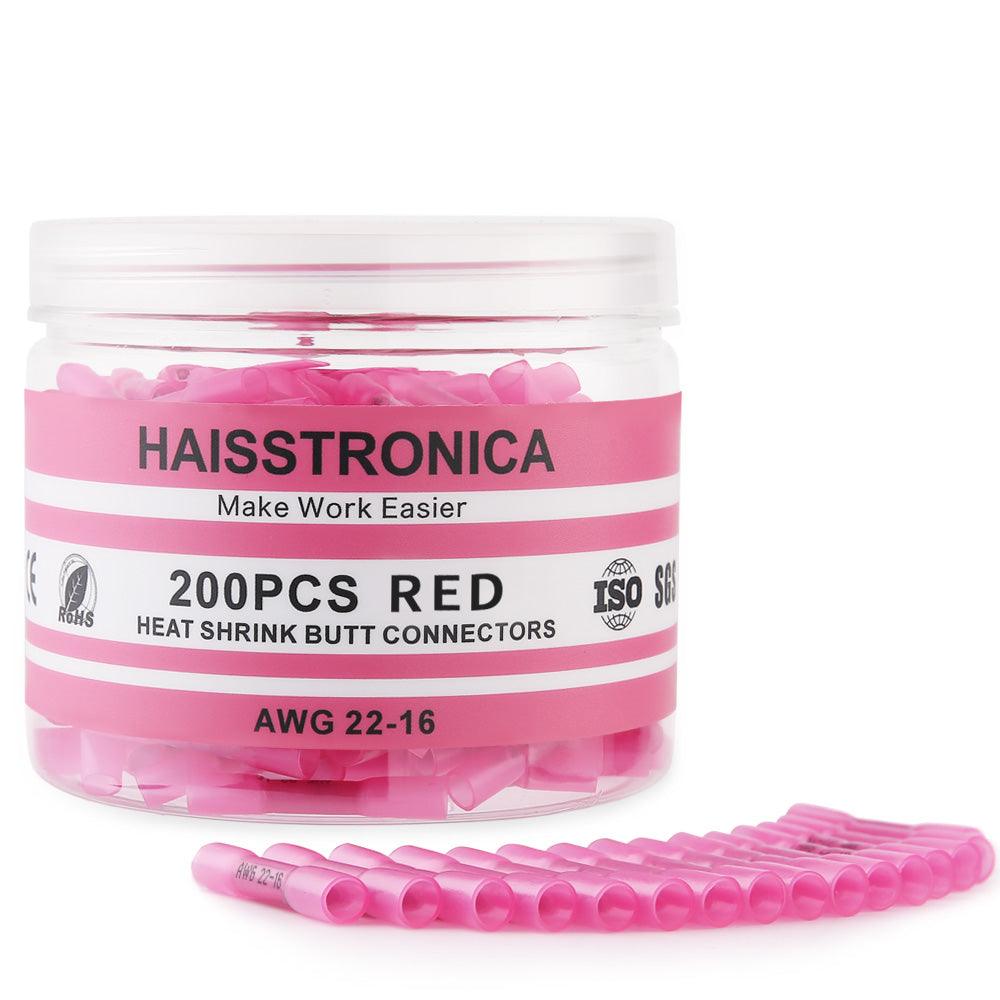
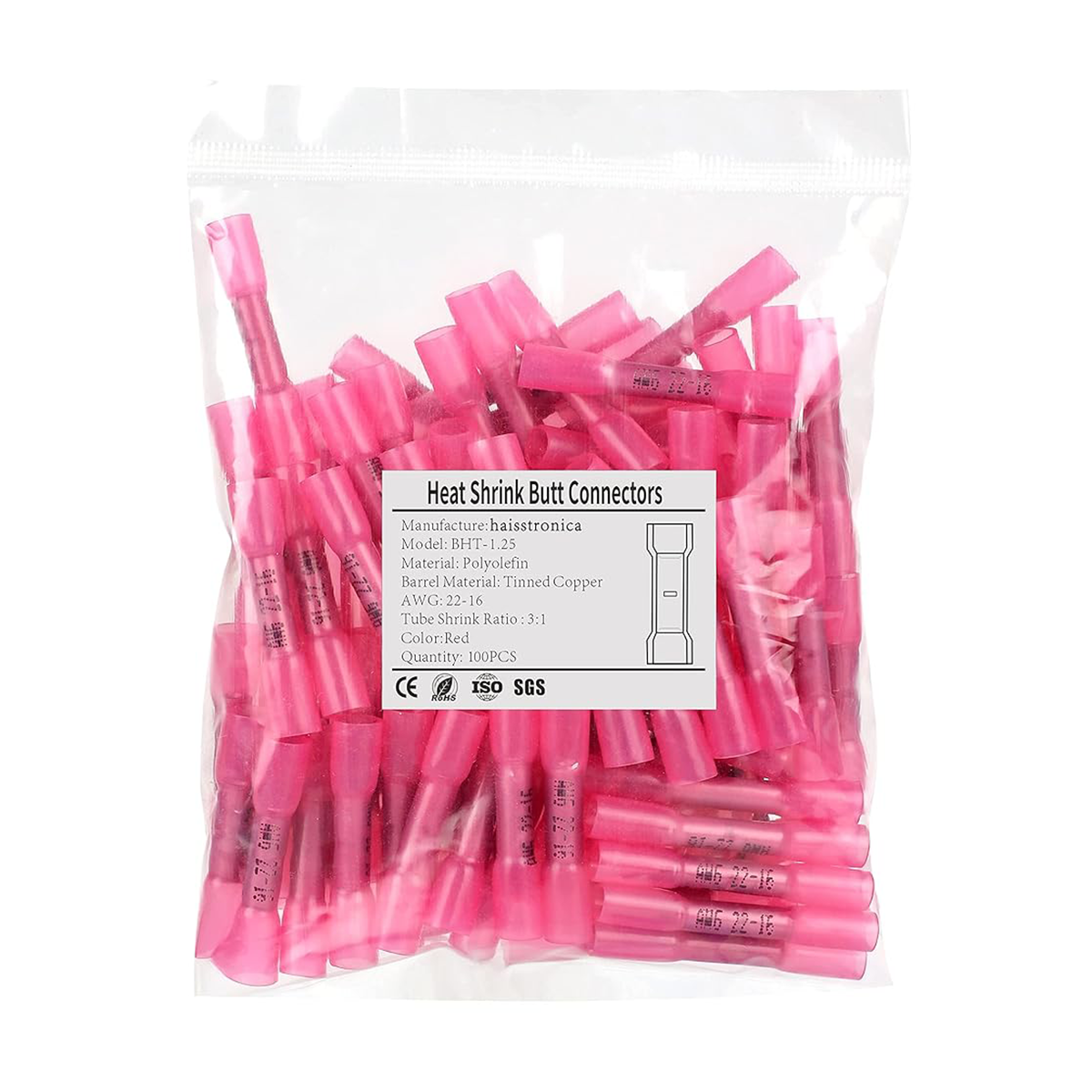
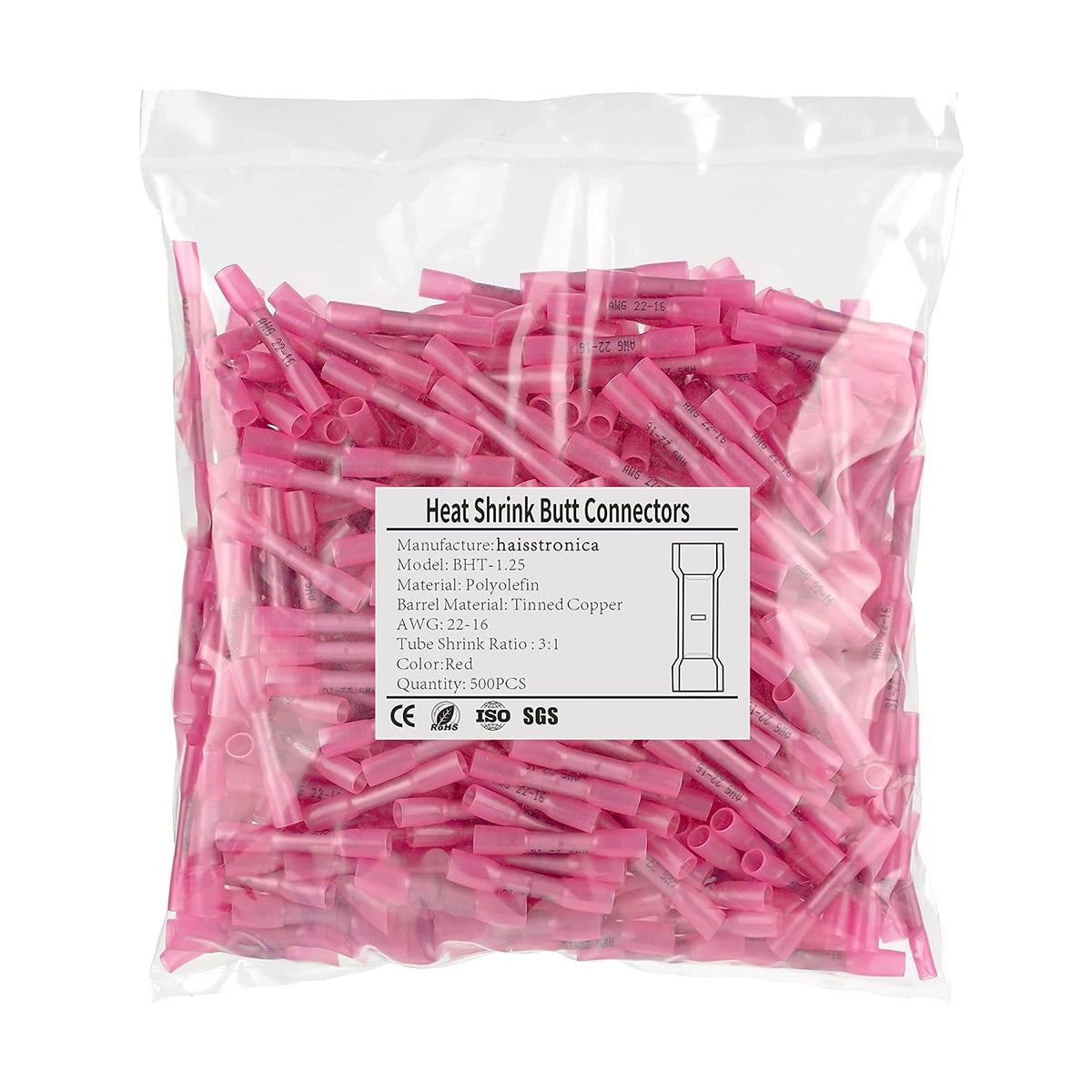
| Red | 22–18 | Insulation OD at both ends |
| Green | 18–16 | Insulation OD at both ends |
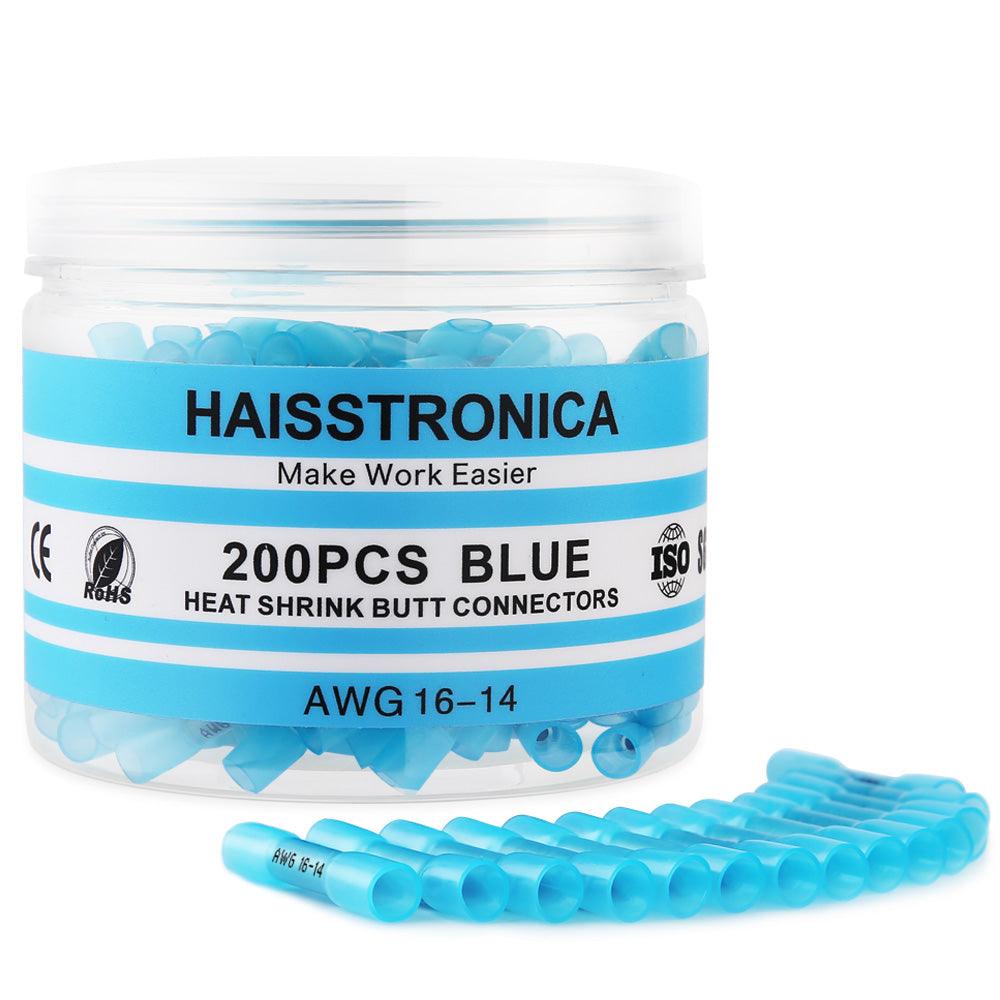
| Blue | 16–14 | Insulation OD at both ends |
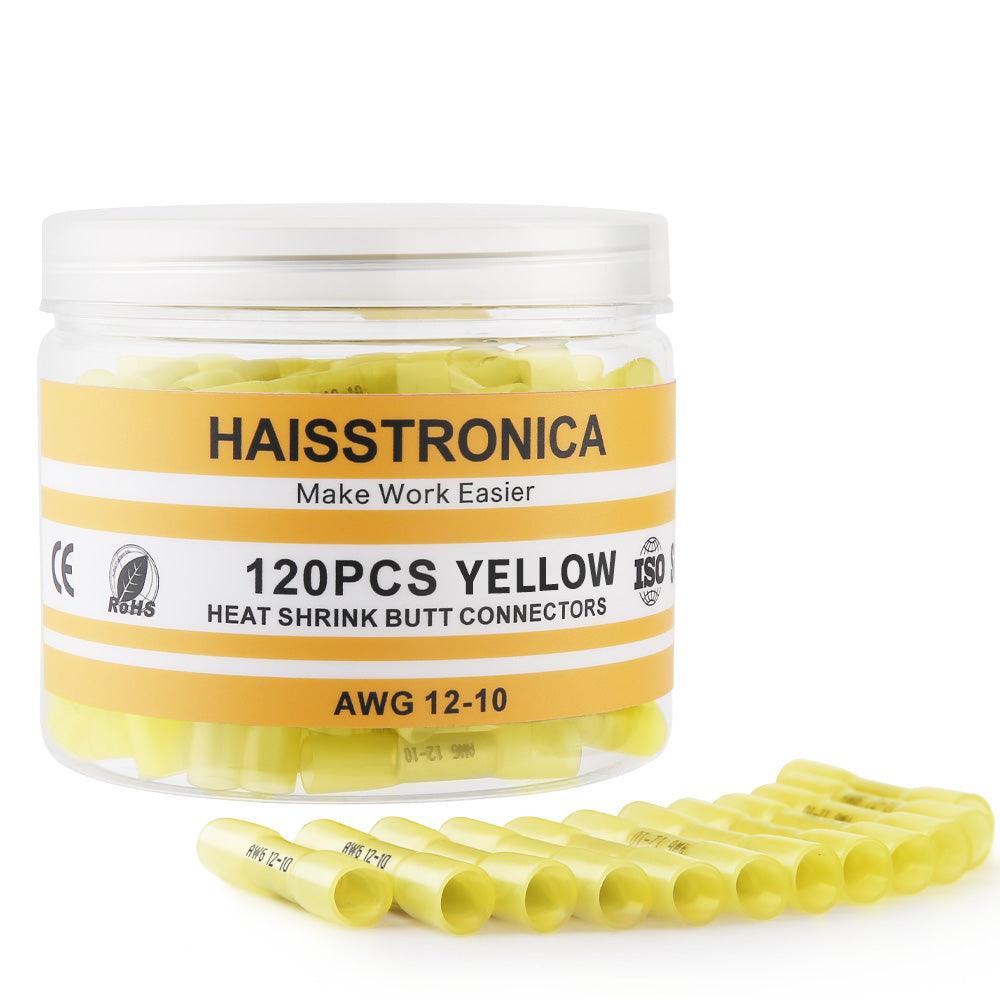
| Yellow | 12–10 | Insulation OD at both ends |
Match a mixed-gauge kit to the work you actually do
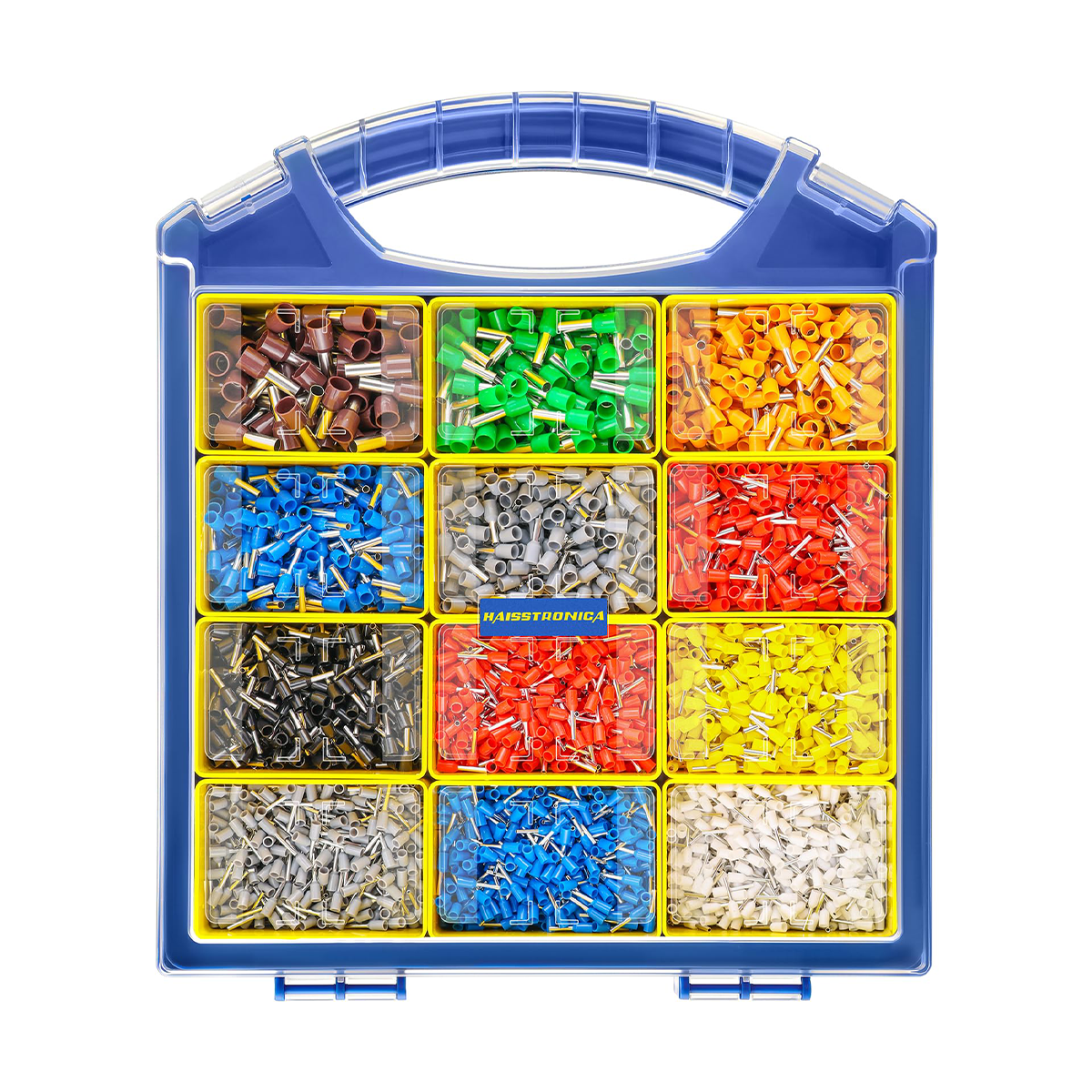
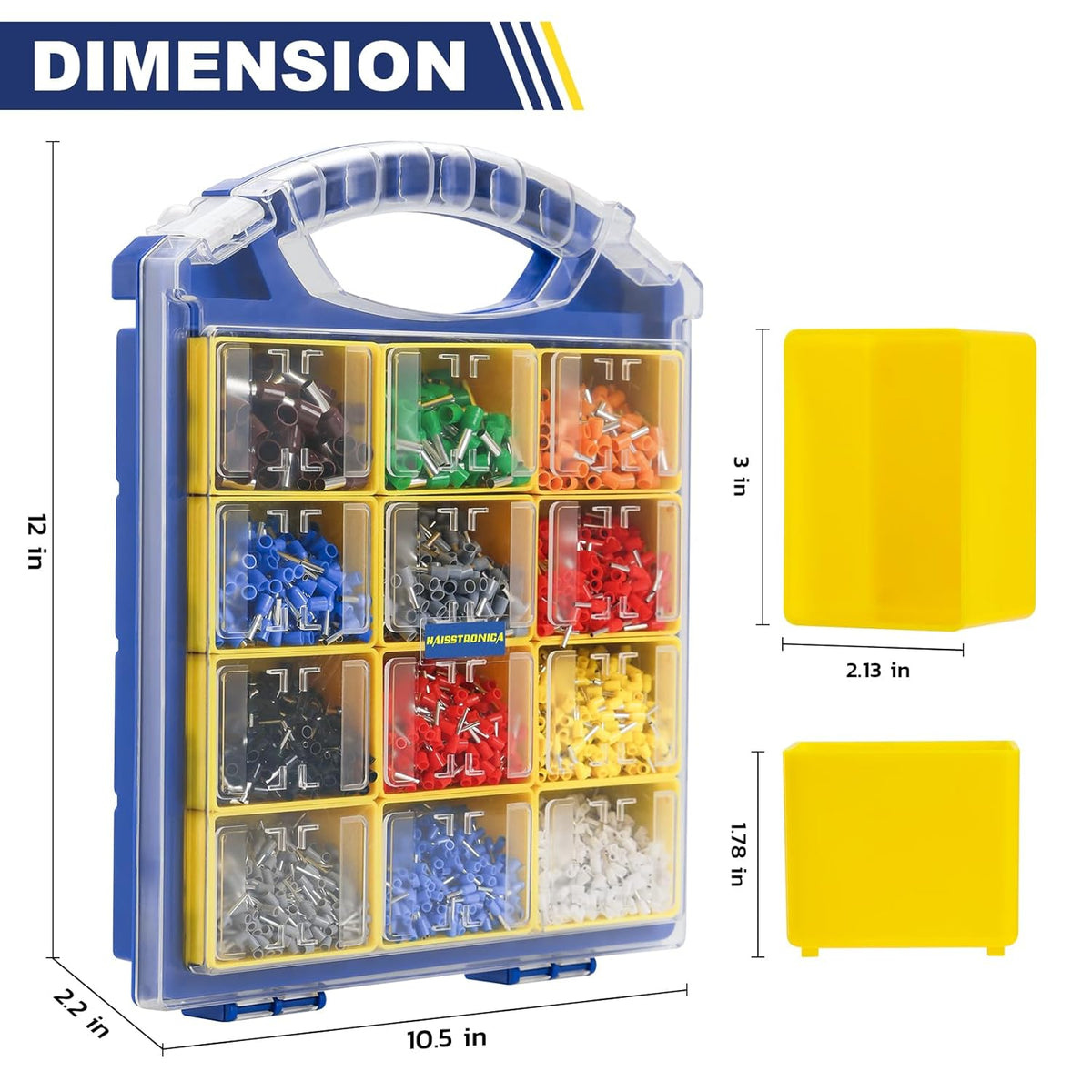
The 340PCS organizer covers the five listed gauge groups. Choose it when that mix fits your projects, then confirm sleeve dimensions and environmental suitability.
This kit is not presented here as a verified 2:1 or 3:1 option. If shrink ratio determines your purchase, request the specification for the exact kit first.
Check the 340PCS kit’s sizes →
When documented 3:1 tubing is the right next step
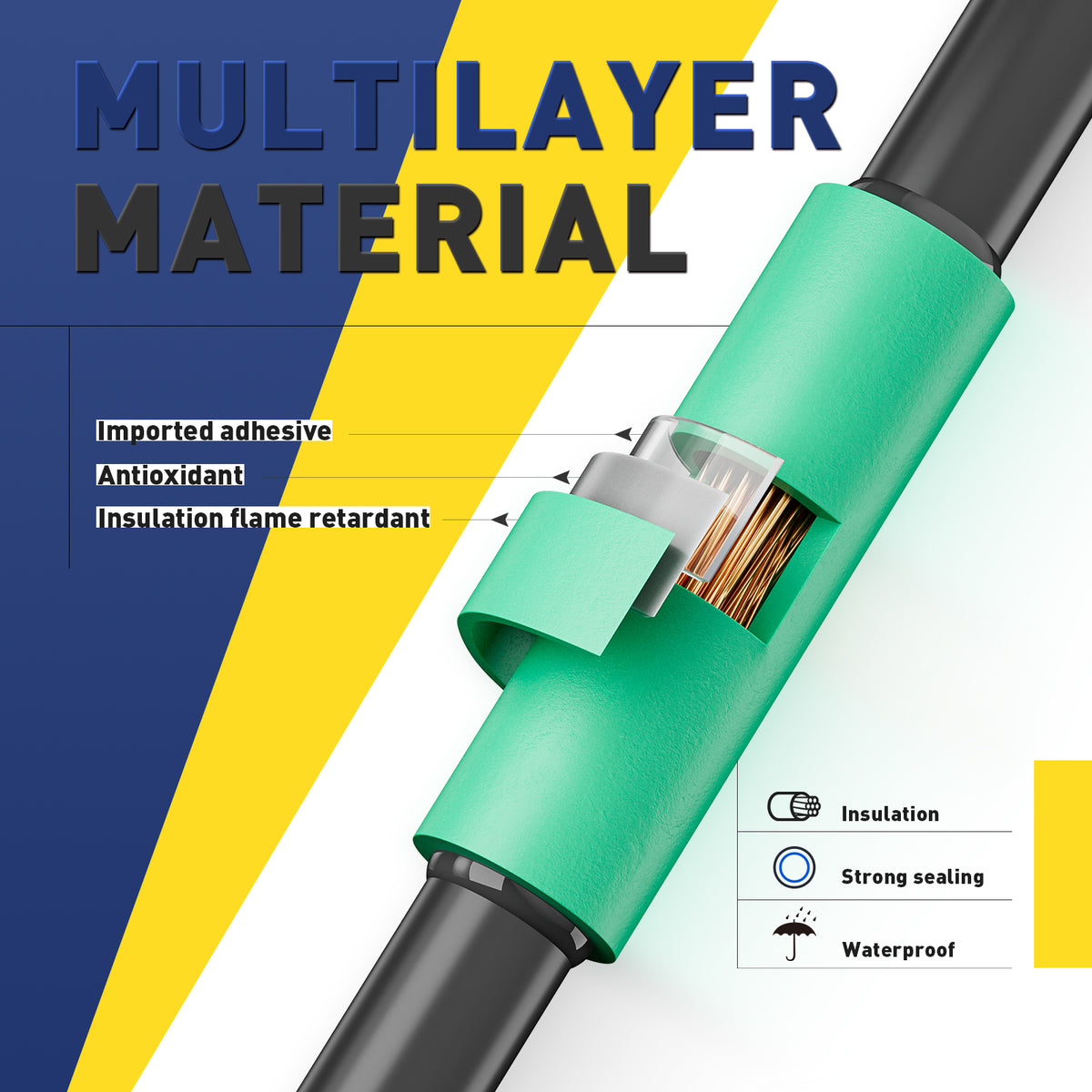
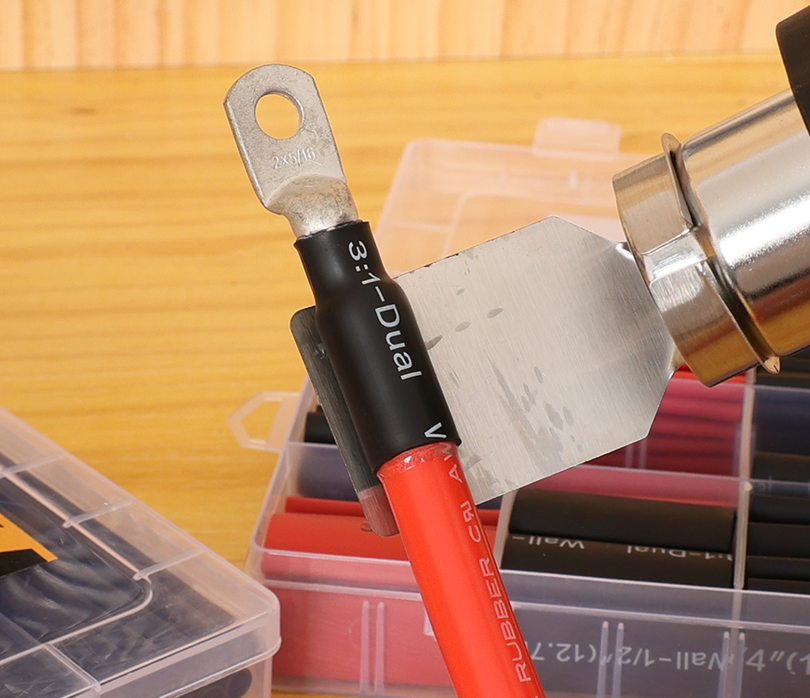
For a separate insulation or sealing layer, a 3:1 tube can help when the pass-over diameter and final sealing diameter differ. Check its adhesive compatibility, recovered wall thickness, length and service rating as well as diameter. Do not cover a defective joint and call it repaired.
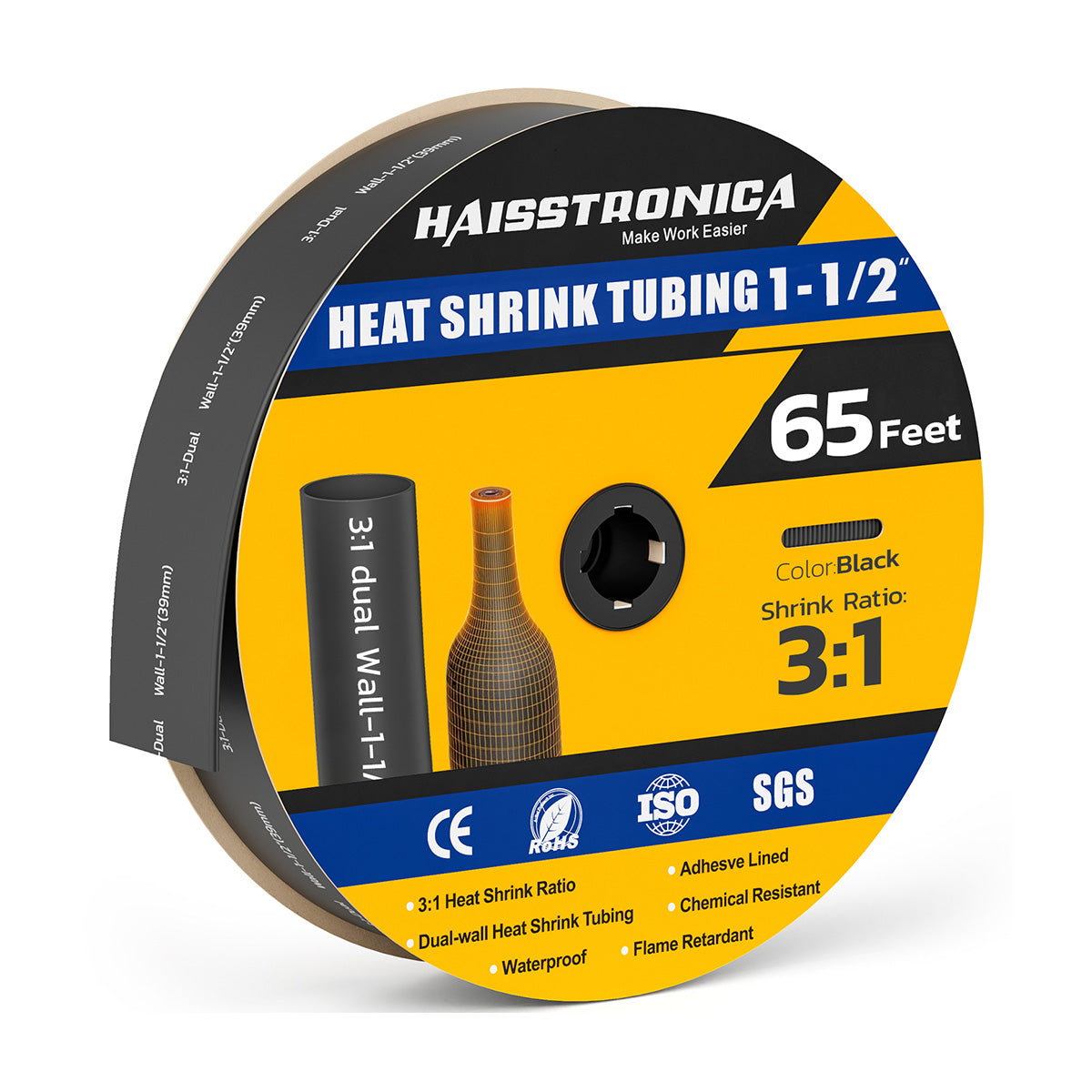
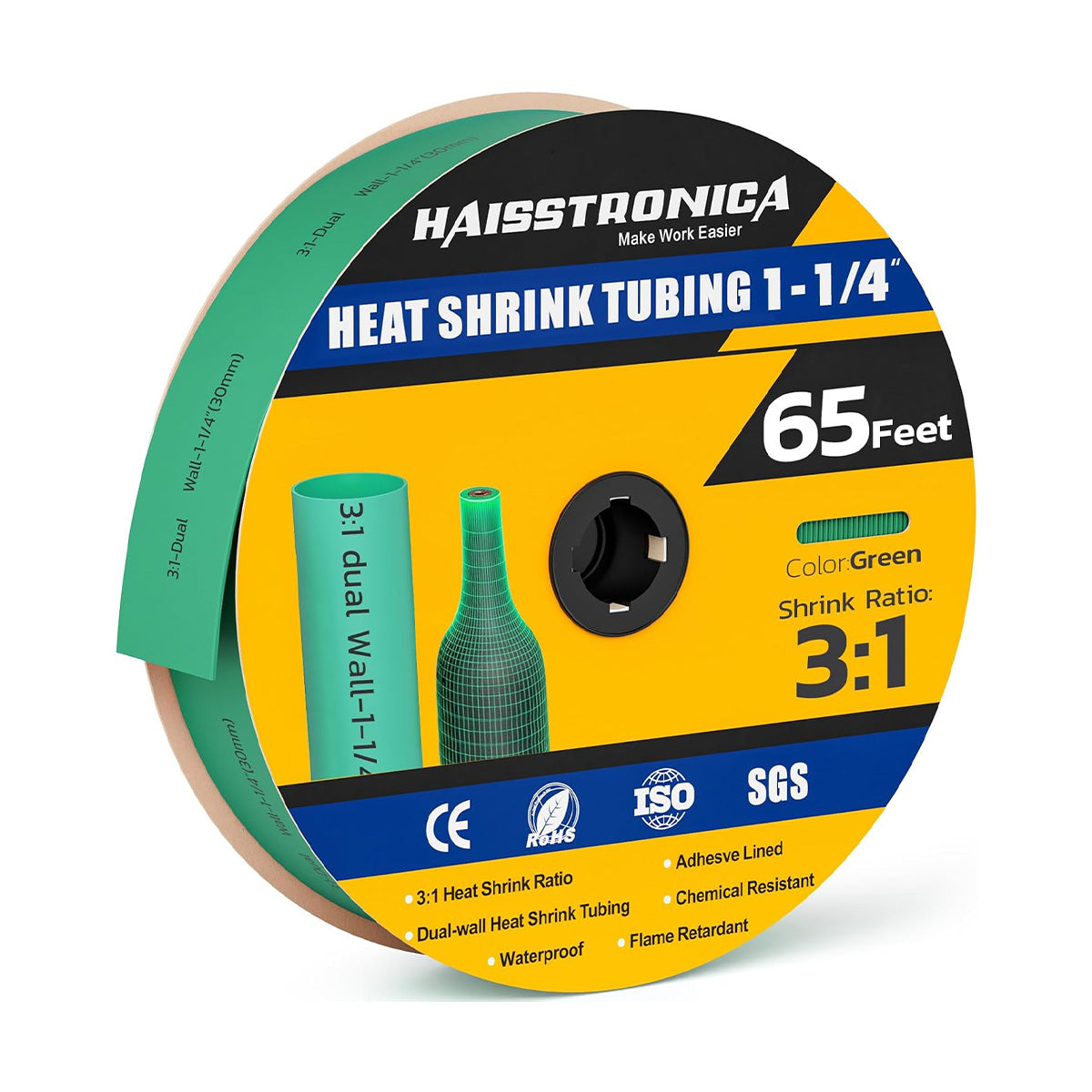
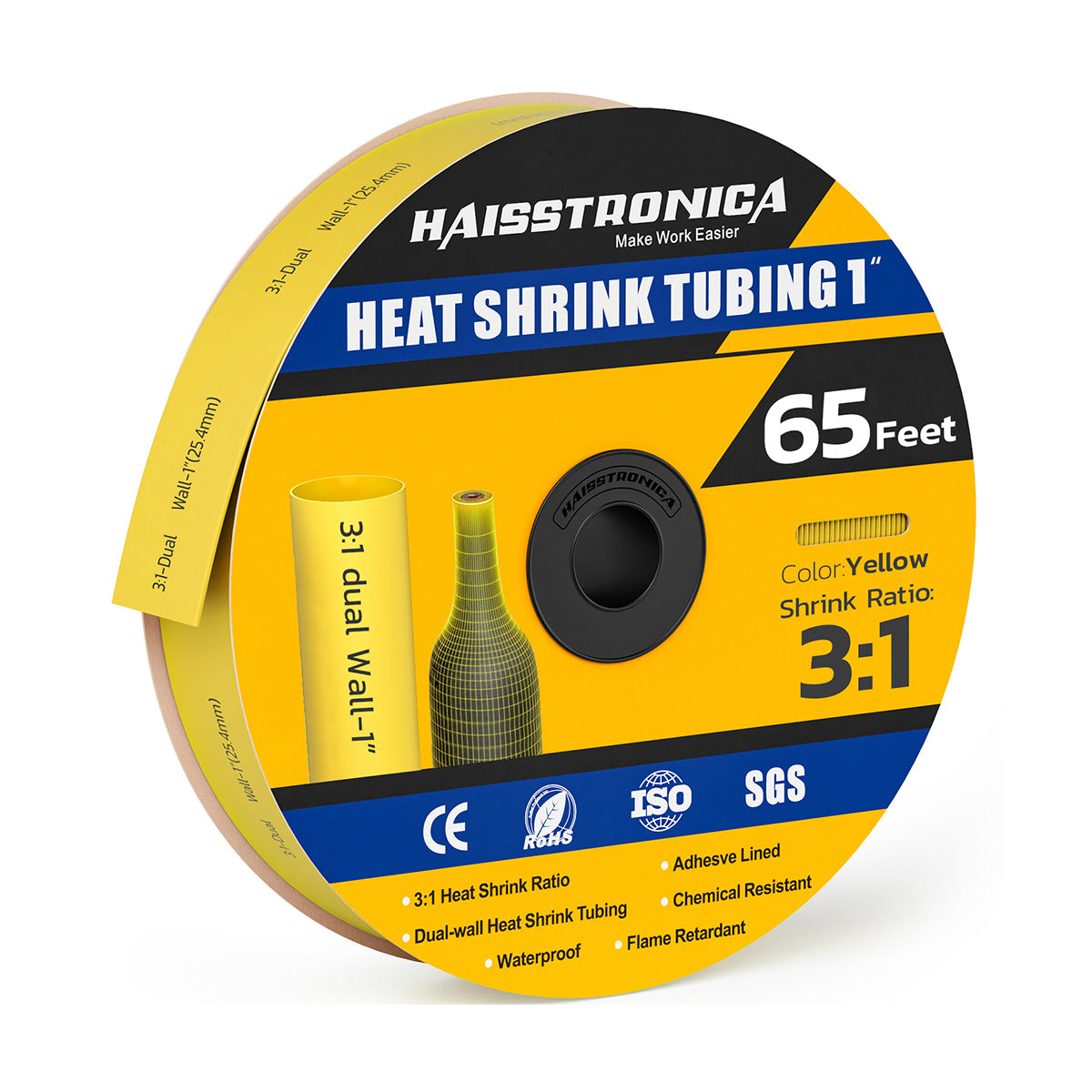
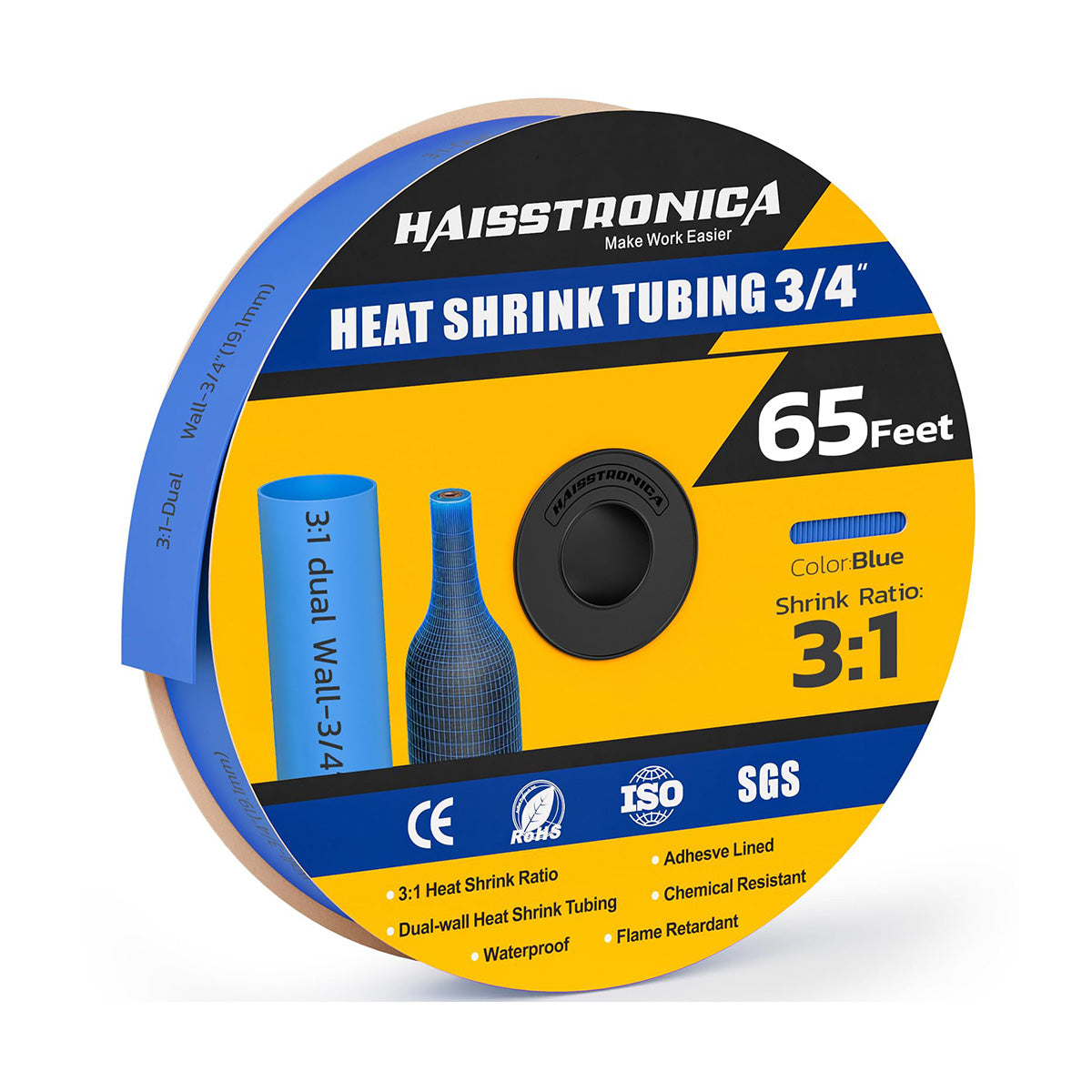
360PCS adhesive-lined heat shrink tubing kit
This tubing kit explicitly lists a 3:1 shrink ratio. Review its sizes for an independently suitable connection; the tubing contains no solder and does not raise the underlying connection’s temperature or environmental rating.
Review 3:1 tubing sizes →
Heat technique: recover the sleeve and complete the joint
A sleeve that looks shrunk is not proof that the solder has flowed correctly. Follow the exact connector’s heating instructions and inspect the completed joint.
- Prepare safely. De-energize the circuit, use clean, dry wires and support the splice. Keep heating tools away from fuel, flammable vapors and heat-sensitive parts.
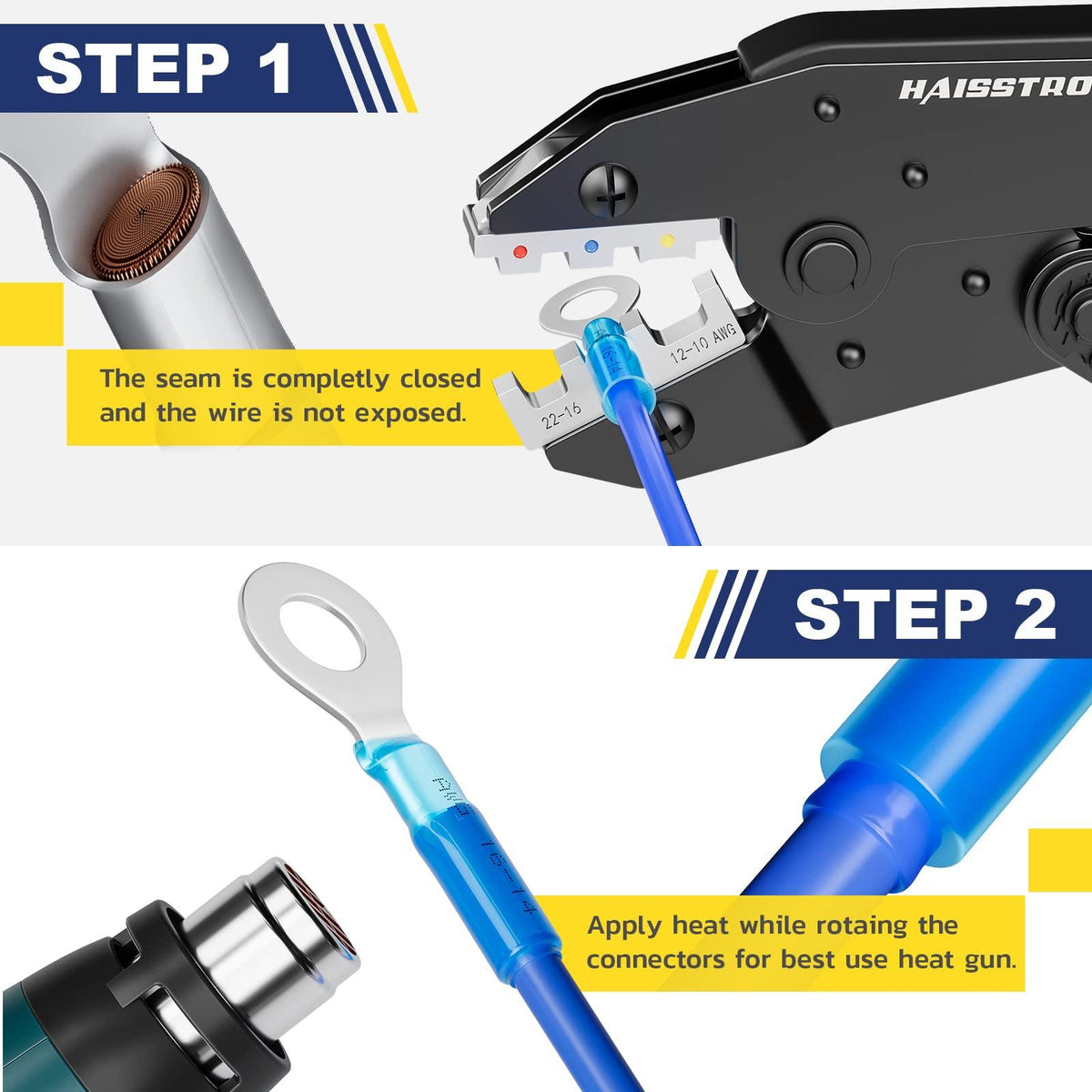
- Use the specified heat process. Match the heat gun, nozzle, distance and heating sequence to the connector. Move heat as directed for even recovery; there is no universal temperature or time for every sleeve.
- Inspect after cooling. Check solder flow, sleeve condition and both sealing ends against the manufacturer’s criteria. Reject scorching, open ends or incomplete solder flow; visible adhesive alone is not proof of a waterproof splice.
- Verify and support. Perform the required electrical and mechanical checks, then secure the wiring so the joint is not carrying repeated bending or pull loads.
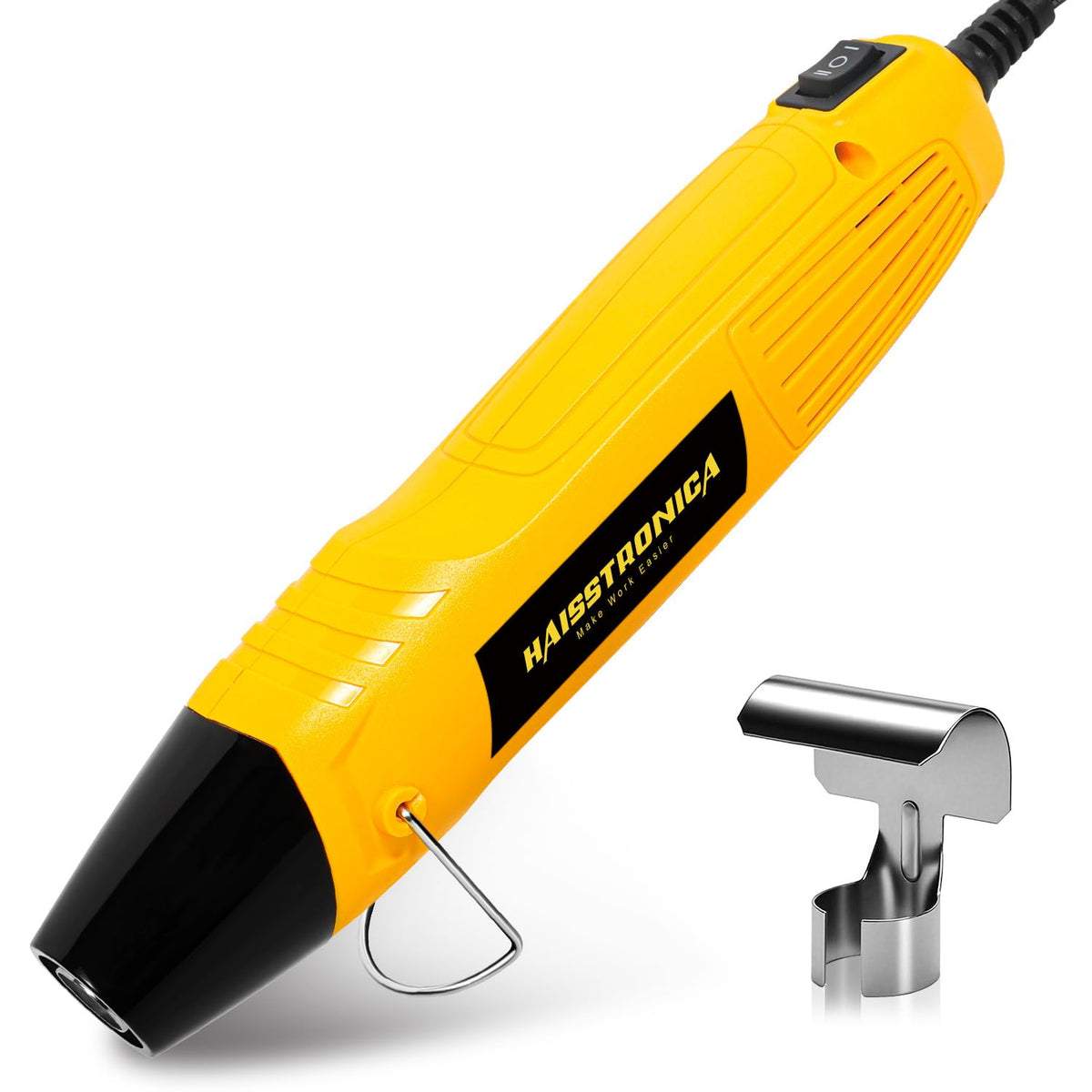
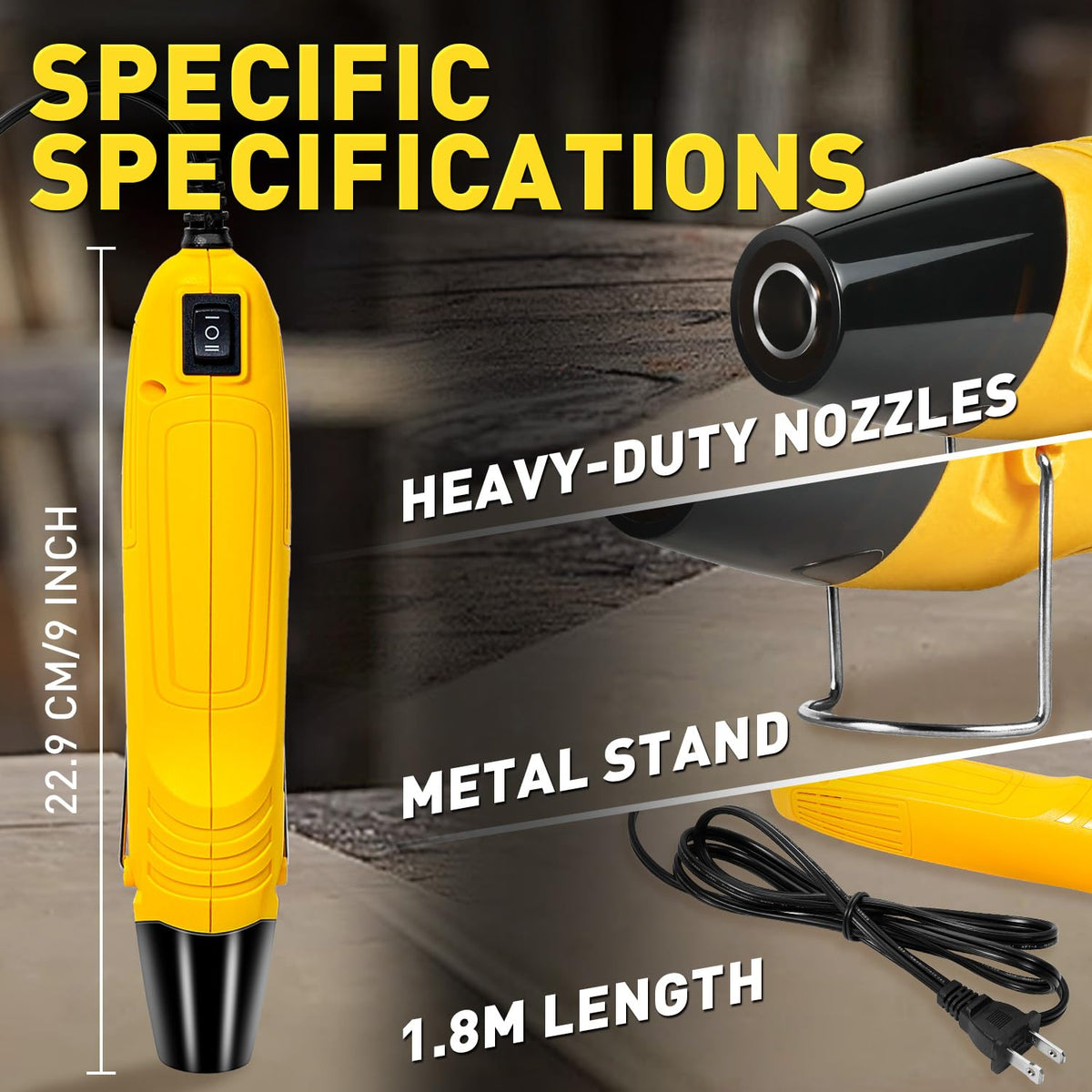
Mini Heat Gun 350W
A compact heat source for controlled application. Its listed two heat settings do not replace the connector’s installation requirements. Confirm heat-output compatibility, access around the splice and the 110V power requirement before ordering.
View the Mini Heat Gun →
Choose by environment—not by shrink ratio alone
| Project | Selection rule | Where to compare |
|---|---|---|
| Indoor low-voltage | 2:1 can be enough when the documented fit and electrical ratings match. | Compare standard solder seal options; confirm the listed ratio. |
| Automotive | Consider a documented 3:1 sleeve if diameter variation requires it. Check heat, fluids, vibration and the vehicle’s repair procedure separately. | Review 3:1 tubing for separate insulation; verify the solder connector independently. |
| Marine / saltwater | Require an approved connection method and documented suitability for the actual exposure. 3:1 alone is not a marine qualification. | Confirm the exact connector documentation before choosing a kit. Do not assume suitability for bilge exposure or submersion. |
Frequently asked questions
Does 3:1 let me use one solder connector for more AWG sizes?
Not by itself. The solder element and conductor arrangement still have a specified wire range. Shrink ratio describes sleeve recovery, not electrical capacity.
Is all 3:1 tubing adhesive-lined?
No. Shrink ratio and adhesive lining are separate specifications. Check both, along with the intended service conditions.
Can extra tubing rescue an oversized or poorly soldered connector?
No. An outer sleeve cannot correct inadequate conductor fit or incomplete solder flow. Remake the connection with the correct parts and process.
Your final buying path
Buy the fit you need
Start with the correct gauge mix. Choose 2:1 only when its actual dimensions and ratings pass.
Compare solder seal kits →Separate connection from insulation
Confirm the approved splice first, then select additional tubing if the repair calls for it.
Compare heat shrink tubing →Verify exposure suitability first
Match the documented connection system to splash, saltwater or bilge exposure. If approval or ratings are unclear, pause the purchase and obtain a suitable specification.
Bottom line: check AWG, both insulation diameters and environmental suitability first. Buy a higher ratio when it solves a measured fit requirement—not as a substitute for those checks.