
Choose the connection by its limits—not just its color.
A loose barrel, poorly recovered sleeve, or damaged seal can begin with the wrong selection. Check wire size, shrink ratio, electrical requirements, service temperature, and exposure before choosing a product.
First, identify the failure you are trying to prevent
Wire pulls out or the joint heats up
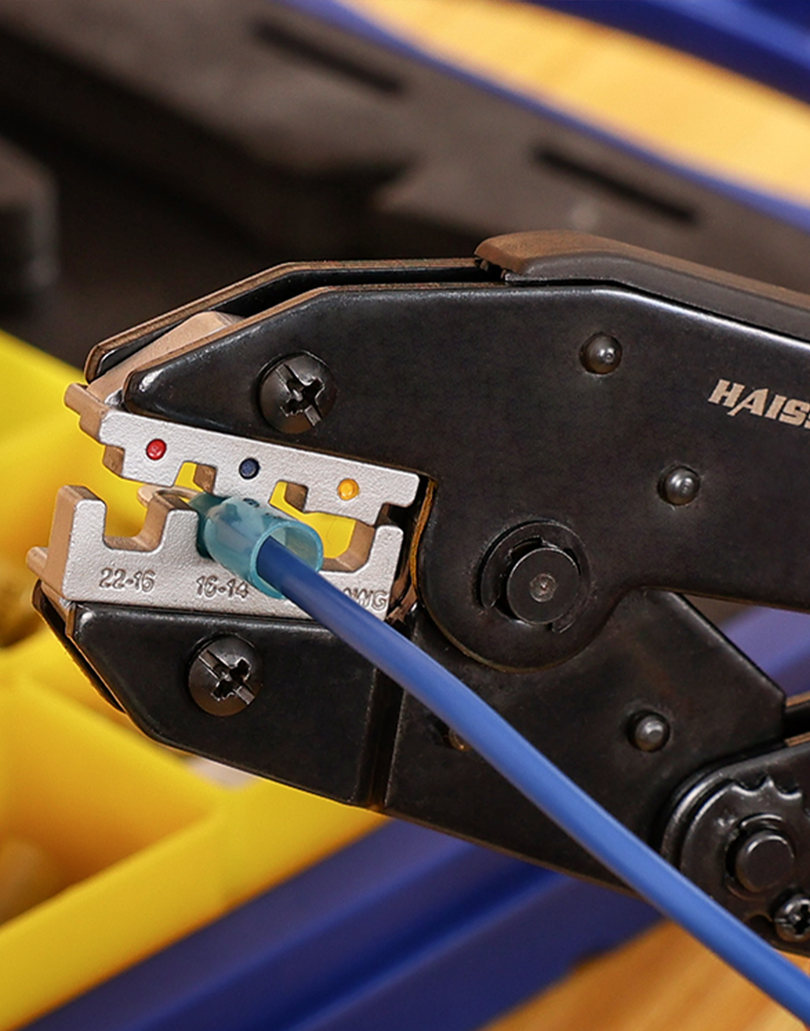
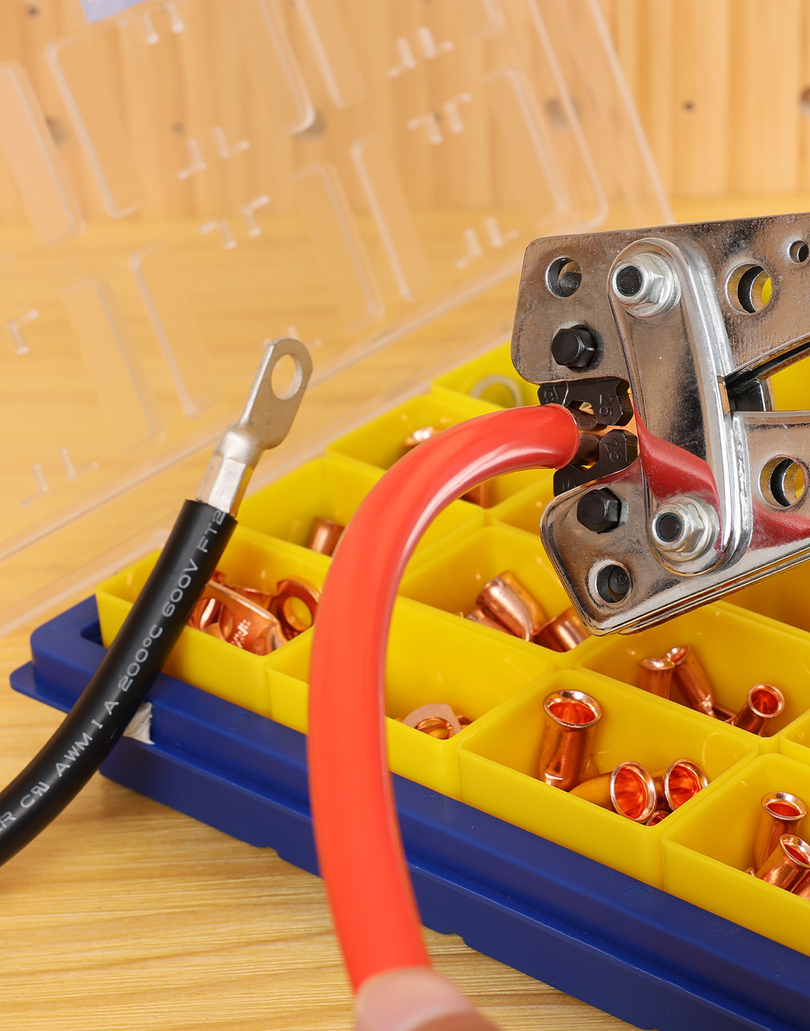
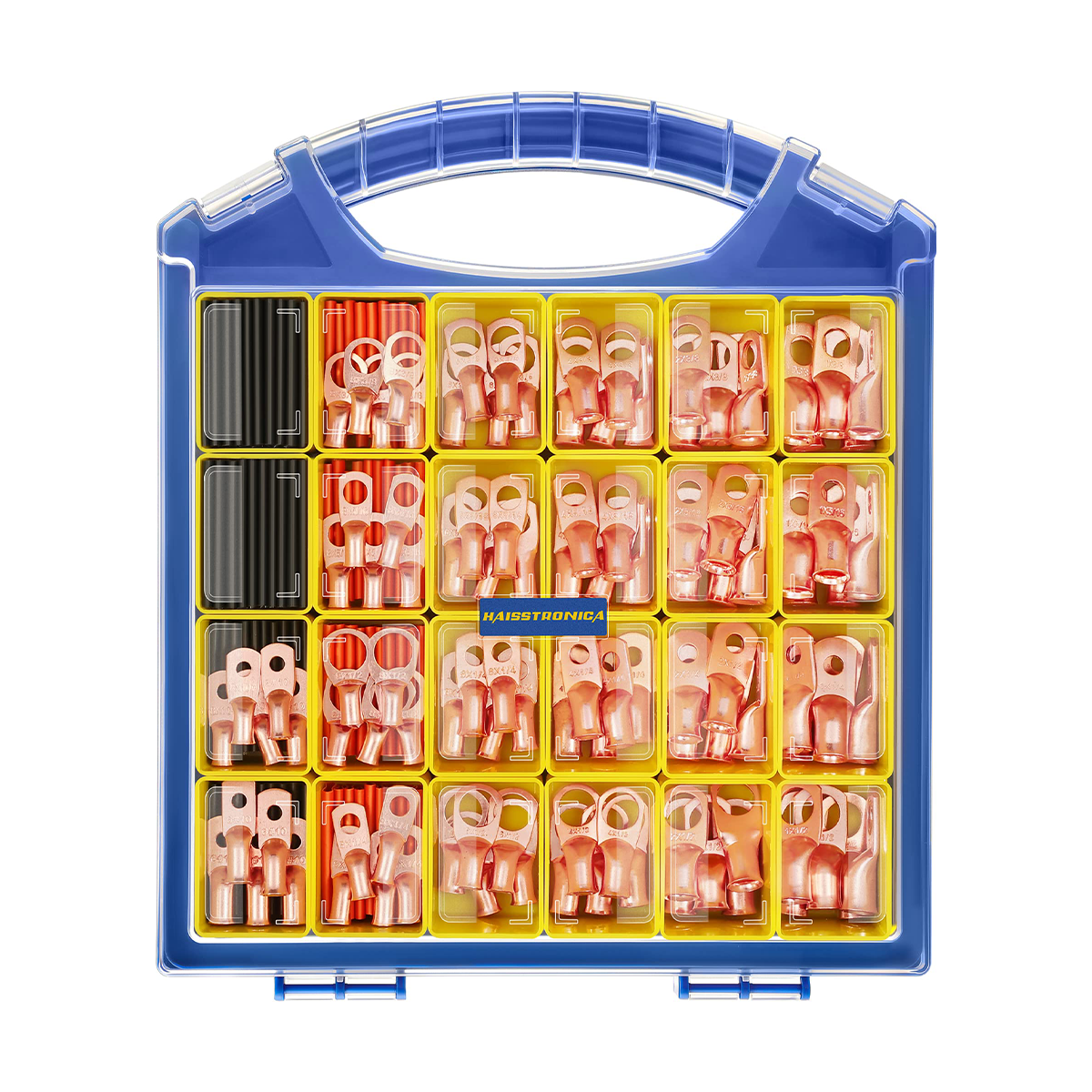
Check conductor size, barrel geometry, strip length, and the crimp—not just the outside sleeve. Heat shrink does not repair an incorrect mechanical connection.
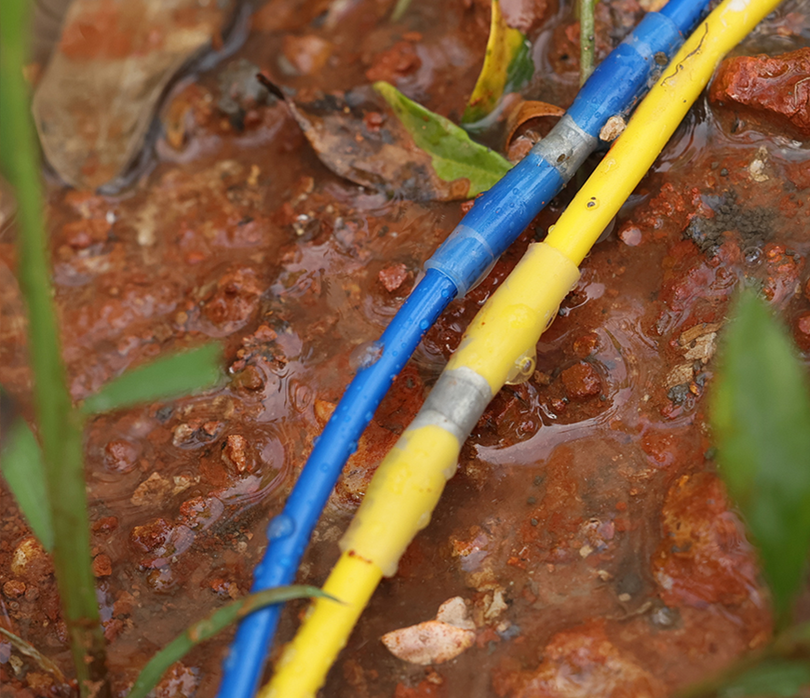
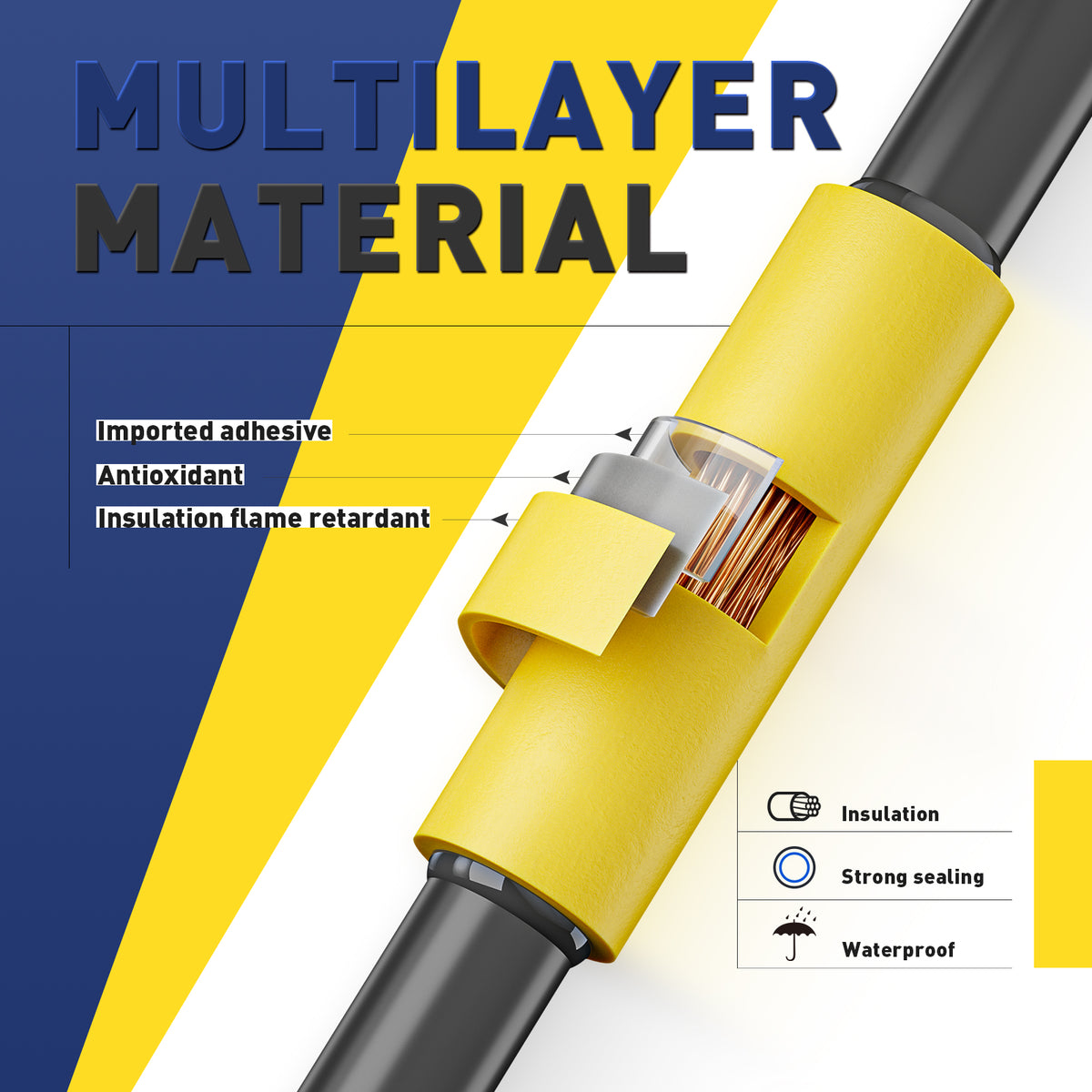
Water enters or the sleeve stays loose
Check the seal against the actual jacket diameter, adhesive coverage, and installation quality. A bigger shrink ratio cannot compensate for the wrong connector barrel.
The insulation cracks, softens, or swells
Review service temperature, abrasion, and fluid exposure. Replacing it with another color of the same unsuitable material will not address the cause.
Your five-factor product selector
Each answer unlocks the next check. Product links stay hidden until all five factors are completed and you request the shortlist. Changing an answer updates the result; reset clears everything.
A shortlist is not an installation approval. The compared products have identifiable size and 3:1 options. Exact operating-temperature limits, voltage ratings, certification scope, and chemical-resistance data were not verified for every variant. Specified or uncertain requirements route to confirmation instead of a claimed match.
This browser does not support the selector. Use the five checks below and the final Shop All links, or request specification help.
The five checks behind the selector
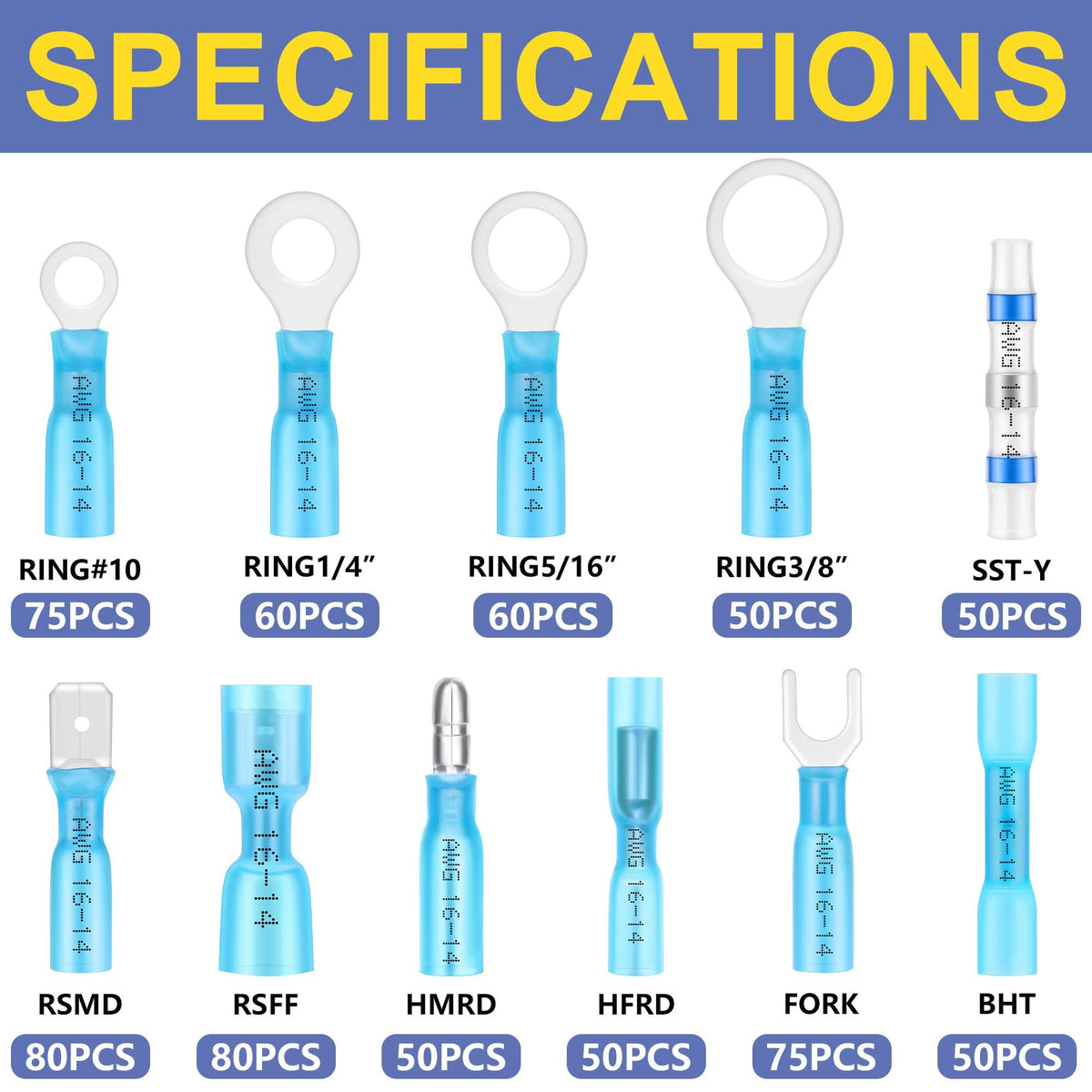
1 · AWG sizes the barrel; diameter sizes tubing
A connector must accept the actual conductor material, strand construction, and gauge. A separate sleeve must also pass over the joint and recover onto the insulation. There is no universal AWG-to-tube-diameter table: insulation thickness and joint geometry vary.
2 · Ratio is not the same as fit
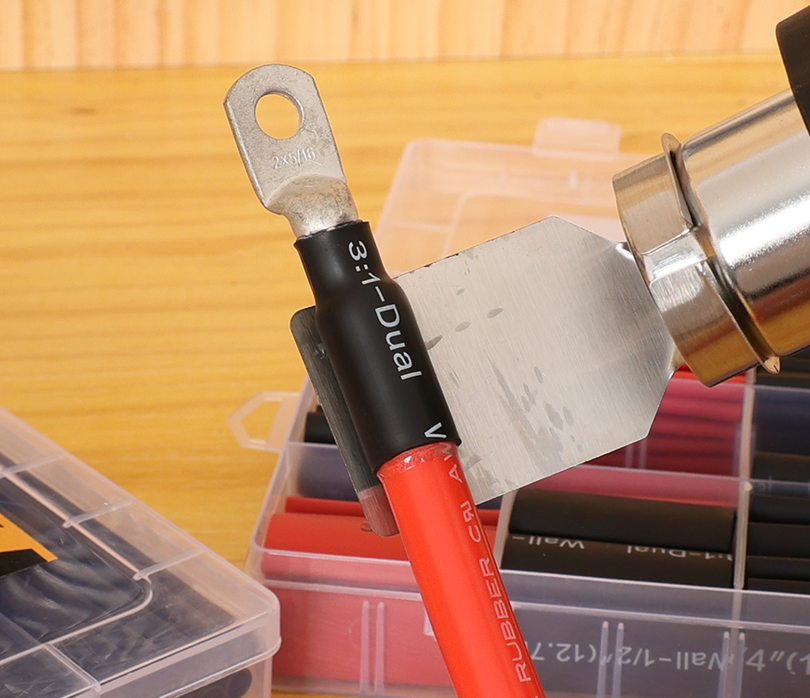
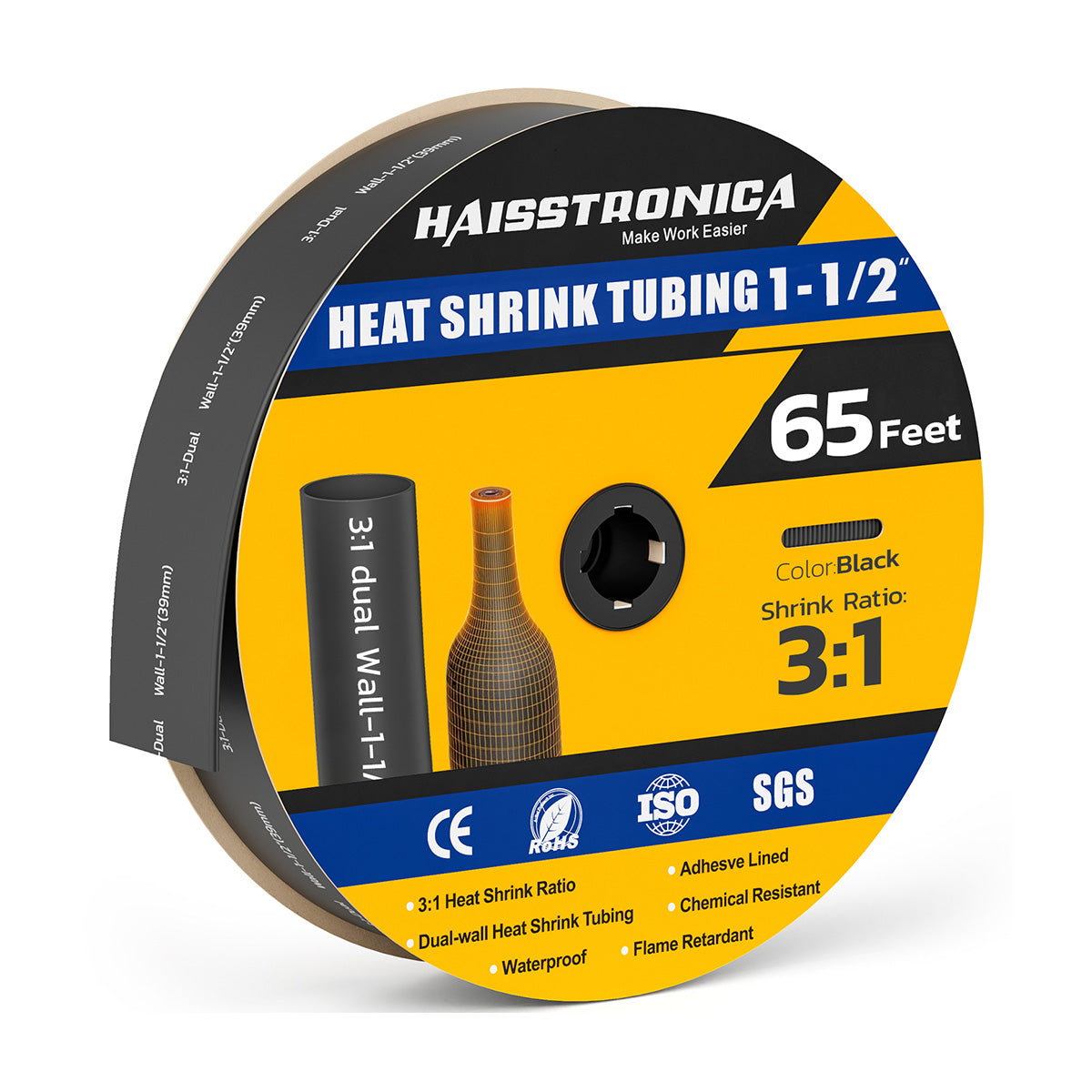
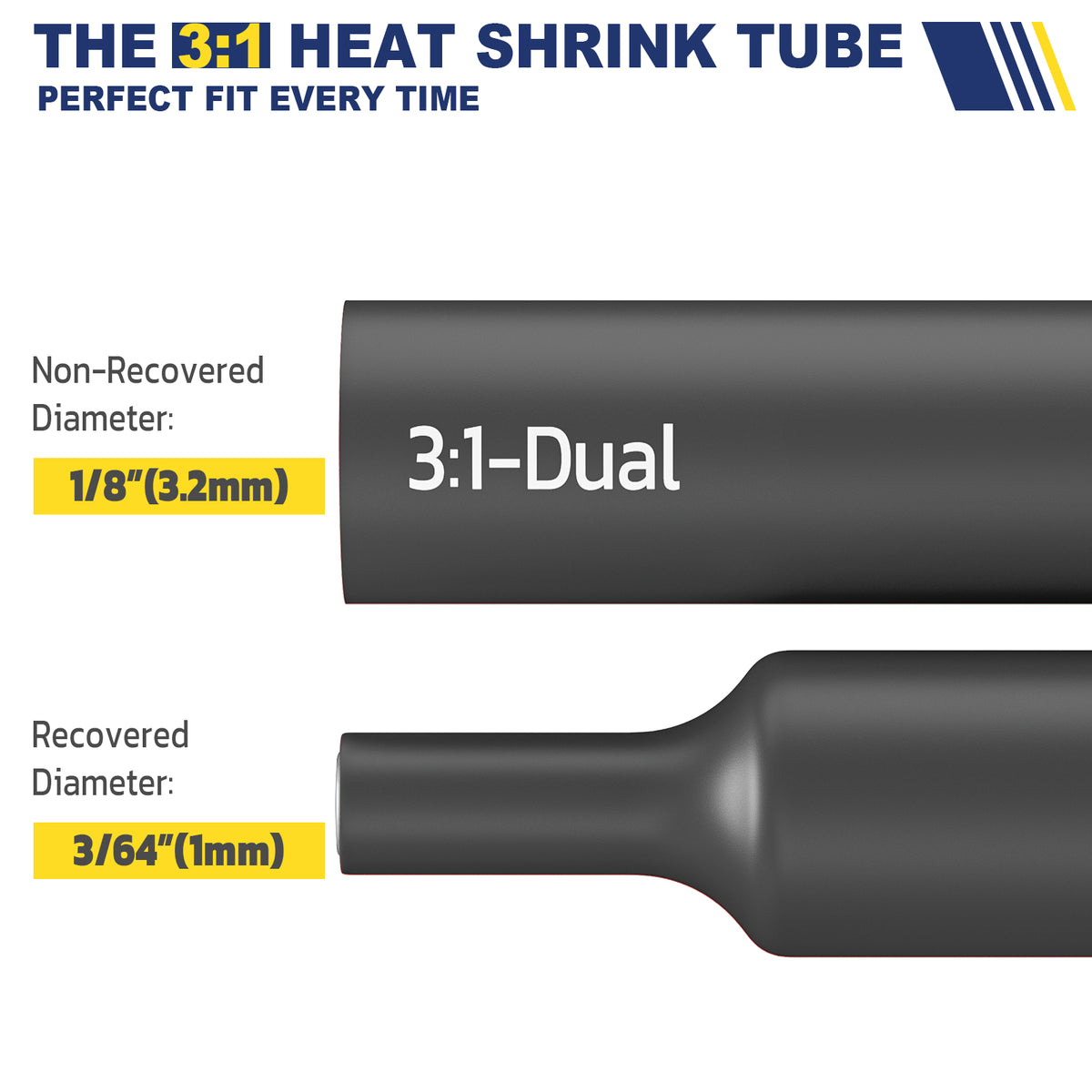
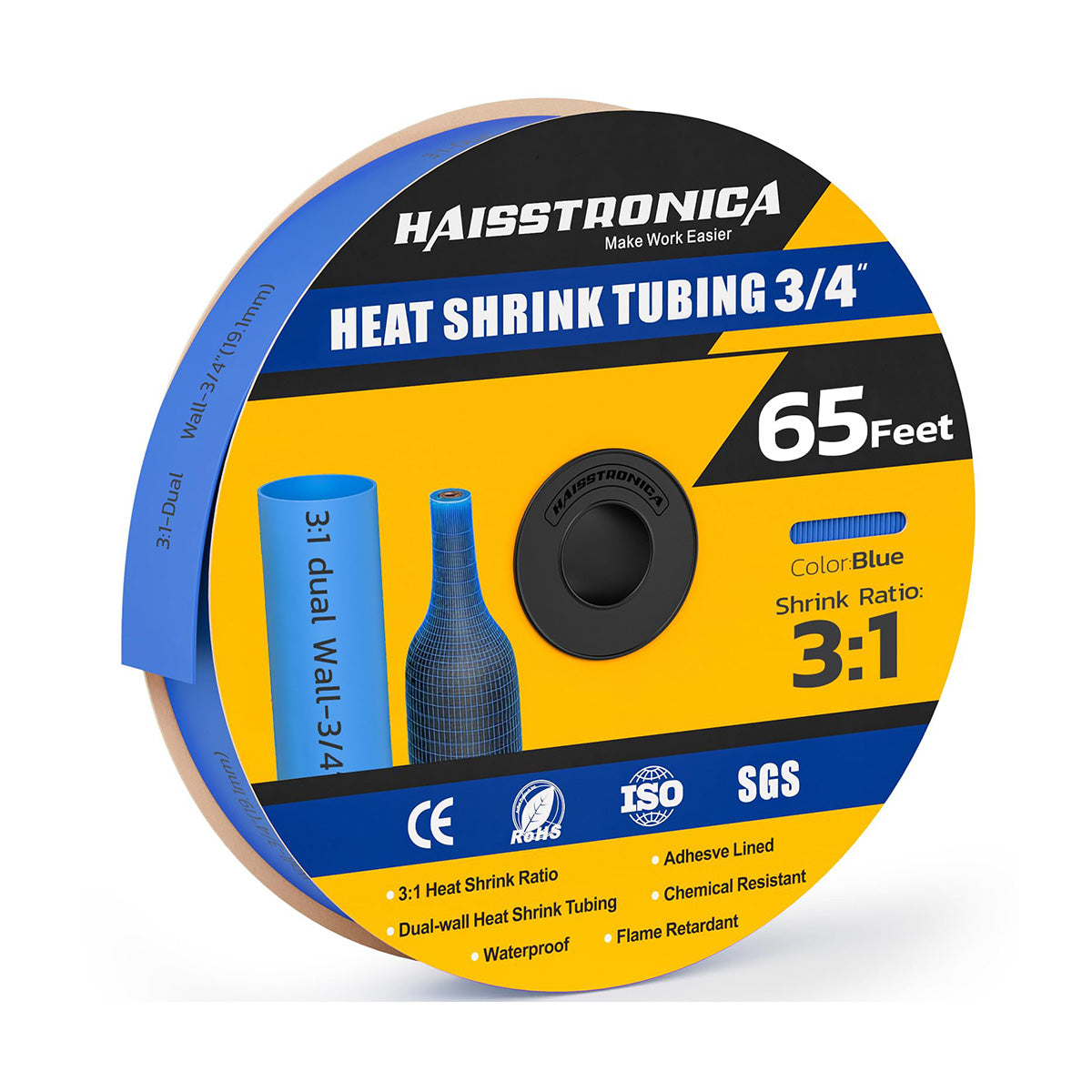
Nominally, 2:1 tubing recovers to half its supplied diameter and 3:1 to one third. Use the specified minimum expanded ID and maximum recovered ID, plus the maker's installation margin and length allowance. A larger ratio does not establish an electrical or water-resistance rating. TE's sizing guidance explains the dimensional checks.
3 · Read the exact rating—not just a logo
Check voltage, insulation material, wall thickness, approval category, and any conditions of use for the exact part. VW-1 concerns flame performance; it does not by itself verify the connection's voltage rating or suitability for mains wiring. UL distinguishes electrical-insulation tubing from flame-retardant-only tubing.
4 · Installation heat and service heat are different
The temperature needed to recover a sleeve is not its continuous operating-temperature limit. Compare the full service range with the datasheet and account for the wire insulation, connector, adhesive, and enclosure—not only the outside tubing. If a limit is absent, obtain it.
5 · “Waterproof” does not mean chemical-proof
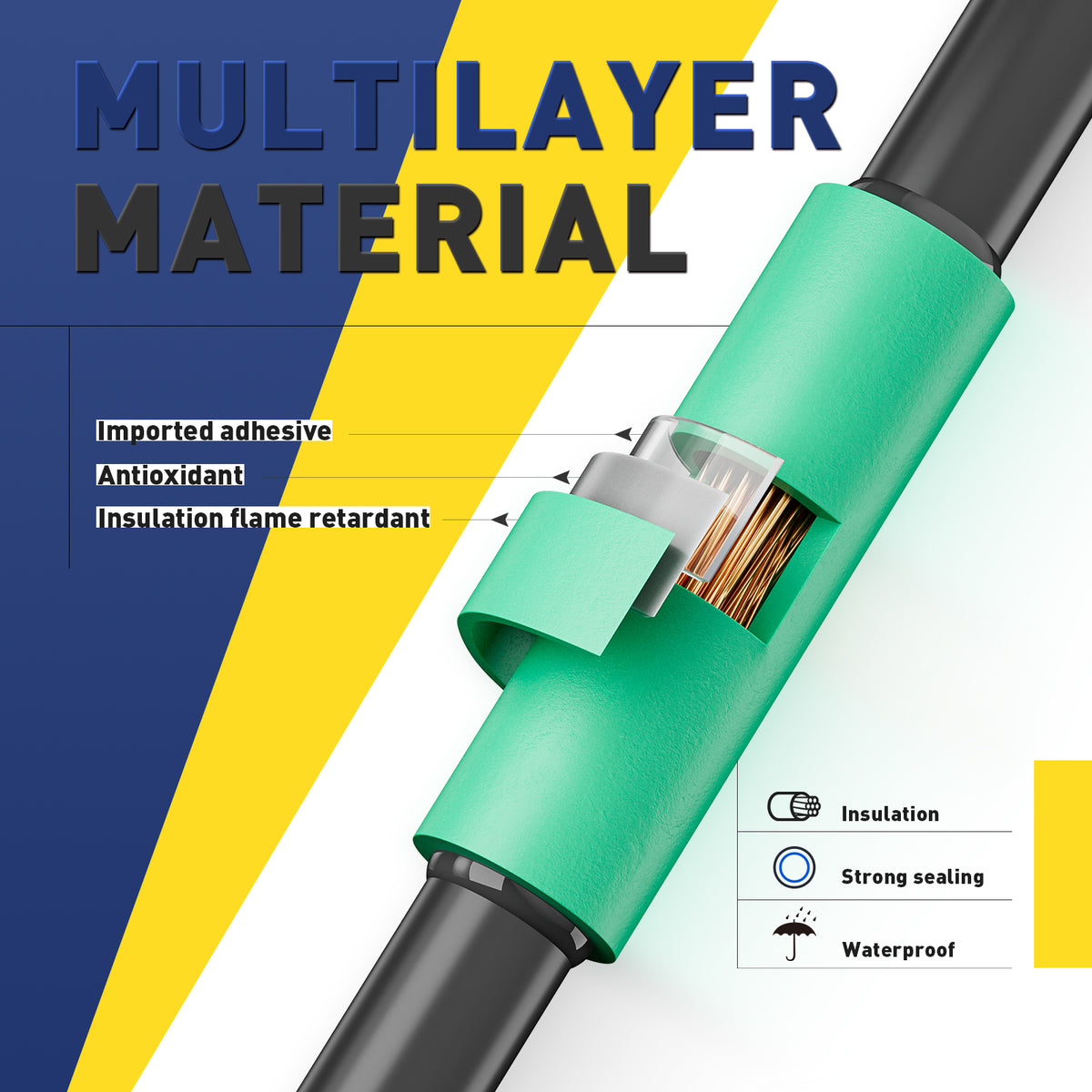
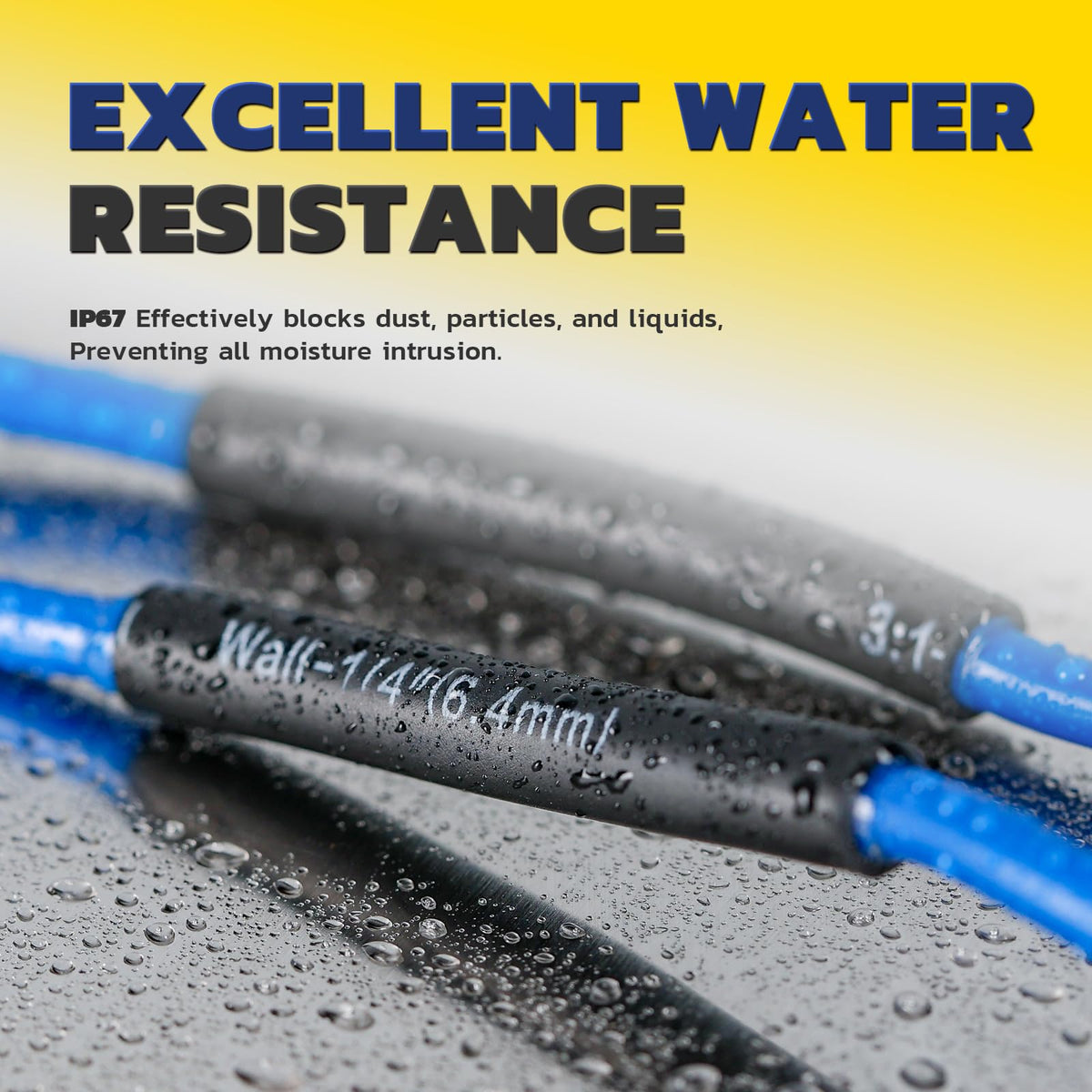
Adhesive-lined products can be a route for moisture sealing when correctly sized and installed. They are not automatically suitable for every oil, fuel, solvent, acid, burial location, or immersion condition. Fluid identity, temperature, and duration matter; the complete joint must meet the actual requirement.
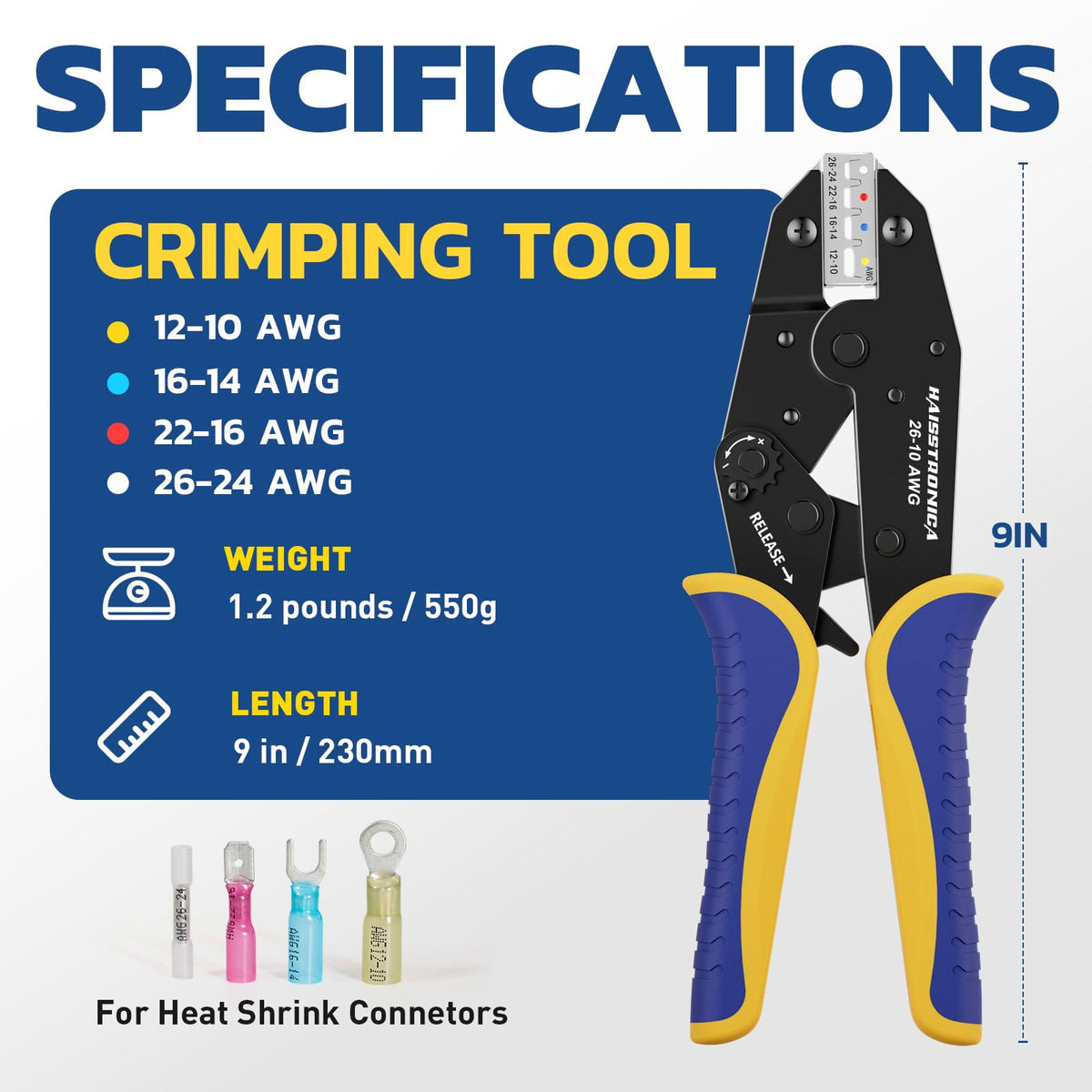
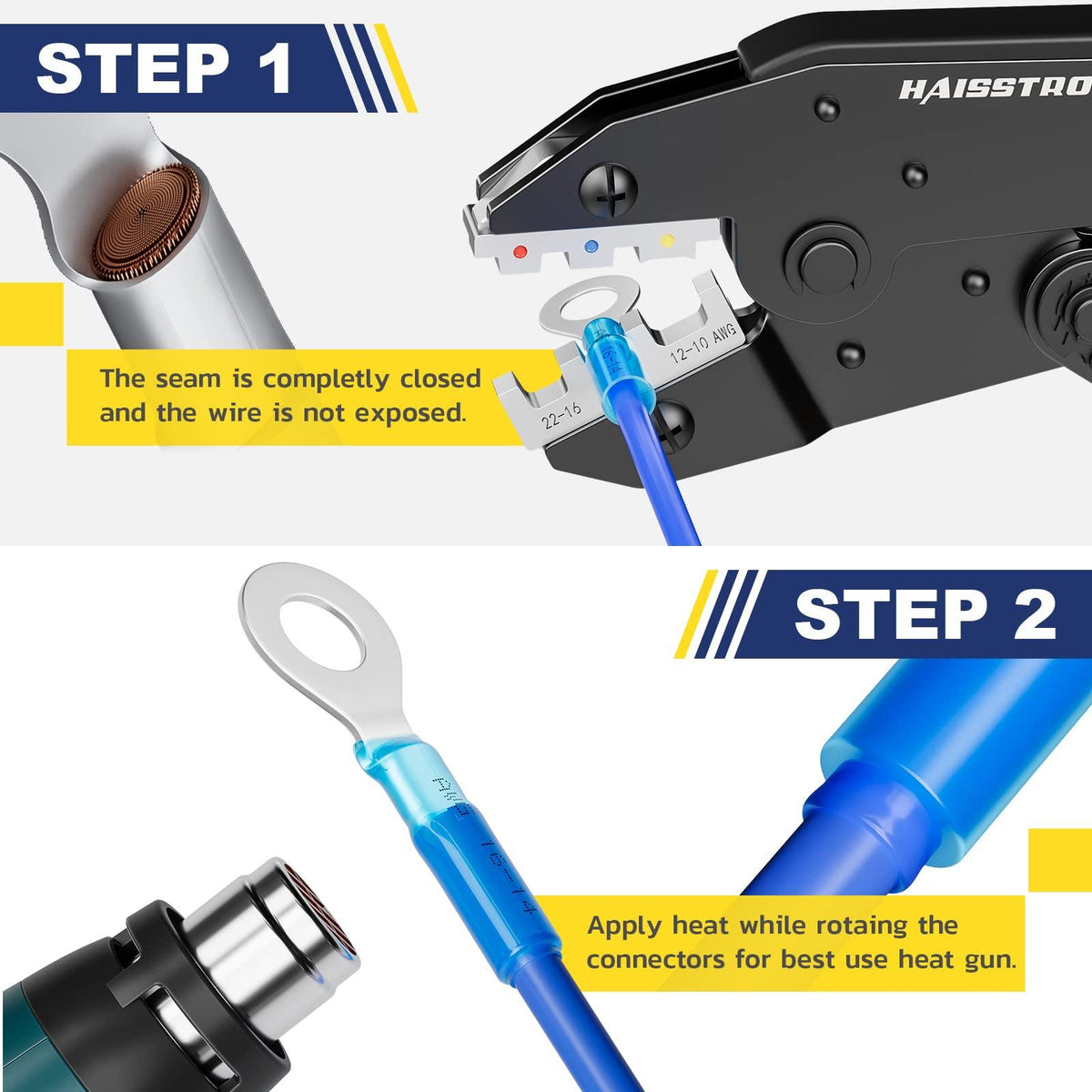
Before installation: isolate and verify power is off. Use the specified strip length and matched crimp tool, complete the mechanical connection, then recover the sleeve as instructed. Inspect the joint and follow the required mechanical/electrical checks before returning it to service. Do not work live or improvise approval for an unfamiliar circuit.
Need a wider range? Shop all by product family.
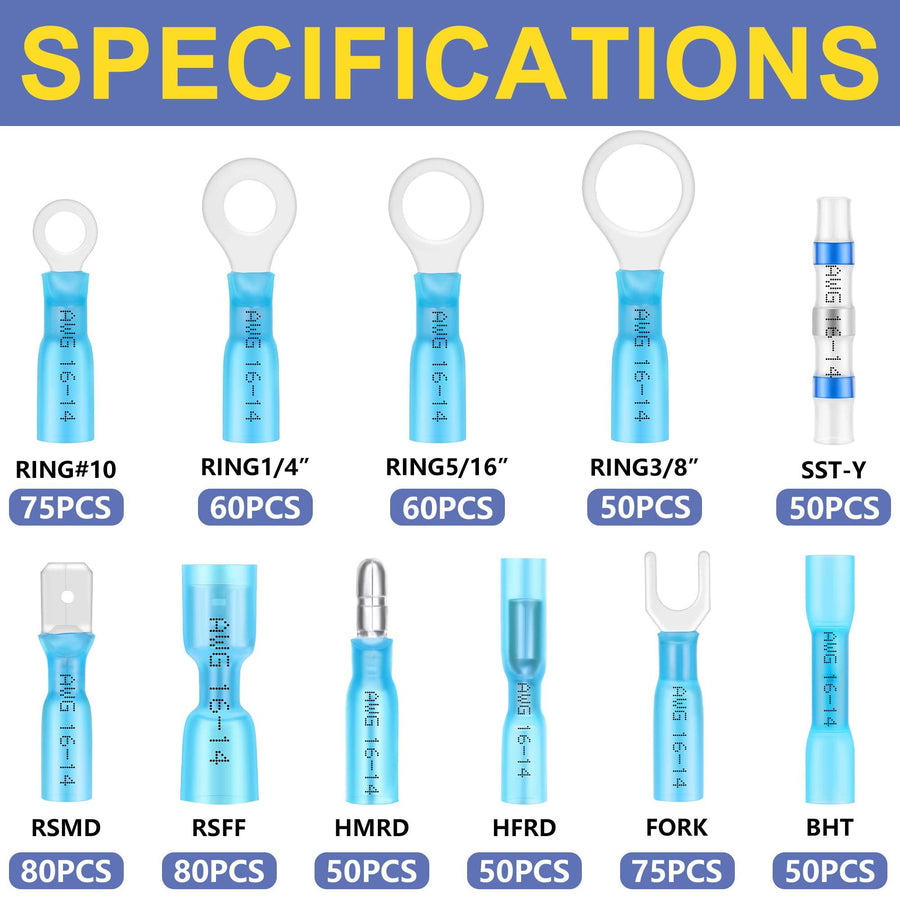
Use these as a browsing fallback, not a substitute for the five checks. Keep the connection type separate from the tubing used to cover it.
Scope: product sizes, ratios, links, and selected purchase options were checked on August 28, 2026. This is a comparison tool, not a certification or circuit-design calculator. All eight product routes remain hidden until the five-factor selection is complete; only the relevant route is then shown.








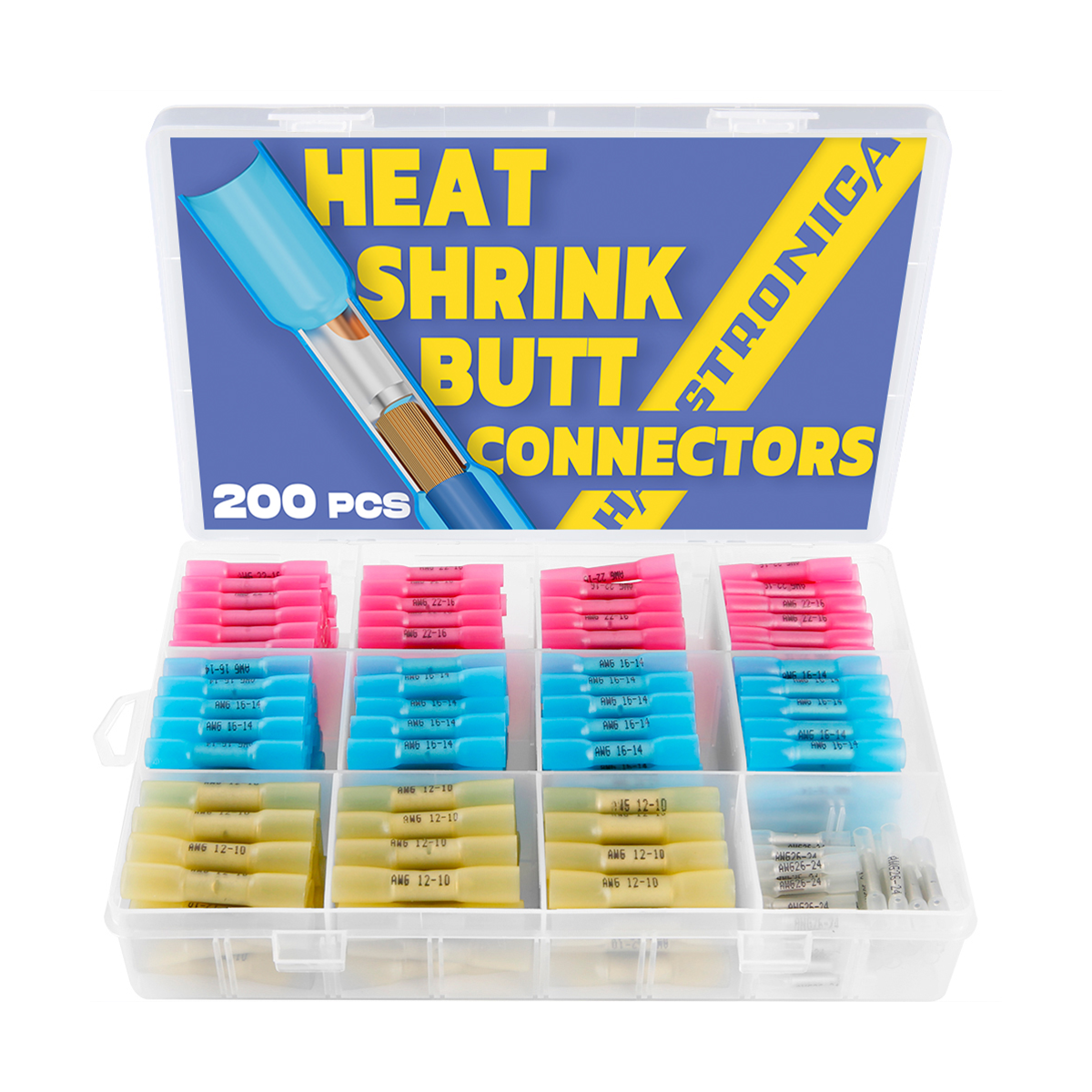
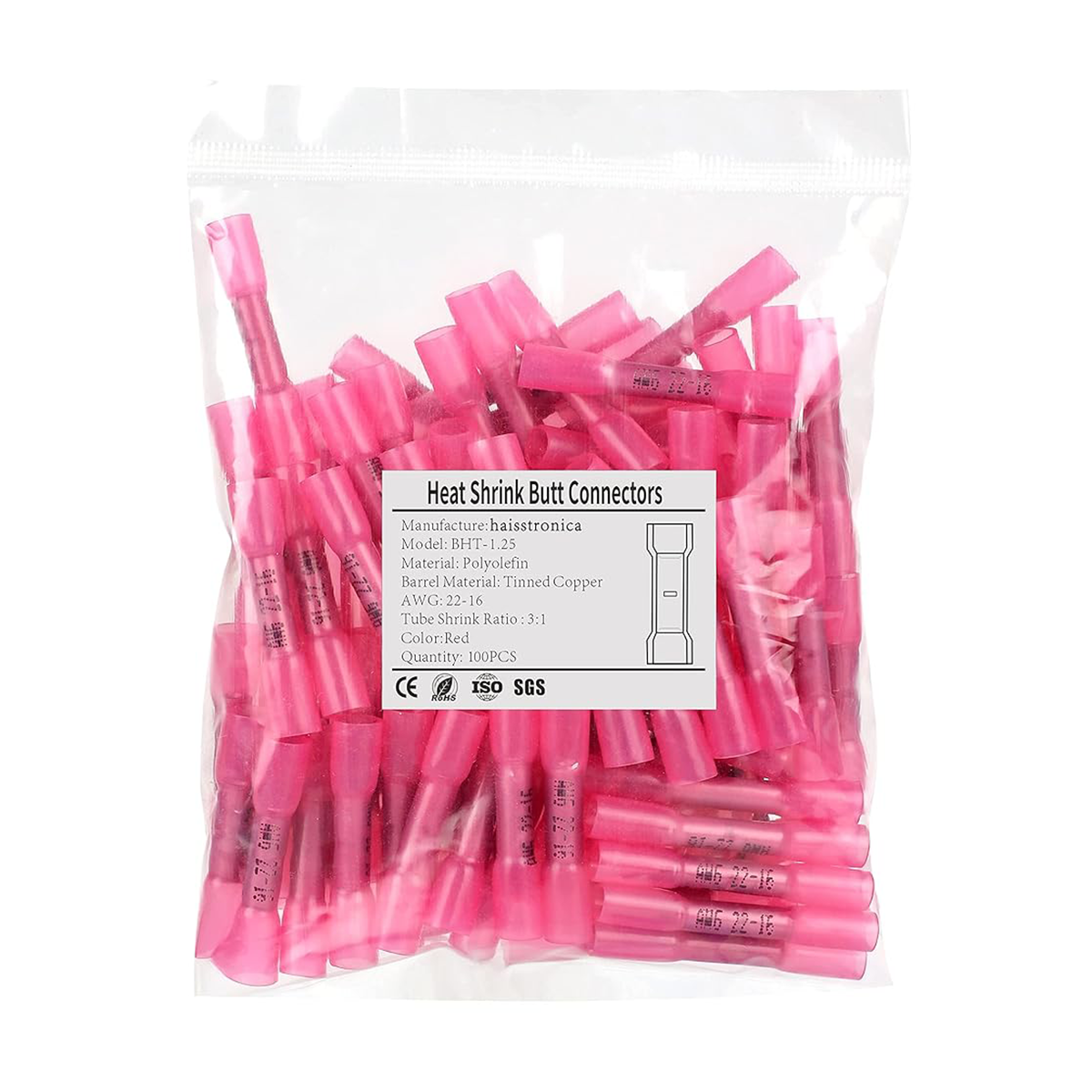
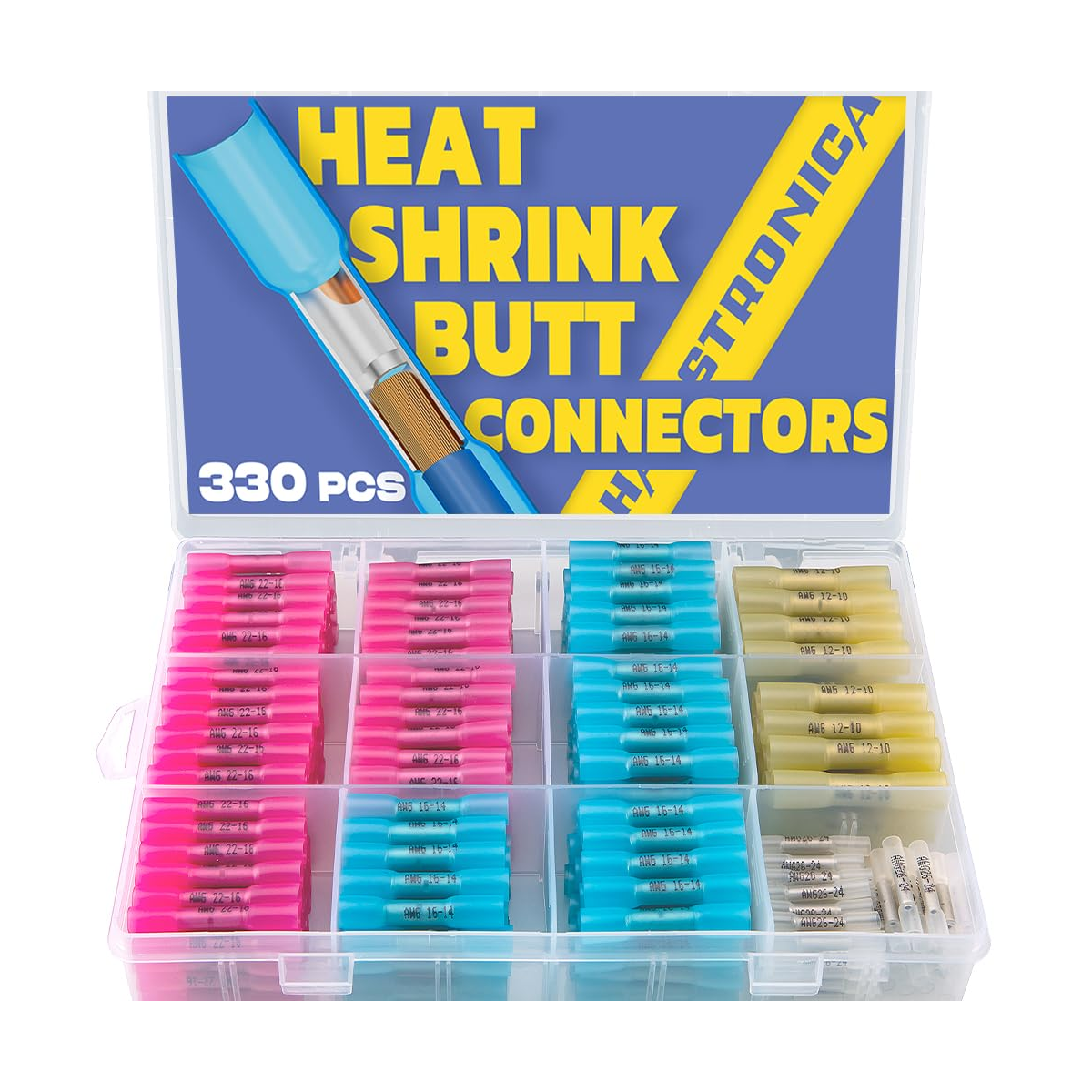
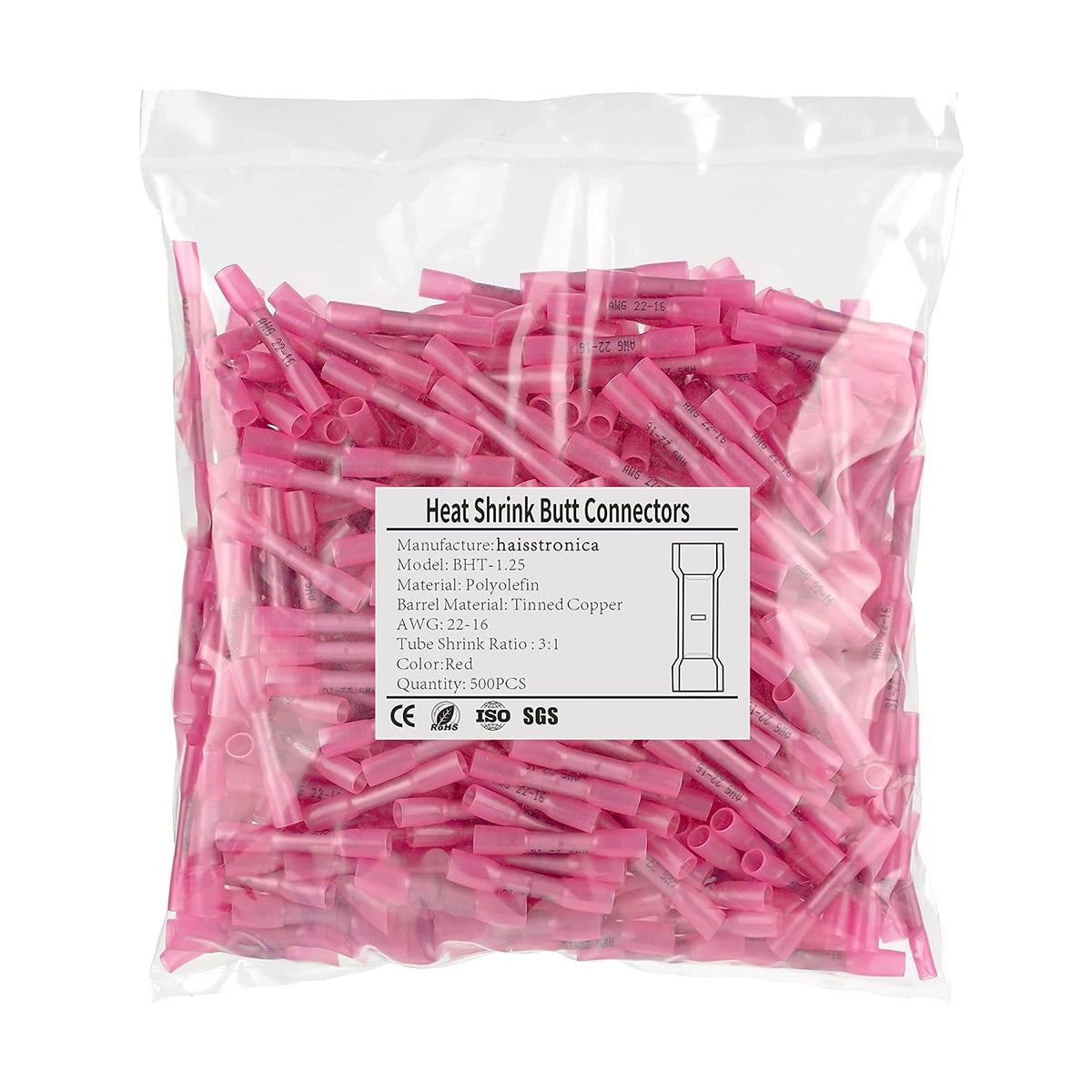
1 comment
Joe Ragsdale
I’d like to be able to use one size of shrink tube for 3 conductor # 14 SO CORD at the breakout point as well as the terminal end of individual conductors. If it will fit both areas of the cord and conductors in double wall shrink tube.
I’d like to be able to use one size of shrink tube for 3 conductor # 14 SO CORD at the breakout point as well as the terminal end of individual conductors. If it will fit both areas of the cord and conductors in double wall shrink tube.